Portable Toilet Bags for RV & Van Life
Home → Solutions → Portable Hygiene & Sanitation → RV & Van Life
Living in an RV looks simple online.
Until waste storage becomes part of daily life.
Most people only think about portable toilet bags after something goes wrong.
Usually:
- leaks
- odor
- weak liners
- difficult disposal
- storage problems during long trips
That is when portable toilet bags stop being a simple accessory and become part of the entire sanitation system.
After spending years working with compostable bag manufacturing and talking with RV users, sanitation distributors, and outdoor equipment buyers, I realized one thing:
Most portable toilet bag problems are not caused by one single product.
They are caused by mismatched use environments.
This article is a practical guide to portable toilet bags for RV and van life systems based on real travel conditions rather than marketing language.
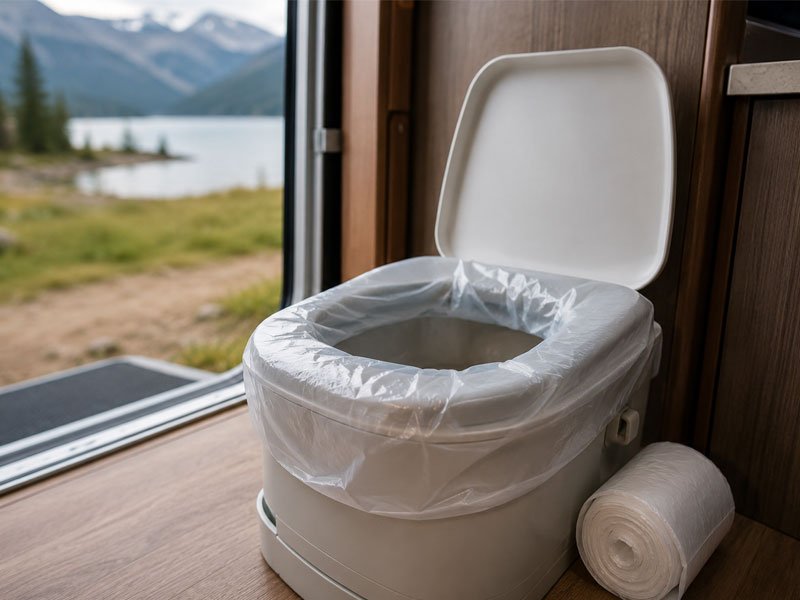
Why Portable Toilet Bags Matter More Than Most RV Users Expect
When people first build an RV or van life setup, they usually focus on:
- solar systems
- batteries
- water storage
- cooking equipment
- sleeping space
Waste handling often becomes an afterthought.
Until the first long trip.
Portable toilet bags directly affect:
- hygiene
- odor control
- storage stability
- vehicle cleanliness
- travel comfort
Especially in small spaces.
A weak liner inside a compact van can quickly become a much bigger problem than people expect.
That is why many experienced RV travelers spend more time testing sanitation setups than beginners realize.
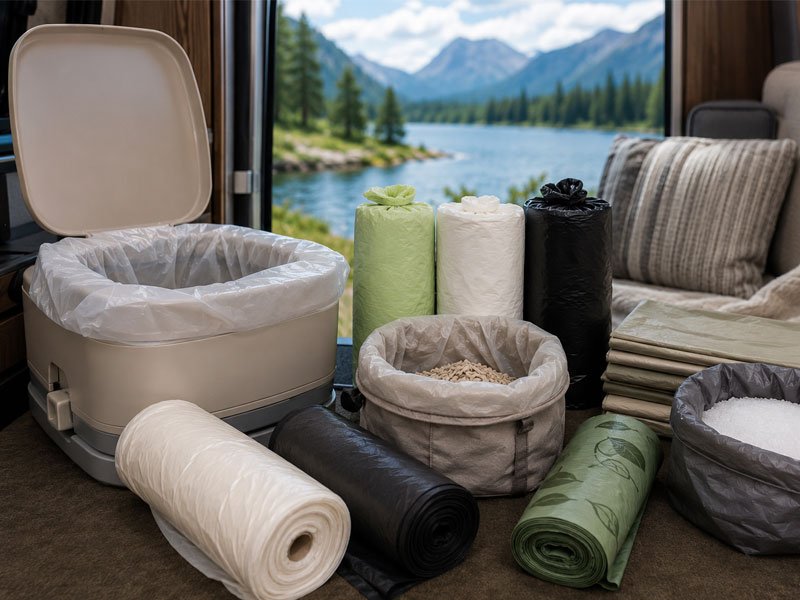
What Types of Portable Toilet Bags Are Used in RV & Van Life?
There is no single “best” portable toilet bag.
Different travel systems use different solutions.
The most common options include:
- compostable toilet bags
- PE plastic liners
- heavy-duty portable toilet liners
- absorbent waste bag systems
- short-cycle camping toilet bags
Some RV users prioritize environmental impact.
Others prioritize long-term leak resistance.
Some prioritize easy disposal during travel.
The correct choice usually depends on:
- trip duration
- storage conditions
- weather
- disposal access
- toilet system design
This is one reason why many buyers begin researching different types of compostable portable toilet liners before choosing a long-term RV sanitation setup.
Leak Resistance During Long RV Trips
This is probably the biggest issue.
Not certifications.
Not marketing claims.
Leaks.
Especially during:
- multi-day travel
- hot weather
- rough roads
- temporary storage
Many low-cost toilet bags fail because the film structure is unstable.
Or the seals are weak.
Or the thickness varies too much.
In real RV sanitation systems, sealing types and leakage risks matter far more than most people expect.
A bag may look thick online.
But weak sealing can still cause failures during transport.
I have seen cases where buyers focused only on price and ignored sealing performance completely.
That usually becomes expensive later.
Odor Control Inside Small Vehicle Spaces
Odor behaves differently inside a van than inside a normal bathroom.
Small enclosed spaces trap heat and humidity.
And once waste sits inside the vehicle for several hours, odor control becomes much more difficult.
Plastic liners usually provide stronger long-term odor containment.
Especially during:
- summer travel
- long parking periods
- high-humidity environments
Compostable toilet bags can still work very well.
But they are often more sensitive to heat and moisture exposure.
This is also why storage and transport conditions for compostable bags become much more important during RV travel than many users initially expect.
Sometimes the problem is not the bag itself.
It is the storage environment.
Compostable vs Plastic Portable Toilet Bags for Van Life
This discussion has become much bigger in recent years.
Especially as more RV travelers try to reduce traditional plastic waste.
Compostable toilet bags are usually designed for controlled disposal systems or shorter sanitation cycles.
Plastic liners are usually designed for maximum stability and easier long-term storage.
Both have advantages.
Both have limitations.
Compostable toilet bags may reduce conventional plastic waste.
But many users discover that disposal infrastructure still matters a lot.
Especially in remote areas.
Or during long off-grid trips.
That is why compostable vs plastic waste system compatibility has become an increasingly important discussion inside real portable sanitation systems.
Waste Storage Challenges During Hot Weather
Heat changes everything.
Especially inside parked vehicles.
During summer travel, interior temperatures inside RVs and vans can rise very quickly.
This affects:
- odor
- humidity
- waste stability
- bag performance
- sealing pressure
Many RV users underestimate how much temperature affects portable toilet systems.
Some lightweight toilet bags work perfectly during weekend trips.
But struggle during longer high-temperature travel conditions.
This is one reason why some biodegradable camping toilet bags are designed mainly for short-cycle outdoor use instead of long-duration storage environments.
What RV Users Often Get Wrong About Portable Toilet Bags
I noticed many first-time RV users assume toilet bags are all basically the same.
They are not.
Some bags are optimized for:
- lightweight portability
- short-term disposal
- emergency sanitation
- compact travel kits
Others are designed for:
- stronger sealing
- wet-load resistance
- multi-day storage
- commercial sanitation systems
A bag that works well for a weekend camping trip may not work well for long-term van life.
This is where many sanitation problems begin.
Not because the product is “bad.”
But because the system does not match the use environment.
Which Portable Toilet Bags Work Best for RV & Van Life?
There is no perfect universal answer.
But generally:
Compostable toilet bags work well for:
- short-cycle sanitation systems
- eco-focused travel
- campgrounds with composting programs
- temporary outdoor use
- users prioritizing reduced plastic waste
Plastic liners work well for:
- long-term storage
- extended RV travel
- high-temperature environments
- emergency backup systems
- users prioritizing maximum leak resistance
The better option usually depends on how the sanitation system is actually used.
Not just the material itself.
What OEM Buyers Should Check Before Sourcing Portable Toilet Bags
After working in compostable bag manufacturing for years, I noticed many buyers focus only on certifications.
But certifications alone are not enough.
The real operational questions are:
- How stable is the film?
- How strong are the seals?
- What is the thickness tolerance?
- How does the bag behave after humidity exposure?
- How long can it be stored?
- Is the bag optimized for short-cycle or long-term use?
Sometimes a product passes certification.
But still performs poorly in real travel conditions.
That creates bigger problems later.
Especially for distributors, importers, and private-label brands.
Conclusion
I used to think portable toilet bags were a very simple product.
Now I do not think that anymore.
The more I study RV and van life sanitation systems, the more I realize most problems are caused by mismatched expectations.
A bag may perform perfectly during a short camping trip.
And fail completely during long off-grid travel.
That is why portable sanitation should not be treated as a small accessory category.
It is part of the entire travel system.
Today, more manufacturers are beginning to realize that portable hygiene packaging systems require a balance between material performance, storage stability, disposal infrastructure, and real-world travel conditions.
That is where smarter sanitation decisions begin.