ASTM D6400 Compostable Bags
ASTM D6400 compostable bags for importers, distributors, food-waste programs and private-label B2B projects.
Custom sizes, thicknesses, printing and packaging with compliance documentation based on the final product specification.
What ASTM D6400 Means for Compostable Bags
ASTM D6400 is the standard specification used for plastics and plastic products designed to compost in municipal and industrial aerobic composting facilities.
For buyers, ASTM D6400 should be considered at the finished-product level. The bag being purchased—including its material, thickness and other components—should match the applicable test or certification documentation.
ASTM D6400 is a technical standard. It is not itself a product certification program.
For a detailed explanation of the standard and its technical requirements, see our ASTM D6400 compostable standard guide.
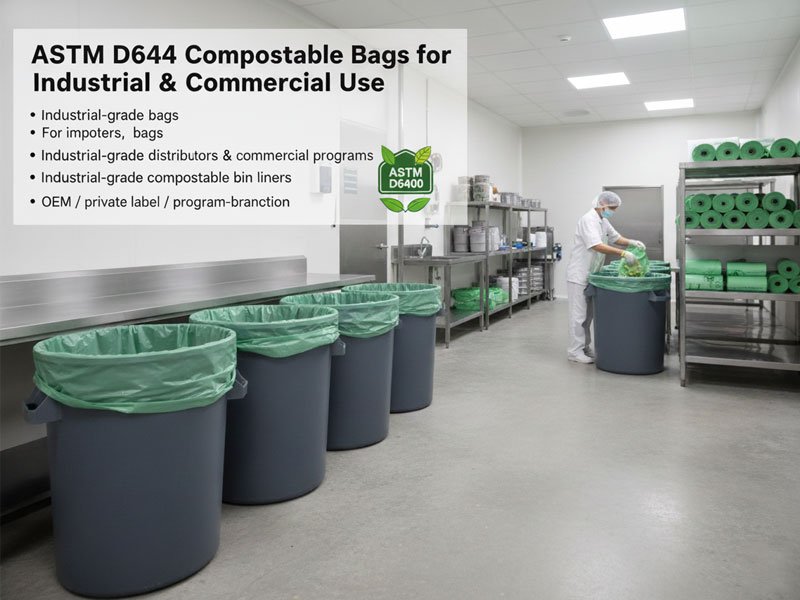
Typical use cases include:
- commercial food waste collection
- municipal organics programs
- industrial composting facilities
- hotels, restaurants, and institutional kitchens
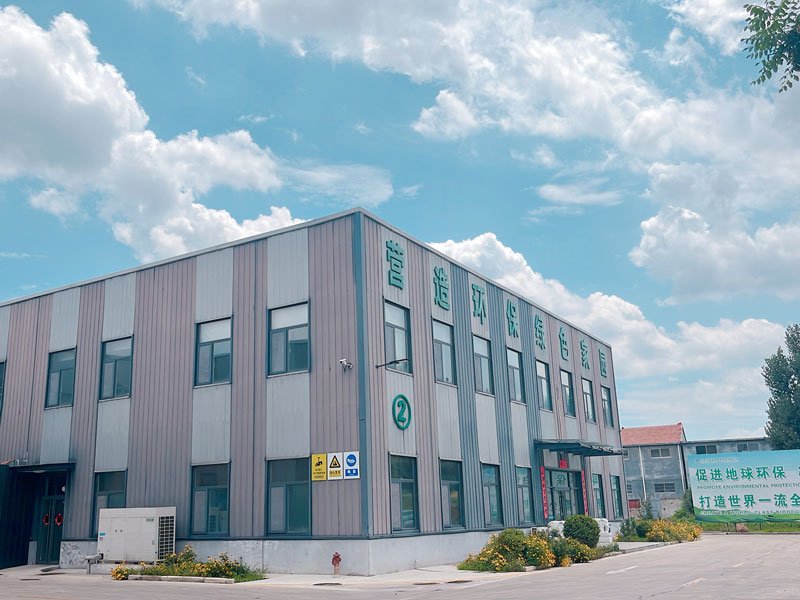
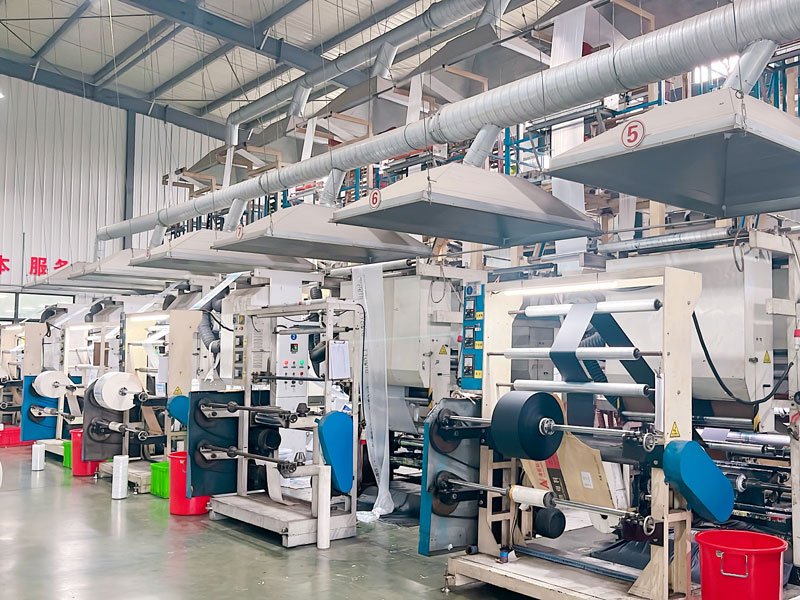
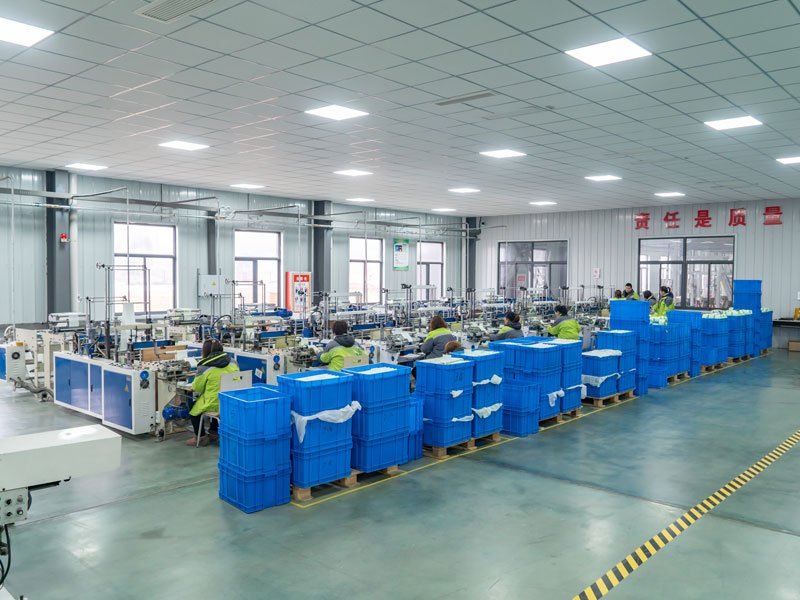
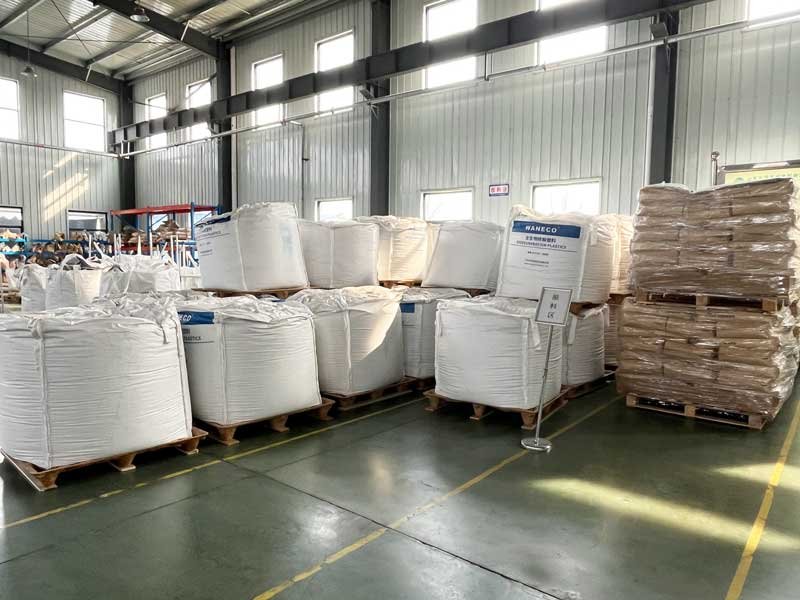
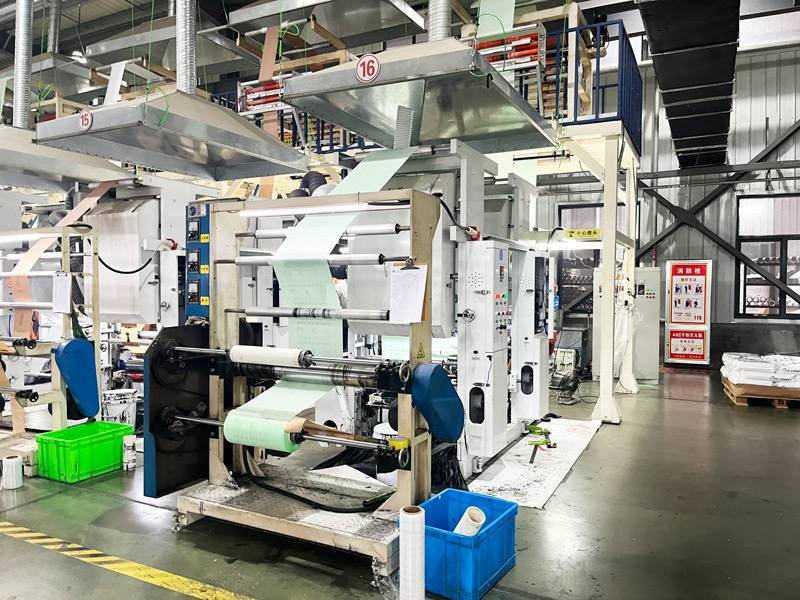
We manufacture ASTM D6400 compostable bags in our 20,000 m² factory, with 16 automated production lines dedicated to stable, long-term B2B supply.
Our focus is not small retail packs, but consistent quality at scale.
ASTM D6400 Compostable Bag Options
ORIZON manufactures compostable bag formats for commercial organics, food-waste collection and B2B distribution programs.
| Product Type | Typical B2B Application | Custom Options |
|---|---|---|
| Compostable bin liners | Commercial organic-waste collection | Size, thickness, roll count |
| Food-waste bags | Restaurants, hotels and commercial kitchens | Dimensions, thickness, packing |
| Kitchen caddy liners | Food-scrap collection programs | Bag size, roll format, printing |
| Large bin liners | Facilities and waste contractors | Capacity, thickness, carton packing |
| Yard & green-waste bags | Lawn, leaf and organic-waste programs | Size, thickness, printing |
| Custom compostable bags | Distributor and private-label programs | Specification and packaging |
Available ASTM D6400 test or certification coverage depends on the final product configuration.
A bag should not be described as ASTM D6400 compliant only because the manufacturer uses a compostable raw material.
Industrial composting systems are demanding.
Bags must stay strong during use, but still disintegrate during composting.
Generic biodegradable bags often fail because they:
- tear under wet food waste
- stretch or leak during daily handling
- break down inconsistently
ASTM D6400 Compostable Bags Are Used Because They:
- are designed for industrial composting conditions
- perform reliably with wet organic waste
- help reduce contamination risk
- are commonly specified in commercial procurement
For buyers managing food waste or organics at scale, ASTM D6400 compostable bags are a practical baseline choice.
ASTM D6400 vs BPI Certification
ASTM D6400 and BPI are closely related, but they are not the same thing.
| ASTM D6400 | BPI Certification | |
| What it is | Technical standard specification | Third-party certification program |
| Main role | Defines commercial compostability requirements | Verifies eligible finished products |
| Used for | Plastics designed for municipal / industrial composting | Certified compostable products |
| Public product listing | No ASTM-certified product catalog | BPI Online Product Catalog |
| Certification Mark | No ASTM product certification mark | BPI Certification Mark |
BPI uses ASTM D6400 as the base standard for its commercial compostability certification program.
BPI uses ASTM D6400 as the base standard for its commercial compostability certification program.
So when a buyer asks for an “ASTM D6400 certificate,” it is important to clarify what documentation is actually required:
- an ASTM D6400-related test report
- third-party BPI certification
- an official BPI product listing
- or another certification required by the receiving program
For BPI-specific projects, see our BPI certified compostable bags.
What to Verify Before Placing an Order
A compostable bag can look correct on a quotation while still creating problems later if the certification, finished specification and end-of-life requirements are not aligned.
Before issuing a purchase order, confirm the following.
1. Verify the Finished Bag
Check whether the documentation applies to the finished bag being quoted, rather than only to the resin or raw material.
2. Match the Specification
Confirm that the agreed dimensions, thickness, structure, color and printing match the reviewed product configuration.
3. Confirm the Required Certification
Some projects may require ASTM D6400 test documentation, while others specifically require BPI certification or additional acceptance programs.
Confirm this before product development.
4. Check the End-of-Life Program
Ask the receiving municipality, waste contractor or composting facility which compostable liners and certifications it accepts.
ASTM D6400 compliance should not be treated as automatic acceptance by every commercial composting facility.
5. Document the Approved Product
Keep a clear record of the approved bag specification, packaging and artwork so repeat orders can be manufactured against the same reference.
Customize the Bag Before You Finalize the Certification Claim
ASTM D6400 and BPI are closely related, but they are not the same thing.
B2B buyers rarely purchase only a standard bag.
They may need a different size, thickness, color, print design, roll count or retail package.
The important question is not simply:
“Can the factory manufacture it?”
The better question is:
“Does the final customized product still match the applicable ASTM D6400 test or certification scope?”
Before sampling, we recommend confirming:
- bag dimensions
- thickness
- material formulation
- color
- printing
- additives where applicable
- bag construction
- packaging format
- required certification
If the requested configuration differs from an existing tested or certified product, the compliance requirements should be reviewed before mass production.
This helps avoid completing artwork, packaging and tooling only to discover later that the compliance claim needs to change.
Will the Composting Facility Accept the Bag?
This is one of the most important questions for ASTM D6400 compostable bag projects.
Meeting a compostability standard and being accepted by a specific composting facility are related, but they are not identical.
Commercial composters may operate different systems and may have different policies for compostable plastics.
Some programs accept BPI-certified liners. Others may require additional product approval or field-testing programs. Some facilities do not accept compostable plastic bags at all.
For municipal, food-waste or institutional projects, confirm the receiving composting system before selecting the bag and certification route.
The correct sequence is:
End-of-Life Program
- Accepted Certification
- Bag Specification
- Testing / Certification Review
- Sample
- Production
This is safer than selecting a bag first and checking disposal requirements after the order has already been produced.
Documentation B2B Buyers Should Request
The right documentation depends on the project rather than on a standard checklist supplied with every shipment.
For procurement review, buyers may need:
| Document | What It Helps Verify |
| ASTM D6400-related test report | Whether the tested configuration meets the required standard |
| BPI certification / listing | Third-party certification where required |
| Finished-product specification | Size, thickness and construction |
| TDS | Technical product information |
| Artwork approval | Final printed configuration |
| Batch information | Production traceability |
| Packing specification | Roll, carton and pallet configuration |
The information on the quotation, approved sample and compliance documents should describe the same product.
If they do not, ask the supplier to clarify the difference before placing the order.
From Sample Approval to Repeat Supply
Certification is only one part of a successful B2B program.
Importers and distributors also need future orders to match the product they originally approved.
For new projects, samples can be used to confirm:
- dimensions
- thickness
- film feel
- bag construction
- roll format
- printing
- packaging
After approval, the confirmed specification can become the production reference for repeat orders.
Standard production MOQ is typically around 500 kg per size or design, with the final MOQ depending on specification, printing and packaging requirements.
For annual or multi-SKU programs, buyers can also provide forecast volume and delivery schedules for production planning.
B2B Compostable Bag Manufacturing
- 16 years of compostable bag manufacturing
- Industrial-scale production with 16 automated lines
- B2B-oriented MOQ and production planning
- OEM and private-label experience
- Stable, repeatable supply for long-term programs
- Export packaging optimized for North America
For more information about our production process and factory verification, visit our compostable bag factory.
FAQ
No. ASTM D6400 is a technical standard, while BPI is a third-party certification program.
BPI uses ASTM D6400 as the base standard for its commercial compostability certification, but a supplier should not claim that a product is BPI certified simply because it has ASTM D6400 test documentation.
If BPI certification is required, verify the exact finished product through the applicable BPI documentation or official product listing.
Ask for documentation that can be compared directly with the product being quoted.
Check the finished bag specification—including product type, thickness and other relevant configuration details—against the applicable test or certification records.
A raw-material certificate alone should not automatically be treated as proof that every finished bag made from that material meets ASTM D6400.
Customization is possible, but the compliance impact should be reviewed.
Changes to thickness, material formulation, printing, additives or product construction may affect whether the new finished product still matches an existing tested or certified configuration.
Confirm the final specification before mass production rather than assuming every custom version has the same compliance status.
No. ASTM D6400 defines requirements for plastics intended for municipal and industrial aerobic composting, but individual composting facilities and organics programs decide which products they accept.
Always confirm the receiving facility's requirements before purchasing bags for a commercial organics program.
ASTM D6400 is intended for municipal and industrial aerobic composting conditions, not as a home-compostability standard.
If home compostability is required, buyers should request certification specifically intended for home-composting conditions rather than assuming ASTM D6400 provides the same claim.
It depends on the customer, municipality and composting facility.
ASTM D6400 defines compostability requirements. BPI provides third-party product certification based on ASTM D6400 for eligible products, while programs such as the Compost Manufacturing Alliance may add facility-oriented testing or acceptance requirements.
Before choosing the certification route, ask the receiving program what it specifically requires.
Discuss Your ASTM D6400 Compostable Bag Project
Tell us your bag type, size, thickness, quantity, packaging and destination market.
If the project has specific ASTM D6400, BPI or composting-facility requirements, include them before sampling.
We can review the product specification and manufacturing options before quotation.
Wholesale, OEM and private-label B2B supply are available for qualified projects.