I deal with packaging buyers every week. Most of them ask the same question in different ways: Should we switch to paper bags, or are compostable plastic bags a better choice?
As a manufacturer with 16 years of experience producing compostable plastic bags, this guide isn’t about marketing or environmental slogans. It provides a pragmatic comparison of compostable plastic bags and paper bags from a B2B sourcing and performance perspective. If you’re responsible for packaging decisions—including cost, storage, complaints, and compliance—then this page is for you.
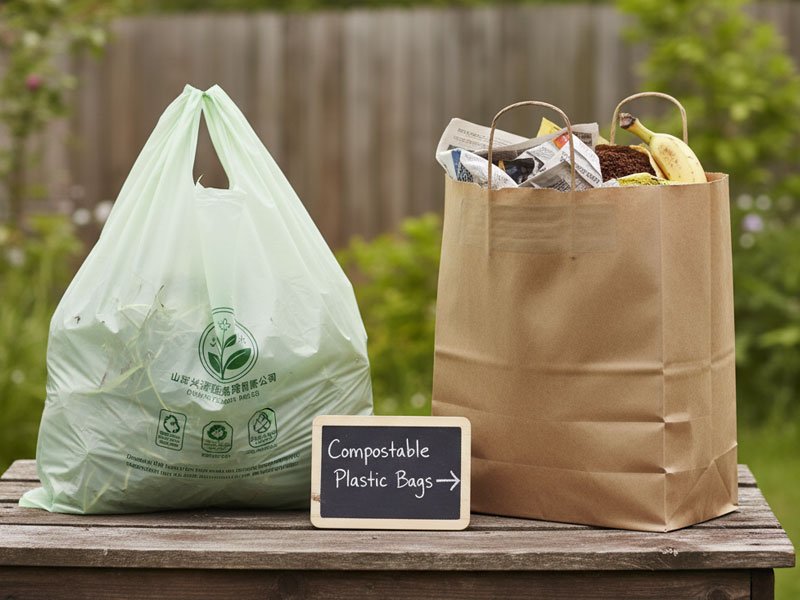
What Do We Mean by “Compostable Plastic Bags” and “Paper Bags”?
Before we compare, we need to define terms clearly.
Many online discussions mix them up.
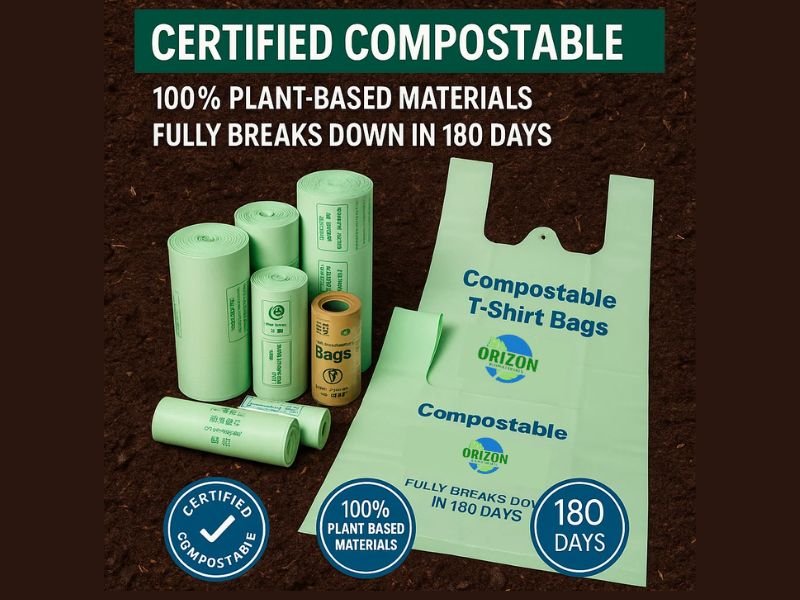
Compostable Plastic Bags (Film-Based)
When I say compostable plastic bags, I mean:
- Flexible film bags made from PLA, PBAT, and starch blends
- Certified under industrial composting standards such as EN 13432 or ASTM D6400
- Designed to carry weight, resist tearing, and handle moisture
These are often called compostable film bags or compostable bioplastic bags.
Important note: compostable does not automatically mean home compostable.
Most certified compostable plastic bags require industrial composting conditions.
External reference: European Bioplastics – What is industrial composting
Paper Bags
Paper bags usually mean:
- Kraft paper or recycled paper bags
- Rigid structure
- Often accepted in composting systems, depending on coatings and inks
Paper bags feel simple and familiar. But performance depends heavily on humidity, storage, and load type.
Material Comparison for Compostable die cut plastic Bags
See how our compostable bags compare to other materials in terms of strength, durability, and environmental impact.
| Feature | Our PLA+PBAT Bags | Pure PLA Bags | Paper Bags | Traditional Plastic |
|---|---|---|---|---|
| Max carry weight | 8-12 kg | 3-5 kg | 5-7 kg | 10+ kg |
| Wet strength | High | Low | Gets soft | Excellent |
| Home compost | Yes (120-180 days) | Rarely | Yes | Never |
| Reusable times | 8-15 times | 1-3 times | 1-2 times | Many times |
| Feel | Soft, plastic-like | Crisp | Rough | Plastic |
Strength & Load Performance (Dry vs Wet Conditions)
This is where many purchasing decisions are actually made.
Dry Load Performance
In dry conditions:
- Paper bags can carry light to medium loads well
- Compostable plastic bags offer higher tear resistance at the same thickness
For boxed or dry retail items, both materials can work.
Wet Load & Humidity Exposure
Once moisture is involved, the difference becomes clear.
Paper bags:
- Lose strength when exposed to rain, condensation, or food residue
- Can soften and deform under weight
Compostable plastic bags:
- Maintain structure in wet conditions
- Perform better for food, takeaway, and high-humidity environments
This is one reason many retailers still rely on compostable plastic bags instead of paper in rainy regions or cold-chain logistics.
Storage, Humidity & Shelf Stability in Real Supply Chains
This is a topic most comparison articles skip—but buyers cannot.
From my experience, storage issues cause more complaints than bag breakage.
Paper bags:
- Sensitive to warehouse humidity
- Can warp or weaken during long storage
- Require stricter storage control
Compostable plastic bags:
- More stable in standard warehouse conditions
- Stack efficiently
- Handle long shipping and storage cycles better
If your distribution chain includes coastal regions, seasonal humidity, or long inventory cycles, this matters.
Printing Quality & Branding Consistency
Brand owners often underestimate this point.
Paper bags:
- Good surface feel
- Print quality depends on paper grade
- Ink absorption can vary by batch
Compostable plastic bags:
- More consistent printing across production runs
- Better color control for logos and branding
- Suitable for private label programs
Printing coverage and ink type must still meet compostability rules.
External reference: TÜV Austria – Compostable product certification rules
Packaging Efficiency: Space, Weight & Logistics Cost
This is where numbers quietly add up.
Paper bags:
- Take more space per unit
- Increase shipping volume
- Require more warehouse space
Compostable plastic bags:
- Compact when packed
- Lower shipping volume per unit
- Easier to handle in high-volume distribution
I often tell buyers:
Even if unit cost looks similar, logistics efficiency changes the real cost.
Compostability Conditions: Industrial vs Practical Reality
This is one of the most misunderstood areas online.
Industrial Composting Requirements
Certified compostable plastic bags require:
- Controlled temperature
- Proper humidity
- Time and microbial activity
These conditions exist in industrial composting facilities, not backyard compost piles.
External reference: BPI (Biodegradable Products Institute) – How compostable products work
Common Misunderstandings
A common belief is:
“Paper always composts better than compostable plastic.”
In reality:
- Acceptance depends on local composting systems
- Some facilities reject thick paper or printed paper bags
- Certification and local rules matter more than material labels
This is why buyers must check regional acceptance, not just material type.
Cost Stability at Scale (Without Quoting Prices)
I won’t list prices here. That would be misleading.
Instead, let’s talk about cost stability.
Paper bags:
- Influenced by pulp supply
- Sensitive to energy and recycling market changes
- Price swings can be sharp
Compostable plastic bags:
- Linked to biopolymer supply
- More predictable at contract scale
- Better suited for long-term sourcing plans
For large-volume buyers, price stability often matters more than unit price.
Which Is Better for Retail Packaging? (Scenario-Based Summary)
There is no single “better” choice—only better choices for specific use cases.
In practice:
- Wet or humid environments → Compostable plastic bags
- Food, takeaway, cold chain → Compostable plastic bags
- Dry, lightweight retail → Paper or compostable plastic
- High branding consistency → Compostable plastic bags
- Long storage cycles → Compostable plastic bags
For retail carry applications, compostable plastic bags—such as die-cut handle bags—often provide better wet strength and storage stability than paper bags.
Final Takeaway for B2B Buyers
If you are choosing between paper bags vs compostable plastic bags, ask practical questions:
- Where will they be stored?
- Will they face moisture?
- How long is the supply chain?
- What does your local composting system accept?
There is no perfect material. There is only the right material for your real operating conditions.
FAQ (For Buyers)
Are compostable plastic bags stronger than paper bags?
In wet or humid conditions, yes. In dry conditions, both can work.
Do compostable plastic bags break down at home?
Most certified compostable plastic bags require industrial composting.
Are paper bags always more environmentally friendly?
Not always. Impact depends on sourcing, use, and disposal systems.
Which is better for printed retail branding?
Compostable plastic bags offer more consistent print quality.