Sustainable packaging is no longer a niche topic. Driven by regulation, infrastructure development, and shifting procurement standards, packaging materials are undergoing a structural transformation.
This article explores the key trends shaping the future of sustainable packaging materials, with a focus on compostable, biodegradable, and bio-based solutions—and the realities behind them.
Rather than predicting a single “winning material,” the future points toward system-compatible, regulation-aligned packaging choices.
Why Sustainable Packaging Is Entering a New Phase
For years, sustainability in packaging was driven largely by marketing claims and consumer perception. Today, the landscape is changing.
Three forces are reshaping the market:
- Stricter regulations replacing voluntary claims
- Infrastructure-led decision making (what systems can actually process)
- Procurement accountability across supply chains
As a result, sustainability is moving from what sounds good to what actually works.
Key Trend 1: From “Biodegradable” Claims to System-Compatible Materials
One of the clearest shifts is the declining reliance on vague “biodegradable” claims.
While biodegradable materials can break down over time, the lack of defined conditions, timelines, and outcomes has made the term increasingly problematic in regulated markets.
Looking ahead, sustainable packaging materials are expected to:
- Align with specific waste treatment systems
- Demonstrate measurable end-of-life outcomes
- Avoid contamination of recycling and composting streams
This trend favors materials designed for known systems, rather than materials relying on undefined degradation.
Key Trend 2: The Growing Role of Compostable Packaging—With Limits
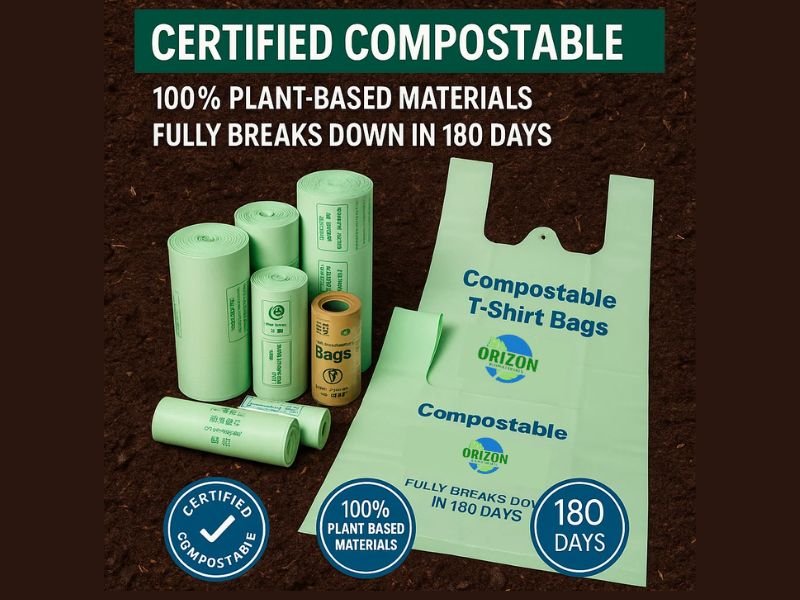
Compostable packaging is often seen as a cornerstone of sustainable packaging’s future, especially for food-contaminated applications.
However, its growth is not universal.
What is changing:
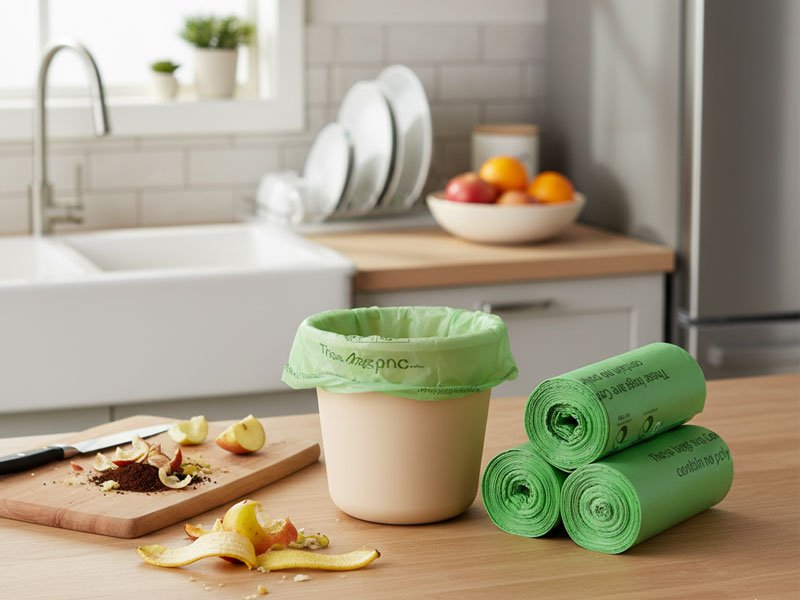
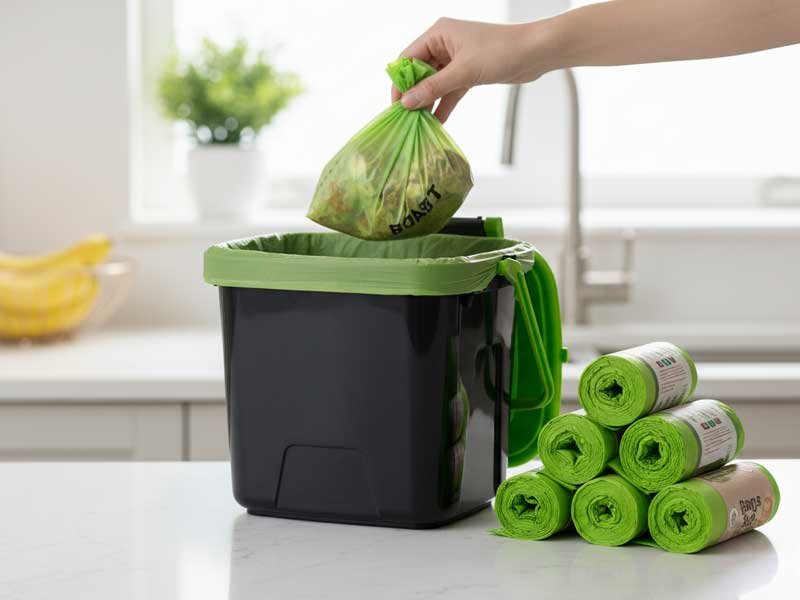
- Compostable materials are increasingly specified for food service, organics collection, and contaminated packaging
- Municipal composting infrastructure is expanding in many regions
- Certification standards are becoming procurement requirements rather than marketing extras
What remains a constraint:
- Compostable packaging depends on industrial composting access
- Not all regions accept compostable plastics, even when certified
- Incorrect disposal can undermine environmental benefits
The future of compostable packaging is therefore system-dependent, not universal.
Key Trend 3: Expansion of Bio-Based Packaging Materials
Bio-based materials—derived partially or entirely from renewable resources—are gaining attention as alternatives to fossil-based plastics.
Examples include materials based on:
- Polylactic acid (PLA)
- Polyhydroxyalkanoates (PHA)
- Fiber-based and hybrid structures
However, an important distinction is emerging:
Bio-based does not automatically mean biodegradable or compostable.
In the future, bio-based content is likely to be valued for:
- Carbon footprint reduction
- Feedstock diversification
- Partial substitution of fossil plastics
But end-of-life compatibility will remain the deciding factor.
Key Trend 4: Regulation Is Driving Material Choices, Not Preference
Regulatory pressure is now one of the strongest forces shaping sustainable packaging.
Common regulatory directions include:
- Restrictions on single-use plastics
- Requirements for certified compostability or recyclability
- Greenwashing enforcement against unverified claims
- Extended Producer Responsibility (EPR) frameworks
As regulations tighten, packaging decisions increasingly start with one question:
“What materials are allowed and accepted in this market?”
This shifts sustainable packaging from a branding decision to a compliance-led strategy.
Key Trend 5: Infrastructure Will Decide Winners and Losers
Perhaps the most overlooked factor in sustainable packaging discussions is infrastructure reality.
Packaging materials do not exist in isolation. Their environmental impact depends on:
- Collection systems
- Sorting technology
- Processing facilities
- Contamination thresholds
Future-proof packaging materials are those that:
- Match existing or expanding infrastructure
- Reduce system disruption
- Deliver predictable outcomes at scale
Materials that rely on ideal conditions but lack system support are likely to face resistance—regardless of how innovative they appear.
Compostable vs Biodegradable: A Necessary Clarification
As sustainable packaging evolves, confusion between compostable and biodegradable materials continues to surface.
While compostable materials are a regulated subset of biodegradable materials, the two are not interchangeable in practice.
Understanding this distinction is essential for evaluating future material trends.
For a detailed explanation, see: Compostable vs Biodegradable: Key Differences Explained
What This Means for Businesses and Procurement Teams
The future of sustainable packaging is not about choosing a single “best” material.
Instead, it requires:
- Aligning materials with real disposal systems
- Understanding regional acceptance rules
- Avoiding reliance on unverified environmental claims
- Building specifications around certification and infrastructure compatibility
Procurement teams are increasingly evaluated not just on sustainability goals—but on whether those goals translate into measurable, system-aligned outcomes.
Looking Ahead: Practical Sustainability Over Promises
The next phase of sustainable packaging will favor materials that:
- Work within existing waste systems
- Comply with tightening regulations
- Deliver consistent performance at scale
Innovation will continue, but credibility, compatibility, and compliance will determine which materials succeed.
Sustainability is no longer about what a package claims to be— it is about what actually happens after disposal.