Choosing the right waste bags is not just a material question. For food waste, organics collection, and municipal systems, the wrong bag can cause contamination, rejection, or compliance risks.
This page explains the real difference between biodegradable vs compostable waste bags, focusing on how waste bags are used, collected, and processed in real-world waste systems.
Why “Waste Bags” Need a Different Comparison
Waste bags are different from shopping bags or packaging films.
Most waste bags are used for:
- food scraps
- organic waste
- mixed household or commercial waste
After use, they usually end up in organics collection systems (FOGO) or landfill, not in open environments.
Because of this, material claims like biodegradable or compostable are judged by waste system performance, not by marketing language. In waste collection, where the bag goes matters more than what the bag is called. For a broader material-level explanation, see our guide on compostable vs biodegradable bags explained.
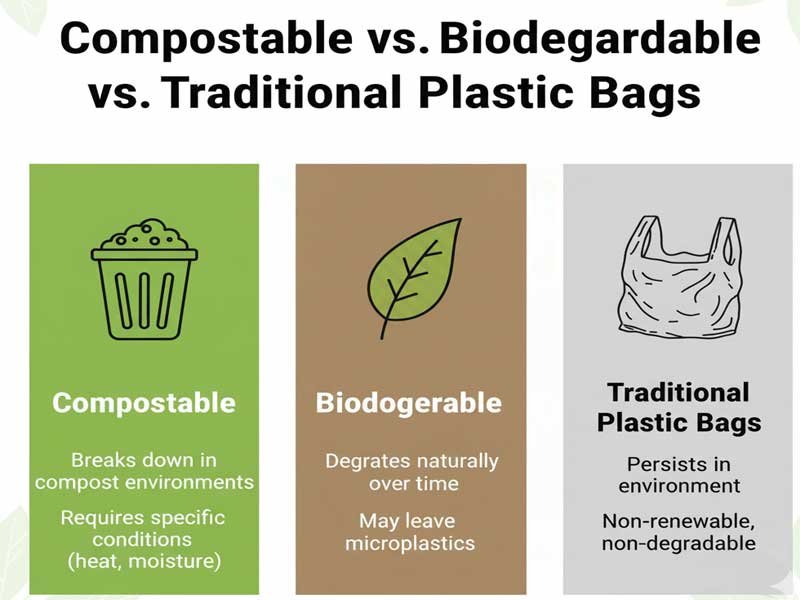
What Do “Biodegradable” and “Compostable” Really Mean?
Biodegradable Waste Bags
Biodegradable means a material can break down over time through natural processes.
However, the term does not clearly define:
- how long it takes
- what conditions are required
- what the final result is
For waste bags, this creates problems. In landfill or sealed waste systems, biodegradable trash bags may:
- break down very slowly
- fragment into smaller pieces
- leave residues that are hard to measure
For this reason, biodegradable waste bags are often seen as high-risk claims in regulated waste systems, especially when waste bag labeling and compliance requirements are not clearly defined.
Compostable Waste Bags
Compostable waste bags are designed to break down completely under specific composting conditions.
Certified compostable bags must:
- fully disintegrate
- convert into water, CO₂, and biomass
- leave no toxic residue
For waste bags used with food waste or organics, compostable materials are measurable, testable, and system-compatible when the correct certification is used.
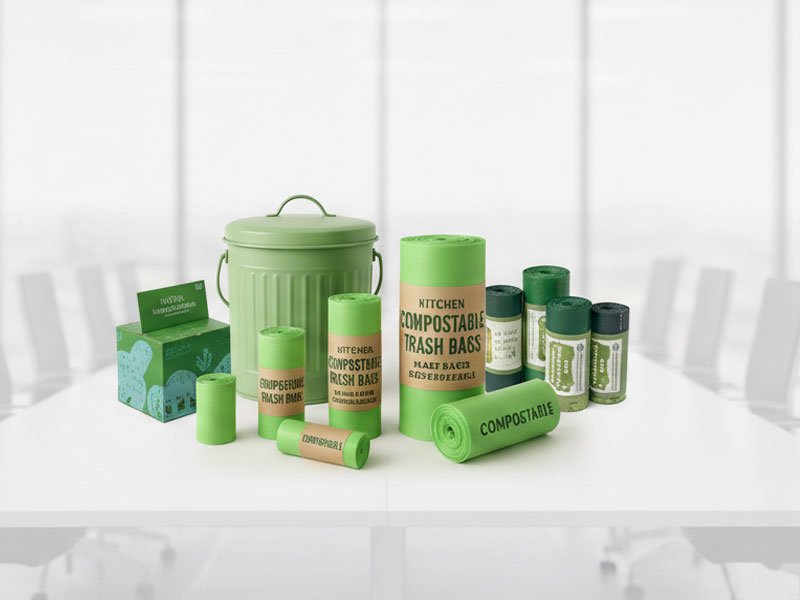
Where Do Waste Bags Actually End Up?
Food Waste & Organics Collection (FOGO, Caddy Liners)
In organics systems, waste bags are collected together with food waste and sent to industrial composting facilities.
Most councils and waste operators:
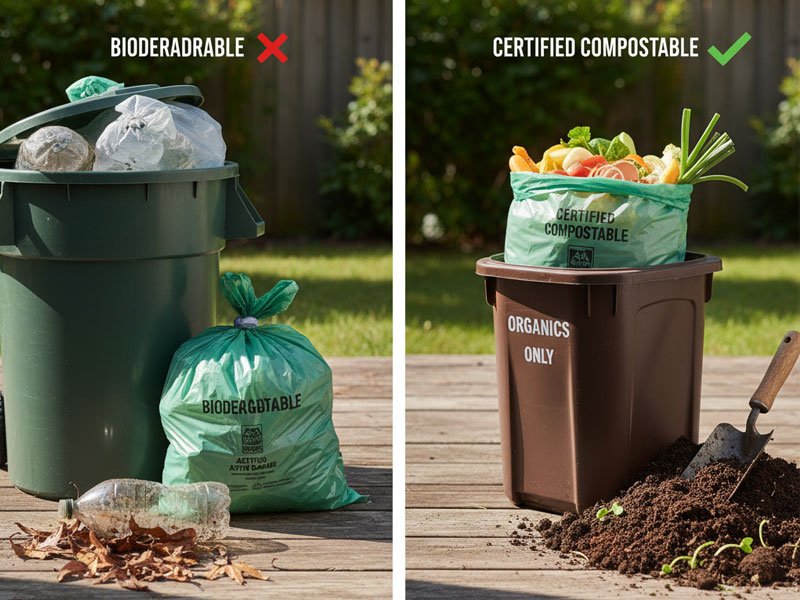
- reject biodegradable or degradable liners
- only accept certified compostable bin liners
- aim to reduce contamination in compost output
In this setting, the comparison between biodegradable vs compostable waste bags is simple:
Only compostable bags designed for organics systems are suitable, which is why councils typically require certified compostable bin liners for food waste and organics collection.
General Waste & Landfill
When waste bags go to landfill:
- oxygen is limited
- moisture is inconsistent
- decomposition is unpredictable
In landfill conditions, both biodegradable and compostable trash bags often:
- do not break down as expected
- provide little environmental benefit
This is why many waste authorities state that material claims do not change landfill outcomes.
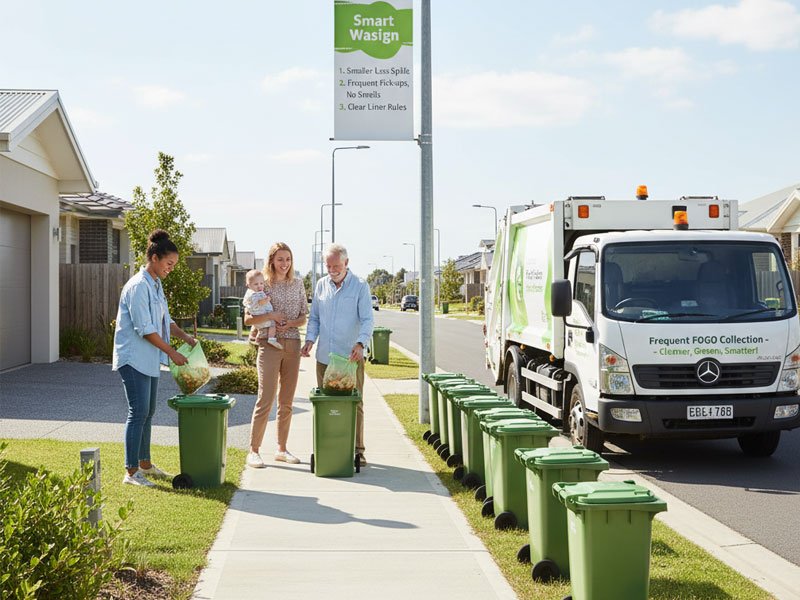
Council and Waste System Acceptance
Waste collection systems focus on contamination control, not marketing terms.
Many councils:
- do not accept bags labeled only as biodegradable, based on Australian council requirements for compostable waste bags and contamination control policies
- treat “degradable” or “oxo-degradable” as contamination risks
- require compostable liners to meet specific standards
For waste bags, acceptance is based on:
- certification
- compatibility with local facilities
- clear labeling
This is especially important for food waste and organics programs.
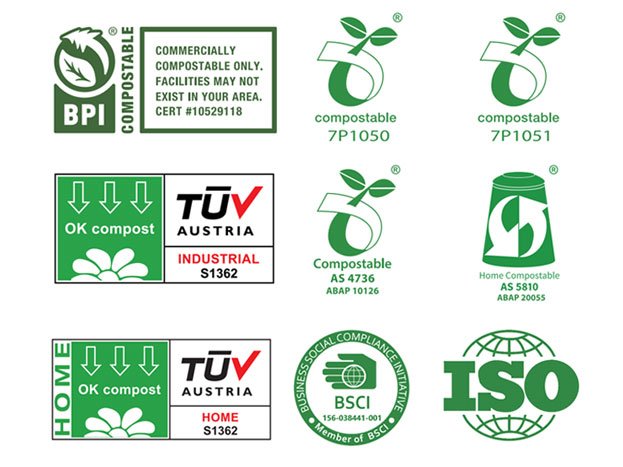
Certifications That Matter for Compostable Waste Bags
Compostable waste bags must match the type of composting system they enter. Common standards for compostable waste bags include EN 13432 certified compostable waste bags, ASTM D6400 compostable trash bags, and AS 4736 compostable bin liners for FOGO, depending on the target market and composting system.
These standards are commonly required for:
- compostable trash bags
- compostable bin liners
- organics and food waste collection
Home Composting Standards (Limited Use)
- AS 5810
- OK Compost HOME
Home compostable certification does not automatically mean acceptance in municipal organics systems. System rules always come first.
High-Risk Claims Buyers Should Avoid
For waste bags, some claims increase compliance risk.
Common high-risk labels include:
- biodegradable (without conditions)
- degradable
- oxo-degradable
- eco-friendly (without certification)
These terms often:
- lack clear end-of-life definitions and may confuse waste sorting, which is why biodegradable claims are often misleading in regulated waste systems.
- confuse waste sorting
- increase rejection by waste operators
For waste bags, certification matters more than wording.
How B2B Buyers Should Evaluate Waste Bags
When sourcing waste bags, buyers should focus on system fit, not slogans.
A practical checklist:
- Which waste stream will the bag enter?
- Is the bag accepted by local councils or operators?
- Does the certification match the composting process?
- Are material claims clearly supported by standards?
- Is labeling clear for users and waste handlers?
This approach reduces contamination risk and protects downstream waste systems, especially when sourcing compostable waste bags for distributors and large-scale buyers.

Why Manufacturers Focus on Certified Compostable Waste Bags
From a manufacturing and compliance perspective, waste bags are system products, not lifestyle products.
Certified compostable waste bags:
- are designed for known waste processes
- meet documented standards
- reduce confusion for collectors and processors
For this reason, many manufacturers avoid producing or promoting biodegradable waste bags for organics use.
Frequently Asked Questions
Are biodegradable waste bags accepted in organics bins?
In most cases, no. Organics systems usually require certified compostable liners.
Do compostable trash bags break down in landfill?
Not reliably. Compostable bags are designed for composting facilities, not landfill conditions.
Are compostable waste bags always better than biodegradable ones?
For food waste and organics systems, compostable bags with the right certification are the safer option.
Why do councils reject biodegradable bin liners?
Because biodegradable claims are hard to verify and may increase contamination.
Which certification should compostable waste bags have?
It depends on the market and waste system, such as EN 13432, ASTM D6400, or AS 4736.
For food waste applications, buyers typically choose compostable bin liners for food waste that match local organics system requirements.
Conclusion
When comparing biodegradable vs compostable waste bags, the key question is not the material name, but system compatibility. For waste collection, food waste, and organics programs, clear certification and correct end-of-life design matter more than marketing terms.