Compostable Packaging USA: Regulations, Labeling & Compliance
U.S. compostable packaging compliance involves more than choosing a compostable material or obtaining a test report.
Importers, distributors and brands need to consider environmental marketing claims, technical standards, third-party certification, state labeling requirements and the rules of the intended composting program.
How U.S. Compostable Packaging Compliance Works
There is no single nationwide rule that covers every compostable package, product and labeling situation.
For most B2B projects, compliance should be reviewed across three separate layers.
| Compliance Layer | What Buyers Need to Check |
|---|---|
| Environmental claims | Whether “compostable,” “biodegradable” or similar marketing claims are properly supported and qualified |
| Standards & certification | Which ASTM standard, certification program or finished-product verification applies |
| State & local requirements | Label wording, certification marks, colors, product identification and local program rules |
These layers are related but not interchangeable.
A product may meet an ASTM compostability standard and still require additional certification or labeling before it can be sold in a particular market.
Likewise, a certified compostable product is not automatically accepted by every composting facility.
Federal Guidance for Compostable Claims
At the federal level, environmental marketing claims are addressed through the FTC Green Guides.
A compostable claim should be supported by competent and reliable scientific evidence.
Businesses should also distinguish between home composting and commercial or municipal composting.
If a product cannot be safely composted at home, an unqualified “compostable” claim may create the wrong expectation. Claims may also need qualification when appropriate municipal or industrial composting facilities are not widely available.
Broad terms such as “green” or “eco-friendly” should also be used carefully. Environmental claims should describe the specific benefit that can actually be substantiated.
For B2B buyers, this means certification and technical documentation should support the claims that appear on the finished product and packaging.
ASTM Standards for Compostable Packaging
ASTM standards provide an important technical foundation for compostability claims, but they are not themselves product-certification programs.
ASTM D6400 is commonly used for plastics and plastic products designed for aerobic composting in municipal or industrial facilities.
ASTM D6868 applies to certain end items in which plastics or polymers are incorporated with paper or other substrates.
The appropriate standard depends on the finished-product construction and intended claim.
For detailed technical information, testing and requirements, see our ASTM D6400 standard and testing requirements.
BPI Certification & Product Verification
BPI is a third-party certification program commonly used for compostable products and packaging.
For procurement purposes, buyers should verify the exact finished product rather than relying only on a supplier statement such as:
“Made from BPI-certified material.”
A certified raw material does not automatically make every finished bag or package BPI certified.
Buyers should check the applicable product, SKU, thickness, printing and certification scope where relevant.
For certificate, supplier and product-level checking, see our BPI certification verification page.
Certification should also be separated from end-of-life acceptance. A BPI-certified product may still need to be approved or accepted by the receiving composting program.
State Compostable Packaging Labeling Requirements
State requirements can differ significantly.
A package that is acceptable in one market should not automatically be assumed to meet the labeling requirements of every other state.
California
California has specific requirements for products marketed as compostable.
Depending on the product type, requirements may include applicable ASTM specifications, certification marks, visual identification and restrictions on misleading environmental claims.
Compostable plastic bags have additional labeling requirements intended to distinguish them from conventional plastic bags.
Washington
Washington requires covered compostable products to follow specific labeling and identification rules.
Depending on the product, requirements can include third-party certification, the word “compostable,” approved color signals or striping, and inclusion in a producer declaration of compliance.
Different requirements apply to film bags, other film products and food-service products.
Minnesota
Minnesota also regulates compostable and biodegradable claims for covered products.
Beginning in 2026, covered products marketed as compostable must meet applicable certification requirements under the state framework.
Other States
Requirements continue to develop across different states and product categories.
Before launching a product nationally, buyers should review the rules that apply to the exact product and target markets rather than relying on one general U.S. specification.
For a broader state-by-state overview, see our U.S. compostable packaging laws guide.
Multi-State Compliance: What Buyers Need to Check
Multi-state programs create a different challenge from selling a product into one market.
A single bag design or retail package should not automatically be assumed to work across every state.
Before approving a national or multi-state SKU, review:
Target States:
- Product Type
- Compostability Claim
- Required Certification
- Labeling & Color Rules
- Certification Mark
- Artwork Approval
- Final SKU
- Supply Plan
This review is especially important when one product will be distributed through national retailers, distributors, food-service networks or institutional contracts.
Where state requirements differ, buyers may need to adjust artwork, product identification or SKU strategy before mass production.
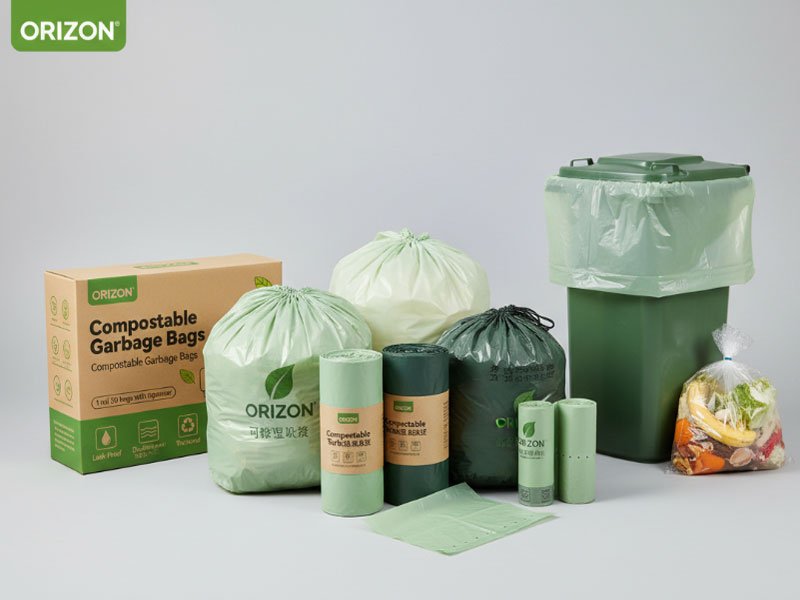
How Distributors Should Evaluate Compostable Packaging Vendors
For distributors and importers, supplier evaluation should go beyond factory capacity and price.
Verify the Finished Product
Ask whether the compliance documents apply to the actual finished product being quoted rather than only to the raw material.
Check Certification Scope
Compare the product type, dimensions, thickness, color, printing and SKU with the applicable certification or test documentation.
Review Target-Market Labeling
Provide the supplier with the states or markets where the product will be sold before approving artwork.
This can reduce the risk of producing packaging that later requires reprinting or redesign.
Confirm Artwork Before Production
Certification marks, compostability wording, disposal instructions and visual identification should be reviewed before mass production.
Control Repeat-Order Specifications
For long-term supply, maintain an approved specification covering the bag, printing, packaging and carton configuration.
Confirm End-of-Life Acceptance
Where the product is intended for a specific organics program, verify what that collection program or composting facility actually accepts.
Keep Traceable Documentation
Certification records, approved artwork, product specifications and production information should remain traceable for future supplier reviews and repeat orders.
What Compliance Documents Should Buyers Keep?
A good compliance file helps procurement teams demonstrate why a product was approved and makes future supplier reviews easier.
| Document | What It Helps Verify |
|---|---|
| Third-party certification | Supports the applicable compostability claim |
| Official product / SKU listing | Confirms the exact certified item where available |
| Product specification | Records dimensions, thickness and product configuration |
| Technical data sheet | Provides technical product information |
| Artwork approval | Confirms labeling and certification-mark usage |
| Test documentation | Supports applicable technical claims |
| Batch / production record | Supports traceability and repeat supply |
| Market compliance review | Records the labeling rules checked for target markets |
The quotation, approved sample, compliance documents and final production specification should describe the same product.
If they do not, the difference should be resolved before the purchase order is released.
Product Compliance vs Composting Facility Acceptance
One of the most common mistakes in compostable packaging procurement is assuming that technical compliance automatically guarantees disposal acceptance.
It does not.
A product can meet a recognized compostability standard or hold third-party certification while an individual composting facility chooses not to accept that product type.
Facilities may differ in:
- processing technology
- operating cycle
- contamination policy
- accepted feedstocks
- local collection rules
- certification requirements
For programs where the final composting destination is known, confirm facility acceptance before selecting the product.
The preferred order is:
End-of-Life Program
- Accepted Products
- Required Certification
- Product Specification
- Labeling Review
- Production
Planning a Multi-State Compostable Packaging Program
For distributors, retailers and private-label brands operating in multiple markets, compliance should be reviewed before packaging design is finalized.
A practical project sequence is:
1. Define the Product
Confirm the bag or packaging type, dimensions, material structure and intended application.
2. Define the Markets
Identify the states and distribution channels where the product will be sold.
3. Confirm the Required Claims
Decide whether the product will use claims such as commercial compostable, home compostable or another specific environmental statement.
4. Review Certification
Determine which finished-product certification or test documentation is required.
5. Review Labeling
Check certification marks, wording, color requirements and other market-specific artwork conditions.
6. Approve the SKU
Finalize the finished specification and artwork only after the compliance review.
7. Lock the Repeat-Order Specification
Use the approved SKU as the reference for future manufacturing and procurement.
This approach is usually more efficient than developing packaging first and reviewing compliance after tooling, printing plates or retail artwork are already complete.
Looking for Compostable Products for the U.S. Market?
For available bag categories, product specifications and B2B sourcing, see our compostable products for the U.S. market.
Certification, labeling and target-market requirements should be reviewed before finalizing custom specifications or printed artwork.
FAQ About U.S. Compostable Packaging Compliance
No single federal rule covers every compostable package and labeling situation.
Environmental marketing claims are addressed at the federal level through FTC guidance, while technical standards, third-party certification and state laws may create additional requirements.
Businesses should review the finished product and target markets rather than relying on one nationwide checklist.
There is no single labeling format that applies to every product in every state.
Requirements can depend on product type, certification, compostability claim and state law.
Some states require specific certification marks, the word “compostable,” color identification or other product markings.
Not necessarily.
State labeling requirements can differ, so a package developed for one market may need artwork, certification-mark or product-identification changes before being sold in another.
Multi-state programs should review target states before approving one national SKU.
No.
BPI certification provides third-party product verification, but state laws may impose additional labeling, color, wording or product-identification requirements.
Certification and labeling compliance should be checked separately.
Distributors should verify the exact finished product, applicable certification, product or SKU scope, technical specification, target-market labeling, artwork and repeat-order controls.
For products intended for a known organics program, end-of-life acceptance should also be confirmed.
No.
Technical compliance or certification does not require every composting facility to accept the product.
Individual facilities and collection programs can establish their own accepted-material policies.
Review Your U.S. Compostable Packaging Project
If you are developing compostable packaging for one or multiple markets, send us your product type, specification, target states, quantity and certification requirements.
We can review the manufacturing specification, printing requirements and available certification information before sampling or quotation.
For products requiring custom artwork, market requirements should be reviewed before mass production.