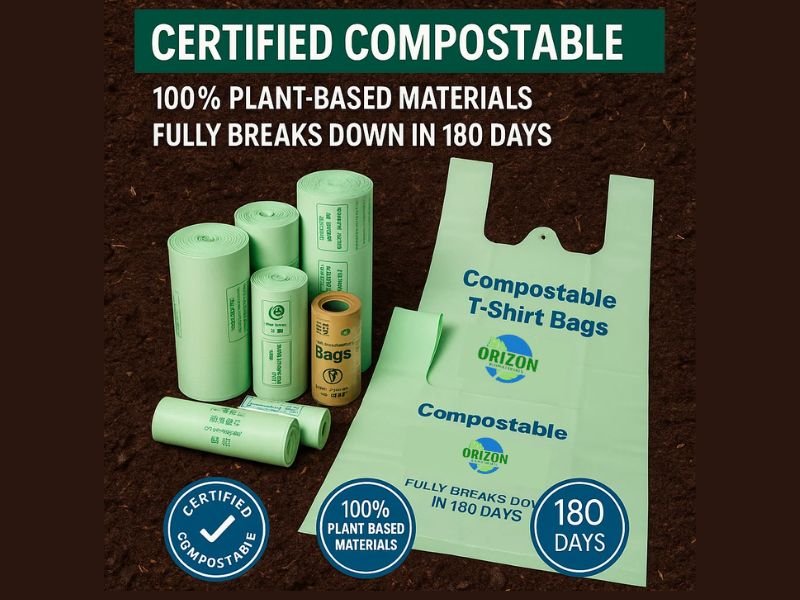
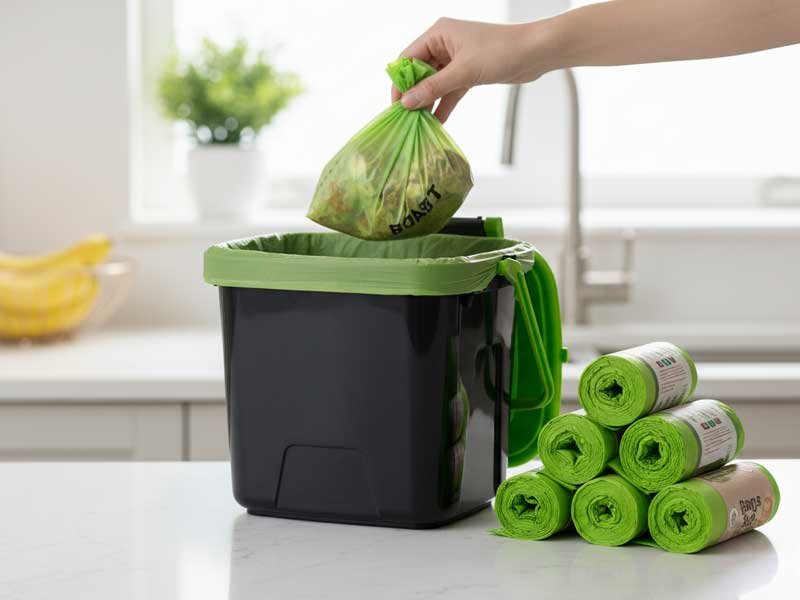
For clothing brands and apparel distributors, packaging is no longer just about protection—it is also about compliance, sustainability, and brand image.
Many businesses are now comparing compostable garment bags vs plastic to find a better alternative for retail, e-commerce, and export packaging.
But are compostable options really better? And what should buyers consider before switching?
This guide breaks down the key differences in materials, performance, and real-world applications.
What Are Compostable Garment Bags?
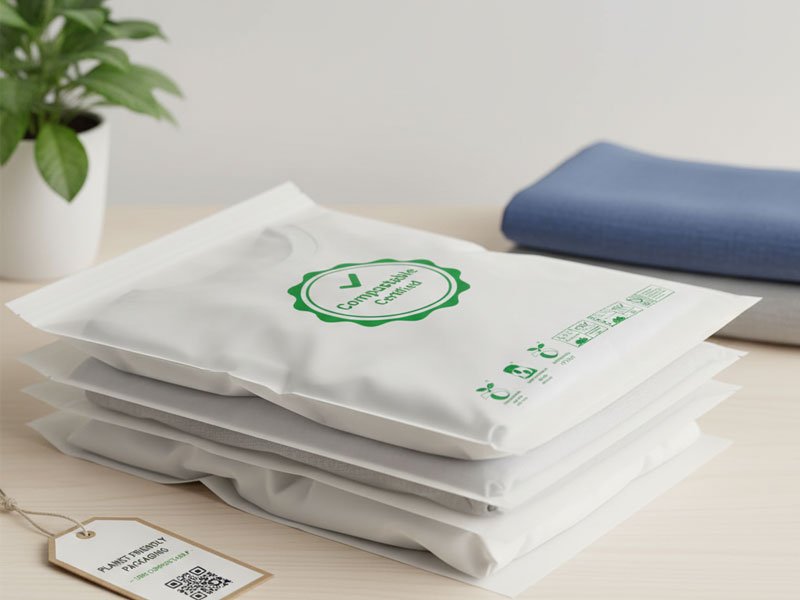
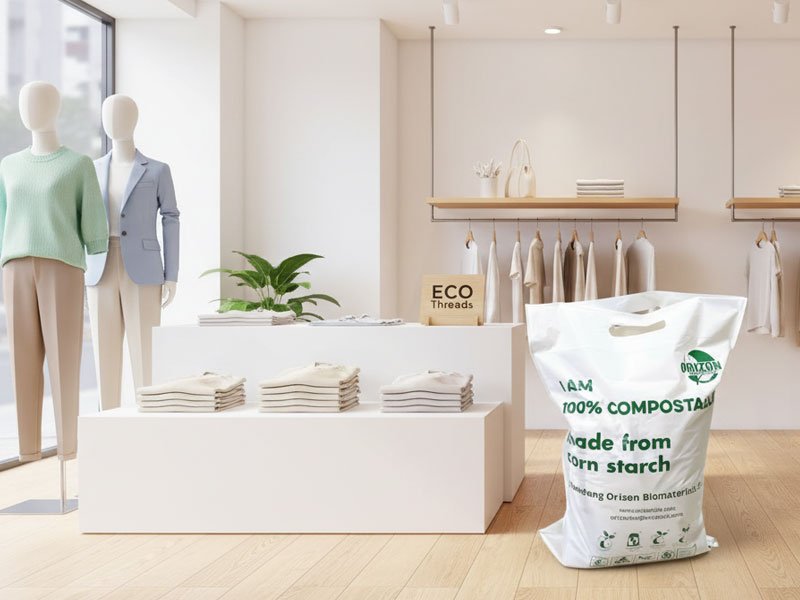
Compostable garment bags are packaging solutions made from plant-based materials such as PLA and PBAT, designed to break down in composting environments.
Unlike traditional plastic, these bags are developed to meet standards like EN 13432 or ASTM D6400, making them suitable for regulated waste systems.
Learn more about compostable garment bags for apparel packaging.
What Are Plastic Garment Bags?
Plastic garment bags are typically made from polyethylene (PE), a fossil-based material widely used in the apparel industry.
They are:
- Low cost
- Durable
- Widely available
However, they are not biodegradable and can persist in the environment for decades.
Compostable Garment Bags vs Plastic: Key Differences
1. Environmental Impact
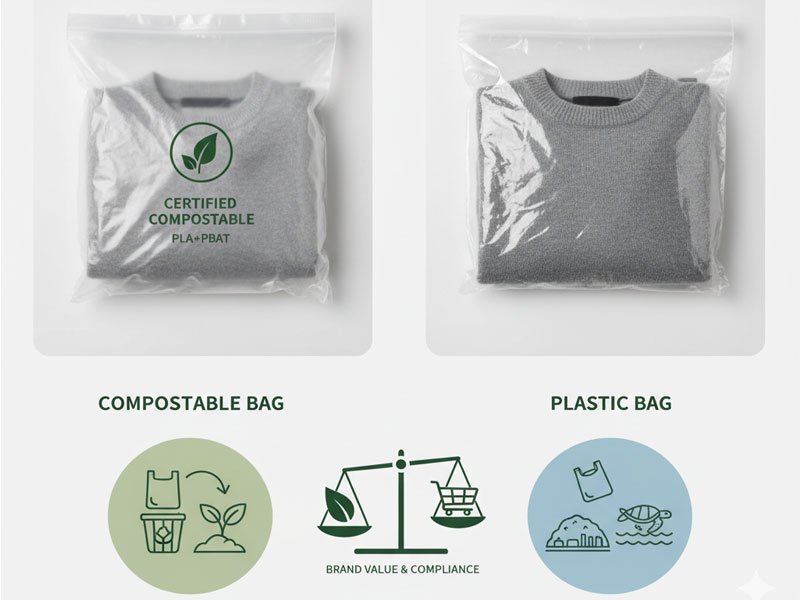
The most important difference between compostable garment bags vs plastic is how they behave after disposal.
- Compostable bags → break down in composting systems
- Plastic bags → accumulate in landfill or environment
For brands focused on sustainability, compostable packaging offers a clear advantage.
2. Compliance and Regulations
In many markets, especially the EU and Australia, packaging regulations are becoming stricter.
Compostable bags:
- Can meet EN 13432, AS4736, or BPI standards
- Are accepted in certain organic waste programs
Plastic bags:
- Increasingly restricted or taxed
- Often fail to meet sustainability requirements
See for compostable packaging.
3. Brand Positioning
Switching from plastic to compostable garment bags can significantly impact brand perception.
Consumers and retailers increasingly prefer:
- Sustainable packaging
- Certified compostable materials
- Transparent environmental claims
Using compostable packaging helps brands align with ESG goals and reduce greenwashing risks.
4. Performance and Durability
One common concern is whether compostable bags are strong enough.
In practice:
- Compostable films (PLA + PBAT) offer good flexibility
- Proper thickness ensures durability
- Suitable for apparel packaging and transport
See how thickness affects performance in compostable bag thickness guide.
5. Cost Considerations
Plastic bags are generally cheaper.
However, compostable garment bags:
- Add value to brand positioning
- Help meet compliance requirements
- Reduce long-term regulatory risks
For many brands, the decision is no longer just about cost, but about sustainability strategy.
When Should Brands Switch to Compostable Garment Bags?
Switching makes sense when:
- You sell in regulated markets (EU, AU, US)
- Your brand emphasizes sustainability
- You want to avoid future compliance risks
- You are building a premium or eco-conscious brand
Explore sustainable packaging for clothing brands.
Are Compostable Garment Bags Always the Better Choice?
Not always.
Compostable packaging works best when:
- Proper waste systems exist
- Certifications match local regulations
- Buyers understand disposal requirements
In some cases, incorrect use can reduce environmental benefits.
Read more: Do compostable plastics break down in landfill?
How to Choose the Right Supplier
When sourcing compostable garment bags, buyers should check:
- Certification (EN13432, BPI, AS5810)
- Film consistency and thickness
- OEM and customization capability
- Production capacity
Work with a reliable compostable garment bags manufacturer.
Conclusion
The comparison of compostable garment bags vs plastic is no longer just a technical discussion—it is a strategic decision.
Plastic may still offer cost advantages, but compostable garment bags provide clear benefits in sustainability, compliance, and brand positioning.
For apparel businesses looking ahead, compostable packaging is becoming the new standard.
FAQ
Are compostable garment bags better than plastic?
Compostable garment bags are better for sustainability and compliance, especially in regulated markets. However, plastic may still be cheaper for short-term use.
What is the difference between compostable and plastic garment bags?
Compostable bags break down in composting systems, while plastic bags remain in the environment for decades.
Are compostable garment bags strong enough for clothing packaging?
Yes. When designed with the right thickness and material blend, they provide sufficient strength for apparel packaging and transport.
Do compostable garment bags meet regulations?
Yes, when certified under standards such as EN13432, ASTM D6400, or AS4736.