Many brands now say they want better packaging.
That is a good start.
But when a buyer asks me about circular packaging, I know they are usually asking a bigger question:
“What happens to this package after it is used?”
For many years, packaging followed a simple path.
Take materials.
Make a product.
Use it.
Throw it away.
This is called a linear economy. It is simple, but it creates waste.
Recycling improves this system, but it does not solve every problem. Some packaging is too thin, too dirty, or too mixed with other materials to be recycled well. This is common with flexible packaging, bags, liners, and films.
That is why more B2B buyers are now looking at circular packaging.
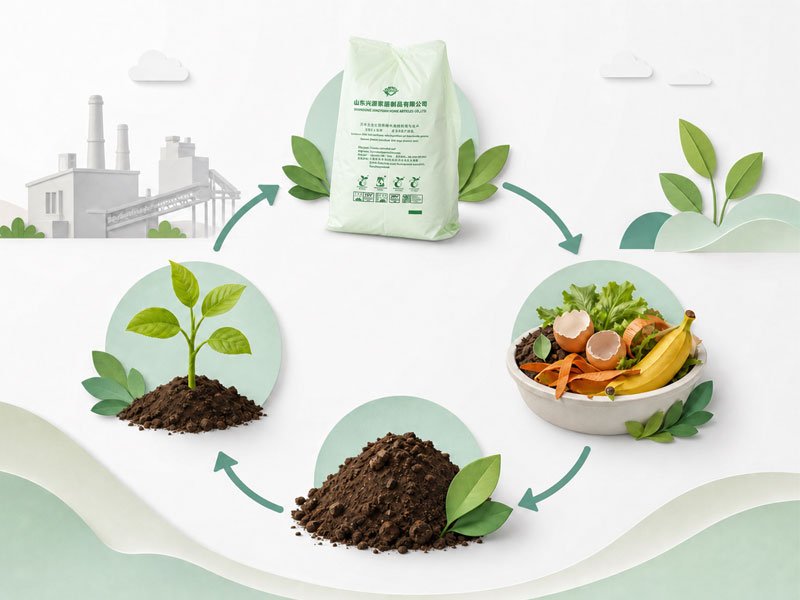
Circular packaging means the package is designed from the start to have a better end of life. It may be reused, returned, recycled, or composted.
The Ellen MacArthur Foundation explains circular economy with three main ideas: remove waste and pollution, keep materials in use, and help nature recover. You can read their overview here: Ellen MacArthur Foundation.
For compostable packaging, this matters a lot.
A bag should not only look “green.” It should fit a real system.
What Does Circular Packaging Mean?
Circular packaging is packaging made with its next step in mind.
That next step could be:
- reuse
- return
- recycling
- industrial composting
- home composting, when certified and suitable
- safe disposal through a local organic waste program
In simple words, circular packaging asks:
“Can this package stay useful after one use?”
For some products, reuse is best. For others, recycling works well.
But for some bag products, composting can make more sense. This is especially true when the bag is used with food scraps, organic waste, or other wet materials.
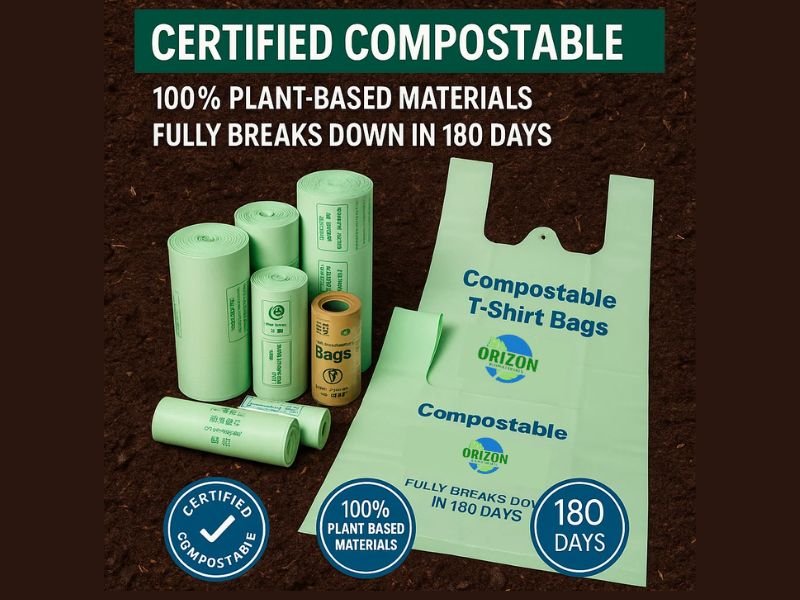
That is where certified compostable bags can play a role.
Why Recycling Alone Is Not Enough
Recycling is important.
We should not ignore it.
But recycling has limits. A clean bottle is easier to recycle than a thin bag with food waste inside. A single-material rigid package is easier to sort than a soft film or mixed flexible pack.
This is why “recyclable” does not always mean “actually recycled.”
For B2B buyers, this is an important point.
If your packaging enters a market where recycling systems cannot handle that material, the claim may not help much. It may also confuse end users.
The FTC Green Guides say environmental claims should be supported by reliable evidence. For compostable claims, companies should also be clear if a product needs a municipal or industrial composting facility. Source: FTC Green Guides.
This is not just a legal detail.
It is a trust issue.
Where Compostable Bags Fit in Circular Packaging
Compostable bags are not the answer for every package.
I would never tell a buyer that.
But they can be a good fit when the bag’s use matches a composting or organic waste system.
For example:
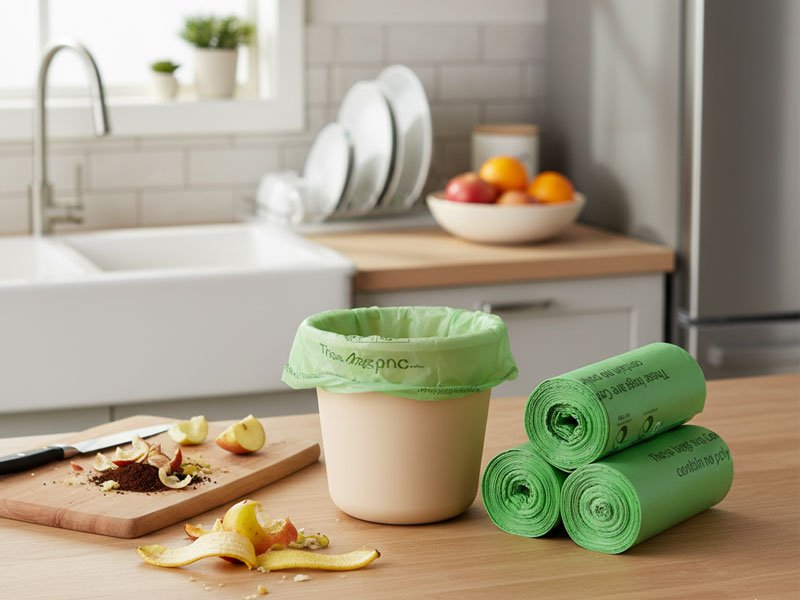
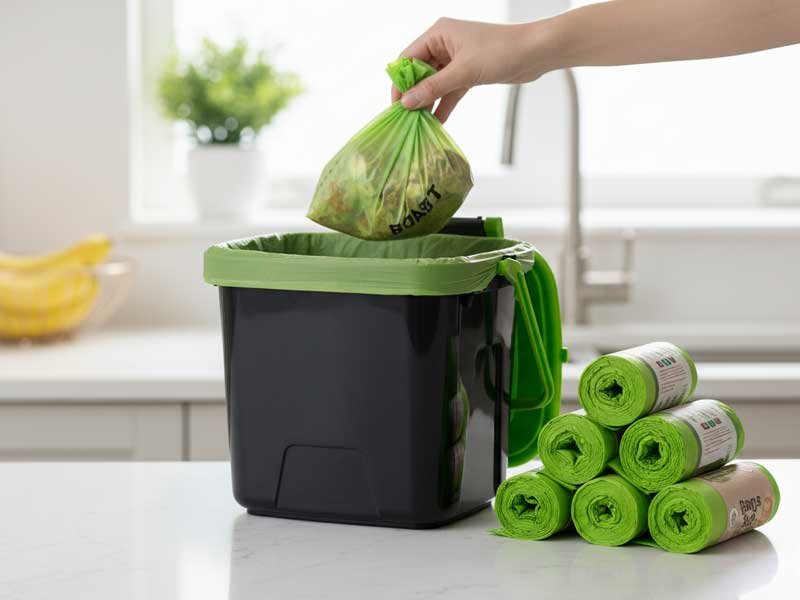
- compostable trash bags for food waste collection
- compostable produce bags for fruit and vegetable retail
- compostable shopping bags for supermarkets and grocery chains
- Compostable mailer bags for brands that want certified flexible packaging
- compostable garment bags for apparel supply chains
- compostable dog poop bags for pet brands, with clear local disposal guidance
In these cases, the value is not just the material.
The value is the full end-of-life plan.
That means the bag should be certified, clearly labeled, and matched to the right market.
Compostable Does Not Mean “Disappears Anywhere”
This is one area where I like to be very clear.
Compostable means a product can break down under composting conditions and meet a recognized standard.
It does not mean the bag will vanish quickly in the ocean, roadside soil, or a landfill.
For B2B buyers, this difference matters.
If you sell in the United States, buyers may ask about ASTM D6400 or BPI certification. BPI says its certification verifies that products meet ASTM compostability standards for North America. Source: BPI.
If you sell in Europe, buyers may ask about EN 13432 or OK Compost certification.
If you sell in Australia, buyers may ask about AS4736 or AS5810.
This is why we always tell buyers to check the target market before choosing the bag structure, thickness, printing, and claim language.
A good compostable bag manufacturer should help with this early.
Not after production.
What B2B Buyers Usually Care About
When a global B2B buyer contacts us, they do not only ask, “Is this eco-friendly?”
They ask more practical questions.
- Can the bag hold weight?
- Will it leak?
- Can it be printed with our logo?
- What certification can you support?
- What is the MOQ?
- Can you keep supply stable?
- Can we use this for retail, e-commerce, pet, or municipal programs?
These are fair questions.
A circular packaging idea is only useful if the product works in real life.
As a China-based OEM compostable bags supplier, we look at both sides: material compliance and daily use.
A compostable trash bag still needs strength.
A produce bag still needs good opening.
A mailer bag still needs seal strength.
A dog poop bag still needs leak control.
Circular design cannot ignore performance.
Our View as a Compostable Bag Manufacturer
We have worked in compostable bag manufacturing for 17 years.
Our factory covers 20,000 square meters, with 16 automatic production lines and about 500 tons of monthly capacity.
That matters for B2B buyers because circular packaging is not only a concept.
It needs stable production.
It needs repeatable quality.
It needs a supplier who can make the same bag again next month, next season, and next year.
We manufacture compostable garbage bags, compostable shopping bags, compostable produce bags, compostable mailer bags, compostable garment bags, and compostable dog poop bags for global B2B customers.
We do not sell to individual consumers.
Our work is mainly for importers, distributors, private-label brands, supermarkets, e-commerce packaging suppliers, pet brands, and waste management programs.
If you are planning a custom compostable bags project, the best time to talk about certification and disposal claims is before sampling.
That saves time.
It also reduces risk.
How to Choose the Right Circular Packaging Path
Before you choose compostable packaging, I suggest asking five simple questions.
- What will the bag be used for?
- Will the bag touch food waste or organic material?
- Which country or market will it be sold in?
- What composting or waste system exists there?
- What certification or labeling does the buyer require?
These questions help you avoid the wrong product.
For example, a supermarket produce bag and an e-commerce mailer bag may both be compostable, but they do not have the same job.
A garbage bag for food waste collection needs different strength than a light retail shopping bag.
A pet waste bag also needs careful wording, because local composting rules may not accept pet waste.
This is why a strong compostable packaging certification guide is useful for buyers before they place an order.
Circular Packaging Is a System, Not a Slogan
The best circular packaging is not made by changing one material and calling the job done.
It is made by connecting design, production, use, labeling, and disposal.
For compostable bags, that means:
- choosing the right certified material
- matching the bag to the use case
- printing clear disposal instructions
- avoiding vague “biodegradable” claims
- checking local composting rules
- working with a supplier who understands B2B production
This is a slower way to think.
But it is more honest.
And for long-term B2B buyers, honest is better than loud.
Conclusion
Circular packaging is not only about what a package is made from.
It is about where the package goes next.
Recycling has an important role. Reuse also has an important role. Composting can also have a role when the product, claim, and local system fit together.
If you are sourcing certified compostable bags for a brand, distributor, retailer, or municipal project, start with the end of life.
Then work backward.
That is how better packaging gets made.