Animal shelters handle pet waste every day.
Dog kennels need cleaning. Cat litter boxes need emptying. Pee pads need replacing. Bedding gets soiled. Outdoor yards need pickup. General bins fill up. Some areas may also create medical or sharps waste that must follow a separate route.
That is why animal shelter pet waste management is not only about picking up feces.
It is a daily workflow.
A good system helps staff and volunteers collect waste, contain it, move it, clean the area, restock supplies and keep records. It also helps shelters avoid leaks, odor, overfilled bins and last-minute supply shortages.
I like to look at shelter waste in a simple way:
What is the waste?
Where does it come from?
Which bag or liner should hold it?
Where does it go next?
Who checks that the job is done?
This guide explains how animal shelters can handle pet waste more efficiently by using clear waste streams, practical bag choices and simple routines.For the full solution category, visit our Animal Shelter Waste Management Solutions page.
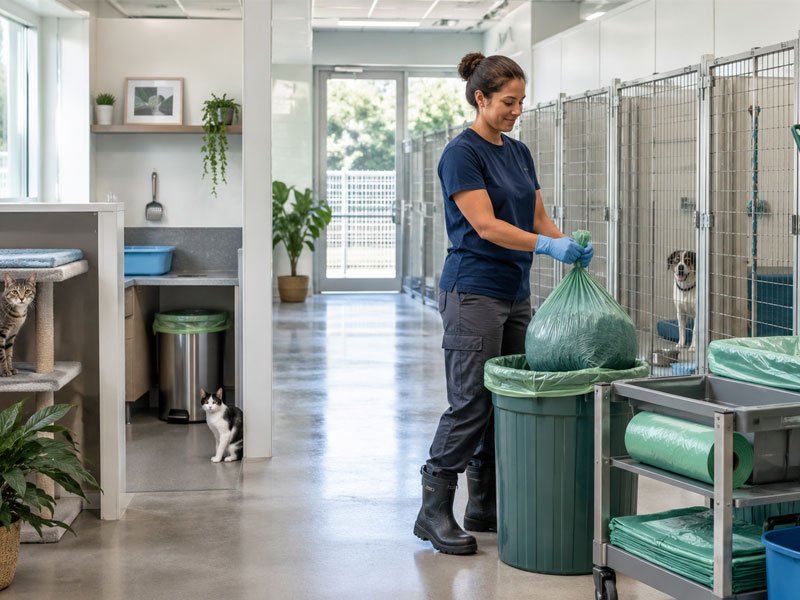
Why Pet Waste Management Matters in Animal Shelters
Animal shelters are busy places.
Animals arrive, move between areas, eat, sleep, recover, play, wait for adoption and sometimes need medical care.
Waste moves with that work.
If the waste flow is unclear, small problems build fast:
- kennels smell bad;
- cat litter bags tear;
- staff double-bag too often;
- outdoor yards become harder to clean;
- volunteers do not know which bin to use;
- dirty bedding crosses the clean supply route;
- and supplies run out before the next order arrives.
Shelter layout research has linked overcrowding with more disease spread and higher animal healthcare costs. The same research also points out that shelter layouts need to consider capacity, staff access and movement routes. Waste handling should be part of that same thinking.
This page does not replace veterinary guidance.
It focuses on the practical side: how waste moves through the shelter and how bags, liners and routines can make that work easier.
Main Waste Streams in an Animal Shelter
A waste stream is a group of waste that comes from the same task or needs the same handling route.
Do not treat all shelter waste as one thing.
A dog walking bag, a cat litter liner and a sharps container do not belong in the same decision.
| Waste stream | Common source | Handling consideration |
|---|---|---|
| Dog feces | Kennels, yards, walks | Quick collection and leak-resistant containment |
| Urine-soaked pads | Puppies, intake, medical cases | Leak control and frequent removal |
| Cat litter | Cattery, cat rooms, isolation | Weight, odor and bag strength |
| Soiled bedding | Dog and cat housing | Laundry or disposal route |
| Food waste | Feeding areas | Odor and pest control |
| General trash | Office, lobby, adoption area | Correct-size bin liners |
| Cleaning waste | Paper towels, wipes, gloves | Clear bin location and frequent removal |
| Medical waste | Clinic or treatment room | Local regulated disposal |
| Sharps | Needles, blades, veterinary tools | Approved sharps container |
This matters because each waste stream needs a different bag, liner, bin or container.
Some animal shelters receive donated supplies such as pet waste bags, pee pads, cat litter, paper towels, laundry detergent and garbage bags. That shows how often these items are used in daily shelter work. But donation lists are not the same as a stable procurement plan.
Shelters still need to know what they use, how fast they use it and which products fit each area.
Manage Waste by Shelter Area
The easiest way to build an animal shelter waste management plan is to walk through the shelter area by area.
Each zone has its own waste problem.
Dog kennels
Dog kennels may create:
- feces;
- urine;
- wet newspaper or pads;
- soiled bedding;
- used wipes or paper towels;
- general cleaning waste.
Kennel waste disposal should be quick and consistent.
For daily work, staff may need:
- easy-to-open waste bags;
- cart liners;
- bin liners;
- bags for soiled bedding;
- and clear collection points.
The bag should not be so weak that it needs double-bagging every time.
Double-bagging slows the team down. It also increases supply use.
Cat rooms and cattery areas
Cat litter is heavier than many people expect.
A small bag that works for dog walking may not work for litter disposal.
Cat litter waste management in a shelter should consider:
- litter weight;
- clumps;
- sharp litter edges;
- odor;
- leakage;
- and bag tie-off strength.
For cat rooms, I would test the bag with real used litter weight before approving it for routine use.
A bag may look strong when empty.
The real test is when it is half full of litter and being carried to the waste point.
Intake and holding areas
The intake area often deals with animals before their health status is fully known.
Waste here may include:
- feces;
- urine;
- used pads;
- food waste;
- cleaning paper;
- gloves;
- and bedding.
This area needs simple rules.
Use clear bags, bins or labels so staff and volunteers do not guess.
Where risk is higher, follow the shelter’s veterinary and local public health guidance.
Isolation or quarantine areas
Isolation areas should have a separate waste route.
Do not mix isolation waste into normal kennel waste unless your shelter protocol allows it.
A simple setup may include:
- dedicated bins;
- labeled liners;
- area-specific tools;
- clear tie-off rules;
- and a separate holding point.
The goal is not to make the system complicated.
The goal is to make the correct action obvious.
Outdoor exercise yards
Outdoor yards and dog walking routes need pet waste bags for shelters.
These bags should be:
- easy to open;
- large enough for normal use;
- leak-resistant;
- easy to tie;
- and stored where staff and volunteers can reach them.
If volunteers walk dogs off-site, rolls or small packs may be easier than loose bags.
For standard dog walking cleanup options, see our dog waste bags for shelters.
Laundry and soiled bedding
Soiled bedding should have a dirty-to-clean route.
That means dirty items should not cross the clean bedding shelf or food prep area.
Shelters may use larger bags to move:
- towels;
- blankets;
- soft bedding;
- washable mats;
- and other soiled textiles.
Some bedding goes to laundry.
Some must be thrown away.
The route should be clear.
Medical or treatment rooms
Medical waste is different from normal pet waste.
Sharps, used needles, blades, certain medical supplies and potentially infectious waste may need special containers and licensed disposal. Biomedical waste can include materials from the treatment of humans or animals, and discarded sharps are often treated as biomedical waste because they may cause injury or infection risk.
This page is not legal or veterinary medical advice.
Medical waste, sharps and potentially infectious waste should follow local veterinary, public health and licensed waste disposal requirements.
Do not handle them as normal shelter trash.
The Basic Animal Shelter Waste Workflow
A useful animal shelter pet waste management workflow can be simple.
Here is the basic route:
- Collect visible solid waste.
- Contain it in the correct bag or liner.
- Separate by waste type.
- Move it to the correct holding point.
- Clean visible soil.
- Disinfect according to the shelter protocol.
- Replace the liner, bedding or pad.
- Restock supplies.
- Record leaks, shortages or unusual problems.
The order matters.
Cleaning starts with removing waste.
Then the area can be cleaned and disinfected according to the shelter’s own protocol.
Bags and liners do not replace cleaning.
They help the team move waste out of the animal area quickly and with less mess.
Bag and Liner Selection for Animal Shelters
Shelter cleaning waste bags should match the job.
One bag type will not fit every area.
| Use case | Bag or liner requirement |
|---|---|
| Dog walking | Easy-open, portable, leak-resistant |
| Kennel spot cleaning | Small bags, cart liners or bin liners |
| Cat litter disposal | Stronger liner, weight and puncture resistance |
| Pee pad disposal | Leak control and odor containment |
| General bins | Correct bin fit and tear resistance |
| Soiled bedding | Larger bags for transport |
| Isolation area | Labeled or color-coded option |
| Foster kits | Compact rolls or small packs |
Dog walking bags
Dog walking bags need to open fast.
A volunteer should not have to fight the bag while holding a leash.
Check:
- size;
- opening;
- thickness;
- perforation;
- roll count;
- tie space;
- and carton packing.
Kennel liners
Kennel liners for animal shelters should be selected by bin or cart size.
A liner that is too small tears at the rim.
A liner that is too large wastes material and makes tie-off harder.
Check:
- bin width;
- bin height;
- rim shape;
- expected load;
- wet waste risk;
- and lifting method.
Cat litter waste bags
Cat litter is heavy and can be abrasive.
For cat litter disposal bags, test:
- puncture resistance;
- bottom seal;
- tie strength;
- odor containment;
- and lifting weight.
I would not approve a cat litter bag only by looking at film thickness.
The real test is filled litter.
Bin liners
General bin liners should fit the bin, not just the litre size.
Two bins with the same volume may have different shapes.
Check:
- rim size;
- liner overhang;
- bag length;
- bottom fit;
- and pull-out strength.
Soiled bedding bags
For bedding and laundry routes, the bag may need more capacity.
The goal is to move dirty textiles without touching clean supplies or dropping items in hallways.
If the bedding is washable, the bag is part of the laundry flow.
If the bedding is disposable, the bag is part of the waste flow.
Keep those routes separate.
Compostable, Recycled or Conventional Bags?
Animal shelters may ask for compostable, recycled-content or conventional bags.
There is no single best answer for every shelter.
The first question is practical:
Where will the waste actually go?
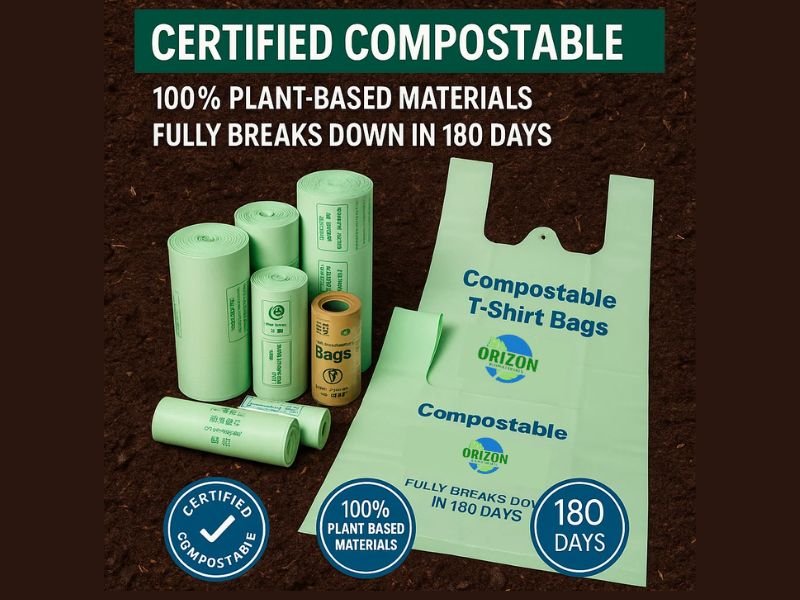
Compostable bags can be part of a shelter sustainability plan when the waste route supports that claim.
But many pet waste bags that are labeled compostable still end up in landfill when no suitable composting route accepts pet waste. TIME reported that industrial composting facilities in the United States often do not accept dog waste, so compostable dog waste bags may not be used as intended in many locations.
That does not mean compostable bags have no place.
It means the shelter should check:
- local disposal rules;
- facility acceptance;
- pet waste policy;
- certificate scope;
- storage conditions;
- and the final waste route.
Recycled-content bags may help reduce virgin plastic use in some general waste routes.
Conventional liners may still be required for certain heavy, wet or regulated waste streams, depending on local rules and shelter protocol.
For shelters, I would start with containment and correct disposal.
Then review the material option.
For compostability claims and market rules, see our compostable certifications.
Estimate Monthly Bag and Liner Demand
Shelters should not rely only on last-minute orders or donations for critical supplies.
A simple demand estimate helps prevent shortages.
Use this starting formula:
Monthly demand =
daily cleaning rounds × number of kennels
+ dog walking bags
+ cat litter disposal bags
+ pee pad disposal bags
+ laundry or soiled bedding bags
+ general bin liners
+ reserve stock
Example
A shelter has:
- 40 dog kennels;
- 2 main cleaning rounds per day;
- 30 dog walking bags per day;
- 25 cat litter disposal bags per day;
- 10 general bin liners per day.
Basic daily demand:
40 kennels × 2 rounds = 80 kennel-related bag uses
+ 30 dog walking bags
+ 25 cat litter bags
+ 10 bin liners
= 145 bag or liner uses per day
Monthly estimate:
145 × 30 days = 4,350 bag or liner uses per month
Then add reserve stock.
A practical reserve may cover:
- intake surges;
- adoption events;
- supplier lead time;
- delivery delays;
- seasonal illness periods;
- and disaster response.
Some shelters may hold two to four weeks of critical supply.
The right level depends on storage space, budget and supplier lead time.
Reduce Waste Without Reducing Hygiene
A shelter should not reduce waste by making cleaning harder.
The better goal is to remove waste that does not help hygiene.
Review:
- bag size;
- liner fit;
- thickness;
- double-bagging;
- carton packing;
- refill points;
- storage;
- and volunteer instructions.
Use the right size
Oversized liners waste material.
Undersized liners tear.
Measure the bin.
Test the fit.
Use the right thickness
A thinner bag may work for light waste.
It may fail for litter or wet bedding.
A thicker bag may be needed for heavy loads, but it can increase cost and storage space.
Test the real task.
Reduce double-bagging
If staff double-bag every time, the bag may not match the job.
Ask why.
Is the bag too thin?
Is the seal weak?
Is the waste too wet?
Is the bin too large?
Is the team using the wrong bag?
Solve the cause.
Keep supplies near the task
A bag that is stored far from the work area will be used less correctly.
Put the right bags near:
- kennel cleaning carts;
- cat rooms;
- outdoor yards;
- laundry areas;
- and isolation rooms.
Make the correct choice easy.
Staff and Volunteer Waste Handling Checklist
Shelters often rely on both staff and volunteers.
A system should be simple enough for a new volunteer to follow after training.
Post short instructions near each work area.
Basic handling checklist
- Use the assigned bag or liner for the area.
- Remove visible waste promptly.
- Tie or close the bag before moving it.
- Do not leave filled bags inside kennels.
- Place waste in the assigned bin or holding point.
- Report leaks, odor or broken bins.
- Restock bags after cleaning.
- Keep clean supplies away from dirty waste.
- Do not mix medical waste with general trash.
- Ask staff when the waste type is unclear.
One clear rule helps:
If you are not sure, stop and ask.
That is better than mixing waste streams.
Procurement Checklist for Shelter Waste Bags
Shelter buyers need more than a unit price.
Before quoting animal shelter waste bags, I would ask these questions.
Shelter profile
- How many dog kennels do you operate?
- How many cat rooms or cat cages do you use?
- Do you have intake, isolation or medical areas?
- Do you use outdoor yards?
- Do volunteers walk dogs off-site?
- Do you use pee pads?
- Do you wash bedding on-site?
Waste flow
- Which areas create the most waste?
- How many cleaning rounds happen each day?
- Where are waste holding points?
- Which bins are used?
- Which waste streams need separate handling?
- Which waste is handled by a licensed contractor?
Product details
- What bag sizes do you need?
- What bin sizes do you use?
- What thickness works for each task?
- Do cat litter bags need extra strength?
- Do outdoor dog walking bags need rolls?
- Do you need labels or color coding?
- Do you need compostable or recycled-content options?
Supply planning
- What is your monthly usage?
- What safety stock do you keep?
- How much storage space is available?
- Do you need bulk cartons?
- Do you need custom carton labels?
- What delivery schedule works best?
- Do you need samples before approval?
For bulk or OEM supply planning, review our OEM and bulk compotable bags.
Common Mistakes Animal Shelters Should Avoid
1. Treating all waste as one stream
Dog waste, cat litter, bedding, medical waste and general trash should not all be handled the same way.
2. Using weak bags for heavy litter
Cat litter needs strength.
A bag that works for office trash may fail with wet litter.
3. Oversizing every liner
A bigger liner is not always better.
It may waste material and make tie-off harder.
4. Forgetting outdoor walking bags
Shelters often focus on kennels and cat rooms.
Dog walking and exercise yards need their own stock.
5. Relying only on donations
Donations help.
But critical cleaning supplies should have a planned stock level.
6. No refill point for volunteers
If volunteers cannot find bags, the system slows down.
7. No record of bag usage
Without usage records, ordering becomes guesswork.
8. Mixing medical waste into general trash
Medical waste, sharps and potentially infectious waste need the correct route.
9. Confusing compostable with accepted
A compostable bag is useful only when the waste route supports it.
10. Not testing with real waste
A sample should be tested with the real task: litter, wet pads, kennel waste or outdoor cleanup.
Animal Shelter Pet Waste Management SOP Checklist
An SOP is a standard operating procedure.
In plain English, it is the written way a task should be done.
A shelter waste SOP does not need to be long.
It needs to be clear.
| SOP item | What to confirm |
|---|---|
| Area | Dog kennel, cat room, intake, isolation, laundry or outdoor yard |
| Waste type | Feces, litter, pads, bedding, food waste or general trash |
| Bag or liner | Size, thickness, material and color |
| Collection frequency | Scheduled cleaning and spot cleaning |
| Responsible person | Staff, volunteer or contractor |
| Disposal point | Bin, holding area, laundry or licensed waste route |
| PPE | Gloves or other shelter-required protection |
| Refill point | Where bags and liners are stored |
| Exception rule | What to do for leaks, odor, illness or unknown waste |
| Record | Usage, shortages, damage or incidents |
The SOP should answer one simple question:
What should the next person do?
If the answer is not clear, the SOP needs work.
Animal Shelter Waste Management Checklist
Waste streams
- Dog feces identified
- Cat litter identified
- Pee pad waste identified
- Soiled bedding route confirmed
- Food waste route confirmed
- General trash route confirmed
- Medical waste separated
- Sharps route confirmed
Shelter areas
- Dog kennels mapped
- Cat rooms mapped
- Intake area mapped
- Isolation area mapped
- Outdoor yards mapped
- Laundry area mapped
- Medical room mapped
- Waste holding points marked
Bags and liners
- Dog walking bags stocked
- Kennel liners selected
- Cat litter liners selected
- Pee pad disposal bags selected
- General bin liners fitted
- Soiled bedding bags selected
- Isolation liners labeled if needed
- Bulk cartons stored safely
Staff and volunteers
- Area instructions posted
- Refill points labeled
- Medical waste rule explained
- Leak reporting process clear
- Shortage reporting process clear
- Volunteer training includes waste flow
Procurement
- Monthly usage tracked
- Reserve stock defined
- Supplier lead time confirmed
- Sample testing completed
- Carton quantity confirmed
- Delivery schedule planned
- Material preference reviewed
- Disposal route checked
FAQ
What is animal shelter pet waste management?
Animal shelter pet waste management is the system used to collect, contain, separate, remove and track waste from kennels, cat rooms, intake areas, outdoor yards, laundry and other shelter spaces.
What types of waste do animal shelters handle?
Animal shelters may handle dog feces, cat litter, urine-soaked pads, soiled bedding, food waste, cleaning waste, general trash, medical waste and sharps. Each stream may need a different bag, liner, bin or disposal route.
How do shelters manage dog waste from kennels?
Shelters usually remove solid waste during scheduled cleaning and spot cleaning. The waste should be placed in the correct bag, cart liner or bin liner, then moved to the assigned waste point before cleaning and disinfection continue.
How should cat litter waste be handled in shelters?
Cat litter should be placed in a bag or liner strong enough for the weight and texture of used litter. The bag should resist tearing, hold odor reasonably well and be easy to close before transport.
What bags do animal shelters need?
Animal shelters may need dog waste bags, kennel liners, cat litter waste bags, pee pad disposal bags, general bin liners, soiled bedding bags and labeled bags for separated waste streams.
Can shelters use compostable bags?
Yes, but only when the bag performance and waste route support the claim. The shelter should confirm whether the local facility accepts the waste type and the compostable bag before using compostable claims in policy or purchasing.
How can shelters reduce odor from pet waste?
Remove waste quickly, use suitable bags or liners, close bags before moving them, keep bins serviced, separate dirty routes from clean areas and follow the shelter’s cleaning and disinfection protocol.
How do shelters estimate monthly waste bag use?
Start with the number of kennels, cleaning rounds per day, dog walking bags, cat litter disposal bags, pee pad disposal bags, bedding bags and general bin liners. Then add reserve stock for intake surges and supplier lead time.
Should medical waste be handled with normal pet waste?
No. Medical waste, sharps and potentially infectious waste should follow local veterinary, public health and licensed disposal requirements. They should not be mixed into normal pet waste or general trash.
What should be included in a shelter waste management SOP?
A shelter waste SOP should list the area, waste type, bag or liner type, collection frequency, responsible person, disposal point, PPE requirement, refill point, exception rule and record needed.
Build a Cleaner, Easier Waste Workflow
Animal shelter waste management works best when the system is simple.
Each area should have the right bag.
Each waste stream should have a clear route.
Each person should know what to do next.
That is the work.
Shelters do not need a complicated plan for every small mess. They need a practical system that staff and volunteers can repeat every day.
ORIZON supports animal shelter waste management solutions with dog waste bags, kennel liners, cat litter disposal bags, bin liners and bulk bag options for shelter operations.
For a complete shelter supply overview, visit our Animal Shelter Waste Management Solutions.