Apartment communities are becoming increasingly pet-friendly, and many property managers are adopting structured community pet waste management solutions to maintain cleaner and more enjoyable shared spaces.
Many residents now choose apartment complexes based on amenities that support pet ownership, such as walking trails, green spaces, and designated pet areas. While these features improve the living experience, they also create new responsibilities for property managers and maintenance teams.
One of the most common challenges is managing pet waste in shared outdoor spaces.
Unlike single-family neighborhoods, apartment communities often have higher population density and more concentrated pet activity. Dogs are typically walked along the same sidewalks, landscaped areas, and common routes every day. If pet waste is not collected and disposed of properly, complaints can increase quickly.
For many apartment managers, the question is not whether to install dog waste stations.
The real question is where they should be placed.
Poor placement often leads to low usage, unnecessary maintenance, and continued pet waste problems. Good placement makes disposal easier for residents and supports cleaner, more enjoyable community spaces.
This guide explains how apartment dog waste stations can be planned more effectively, helping property managers improve resident participation while simplifying day-to-day maintenance as part of broader community pet waste management solutions.
Why Dog Waste Station Placement Matters
Installing additional dog waste stations does not always solve the problem.
Location is often more important than quantity.
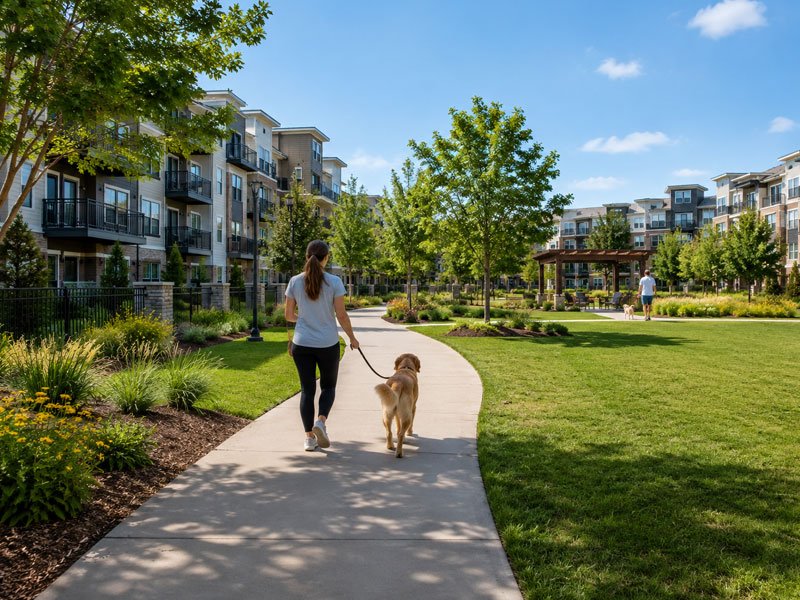
Residents naturally follow established walking routes. They leave buildings through the same entrances, walk their dogs along familiar sidewalks, and visit the same green spaces every day.
When a disposal station is located along these natural paths, residents are far more likely to use it.
If the station is hidden behind a building or placed far away from where people actually walk, participation usually decreases.
Successful apartment pet waste management focuses on making responsible behavior convenient.
A well-planned station network can help:
- Reduce pet waste left in common areas
- Improve resident convenience
- Support cleaner walking paths
- Simplify maintenance operations
- Improve the overall appearance of the property
Many apartment communities find that thoughtful planning produces better long-term results than simply installing additional stations.
For most properties, effective placement is the foundation of a successful residential pet waste management program.
Common Placement Challenges in Apartment Communities
Every apartment property has a different layout, but many communities experience similar challenges when planning dog waste station locations.
Understanding these common issues can help property managers avoid costly mistakes.
Building Entrances
Many dogs begin and end their walks near building entrances.
Although placing a station directly beside the entrance may appear convenient, it can also create concerns about appearance, odor, and resident experience.
Instead, stations often perform better when positioned a short distance away, along the natural walking route rather than immediately outside the building.
This keeps disposal convenient while maintaining a welcoming entrance.
Walking Routes
Residents rarely choose random paths.
Most apartment communities have established sidewalks, internal roads, or walking loops that residents use every day.
Dog waste stations should support these existing movement patterns rather than attempting to change them.
Observing where residents actually walk before selecting station locations often leads to much better results.
Shared Green Spaces
Open lawns and landscaped areas are popular places for dog walking.
These spaces also tend to generate the highest volume of pet waste.
Placing stations close to these areas makes proper disposal easier while helping maintenance teams keep shared spaces cleaner.
The objective is to make disposal the easiest option available.
Dog Relief Areas
Many newer apartment developments include designated pet relief areas.
These locations naturally require nearby disposal stations.
Providing bags and waste bins within or immediately adjacent to these spaces encourages consistent use and reduces waste being carried throughout the property.
Parking Areas and Internal Roads
Dogs are often walked between apartment buildings and parking lots.
These transition areas are sometimes overlooked during planning.
Where appropriate, stations located near pedestrian routes connecting parking areas to residential buildings can improve accessibility without interfering with vehicle movement.
Maintenance Accessibility
A station should not only be convenient for residents.
It should also be convenient for maintenance staff.
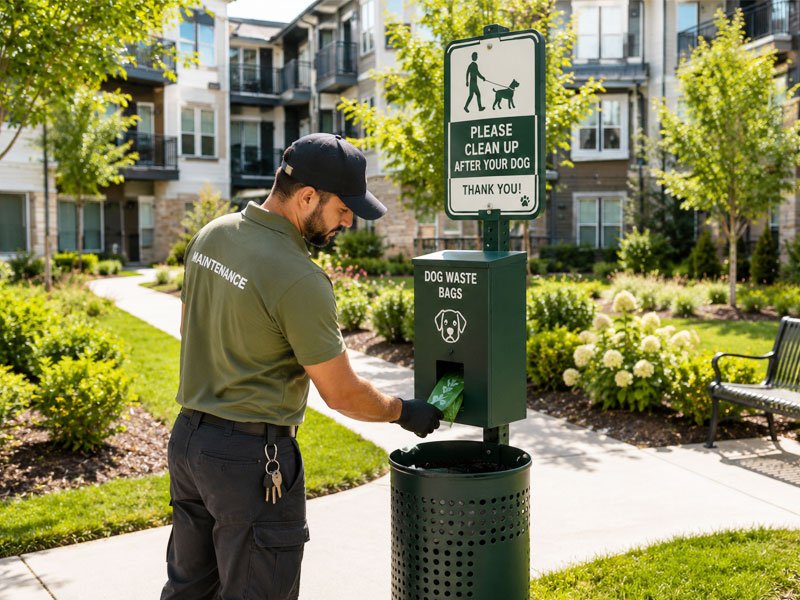
Maintenance teams need regular access for:
- Refilling bags
- Emptying bins
- Cleaning surrounding areas
- Inspecting equipment
When stations are difficult to reach, servicing becomes less efficient and maintenance costs may increase.
For this reason, station placement should always consider both resident convenience and operational efficiency.
Best Locations for Apartment Dog Waste Stations
Choosing the right location is one of the most important decisions in any apartment pet waste management program.
Installing more stations does not always improve participation.
Instead, the goal is to place each station where residents naturally expect it to be.
When disposal is convenient, residents are more likely to clean up after their pets.
Below are some of the most effective locations commonly used in apartment communities.
Near Primary Walking Paths
Most residents follow the same walking routes every day.
They leave their building, follow sidewalks, and return using the same path.
Installing apartment dog waste stations along these primary walking routes makes disposal simple and convenient.
Stations should be visible without interrupting pedestrian traffic.
In many communities, placing a station every few minutes along frequently used walking paths provides better coverage than concentrating several stations in one location.
Image Suggestion
Modern apartment sidewalk with residents walking dogs and a dog waste station positioned beside the pathway.
Close to Dog Relief Areas
If an apartment community includes designated pet relief areas, these locations should always include convenient disposal facilities.
Residents naturally expect to dispose of pet waste immediately after use.
Providing bags and waste bins within or adjacent to these spaces reduces the likelihood of waste being carried throughout the property.
This simple planning decision often improves both cleanliness and resident participation.
Along Community Green Spaces
Open lawns and landscaped areas are popular places for daily dog walks.
They also generate a significant amount of pet waste.
Stations positioned along the edges of these green spaces allow residents to dispose of waste before continuing their walk.
The objective is to make proper disposal part of the normal walking routine rather than requiring residents to change direction.
Near Community Parks and Pet-Friendly Amenities
Many apartment developments include small parks, dog exercise areas, or shared recreational spaces.
These amenities naturally attract pet owners throughout the day.
Installing dog waste stations near these locations supports responsible pet ownership while helping maintenance teams keep these areas clean.
The station should remain close enough to be convenient but should not interfere with recreational activities.
Along Internal Sidewalk Connections
Large apartment communities often have internal sidewalks connecting multiple residential buildings.
These connectors are used by hundreds of residents every day.
Dog waste stations positioned along these routes provide convenient access without requiring residents to search for disposal points.
For larger developments, these connecting sidewalks often become some of the most valuable station locations.
Locations to Avoid
Choosing where not to install a station is just as important as choosing where to install one.
Poor placement can reduce participation, create maintenance issues, and negatively affect the resident experience.
Apartment communities commonly avoid placing stations in the following locations.
Immediately Outside Building Entrances
Although convenient, stations positioned directly beside apartment entrances may create negative first impressions.
Residents entering or leaving the building generally prefer entrances that remain clean, open, and visually attractive.
A better solution is to place the station slightly farther along the walking route.
Children’s Playgrounds
Pet waste stations should not be installed next to playgrounds or children’s activity areas.
Keeping these spaces visually separated helps maintain hygiene expectations while creating a more comfortable environment for families.
Outdoor Dining and BBQ Areas
Shared gathering spaces are designed for recreation and social interaction.
Waste stations positioned immediately beside picnic tables, outdoor kitchens, or BBQ areas may negatively affect the overall experience.
Whenever possible, stations should remain nearby without becoming part of the primary gathering area.
Hidden Corners
Stations that are difficult to see are often difficult to use.
Residents are unlikely to walk out of their way to locate disposal facilities.
Visible, accessible locations generally achieve much higher participation rates.
Areas That Are Difficult to Service
Maintenance efficiency should always be considered during planning.
Stations hidden behind landscaping, fences, or steep slopes may require additional time to refill and clean.
Choosing locations that maintenance staff can easily access helps reduce long-term operating costs.
How Many Dog Waste Stations Does an Apartment Community Need?
There is no single answer that works for every property.
The appropriate number depends on several factors, including:
- Total property size
- Number of residential buildings
- Estimated dog population
- Walking route density
- Distribution of green spaces
- Existing maintenance resources
Rather than beginning with a fixed number, many property managers first identify where residents actually walk their dogs.
Stations are then installed at the locations that provide the greatest benefit.
As the community grows or walking patterns change, additional stations can be added where needed.
This approach is often more effective than installing a large number of stations all at once.
Planning for Long-Term Maintenance
Successful apartment dog waste stations require ongoing maintenance. Many communities also standardize the type of dog waste station bags used across all stations to simplify refilling, inventory management, and routine maintenance.
Without regular servicing, even the best station locations quickly lose their effectiveness.
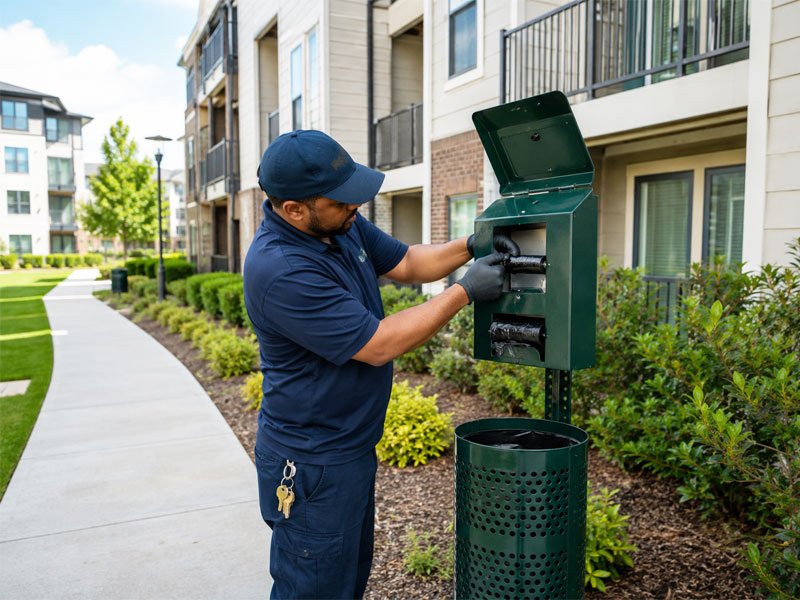
Maintenance plans typically include:
- Refilling dog waste bags
- Emptying waste bins
- Inspecting dispensers
- Cleaning surrounding areas
- Replacing damaged components
Many apartment communities include these tasks within existing landscape maintenance or property inspection schedules.
This integrated approach helps reduce operational costs while ensuring disposal stations remain fully functional throughout the year.
Communities looking to improve overall residential pet waste management often combine thoughtful station placement with standardized maintenance procedures and community pet waste management solutions that support long-term operational consistency.
Benefits of Well-Planned Apartment Dog Waste Station Placement
A well-planned apartment dog waste station program offers benefits that extend beyond keeping outdoor spaces clean.
For residents, it creates a more enjoyable living environment.
For property managers, it helps simplify operations while reducing recurring maintenance issues.
Over time, thoughtful planning can contribute to a cleaner, more organized, and more pet-friendly community.
Cleaner Common Areas
Conveniently located disposal stations make it easier for residents to clean up after their pets.
This helps reduce pet waste accumulation on sidewalks, landscaped areas, and shared green spaces.
Cleaner surroundings improve the daily experience for everyone living in the community.
Fewer Resident Complaints
Pet waste is one of the most common issues reported to apartment management offices.
Providing accessible disposal stations, together with clear community expectations, can significantly reduce complaint frequency.
Instead of reacting to recurring problems, property managers can focus on preventative maintenance.
More Efficient Maintenance
Well-planned station locations also benefit maintenance teams.
Stations that are easy to access require less time to inspect, refill, and service.
Routine maintenance becomes more predictable, helping reduce unnecessary labor while keeping the system operating effectively.
Better Resident Experience
Residents notice when outdoor spaces are well maintained.
Clean walking paths, attractive landscaping, and organized pet waste management all contribute to a stronger sense of community.
Small operational improvements often create noticeable improvements in resident satisfaction.
Support for Sustainability Goals
Many apartment communities are working toward broader environmental objectives.
Where local waste infrastructure allows, certified compostable dog waste bags may support plastic reduction initiatives and community sustainability programs.
Material selection should always consider local regulations, accepted waste streams, and available composting facilities.
Sustainability works best when operational planning and environmental goals support each other. Before selecting environmentally friendly materials, many property managers also review compostable certification requirements to ensure products meet local compliance standards.
Apartment Dog Waste Station Placement Is Only One Part of a Complete Pet Waste Management Program
Station placement is an important starting point.
However, successful apartment pet waste management involves much more than deciding where to install equipment.
Long-term success usually combines:
- Thoughtful station placement
- Routine maintenance schedules
- Resident education
- Clear community policies
- Regular program evaluation
- Appropriate waste collection procedures
When these elements work together, apartment communities often experience cleaner common areas, better resident participation, and fewer maintenance challenges.
Many property managers also integrate apartment programs into broader community pet waste management solutions that support consistent operations across residential developments.
Many of the same planning principles are also used in public dog waste management programs, where convenient infrastructure and routine servicing help maintain parks, trails, and other shared public spaces.
FAQ
Where should apartment dog waste stations be placed?
Stations are generally most effective when located along primary walking routes, near dog relief areas, beside shared green spaces, and close to commonly used pedestrian paths.
The goal is to place stations where residents naturally walk their dogs rather than expecting residents to change their route.
How many dog waste stations should an apartment complex install?
There is no universal number.
The appropriate quantity depends on property size, resident population, dog ownership, walking patterns, and maintenance resources.
Many communities begin with the highest-traffic locations and expand the network as needed.
Who is responsible for maintaining apartment dog waste stations?
Maintenance responsibilities are usually handled by:
- Property management teams
- Landscape contractors
- Facility maintenance staff
- Third-party service providers
Most communities include station servicing within existing maintenance schedules.
Should apartment communities install dog waste stations?
Many apartment communities choose to install dog waste stations because they improve convenience, encourage responsible pet ownership, and help maintain cleaner shared spaces.
The effectiveness of the program depends largely on placement, maintenance, and resident participation.
What type of bags are commonly used in apartment dog waste stations?
Many communities use dispenser-compatible dog waste station bags that support quick refilling and consistent maintenance.
Many communities choose dispenser-compatible dog waste station bags that simplify routine maintenance and support consistent servicing throughout the property.
Can apartment communities use compostable dog waste bags?
Yes.
Some communities choose certified compostable bags as part of broader sustainability initiatives.
Before implementation, property managers should review local waste regulations, accepted disposal pathways, and applicable compostable certification requirements.
Conclusion
Installing apartment dog waste stations is not simply about adding equipment.
It is about understanding how residents use shared spaces and designing a system that makes responsible behavior easier.
The most successful apartment communities focus on thoughtful planning rather than simply increasing the number of stations.
By studying walking routes, identifying high-traffic pet areas, supporting routine maintenance, and educating residents, property managers can create programs that remain effective for years.
Every apartment community is different.
There is no perfect layout that works everywhere.
However, communities that regularly review station performance and adjust placement based on actual resident behavior often achieve cleaner outdoor spaces, fewer complaints, and more efficient operations. Similar planning principles are also applied in HOA pet waste management programs, where shared outdoor spaces require consistent maintenance and resident participation.
A well-planned apartment dog waste station network is not only a maintenance improvement.
It is an investment in the overall resident experience.