Choosing the right compostable bag manufacturer is a critical step for distributors, brand owners, importers, and procurement teams.
With the growing demand for compostable packaging worldwide, many suppliers now claim to offer “eco-friendly” or “biodegradable” bags. However, not all suppliers follow recognized certification standards or maintain consistent production quality.
Some companies are real factories with integrated production lines. Others are trading companies that outsource manufacturing.
For buyers planning long-term programs or large-volume orders, selecting the right supplier requires more than comparing prices.
This guide explains how to evaluate a compostable bag manufacturer step by step before choosing a supplier.
Quick Answer: What Should Buyers Evaluate in a Compostable Bag Manufacturer?
When evaluating a compostable bag manufacturer, distributors, importers and brand owners should review six areas:
- Certification and finished-product scope — verify the applicable standard, certificate status and whether the actual finished bag configuration is covered.
- Factory capability — confirm that the supplier controls relevant manufacturing processes and can provide factory evidence.
- Production capacity and supply stability — review realistic lead times, capacity and repeat-order capability.
- Product performance and quality control — test samples and review thickness, sealing, perforation, printing and batch consistency.
- Documentation and traceability — request product specifications, certification information, QC records and relevant compliance documents.
- OEM and communication capability — confirm that specifications, artwork, packaging and certification requirements can be controlled before mass production.
No single factor proves that a supplier is suitable. Buyers should evaluate certification, product performance, manufacturing capability and documentation together.
Why Choosing the Right Compostable Bag Manufacturer Matters
Selecting the wrong supplier can lead to several problems:
• Non-certified materials
• Inconsistent bag thickness
• Weak sealing strength
• Delayed shipments
• Regulatory compliance risks
For distributors and retailers, these issues can create product recalls or damage brand reputation.
A professional compostable bag factory should provide stable production, clear certification documentation, and transparent communication throughout the supply process. If you need branded packaging, see our custom printed compostable bags guide.
Check Certifications First
Certification is one of the first factors buyers should verify when evaluating a compostable bag manufacturer.
A reliable supplier should provide official certification documents such as:
- EN 13432 – European compostable packaging standard
- ASTM D6400 – U.S. compostable plastics standard
- OK Compost (TÜV Austria)
- BPI Certification (North America)
- AS 4736 or AS 5810 – Australian compostable standards
Do not rely on general marketing terms like “eco-friendly” or “degradable.”
Always ask for:
- Certification number
- Certification organization
- Product scope
- Validity period
You can also verify certificates through the official certification databases.
Verify the Finished Product Scope — Not Just the Material
A common sourcing mistake is accepting a raw-material certificate as proof that every finished compostable bag is certified.
Certification may depend on the complete finished-product configuration, including:
- film formulation
- product type
- thickness
- printing and inks
- seals or adhesives
- labels, liners or other components
- multi-layer structures where applicable
Before approving a supplier, ask:
Does the certificate cover the finished product I am ordering?
Also confirm:
- certificate number and issuing body
- current validity
- certificate holder
- listed product or applicable scope
- whether customization remains within the approved conditions
A supplier should not use one raw-material certificate as universal evidence for every bag configuration.
For a step-by-step verification process, see How to Verify a Compostable Certificate.
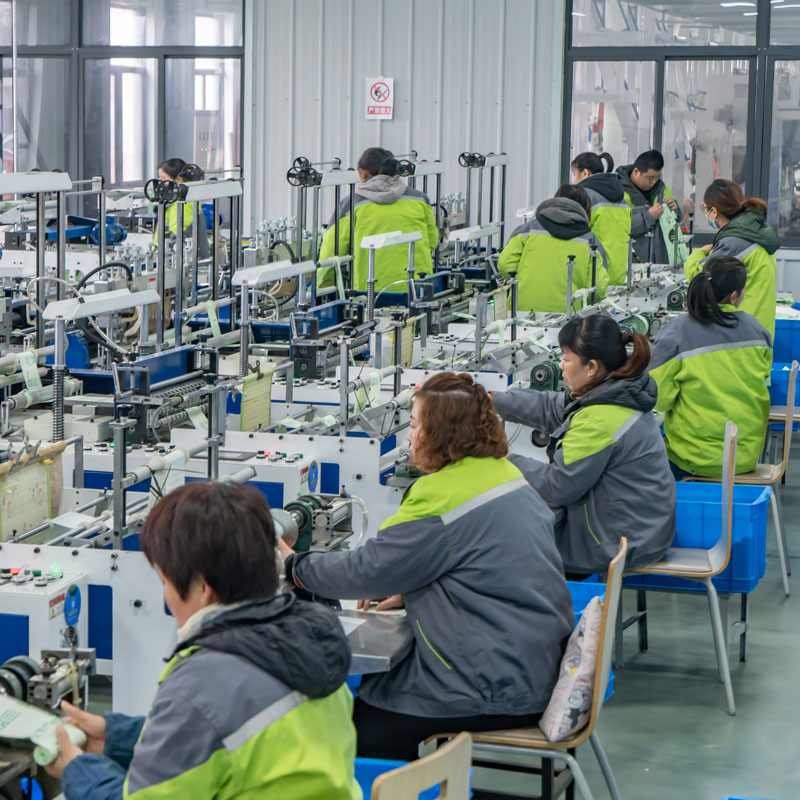
Confirm It Is a Real Factory
Many companies describe themselves as manufacturers, but some are actually trading companies.
To verify whether a supplier is a real compostable bag factory, ask questions such as:
• Do you produce compostable film in-house?
• Do you operate your own bag-making machines?
• Can you provide a live video factory tour?
• Do you manage production batch tracking?
A real factory usually controls key production processes including:
- Film extrusion
- Bag forming
- Sealing
- Printing coordination
- Quality inspection
Factories with integrated production lines typically provide better quality control and supply stability.
Buyers who cannot visit a supplier in person can request a live video inspection, third-party supplier verification or documented manufacturing evidence.
Review Production Capacity
Production capacity is another important factor when evaluating a compostable bag supplier.
Key questions to ask include:
- What is the monthly production capacity?
- How many film extrusion lines are operating?
- How many bag-making machines are available?
- What is the standard lead time for orders?
Stable capacity is especially important for distributors who require continuous supply programs.
Buyers should confirm that the manufacturer can support both the initial order and the expected repeat-order volume without compromising the agreed specification or lead time.
Understand OEM and Private Label Options
Many buyers require custom packaging for their own brand.
Before selecting a supplier, review their OEM capabilities carefully.
Check whether the supplier supports:
- Custom sizes and thickness
- Roll or flat formats
- Logo printing
- Barcode placement
- Retail-ready cartons
For private label projects, clear communication about packaging specifications and certification claims is important.
Incorrect labeling can create compliance problems in regulated markets.
Supplier evaluation and OEM project preparation are different tasks. Once a manufacturer has passed your qualification process, define the exact bag specification, artwork, packaging, certification requirements, MOQ and sampling plan before requesting a final quotation.
Look at Quality Control
Compostable materials behave differently from traditional plastics, so quality control is essential.
A professional compostable bag factory should conduct testing throughout the production process.
Common quality checks include:
- Thickness measurement
- Seal strength testing
- Raw material verification
- Batch identification
- Pre-shipment inspection
Traceability is particularly important when exporting products to regulated markets.
Test Samples for Real-World Performance
Certification confirms compostability requirements, but it does not tell buyers whether a bag performs well in its intended application.
Before approving mass production, evaluate samples using the actual use case.
Depending on the product, checks may include:
- leak resistance
- bottom or side seal strength
- tear resistance
- thickness consistency
- bag opening and handling
- roll perforation
- printing quality
- roll configuration
- shelf life and storage requirements
A food-waste liner, dog waste bag, supermarket produce bag and heavy-duty bin liner should not be evaluated using exactly the same performance criteria.
Sample approval should therefore be based on the agreed finished-product specification rather than general claims such as “strong” or “heavy duty.”
Documents Buyers Should Request Before Ordering
Before approving a compostable bag manufacturer, request documentation relevant to the product and target market.
Compliance Documents
- applicable compostability certificate
- certificate holder and certificate number
- product or certification scope
- supporting test reports where available
- product specification sheet
Product & Quality Documents
- dimensions and thickness requirements
- applicable tolerances
- packing specification
- QC or inspection information
- batch traceability information where required
- shelf-life and storage guidance
Branding & Labeling
- approved artwork
- printing specification
- certification-mark authorization where applicable
- approved environmental or compostability claims
A supplier that cannot provide basic product, certification and quality documentation should require additional due diligence before a bulk order is approved.
Verify Certification & Company Evidence
Match Certification to the Target Market and Composting Environment
Compostability standards are not interchangeable. Industrial/commercial and home-composting certifications apply to different environments, and requirements also vary by destination market.
Buyers should identify the intended market and disposal system before selecting a certified product configuration.
View Compostability Certifications
Compare Pricing Carefully
Price should be compared against the same specification, certification scope, printing, packaging, quality requirements and Incoterm.
A lower quotation does not automatically indicate lower quality, but unusually large price differences should prompt buyers to confirm whether suppliers are quoting the same:
- material and certification requirement
- film thickness and dimensions
- printing specification
- roll or packing configuration
- QC requirements
- freight or delivery terms
Comparing unlike specifications can make the lowest quotation appear more attractive than it actually is.
Red Flags When Evaluating a Compostable Bag Supplier
Additional due diligence may be needed if a supplier:
- relies mainly on vague claims such as “biodegradable,” “eco-friendly” or “green”
- provides only a raw-material certificate without explaining finished-product scope
- cannot provide a valid certificate number, issuer or expiry information
- gives inconsistent information about MOQ, capacity or lead time
- refuses factory video inspection or cannot provide manufacturing evidence
- cannot explain its QC and batch-traceability process
- cannot explain how printing, adhesives or other components affect certification
- provides samples but cannot explain how batch consistency is controlled
- cannot provide basic product specifications or supporting documentation
Red flags do not automatically prove that a supplier is unsuitable, but they should trigger further verification before payment or mass production.
Compostable Bag Manufacturer Evaluation Checklist
Company & Factory
- Is the supplier a manufacturer, converter or trading company?
- Can the manufacturing location be verified?
- Is factory video, visit or third-party verification available?
- Are production capacity and realistic lead times clear?
Certification
- Is the correct standard used for the target market?
- Is the certificate currently valid?
- Is the certificate holder identifiable?
- Does the scope cover the finished product being ordered?
Product Performance
- Has the actual specification been defined?
- Have samples been tested for the intended use?
- Are seal, perforation, printing and thickness requirements acceptable?
Quality & Supply
- Is the QC process explained?
- Is batch traceability available where required?
- Can repeat orders be produced to the same approved specification?
- Are MOQ and lead time clearly stated?
Documentation
- Product specification sheet
- Applicable certificates
- Certification scope information
- Packaging specification
- Artwork approval
- QC / inspection documentation where required
Commercial Terms
- MOQ
- tooling or printing plate costs
- payment terms
- production lead time
- shipping terms
- repeat-order planning
Conclusion
Choosing a compostable bag manufacturer requires more than comparing price or checking whether a supplier displays a certification logo.
Buyers should verify the finished-product certification scope, factory capability, sample performance, quality-control process, documentation, production capacity and commercial terms before approving a supplier.
A structured evaluation process reduces sourcing uncertainty and makes it easier to compare manufacturers on the same requirements.
FAQ
How do I verify a compostable bags manufacturer?
Verify the company, manufacturing facility and product certification separately. Check certificate numbers and current status through the issuing organization, confirm that the finished product falls within the applicable certification scope, and request factory evidence such as an on-site visit, live video inspection or third-party supplier verification. Product samples and quality documentation should also be reviewed before a bulk order.
What certifications should a compostable bag manufacturer have?
A certified compostable bag manufacturer should provide recognized standards such as EN 13432 (EU), ASTM D6400 (US), OK Compost (TÜV Austria), BPI Certification, or AS 4736 / AS 5810 (Australia).
The correct certification depends on your target market.
How can I tell if a supplier is a factory or a trading company?
Ask whether the supplier operates in-house film extrusion and bag-making lines. Request a live video factory tour. Confirm that they manage quality control and batch tracking internally.
A real compostable bag factory controls production steps directly.
What is the difference between industrial and home compostable?
Industrial compostable products require controlled temperature and humidity in commercial facilities. Home compostable products break down in lower-temperature backyard compost systems.
Always confirm which certification applies before placing an order.
What questions should I ask a compostable bags supplier?
Ask about certification scope, finished-product specifications, factory location, production capacity, MOQ, lead time, quality control, batch traceability, samples, OEM capabilities, packaging and the documents available for your target market.
Is price the most important factor?
No. Lower price may mean non-certified materials or weaker quality control. Certified compostable production includes testing and compliance costs.
A reliable certified compostable bags manufacturer should provide stable specifications and transparent documentation.
What documents should I request before approving a compostable bag manufacturer?
Buyers should normally request the applicable compostability certificate and scope, product specification, packing requirements, relevant test information where available, artwork or printing approval, and quality or traceability documents appropriate to the project.