Compostable Garment Packaging for EU Apparel Brands
Custom compostable garment packaging for European apparel brands, garment factories, fulfilment operations, packaging distributors, and private-label programs.
We manufacture open-top, self-adhesive, and specialty garment bags with custom dimensions, thickness, printing, closure options, and bulk export packaging.
Standard customized production typically starts from approximately 500 kg per specification or design.
EU suitability depends on the finished packaging specification, intended use, destination market, and applicable EU and national requirements.
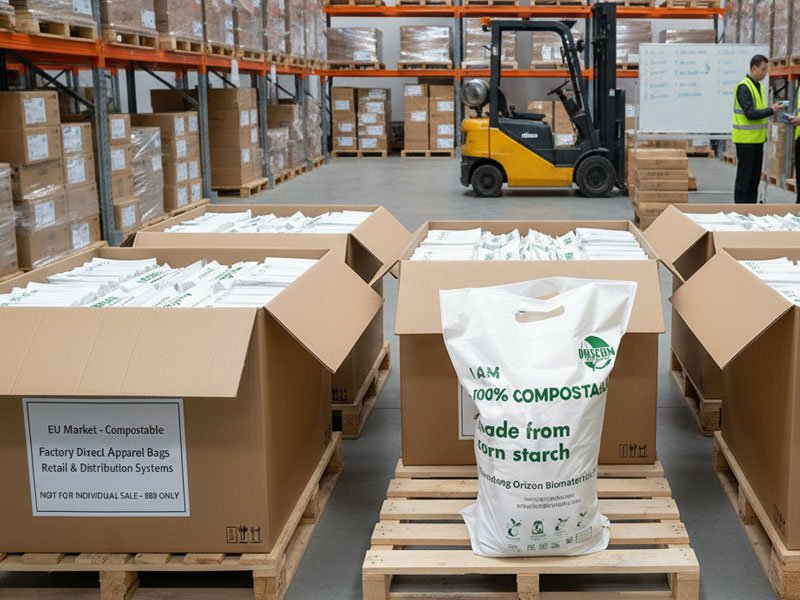
Garment Packaging for European Apparel Supply Chains
Garment packaging bags protect clothing as it moves from the factory to warehouses, fulfilment centres, retailers, and customers.
For European apparel programs, the inner packaging may need to support several functions at the same time:
- garment protection;
- SKU identification;
- barcode scanning;
- efficient carton packing;
- warehouse handling;
- e-commerce fulfilment;
- brand printing;
- packaging compliance.
ORIZON manufactures compostable packaging for clothing as a custom B2B product rather than a fixed retail SKU.
If you currently use conventional PE garment polybags, the existing dimensions, thickness, closure, and artwork can often be used as a starting point for compostable sample development.
This helps buyers compare the new bag against a specification their packing team already knows.
Compostable Garment Bag Formats
Different garments and packing workflows need different bag structures.

Self-adhesive garment bags are commonly used for folded apparel that needs a closed inner package during storage, shipping, or fulfilment.
Typical applications include:
- T-shirts;
- shirts;
- dresses;
- underwear;
- knitwear;
- e-commerce apparel.
Permanent and resealable adhesive structures can be discussed according to the project.
See our self-adhesive compostable garment bags for detailed product options.
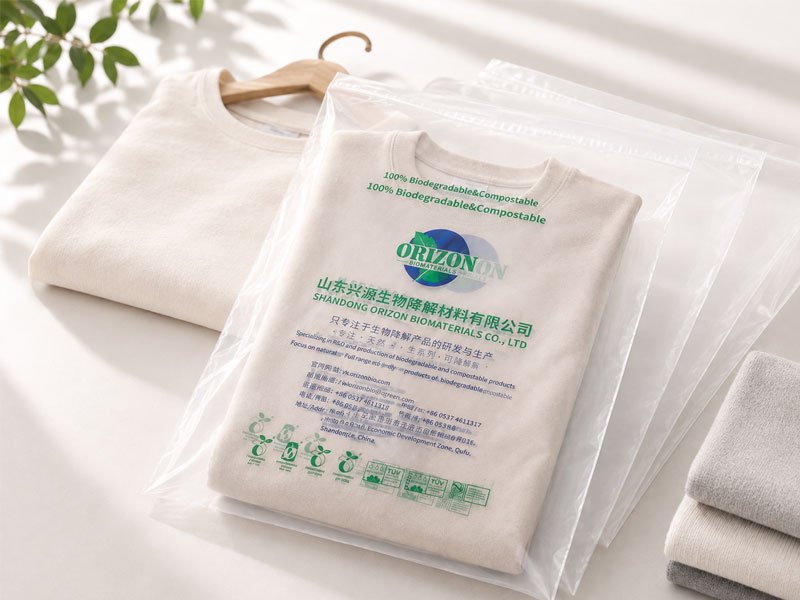
Open-top garment bags are suited to packing lines where fast loading and simple construction are more important than an adhesive closure.
They can be used for:
- garment factories;
- warehouse sorting;
- bulk apparel packing;
- distribution operations.
See our open-top compostable garment bags for product specifications.

Special structures can also be developed for selected apparel and retail applications.
Options may include:
- custom openings;
- hanger openings;
- ventilation holes;
- specialty handles;
- custom flap structures.
See our compostable sustainable clothing packaging options for additional formats.
Bag size, thickness range, sealing type, perforation spacing, and roll format can be customized based on apparel type, packing workflow, and warehouse operations.
Wholesale Garment Packaging Specifications
For B2B apparel programs, we recommend defining the actual specification before comparing prices.
| Specification | OEM Options |
|---|---|
| Bag Type | Open-top, self-adhesive, specialty |
| Dimensions | Custom width, length, and flap |
| Thickness | Selected by garment and workflow |
| Film Appearance | Clear, semi-clear, frosted, or tinted |
| Closure | Open top, permanent adhesive, resealable adhesive |
| Printing | Logo, SKU, barcode area, approved compliance text |
| Vent Holes | Optional |
| Hanger Opening | Optional |
| Packing | Bulk stack, inner packs, export cartons |
| Supply | OEM / Private Label / Wholesale |
| MOQ | Approx. 500 kg per specification or design |
A quotation is normally based on the finished specification rather than only the number of bags.
A large hoodie bag and a small T-shirt bag can use very different amounts of material even when the order quantity is the same.
Choosing Garment Bag Size and Thickness
There is no single standard garment-bag dimension for every clothing product.
The correct size depends on the folded garment.
| Garment Type | Main Sizing Considerations |
|---|---|
| T-Shirts / Underwear | Folded width, length, packing speed |
| Shirts / Dresses | Folded dimensions, presentation, closure |
| Hoodies / Knitwear | Product thickness, bag depth, film strength |
| Denim | Garment weight and handling |
| Multi-Pack Apparel | Total packed thickness and closure allowance |
If your company already uses PE apparel polybags, send us the current size and thickness.
We can use them as the starting reference rather than asking your team to redesign every SKU.
Thickness should also match the application.
A lightweight T-shirt does not necessarily need the same film thickness as denim, heavy knitwear, or a multi-garment pack.
EU Compliance: PPWR and Compostable Garment Packaging
The EU regulatory framework for packaging changed significantly with Regulation (EU) 2025/40, the Packaging and Packaging Waste Regulation (PPWR).
The PPWR began applying across the EU on 12 August 2026. It introduces an EU-wide framework covering packaging design, waste prevention, recyclability, labelling, and other packaging requirements.
For apparel buyers, one point is especially important:
A garment bag is not automatically EU-compliant simply because it is compostable or tested to EN 13432.
Does EN 13432 Make a Garment Bag EU-Compliant?
Not by itself.
EN 13432 remains an important reference for packaging intended for industrial composting. The European Commission’s 2026 PPWR guidance states that the existing EN 13432 standard can continue to be used as guidance while new harmonised compostability standards are being developed.
However, EN 13432 addresses compostability.
The PPWR covers a much broader set of packaging requirements.
For an EU apparel project, buyers should therefore assess:
- the finished bag specification;
- the intended packaging function;
- compostability claims;
- recyclability requirements;
- labelling requirements;
- destination Member State;
- intended waste-management route.
A compostability certificate should be treated as one part of the compliance review, not as a substitute for the full review.
PPWR Considerations for Garment Packaging
Under Article 9 of the PPWR, specific packaging categories are subject to compostability requirements. Other packaging made from biodegradable plastic polymers is generally subject to material-recycling design requirements rather than being automatically required to be compostable.

This distinction matters for apparel polybags.
Garment packaging is not one of the packaging formats that the PPWR simply defines as universally required to be compostable.
For that reason, an apparel brand considering compostable garment packaging should first confirm:
- why compostability is being specified;
- which EU market the package will enter;
- how the package is expected to be collected after use;
- what documentation is required by the buyer or retailer;
- whether the finished package meets the relevant PPWR and national requirements.
We recommend that EU buyers review the finished packaging with their internal compliance team or qualified adviser before market launch.
When Is EN 13432 Relevant?
EN 13432 remains relevant when a buyer intentionally specifies packaging for industrial compostability and needs evidence relating to that end-of-life claim.
For a custom garment bag, the assessment should consider the complete finished product, including where applicable:
- film formulation;
- thickness;
- ink;
- printing coverage;
- adhesive;
- colorants;
- additives;
- finished bag construction.
A raw-material certificate should not automatically be assumed to cover every finished garment bag configuration.
For broader certification information, see our compostable garment bag certifications guide.
Documents EU Buyers Should Request
Before approving a bulk order, EU procurement teams may want to review documentation relating to both the product and the claimed compostability.
Useful documents can include:
- applicable compostability certificate and scope;
- technical data sheet;
- finished bag dimensions;
- film thickness;
- material reference;
- printing specification;
- adhesive information where applicable;
- batch or production traceability;
- manufacturer details;
- packing specification.
For regulated claims, the document should relate as closely as possible to the finished product being purchased.
For ORIZON factory and certification information, visit our Manufacturer & Certification Verification Center.
Performance Checks Before Bulk Approval
Compliance documents are only one part of a garment packaging project.
The bag also has to work on the packing line.
Film Clarity
If staff or scanners need to read labels through the bag, test the final film with the actual SKU and barcode system.
Compostable film should not automatically be assumed to behave exactly like conventional PE.
Adhesive Performance
For self-seal garment bags, confirm whether the flap should be permanent or resealable.
The adhesive should also be tested with the final film and expected storage conditions.
Ventilation
Vent holes can help release trapped air when folded garments are packed tightly into export cartons.
The hole size and position should be agreed before production.
Thickness and Strength
Heavier apparel may need a different thickness from light garments.
Do not select thickness only by copying a competitor’s number.
Storage and Inventory Planning
Compostable film should be stored under suitable warehouse conditions and managed according to the product specification.
For large apparel programs, avoid ordering far more stock than your normal inventory cycle requires without first checking the expected storage period.
Packing-Line Testing
If the bags will be used on a high-volume or automated packing line, test samples under real operating conditions before mass production.
A bag that performs well during manual testing may behave differently at production speed.
Custom Printing, Barcodes and Packaging
Custom printing is available for private-label and apparel programs.
Printed elements may include:
- brand logo;
- website;
- SKU field;
- barcode area;
- QR code;
- handling instructions;
- approved disposal guidance;
- permitted certification marks.
For barcode applications, we recommend testing the final bag with the actual warehouse scanner.
Film clarity, print position, label contrast, and lighting can all affect readability.
Certification marks should only be printed where the relevant authorization permits their use.

Replacing Conventional PE Garment Polybags
Many European apparel brands already have an established PE garment-bag specification.
That makes a useful starting point.
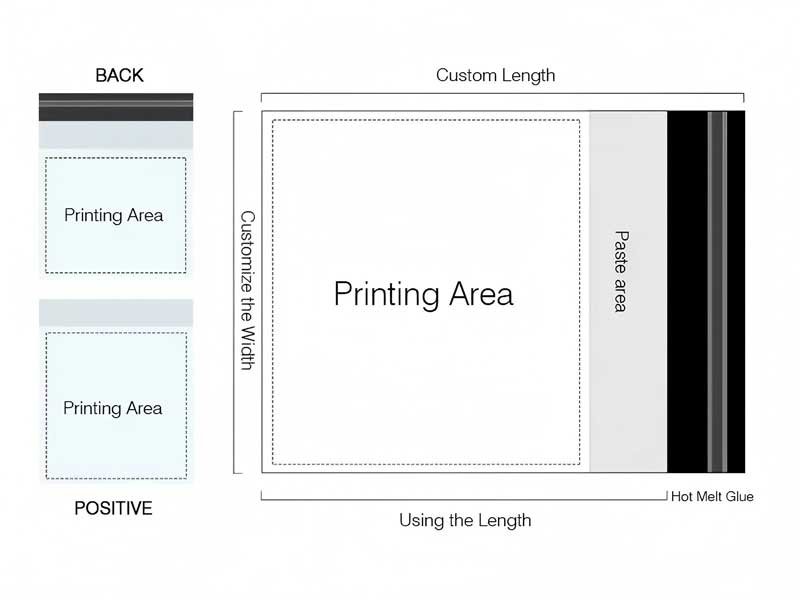
We normally compare:
- width;
- length;
- thickness;
- flap size;
- adhesive type;
- vent holes;
- print position;
- barcode placement;
- pieces per inner pack;
- carton quantity.
A compostable version does not always need to copy every PE specification exactly.
The two films can differ in flexibility, clarity, stiffness, sealing behaviour, and storage characteristics.
Sample testing allows the buyer to adjust the specification before a full production order.
For a deeper comparison, see our compostable vs plastic packaging for clothing brands guide.
Wholesale & OEM Garment Packaging for Europe
Many European apparel brands already have an established PE garment-bag specification.
That makes a useful starting point.
ORIZON manufactures custom garment bags for:
- apparel brands;
- garment factories;
- packaging distributors;
- e-commerce businesses;
- fulfilment centres;
- private-label packaging programs.
Customization can include:
- multiple garment sizes;
- film thickness;
- transparent or tinted film;
- logo printing;
- adhesive closure;
- ventilation holes;
- barcode area;
- inner packing;
- export cartons.
For apparel programs with many SKUs, we recommend grouping similar garments where practical.
For example, one approved bag specification may be suitable for several T-shirt SKUs, while hoodies or heavy knitwear may need a larger specification.
This can simplify inventory and purchasing.
MOQ for Custom EU Garment Bags
Standard customized production typically starts from approximately 500 kg per specification or design.
For MOQ purposes, one specification normally means one defined combination of factors such as:
- dimensions;
- thickness;
- bag structure;
- film color;
- artwork.
If an apparel program needs four different bag sizes, each size should be reviewed as a separate production specification unless otherwise agreed.
The number of finished bags represented by 500 kg will vary greatly by size and thickness.
Samples Before Bulk Production
We recommend sample evaluation before switching a large apparel program from conventional PE to compostable garment packaging.
Samples can be used to check:
- garment fit;
- film feel;
- transparency;
- thickness;
- adhesive performance;
- vent-hole position;
- printing;
- barcode scanning;
- packing speed.
Where possible, test the sample with the real garment and the real fulfilment process.
That gives more useful information than checking the empty bag on a desk.
Country-Level Requirements Within the EU
The PPWR creates a common EU framework, but practical waste collection, disposal communication, and some implementation details may still vary between Member States.
This matters when the same apparel packaging is sold across several countries.
A multi-market EU project should therefore identify:
- destination countries;
- intended disposal route;
- retailer-specific requirements;
- local collection conditions;
- language and labelling needs.
Do not assume that one disposal instruction is appropriate for every European market.

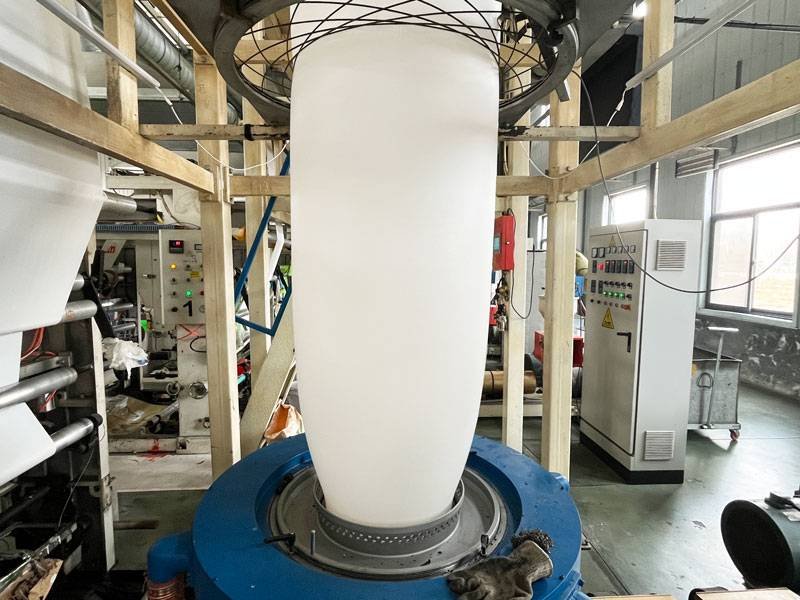
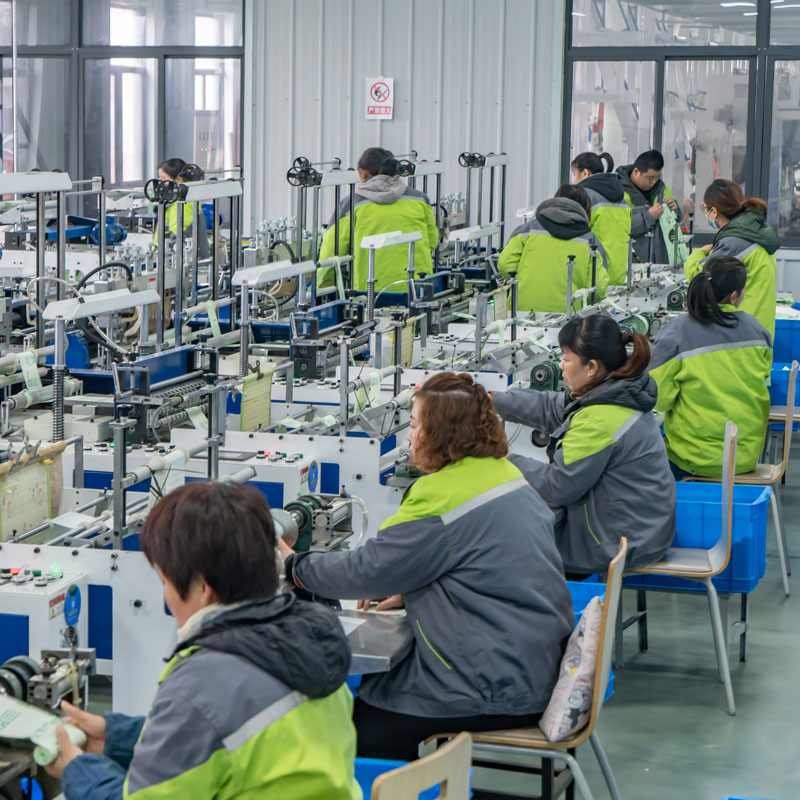
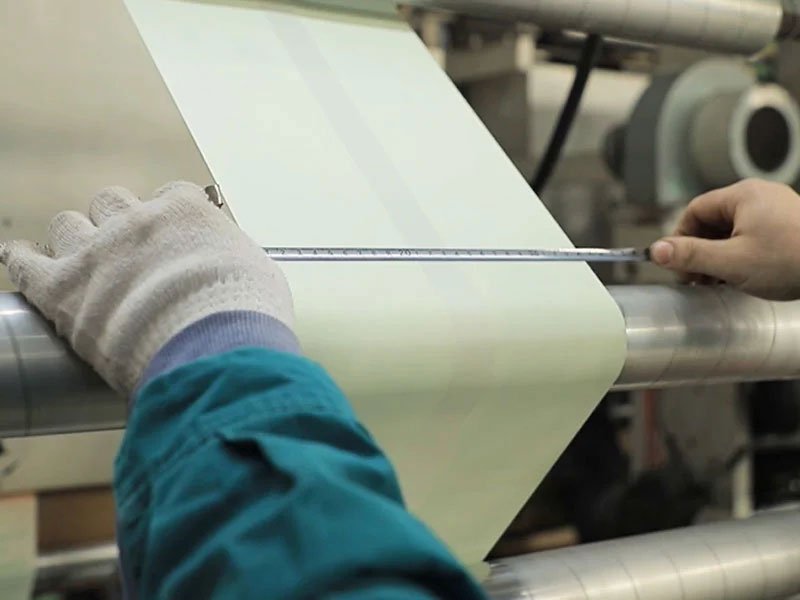
Factory Production for EU Apparel Programs
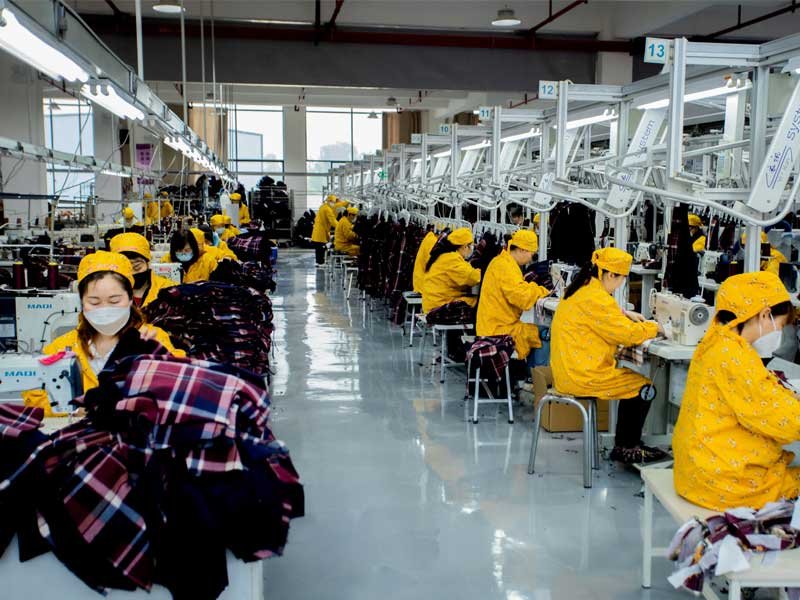
ORIZON compostable garment bags manufacturer for custom B2B programs.
Our manufacturing facility is approximately 20,000 m², with 16 automatic production lines and monthly capacity of approximately 500 tons.
Production capabilities include:
- film extrusion;
- printing;
- bag converting;
- adhesive and closure processing;
- packing;
- quality inspection.
For factory and certification verification, see our Manufacturer & Certification Verification Center.
B2B FAQ
Not automatically.
Suitability depends on the finished product, intended use, PPWR requirements, national rules, disposal route, and any retailer-specific requirements.
Buyers should review the final specification for the destination market.
No.
EN 13432 relates to industrial compostability. PPWR covers a broader range of packaging requirements, including recyclability and other design and compliance obligations.
Options include open-top, self-adhesive, and specialty garment bags.
Dimensions, thickness, printing, closures, vent holes, and packing can be customized.
Yes.
An existing PE bag or specification can be used as the starting reference.
We recommend testing compostable samples before bulk production because film behaviour may differ from PE.
Standard customized production typically starts from approximately 500 kg per specification or design.
Equivalent bag quantities depend on dimensions and thickness.
Yes. Custom logo printing, SKU fields, barcode areas, handling instructions, and approved compliance information can be included.
Certification marks require applicable authorization before printing.
Depending on the project, documentation may include applicable certificates, certificate scope, product specification, technical data, printing details, packing information, and manufacturer verification.
Custom Compostable Garment Packaging for Europe
We manufacture custom compostable garment packaging for European apparel brands, factories, distributors, and fulfilment programs.
Choose the bag structure, dimensions, thickness, closure, printing, and export packing to suit your apparel workflow.
Send us your existing garment polybag specification or target garment size, and we can recommend a practical starting configuration.