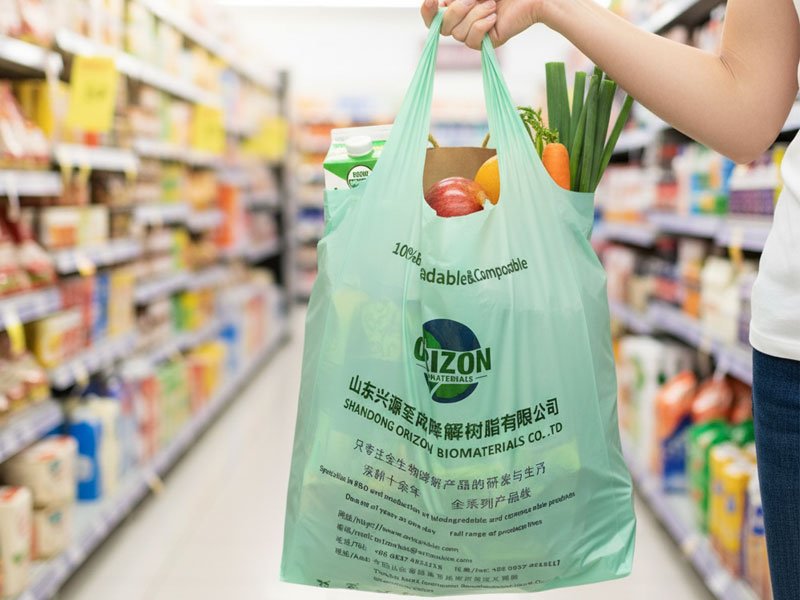
Australia is entering a new phase of sustainable packaging. With the implementation of the plastic bag ban, the Organic Waste Recycling Program (FOGO), and the stringent AS 4736/AS 5810 compostability standards, supermarkets can no longer rely on suppliers’ vague “eco-friendly” claims.
Many suppliers advertise their products as biodegradable, but this term is not regulated, often misleading retailers and causing contamination of composting facilities.
If you are a buyer for an Australian supermarket or retail chain, understanding the difference between compostable and biodegradable bags is crucial for compliance, customer satisfaction, and brand reputation.
This article will explain these six key compostable bags vs biodegradable bags—from certification to materials science—to help you confidently choose the right compostable shopping bags for your stores.

Compostable vs Biodegradable in Australia
In many markets, “biodegradable” sounds positive, but in Australia this term is not a legal standard. A biodegradable bag may simply break into tiny pieces of plastic—microplastics—without truly decomposing.
Biodegradable bags can be misleading because:
- They are not required to fully break down.
- They may contain oxo-degradable additives banned in many countries.
- They often cannot enter FOGO or industrial composting systems.
- They can contaminate compost and lead to fines or audits for supermarkets.
Compostable:
- Must meet AS 4736 (industrial) or AS 5810 (home composting).
- Must fully decompose into CO₂, water, and biomass.
- Leave no microplastics, no toxic residue.
- Are accepted by most Australian composting facilities.
Compostable bags have strict scientific standards. Biodegradable bags do not.
This distinction matters because misunderstanding these terms often leads to confusion about compostable waste meaning and what should actually go into compost bins.
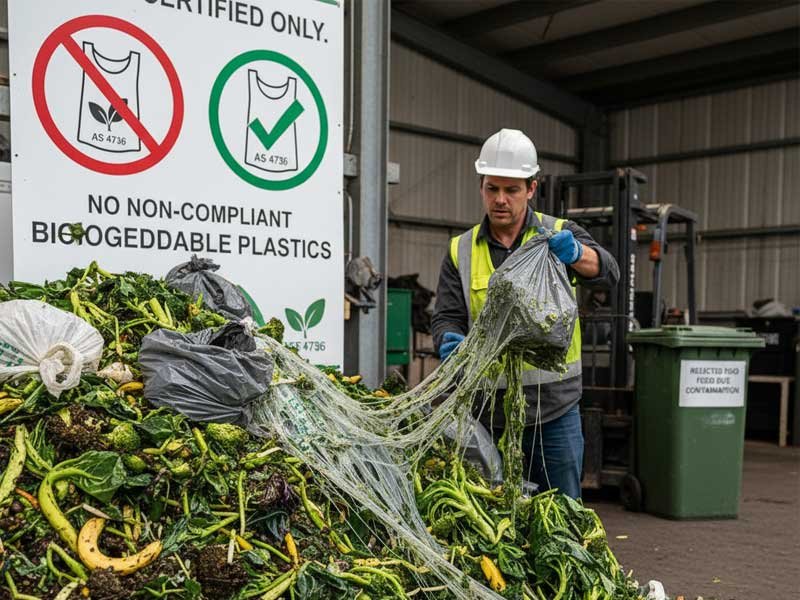
As 4736 Is a Mandatory Requirement for Supermarkets in Australia
Australia has one of the strictest compostable bag certification systems in the world.
Two certifications matter:
| Standard | Meaning |
|---|---|
| AS 4736 | Industrial composting standard; required for supermarket checkout bags, fruit & vegetable bags, and bin liners. |
| AS 5810 | Home composting; used for kitchen caddy liners and small household bags. |
Why AS 4736 matters:
- Woolworths, Coles, IGA and major retailers only accept AS4736-approved bags.
- Bags must have certification numbers, logo, and lab testing reports.
- Composting facilities reject non-certified “biodegradable” bags.
Supermarket Risk: Using uncertified biodegradable bags can lead to FOGO contamination, causing penalties or contract cancellation by waste management operators.
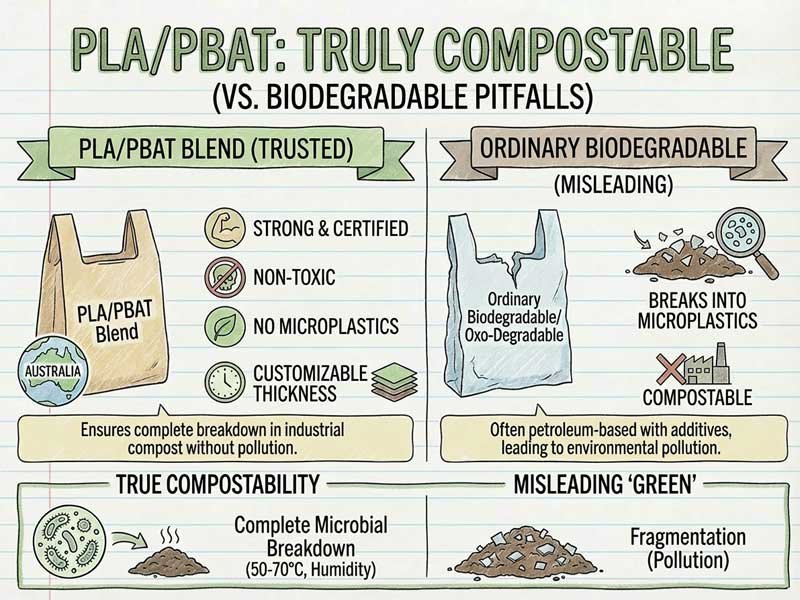
Why PLA/PBAT Bags Are Truly Compostable
A reliable compostable shopping bag must be made from certified materials.The most common—and most trusted—material used in Australia is:
Why Supermarkets Choose PLA/PBAT
- Excellent tensile strength for grocery loads
- Fully compostable under AS 4736
- No heavy metals or toxins
- No microplastics
- Custom thickness to match wet or heavy products
- Long enough shelf life for supermarket storage environments
Biodegradable Bags Typically Use:
- Oxidizing additives (oxidative degradation)
- Inexpensive petroleum-based plastics
- Materials unacceptable to composting plants
PLA/PBAT compostable bags are chemically engineered to truly achieve composting. Biodegradable bags are often only “broken,” not decomposed.
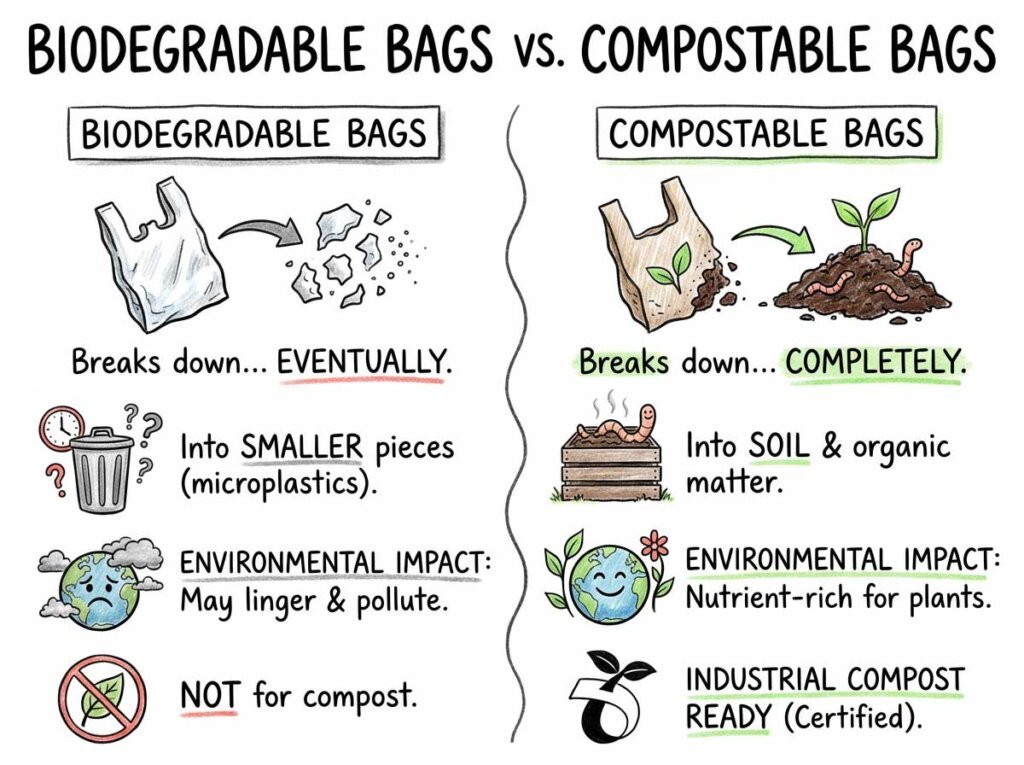
Biodegradable Vs Compostable Bags Environmental Impact
Biodegradable Packaging Bags May Generate Microplastics
Many “biodegradable” packaging bags break down into smaller plastic fragments under sunlight or high temperatures.
The Harms of These Fragments:
- Pollution of soil and waterways
- Inability to be processed by composting facilities
- Damage to supermarket sustainability reputation
- Leading to negative media coverage or “greenwashing” accusations
In contrast, compostable packaging bags decompose into natural biomass under controlled conditions.
Importance of Compostable Packaging Bags to Supermarket Brands:
- Contributes to Achieving Environmental, Social and Governance (ESG) Goals
- Reduces Carbon Footprint
- Supports Community Food, Organic and Organic Products (FOGO) Projects
- More Popular with Australian Consumers (Over 70% of consumers choose eco-friendly packaging)
In industrial composting systems, this difference is enforced through formal standards, which is why many programs rely on BPI certification to identify materials that are truly compostable.
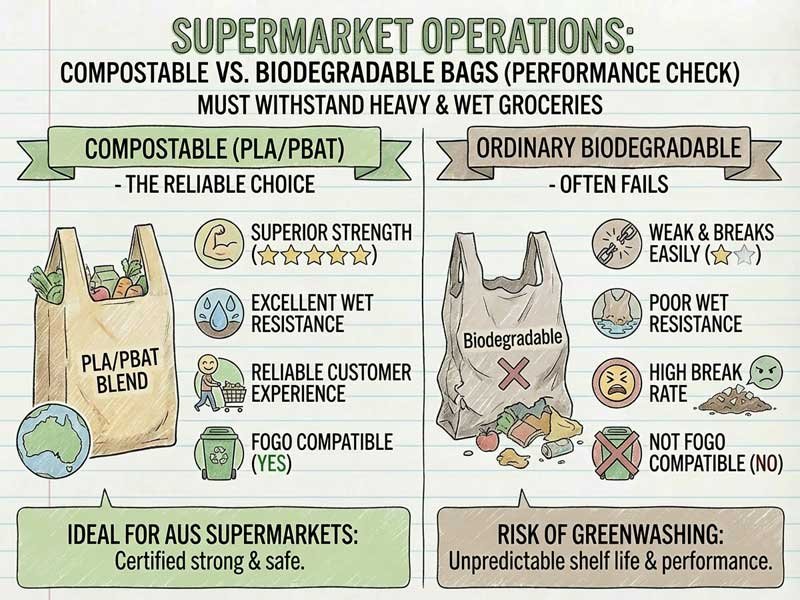
Supermarket Operations: Compostable vs Biodegradable Bags
Supermarket shopping bags must be able to withstand heavy shopping, wet items, and fast checkout processing. This is precisely where biodegradable shopping bags often fall short.
Supermarket Compostable Bags vs Biodegradable Bags
| Feature | Compostable Bag (PLA/PBAT) | Biodegradable Bag | Paper Bag |
|---|---|---|---|
| Strength | ⭐⭐⭐⭐⭐ | ⭐⭐ | ⭐⭐⭐ |
| Wet groceries | Excellent | Poor | Very weak |
| Shelf life | Long & stable | Unpredictable | Stable |
| FOGO compatibility | Yes | No | No |
| Customer experience | Reliable | High break rate | Hard to carry |
| Branding | Supports sustainability | Risk of greenwashing | Good |
For Australian supermarkets, compostable bags outperform both biodegradable and paper bags in strength, wet resistance, and food contact safety.
What Are the Consequences of Choosing the Wrong Shopping Bags?
Supermarkets using misleading shopping bags may face the following risks:
- Compliance issues
- Food, organic matter, and fodder (FOGO) contamination
- Violation of sustainability commitments
- Failure to meet retailer ESG (Environmental, Social, and Governance) requirements
- Financial penalties
- Waste disposal companies may fine supermarkets for refusing to accept waste.
- Local governments may impose compliance fees.
- Brand damage
- Media exposure of “counterfeit biodegradable” shopping bags
- Decline in consumer trust
- For this reason, all large supermarkets have now switched to using only compostable shopping bags certified by AS4736.

How Supermarkets Should Choose Compostable Packaging Bags
Before choosing a compostable packaging bag supplier in Australia, please check the following:
- Does the bag have AS4736 or AS5810 certification?
- Is the material PLA/PBAT + starch-based?
- Can the supplier provide a Life Cycle Assessment (LCA) and degradation report?
- Is the bag strong enough to hold wet food?
- Does the supplier offer private label and custom printing services?
- Can the factory meet the supply volume of supermarkets nationwide?
- Can the supplier guarantee a stable delivery time of 30-40 days?
If the answer to any of these questions is “no,” the packaging bag is likely not truly compostable.
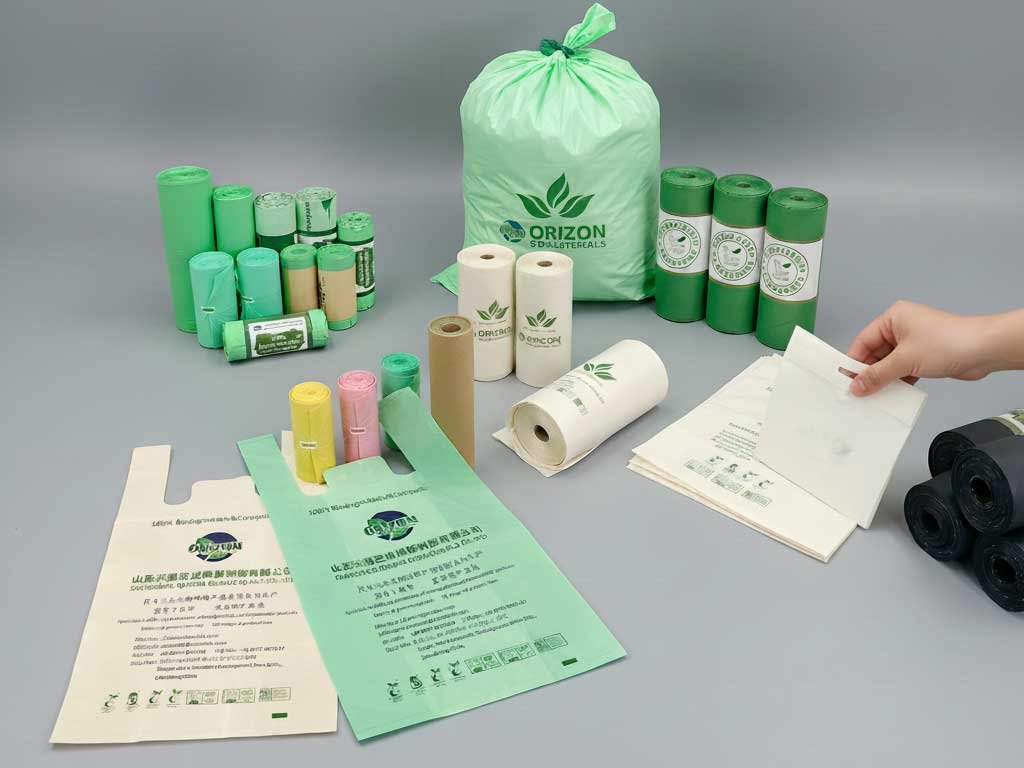
Why ORIZON Is the Preferred Compostable Bag Supplier for Australian Retail Chains
ORIZON offers:
- Packaging bags compliant with AS 4736 / AS 5810 / EN13432 certifications
- 16 years of factory direct sales experience
- OEM printing services for your own brand (up to 8 colors)
- MOQ > 500kg
A full range of products for supermarkets:
- T-shirt shopping bags
- Compostable fruit and vegetable roll bags
- Compostable garbage bags
- Compostable mailing bags
- Compostable Pet Waste Bags
Stable Australian export supply chain
- 15-20 day delivery
- Strong production capacity
- ISO quality management system
- Continuous batch testing
Supermarkets like yours can rely on ORIZON for standard-compliant, durable, and cost-effective products.
Want to Learn More About Certified Compostable Packaging Bags?
To understand the basic scientific definitions of compostable and biodegradable materials, see our guide here:
What Is the Difference Between Biodegradable and Compostable?