Kitchen caddy liners are small bags used to collect food scraps before transferring them to a Food Organics and Garden Organics (FOGO) or food-organics bin.
In Australia, whether you can use a liner—and which type or certification is accepted—depends on your local council and receiving composting facility.
This guide explains what kitchen caddy liners are, how to use them, which sizes are commonly used, how to reduce leaks and odours, and what to check before choosing a compostable liner.
Quick Answer: How to Use Kitchen Caddy Liners
Using a kitchen caddy liner is simple:
- Check whether your local FOGO program accepts compostable caddy liners.
- Open the liner fully and fit it inside the kitchen caddy.
- Add only food scraps and other materials accepted by your local council.
- Empty the caddy every few days or as needed.
- Transfer the liner to the designated FOGO or food-organics bin.
- Clean and dry the caddy regularly.
Always follow your local council instructions because accepted liners, certification requirements and food-waste rules vary across Australia.
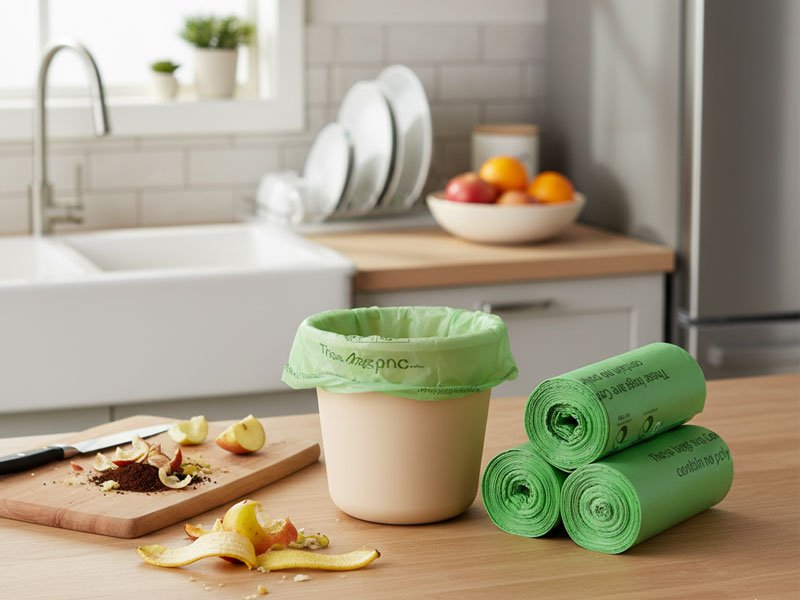
What Is a Kitchen Caddy Liner?
A kitchen caddy liner is a small bag placed inside a food-waste caddy to collect kitchen scraps before they are transferred to a larger organics bin.
Depending on the council, retailer or supplier, these products may also be called:
- compostable kitchen caddy liners
- FOGO caddy liners
- food caddy liners
- caddy bin liners
- kitchen caddy bags
- compostable food-waste bags
In a FOGO system, the kitchen caddy normally acts as a convenient indoor collection container, while the larger outdoor bin is used for collection by the council or waste contractor.
Not every bag is suitable for a FOGO caddy.
A bag labelled “biodegradable,” “eco-friendly” or “plant-based” should not automatically be assumed to meet the compostability requirements of your local program.
How to Use Compostable Kitchen Caddy Liners
1. Check Your Local FOGO Rules
Before using a liner, check whether your council accepts compostable kitchen caddy liners.
Some programs specify particular compostability standards or certification marks. Other programs may allow the caddy to be used without a liner.
2. Fit the Liner Inside the Caddy
Open the liner fully before placing it inside the caddy.
The bottom of the liner should reach the base of the container without excessive stretching.
Leave enough material over the rim to keep the liner in place.
Avoid pulling the liner too tightly around the rim because excessive tension can increase the risk of tearing.
3. Add Accepted Food Scraps
Place only materials accepted by your local food-organics or FOGO program into the caddy.
Avoid adding conventional plastic bags, packaging or other items simply because they are marketed as biodegradable.
4. Empty the Caddy Regularly
Food scraps contain moisture and can develop odours, particularly in warm weather.
Empty the caddy every few days or whenever necessary based on the amount and type of food waste.
5. Transfer the Liner to the Correct Organics Bin
Where compostable caddy liners are accepted, transfer the filled liner to the designated FOGO or food-organics bin.
Do not place the liner into recycling.
6. Clean and Dry the Kitchen Caddy
Clean the caddy regularly and allow it to dry before inserting a new liner.
Keeping the caddy dry can help reduce moisture, odour and premature liner deterioration.
Are Compostable Kitchen Caddy Liners Allowed in FOGO?
In many Australian FOGO programs, certified compostable kitchen caddy liners are accepted.
However, the exact requirements are not identical across Australia.
Requirements may vary between:
- states
- councils
- collection contractors
- composting facilities
Some programs specify commercially compostable liners meeting AS 4736. Other local programs may have additional requirements relating to certification marks, liner material, colour or approved products.
AS 5810 relates to home compostability and should not automatically be treated as a substitute for AS 4736 in every council FOGO program.
Always check the current requirements of your own council before purchasing or using liners.
For more information about certification, see AS 4736 Compostable Bags Australia.
What Size Kitchen Caddy Liner Do You Need?
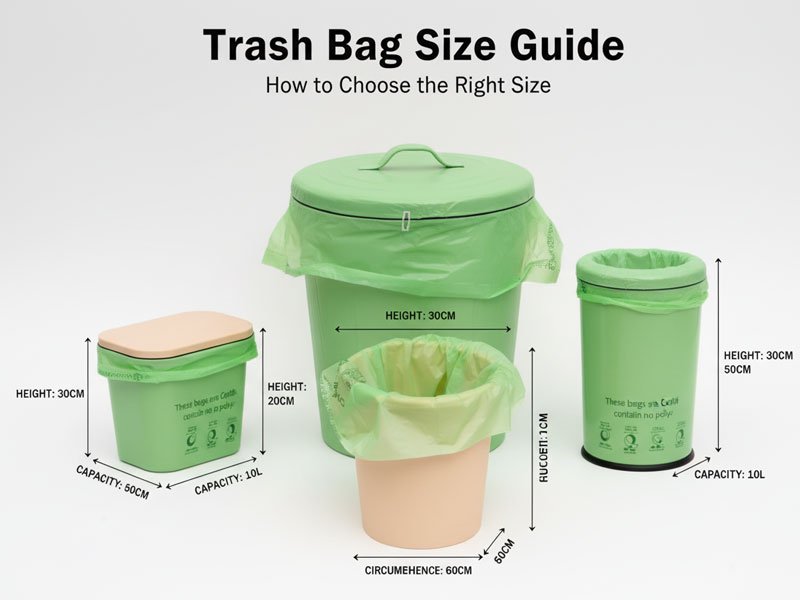
Kitchen caddies do not have one universal size.
Council-supplied and commercially available caddies may differ in width, depth, height and rim shape.
Common small-caddy liner capacities may include:
| Liner Capacity | Typical Application |
|---|---|
| 7–8L | Small benchtop kitchen caddies |
| 8–10L | Household food-waste caddies |
| 10–12L | Larger indoor kitchen caddies |
| Custom | Council, commercial or program-specific caddies |
Capacity alone does not guarantee the correct fit.
Two caddies described as “8L” can still have different dimensions.
Measure Your Kitchen Caddy Before Choosing a Liner
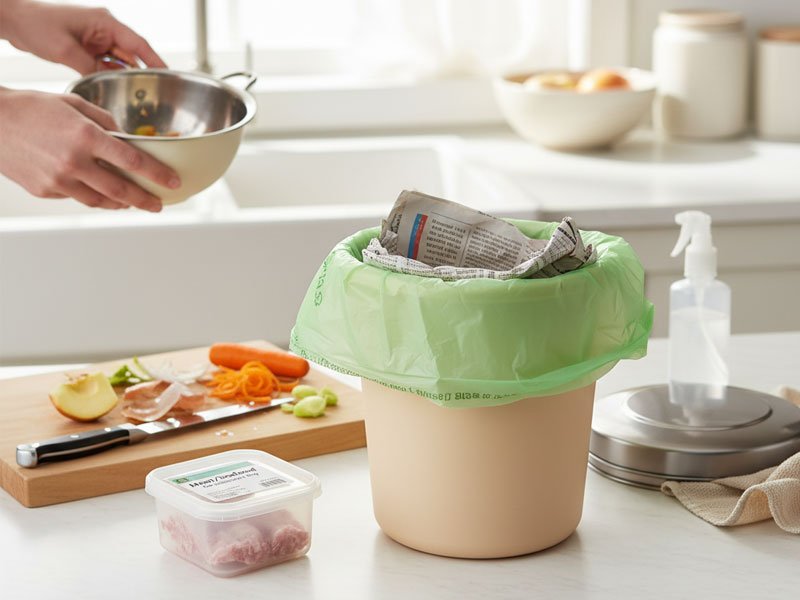
For a better fit, check:
- caddy width
- caddy depth
- caddy height
- rim dimensions
- required liner overhang
A liner should reach the bottom of the caddy without excessive stretching and should provide enough material around the rim to stay securely in place.
If you are purchasing liners in bulk for a council or commercial program, actual caddy dimensions are more useful than litre capacity alone.
For bulk 8L options, see 8L Compostable Caddy Liners for Wholesale Projects.
How to Fit a Kitchen Caddy Liner
Open the liner completely before placing it inside the caddy.
Push the base gently toward the bottom and fold the upper edge over the rim.
The liner should fit comfortably without being stretched tightly across the top of the container.
If a liner repeatedly slips down, tears around the rim or does not reach the base, check its actual width and length rather than relying only on the stated litre capacity.
What Can You Put in a FOGO Kitchen Caddy?
Accepted materials vary by local program.
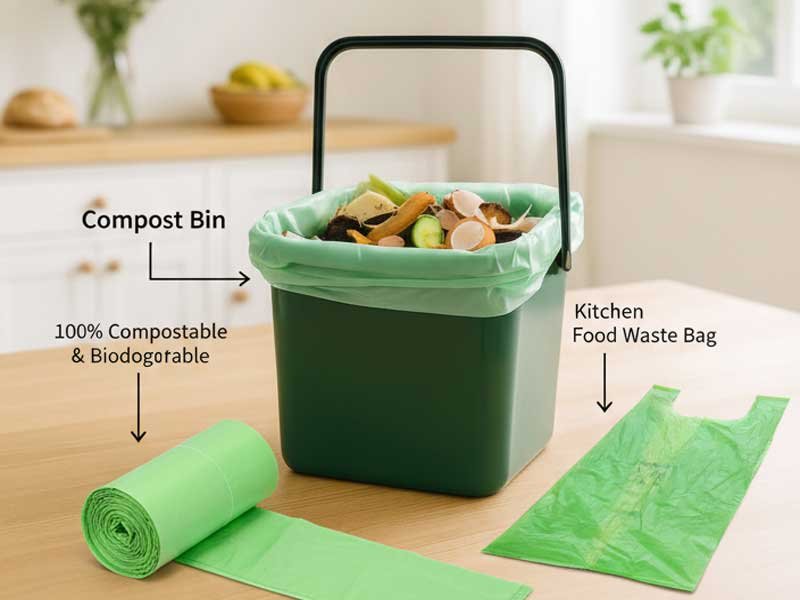
Food scraps commonly accepted in many food-organics systems may include:
- Fruit and vegetable scraps
- Meat and fish scraps
- Leftovers
- Bread and grains
- Dairy products
- Eggshells
- Coffee grounds
- Other accepted food scraps
However, local rules may differ for items such as:
- Compostable packaging
- Paper products
- Pet waste
- Tea bags
- Coffee pods
- Food containers
- Biodegradable products
Do not assume an item belongs in FOGO simply because it is described as biodegradable or compostable.
Always follow your council’s current accepted-items list.
How to Reduce Odours, Moisture and Leaks
Food scraps naturally contain moisture and can produce odours, particularly during warm weather.
Practical steps that can help include:
- Drain excess liquids where possible
- Allow hot food to cool before placing it in the caddy
- Avoid overfilling the liner
- Empty the caddy regularly
- Keep the caddy clean and dry
- Store the caddy away from excessive heat
- Freeze high-moisture meat or seafood scraps until collection day where practical
- Use a liner that properly fits the caddy
Liner dimensions, thickness and seal strength can also affect leakage performance.
If liners regularly tear or leak, review both the bag specification and the weight or moisture level of the waste being collected.
Can You Use a Kitchen Caddy Without a Liner?
In some FOGO programs, yes.
Some councils allow food scraps to be collected directly in an unlined kitchen caddy and transferred loose to the outdoor FOGO bin.
Paper or newspaper liners may also be accepted in some council areas.
However, these alternatives are not universally accepted across Australia.
Local requirements can change, so check your council’s current guidance before using:
- no liner
- newspaper
- paper bags
- paper towels
- another liner alternative
For more information about whether liners are permitted in FOGO systems, see Are Bin Liners Allowed in FOGO Bins?
What If You Run Out of Kitchen Caddy Liners?
Replacement arrangements vary by council.
Some councils provide additional liners through:
- council offices
- libraries
- community facilities
- waste centres
- online ordering
- annual household allocations
Other councils ask residents to purchase suitable liners themselves.
For council collection points, free-liner programs and retail options, see Where to Get FOGO Bags in Australia.
Common Kitchen Caddy Liner Mistakes
Using Conventional Plastic Bags
Ordinary plastic shopping bags or garbage bags should not be used as substitutes for approved compostable caddy liners in FOGO programs.
Assuming “Biodegradable” Means FOGO-Approved
“Biodegradable” is a broad term and does not by itself demonstrate compliance with a recognised compostability standard.
For a detailed explanation, see Biodegradable vs Compostable Bags.
Choosing the Liner by Litres Alone
Capacity is only a starting point.
Check the actual liner and caddy dimensions before purchasing large quantities.
Overfilling the Liner
Heavy, wet food waste can place additional stress on the film and bottom seal.
Empty the liner before it becomes excessively heavy.
Adding Items Not Accepted by the Council
FOGO rules vary.
Follow the accepted-waste list published by your local council rather than relying on general compostability claims.
Storing Compostable Liners in Hot or Humid Conditions
Compostable liners should generally be stored in a cool, dry place away from direct sunlight and excessive heat.
Proper storage can help maintain bag performance before use.
Compostable vs Biodegradable Caddy Liners
The terms are not interchangeable.
Certified compostable caddy liners are tested against defined compostability requirements.
Biodegradable liners may break down under certain conditions, but the term alone does not demonstrate that the product meets the compostability standard required by a FOGO program.
Conventional plastic liners are not substitutes for certified compostable liners where a council specifies compostable products.
For more detail, see Biodegradable vs Compostable Bags.
Does the Council Provide Food Waste Bags?
It depends on the council.
Some councils provide an initial supply of compostable caddy liners when a FOGO service is introduced. Others offer replacement rolls through council facilities, libraries or online ordering.
Some councils do not provide ongoing replacement liners and ask residents to purchase suitable products themselves.
For current examples and more information, see Where to Get FOGO Bags in Australia.
Need Kitchen Caddy Liners for a Council or Commercial Program?
This guide is designed to explain how kitchen caddy liners are used in Australian FOGO and food-waste systems.
If you are sourcing compostable caddy liners in bulk for a council, waste contractor, distributor or commercial organics program, explore our dedicated B2B products.
8L Compostable Caddy Liners for Bulk Supply
For custom 8L caddy liners, roll quantities, printing and private-label packaging.
FOGO Bin Liners for Australian Programs
For 8L–240L council, contractor and commercial FOGO liner projects.
FAQ About Kitchen Caddy Liners
What is a caddy liner?
A caddy liner is a small bag placed inside a kitchen food-waste caddy. It helps collect food scraps before they are transferred to a FOGO or food-organics bin.
What are compostable kitchen caddy liners?
Compostable kitchen caddy liners are bags designed for food-waste collection and manufactured to meet applicable compostability requirements. Whether a specific liner is accepted depends on the local FOGO program and applicable certification.
What are FOGO caddy liners?
FOGO caddy liners are compostable liners used in kitchen caddies for collecting food scraps before they are transferred to a Food Organics and Garden Organics bin.
What size kitchen caddy liner do I need?
There is no universal size. Small kitchen caddies commonly use liners in approximately the 7–12L range, but the actual width, depth, height and rim dimensions should be checked before choosing a liner.
Are FOGO caddy liners compulsory?
Not always. Some councils require or provide certified compostable liners, while others allow residents to use the caddy without a liner. Check your local council requirements.
Can I use a kitchen caddy without a liner?
In some council areas, yes. However, liner-free use and paper alternatives are not accepted everywhere, so follow your local FOGO guidance.
Which compostable liners are accepted in FOGO?
Requirements vary by program. Many Australian FOGO services specify certified compostable kitchen caddy liners, but the applicable standard, certification mark and liner requirements should be confirmed locally.
Does the council provide food waste bags?
Some councils provide free or replacement compostable caddy liners, while others require residents to purchase their own. Check your council website or see our Where to Get FOGO Bags in Australia guide.
How often should I empty my FOGO kitchen caddy?
Empty it every few days or as needed. More frequent emptying may be useful during warm weather or when the caddy contains wet food scraps, meat or seafood.
Can I use biodegradable bags in my kitchen caddy?
Do not assume a biodegradable bag is suitable. Check whether the product meets the certification requirements specified by your local FOGO service.
More About FOGO Liners in Australia
Looking for more information?
- Where to Get FOGO Bags in Australia
- FOGO Bin Liners for Australian Programs
- 8L Compostable Caddy Liners for Bulk Supply
- AS 4736 Compostable Bags Australia
- Are Bin Liners Allowed in FOGO Bins?
Looking for Bulk Compostable Kitchen Caddy Liners?
For council, distributor, waste-contractor or commercial projects, send us your caddy dimensions, liner size, quantity, roll format, printing, packaging and certification requirements.
We will review the specification and recommend a suitable B2B production option.
B2B supply only.