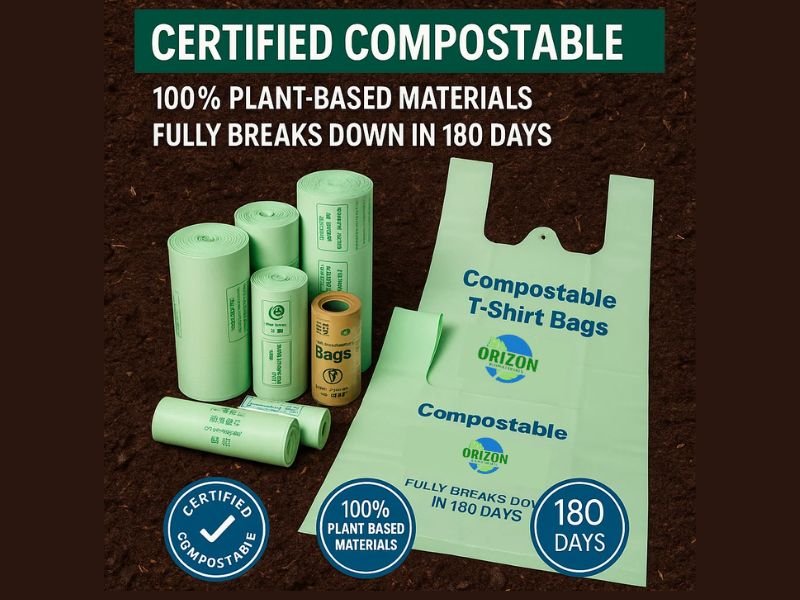
Choosing biodegradable toilet bags is an important step toward reducing plastic waste. But how you dispose of them matters just as much. Many people believe that biodegradable toilet bags can be flushed or thrown away anywhere. This is not true. Incorrect disposal can cause plumbing problems, environmental harm, and even legal issues in some regions.
If you are sourcing Compostable Toilet Bags (Wholesale & OEM), understanding the correct disposal method helps ensure compliance, safety, and real environmental benefits.
This guide explains biodegradable toilet bags disposal in clear, simple terms—so you know what to do, what to avoid, and why it matters.
Biodegradable vs Compostable Toilet Bags
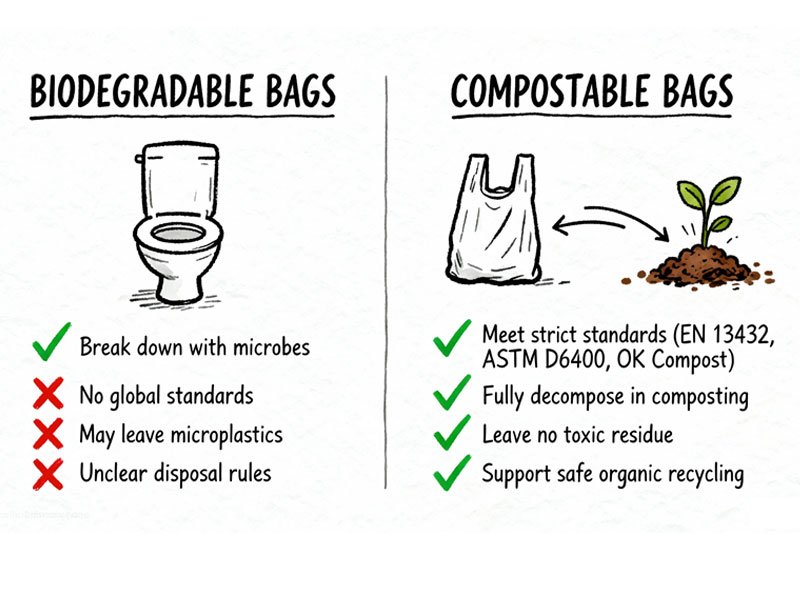
Before discussing disposal, it is important to understand the difference between biodegradable and compostable toilet bags.
What Does “Biodegradable” Mean?
Biodegradable means a material can break down over time with the help of microorganisms.
However, there is no single global standard for biodegradable materials.
Some biodegradable toilet bags:
- Break down very slowly
- Only fragment into smaller pieces
- May leave microplastics behind
This is why disposal rules are often unclear for biodegradable toilet waste bags.
What Makes Compostable Toilet Bags Different?
Compostable toilet bags are a specific category of biodegradable bags.
They must meet strict standards such as:
- EN 13432 (Europe)
- ASTM D6400 (United States)
- OK Compost (Industrial or Home)
Certified compostable toilet bags:
- Fully break down under composting conditions
- Leave no toxic residue
- Support safe organic recycling
Understanding this difference is key to proper biodegradable toilet bags disposal.
Can Biodegradable Toilet Bags Be Flushed?
No. Biodegradable toilet bags should NOT be flushed.
This is one of the most common disposal mistakes.
Even if a bag is labeled biodegradable or compostable:
- It does not dissolve like toilet paper
- It can block pipes
- It can damage sewage systems
Most wastewater treatment facilities are not designed to handle toilet bags of any kind.
Flushing biodegradable toilet bags can lead to:
- Plumbing clogs
- Costly repairs
- Environmental pollution
For safe disposal, always remove the bag from the toilet system before disposal.
Where Should Biodegradable Toilet Bags Be Disposed Of?
There are three main disposal options.
Each depends on certification, local facilities, and usage conditions.
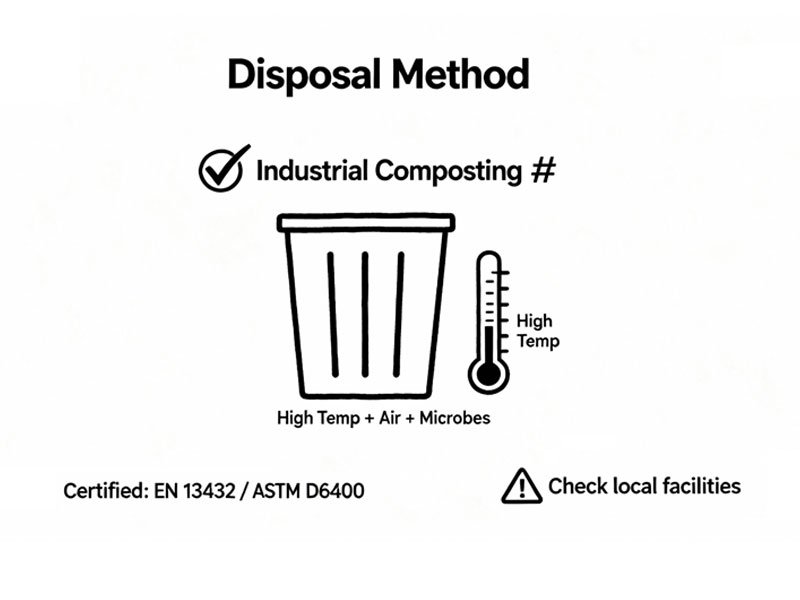
Industrial Composting Facilities (Recommended)
Industrial composting is the best disposal method for certified compostable toilet bags.
These facilities provide:
- High temperatures
- Proper airflow
- Active microorganisms
Under these conditions, compostable and biodegradable toilet bags disposal is effective and controlled.
Industrial composting is suitable for:
- EN 13432 certified bags
- ASTM D6400 certified bags
- OK Compost INDUSTRIAL products
Always check whether your local facility accepts toilet waste bags.
Home Composting (Only If Certified)
Home composting is not recommended for most biodegradable toilet bags.
Only bags certified as OK Compost HOME may be suitable.
Risks of home composting include:
- Low temperatures
- Incomplete breakdown
- Hygiene concerns
For safety reasons, many experts advise against home composting of toilet waste, especially when human waste is involved.
Landfill Disposal (Last Resort)
If composting is not available, landfill disposal may be the only option.
In landfills:
- Biodegradable toilet bags may break down slowly
- Oxygen is limited
- Decomposition is unpredictable
While landfill disposal is not ideal, certified biodegradable toilet bags are still less harmful than traditional plastic bags.
How Long Do Biodegradable Toilet Bags Take to Break Down?
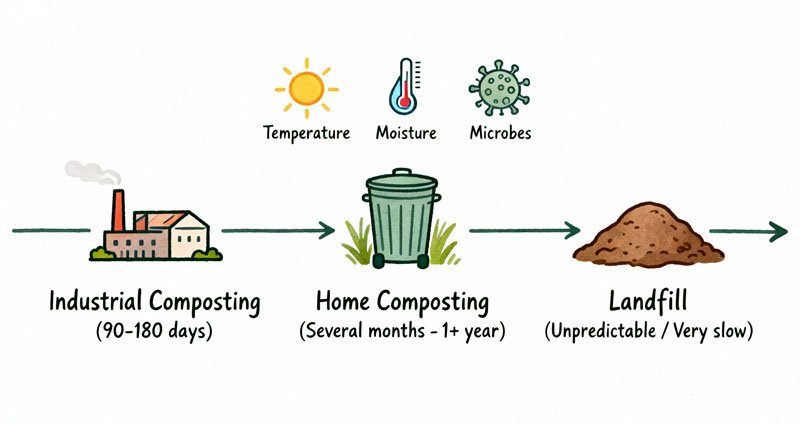
The breakdown time depends on where and how the bags are disposed of.
- Industrial composting: 90–180 days
- Home composting: several months to over one year
- Landfill: unpredictable, often very slow
Environmental factors such as temperature, moisture, and microbial activity play a major role in biodegradable toilet bags disposal.
Can Human Waste Be Composted with Biodegradable Toilet Bags?
This is a common and important question.
Industrial Composting
In industrial composting systems:
- Human waste and compostable toilet bags can be processed together
- High heat helps eliminate pathogens
- Strict monitoring ensures safety
This method is often used for:
- Portable toilets
- Event sanitation
- Emergency sanitation systems
Home Composting Risks
Home composting human waste is not recommended in most cases.
Potential risks include:
- Bacteria and parasites
- Contamination of soil
- Health hazards
Local regulations often restrict home composting of human waste. Always check local rules before attempting this type of biodegradable toilet bags disposal.
Common Disposal Mistakes to Avoid
Many problems come from misunderstanding labels and marketing claims. Avoid these common mistakes:
- Assuming biodegradable means flushable
- Ignoring compostability certifications
- Mixing toilet bags with regular plastic waste
- Using non-compostable liners in compost systems
- Failing to follow local disposal rules
Correct disposal protects plumbing, the environment, and public health.
Disposal Guidelines by Use Case
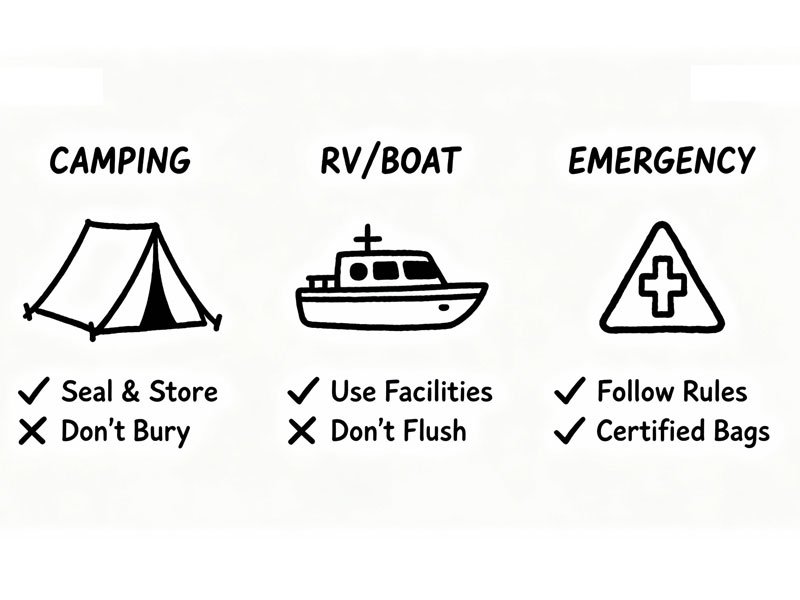
Different situations require different disposal practices.
Camping & Outdoor Toilets
For camping and hiking:
- Seal the biodegradable toilet bag after use
- Store it in a designated container
- Dispose of it at an approved composting or waste facility
Never bury toilet bags in soil unless permitted.
RV & Marine Toilets
For RVs and boats:
- Remove bags during tank cleaning
- Do not flush into marine systems
- Follow marina or campsite disposal rules
Proper biodegradable toilet bags disposal helps prevent water pollution.
Emergency & Portable Sanitation
For emergency and disaster relief use:
- Follow instructions from sanitation providers
- Use approved waste collection points
- Avoid uncontrolled dumping
Certified compostable toilet bags are often preferred in these scenarios.
Environmental Impact & Compliance Considerations
Using biodegradable toilet bags supports sustainability—but only when disposal is handled correctly.
Important considerations include:
- Avoiding greenwashing claims
- Using certified products
- Providing clear disposal instructions
Brands and distributors also share responsibility for educating end users on biodegradable toilet bags disposal.
FAQ About Biodegradable Toilet Bags Disposal
Are biodegradable toilet bags really eco-friendly?
Yes, when certified and disposed of correctly. Incorrect disposal reduces their benefits.
Do compostable toilet bags leave microplastics?
Certified compostable bags do not leave microplastics when composted properly.
Can biodegradable toilet bags break down in landfills?
They may break down slowly, but landfill conditions are not ideal.
Do cities accept compostable toilet bags?
Acceptance varies. Always check local composting guidelines.
Conclusion
Proper biodegradable toilet bags disposal is essential for real environmental impact.
Key takeaways:
- Never flush toilet bags
- Compost only when certified and permitted
- Follow local disposal rules
For reliable, certified solutions designed for portable toilets, camping, and sanitation systems, explore our Compostable Toilet Bags (Wholesale & OEM) and ensure responsible waste management from start to finish.