Extended Producer Responsibility (EPR) is changing how fashion and apparel businesses manage packaging placed on the European market.
At the same time, the EU Packaging and Packaging Waste Regulation (PPWR), Regulation (EU) 2025/40, has introduced a wider framework covering packaging design, sustainability, labelling, documentation and waste-management responsibilities.
The PPWR generally applies across the EU from 12 August 2026, although individual requirements have different application dates.
For apparel businesses, this means garment bags, e-commerce mailers, retail bags and transport packaging should no longer be treated only as purchasing specifications. They may also form part of a wider packaging compliance system.
For commercial packaging formats, see our Compostable Clothing Packaging Solutions.
Last reviewed: October 27, 2026
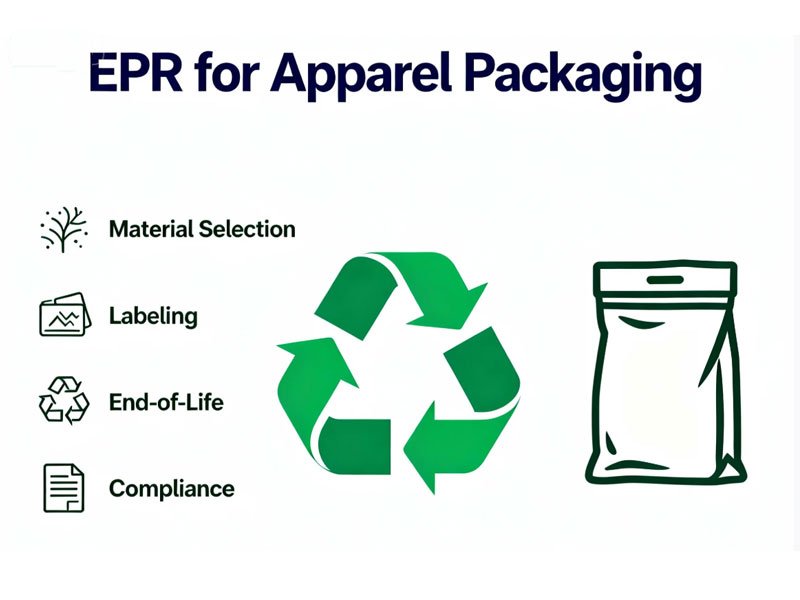
What Is Apparel Packaging EPR?
Extended Producer Responsibility makes the producer responsible for specified financial and operational obligations connected with packaging waste.
Depending on the market and the company’s role in the supply chain, these obligations may include:
- producer registration;
- reporting packaging quantities and materials;
- paying applicable EPR fees;
- participating in producer-responsibility systems;
- financing packaging-waste collection and treatment.
The company legally considered the “producer” is not always the packaging manufacturer.
For fashion brands selling across several EU markets, the responsible party may depend on where the business is established, where the packaged product is first made available and how the product reaches the customer.
EPR vs PPWR: What Is the Difference?
EPR and packaging product compliance are related, but they are not the same thing.
| Area | Typical Focus |
|---|---|
| EPR | Registration, reporting, fees and packaging-waste responsibility |
| PPWR packaging requirements | Design, material requirements, recyclability, minimisation, labelling and technical documentation |
| Compostability | End-of-life characteristic subject to specific PPWR rules |
| Certification | Evidence supporting defined standards or claims where applicable |
A packaging format can therefore be subject to EPR even if it is recyclable, compostable or made from another material.
Changing the packaging material does not normally remove the producer’s EPR responsibilities.
Which Apparel Packaging Is in Scope?
Apparel businesses may use several packaging layers before a garment reaches the final customer.
Common examples include:
Garment Bags
Individual garment bags may be used for:
- factory packing;
- garment protection;
- warehouse handling;
- SKU separation;
- retail preparation;
- e-commerce fulfillment.
E-Commerce Mailers
Outer shipping mailers are used for courier and direct-to-consumer fulfillment.
They perform a different function from the garment bag inside the parcel and should be assessed as a separate packaging component.
Retail and Carrier Bags
Shopping or carry bags supplied through retail channels may also be subject to packaging and national producer-responsibility requirements.
Cartons and Transport Packaging
Master cartons, transport packaging and other packaging used between factories, distribution centres and retail operations may also fall within the wider packaging compliance system.
Apparel brands should therefore review the complete packaging system rather than evaluating only the individual garment bag.
What Fashion Brands May Need to Do Under EPR
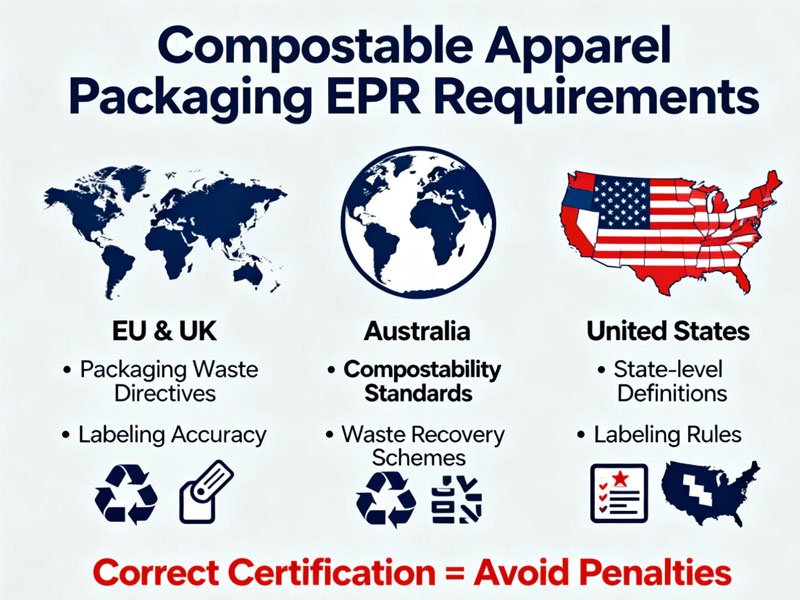
An apparel business placing packaged products on an EU market may need to determine:
- whether it is the legal producer in that market;
- whether producer registration is required;
- which packaging categories must be reported;
- how packaging weight and material data should be recorded;
- which EPR fees or producer-responsibility schemes apply;
- whether an authorised representative is required.
These obligations can vary by Member State.
A brand selling the same garment into Germany, Spain and other EU markets should not assume that one national registration automatically covers the entire EU.
What PPWR Changes for Apparel Packaging
The PPWR creates a harmonised EU framework for packaging and packaging waste.
For apparel businesses, important areas include:
- packaging material and design requirements;
- recyclability;
- packaging minimisation;
- labelling;
- technical documentation;
- conformity assessment;
- producer registration and reporting;
- extended producer responsibility.
Not every requirement applies on the same date.
Brands should therefore review both current obligations and future implementation dates when approving new long-term packaging specifications.
This is particularly important for apparel programs expected to remain in production for several years.
Does EPR or PPWR Require Compostable Garment Bags?
No. There is no general EU requirement that apparel or garment bags must be compostable.
EPR does not normally exempt a business from registration or reporting simply because its packaging is compostable.
Likewise, the PPWR does not establish compostability as the default compliance route for all flexible packaging.
The correct packaging strategy depends on:
- packaging function;
- applicable PPWR requirements;
- market;
- waste-management route;
- material;
- finished-product structure;
- the legal role of the business placing the packaging on the market.
Apparel buyers should therefore avoid assuming that “compostable” automatically means “EPR compliant” or “PPWR compliant.”
Compostable Packaging Under PPWR
PPWR Article 9 contains specific requirements for compostable packaging.
Certain packaging categories have dedicated compostability requirements or may be subject to Member State provisions.
Other packaging, including packaging made from biodegradable plastic polymers, is subject to the wider PPWR design and end-of-life framework.
For apparel packaging, this means an EN 13432 or other compostability certificate should not automatically be interpreted as proof that the finished garment bag satisfies every applicable PPWR requirement.
Buyers should distinguish between:
- material formulation;
- finished-product certification;
- packaging design requirements;
- EPR obligations;
- labelling requirements;
- market-specific waste infrastructure.
Germany and Spain: Examples of National EPR Registration
PPWR creates a common EU framework, but producer registration and reporting remain linked to national systems.
Germany
Businesses considered packaging producers in Germany may need to register with the LUCID Packaging Register and comply with the applicable German packaging EPR requirements.
Registration responsibilities should be checked against the company’s role and the packaging placed on the German market.
Spain
Spain operates the Registro de Productores de Producto – Sección Envases (RPP).
Applicable producers may be required to register and report packaging placed on the Spanish market.
The PPWR has also changed how the producer role is determined from 12 August 2026.
Other EU Markets
Other Member States operate their own registration, reporting and producer-responsibility systems.
A company selling packaged clothing into several EU countries should therefore review each target market instead of relying on one EU-wide EPR registration.
What Packaging Data Should Brands Collect From Suppliers?
EPR and PPWR preparation starts with accurate packaging specifications.
For each packaging format, apparel buyers should consider collecting:
| Packaging Data | Why It Matters |
|---|---|
| Product / packaging format | Identifies the packaging component |
| Material composition | Supports classification and technical review |
| Bag dimensions | Supports specification control |
| Thickness | Helps define material use and finished construction |
| Unit packaging weight | Important for volume and weight reporting |
| Printing | Part of the finished-product specification |
| Adhesive / closure components | May affect finished construction |
| Supplier identification | Supports traceability |
| Batch or production reference | Supports production records |
| Applicable test reports or certificates | Supports relevant claims and verification |
For garment bags, data should be collected at the finished packaging specification level, not only at raw-material level.
What Documents Should Apparel Buyers Request?
Depending on the packaging and target market, buyers may need to request supporting information such as:
- material specification;
- finished bag specification;
- dimensions and thickness;
- unit weight;
- material composition;
- applicable compostability documentation;
- relevant test reports;
- printing and ink information;
- adhesive information where applicable;
- production or batch identification;
- supporting technical documentation required for the intended market.
A supplier certificate should not automatically be treated as proof that every custom packaging SKU is covered by the same scope.
Certification applicability should be checked against the actual finished product.
For further verification guidance, visit our Evidence & Verification Center.
Common Apparel Packaging Compliance Mistakes
Assuming Compostable Means EPR Exempt
Packaging material does not normally remove producer-registration, reporting or fee obligations.
Treating EPR and PPWR as the Same Requirement
EPR is part of the wider packaging compliance framework, but registration and waste-management obligations are different from packaging product-conformity requirements.
Checking Only the Raw Material
Finished-product structure, printing, adhesives and other components may also matter.
Using “Biodegradable” Without Clear Evidence
“Biodegradable” is a broad environmental term and should not be used as a substitute for a defined compostability standard or verified finished-product claim.
Using Certification Logos Without Checking Scope
Certification-mark use should be verified against the applicable certificate, product scope and mark-use requirements.
Ignoring Country-Level EPR Registration
PPWR creates a harmonised EU framework, but businesses may still need to complete producer registration and reporting in individual Member States.
Apparel Packaging EPR & PPWR FAQ
Does EPR apply to garment bags?
Garment bags used as packaging may form part of the packaging that a producer needs to account for under applicable EPR rules. The responsible party depends on the supply chain and target market.
Does using compostable garment bags remove EPR fees?
Not automatically. Compostability does not generally remove registration, reporting or EPR responsibilities.
Does PPWR require apparel packaging to be compostable?
No. PPWR does not generally require garment or apparel packaging to be compostable.
Is EN 13432 enough for PPWR compliance?
No. EN 13432 addresses compostability requirements within its applicable scope. PPWR includes additional packaging requirements that must be assessed separately.
Does one EPR registration cover the entire EU?
Generally no. Producer registration and reporting operate through national systems, so businesses selling into multiple Member States should check each target market.
What information should apparel brands request from packaging suppliers?
At minimum, buyers should obtain clear product specifications, material information, packaging weight, traceability details and any relevant test or certification documentation required for the intended claims and market.
Review Your Apparel Packaging Specification
EPR and PPWR compliance should be reviewed alongside the actual packaging specification, target market and supply-chain structure.
For commercial garment bags, mailers and apparel packaging options, see our Compostable Clothing Packaging Solutions.
For certification and supporting documentation, visit our Evidence & Verification Center.