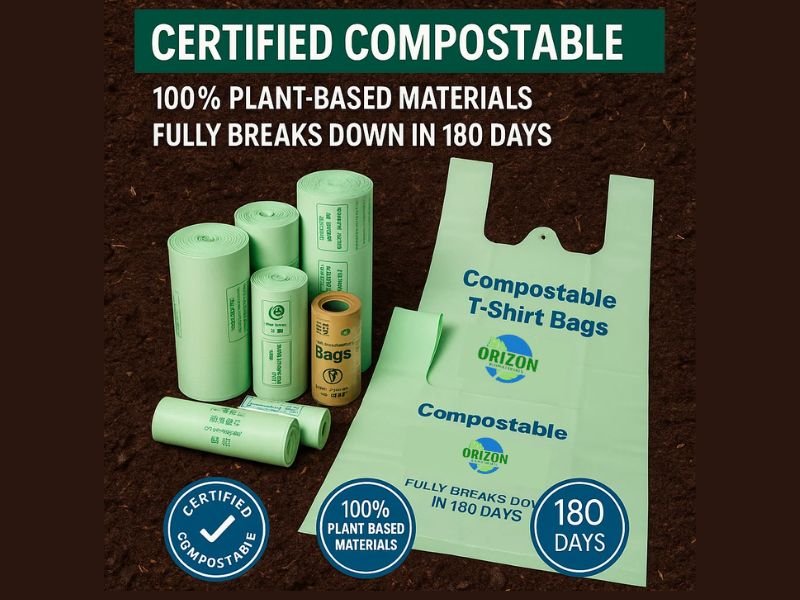
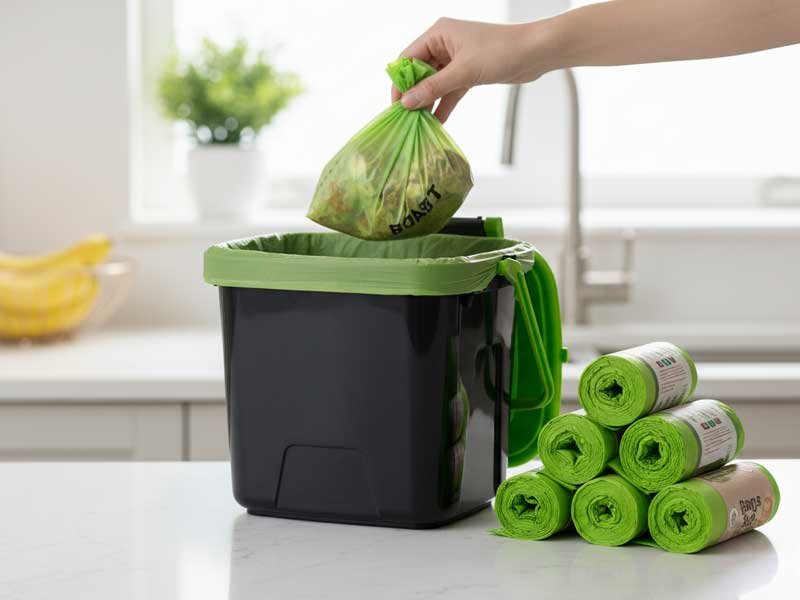
Selecting the correct garment bag size and thickness is one of the most important technical decisions when using compostable garment bags in apparel packaging.
If the bag is too small, it may damage or wrinkle the garment. If the material is too thin, the bag can tear during packing, transportation, or retail handling.
For clothing brands, retailers, and manufacturers, choosing the right garment bag dimensions and micron thickness ensures:
- product protection
- efficient packaging operations
- reduced packaging waste
- consistent customer experience
This technical guide explains standard garment bag sizes, thickness ranges, and material specifications commonly used in apparel packaging.
Why Size and Thickness Matter in Clothing Packaging
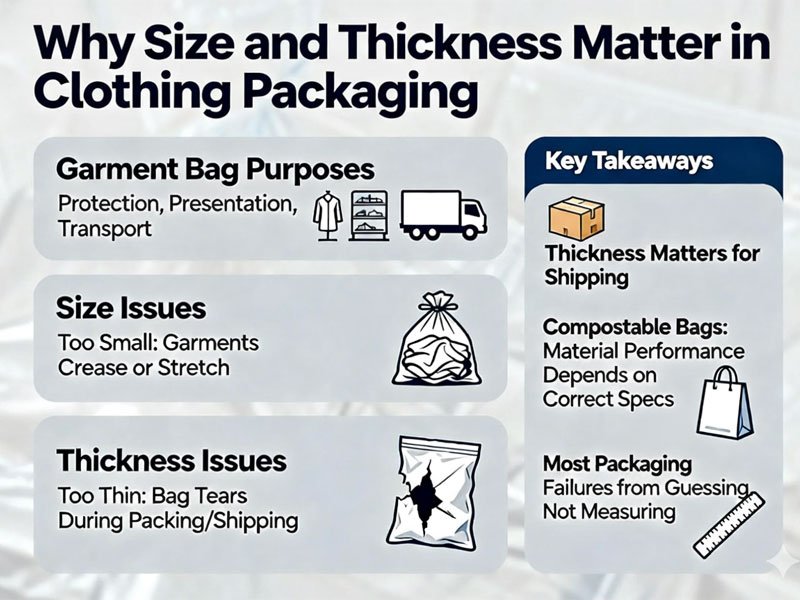
Garment bags serve three basic purposes: protection, presentation, and transport.
If the bag is too small, garments crease or stretch.
If it is too thin, the bag tears during packing or shipping.
For garment packaging for shipping, thickness matters as much as size. This is especially true for compostable garment bags , where material performance depends on correct specifications.
In my experience, most packaging failures come from guessing instead of measuring.
Garment Bag Size Chart for Apparel Packaging
Different clothing categories require different packaging sizes. The following garment bag size chart shows commonly used dimensions used in apparel packaging operations.
| Clothing Type | Recommended Bag Size | Typical Use |
|---|---|---|
| T-shirts | 30 × 40 cm | Folded retail packaging |
| Shirts | 35 × 45 cm | Standard apparel packaging |
| Sweaters | 40 × 50 cm | Medium garments |
| Dresses | 50 × 70 cm | Hanging or folded packaging |
| Jackets | 60 × 80 cm | Bulk packaging |
| Coats | 60 × 100 cm | Large garments |
These sizes are widely used by clothing brands for inner packaging protection before shipping or retail display.

How to Choose the Correct Garment Bag Size
When selecting garment bag dimensions, brands should consider several practical factors.
1 Garment folding method
Folded garments require less packaging space than hanging garments.
2 Product thickness
Sweaters, hoodies, and winter clothing require larger bags compared to lightweight garments.
3 Packaging workflow
Automated packing lines often require standardized bag dimensions for efficiency.
4 Logistics requirements
Shipping cartons and warehouse storage may influence packaging size decisions.
Selecting the correct garment bag size for clothing packaging reduces packing time and material waste.

Garment Bag Thickness Explained
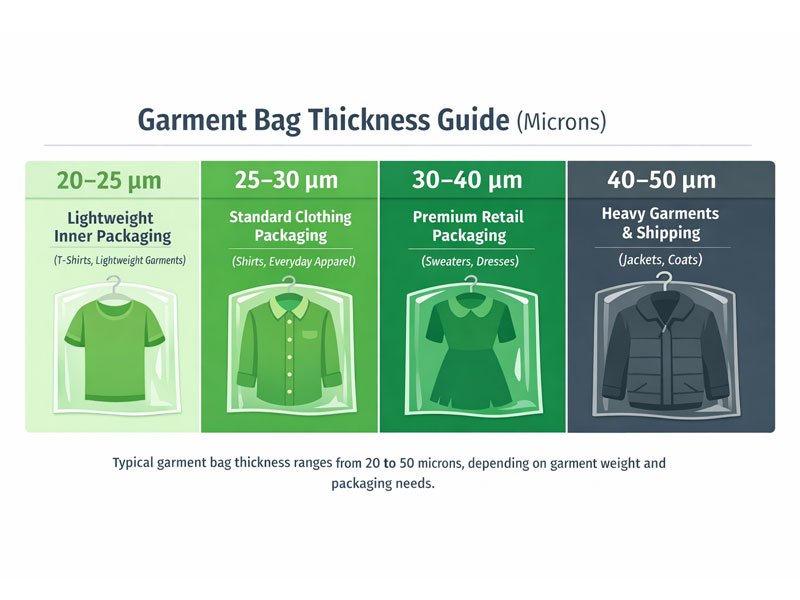
Garment bag thickness is usually measured in microns (μm).
Higher micron values indicate thicker and stronger film materials used in sustainable packaging.
Typical garment bag thickness ranges include:
| Thickness | Application |
|---|---|
| 20–25 μm | Lightweight inner packaging |
| 25–30 μm | Standard clothing packaging |
| 30–40 μm | Premium retail packaging |
| 40–50 μm | Heavy garments and shipping |
For most clothing brands, 25–35 μm provides a balance between strength and material efficiency.
Recommended Thickness for Different Garment Types
Different apparel categories require different packaging strength.
| Clothing Type | Recommended Thickness |
|---|---|
| T-shirts | 20–25 μm |
| Shirts | 25–30 μm |
| Dresses | 30–35 μm |
| Jackets | 35–40 μm |
| Coats | 40–50 μm |
Thicker films improve tear resistance and product protection during shipping.
Material Options for Garment Bags
Garment bags can be produced using different packaging materials depending on sustainability goals and regulatory requirements.
Compostable materials
Many brands are switching to PLA + PBAT compostable garment bags to reduce plastic waste.
These materials can meet international compostability standards such as EN13432 or ASTM D6400.
Traditional PE films
Polyethylene films are still widely used due to their low cost and high durability.
Recyclable packaging films
Some apparel brands use recyclable mono-material packaging or compostable apparel packaging to improve sustainability.
Each material option has different cost, durability, and environmental considerations.
Garment Bag Size Guide for Different Clothing Types
Below are additional examples used in real apparel packaging operations.
| Clothing Item | Bag Size |
|---|---|
| Polo shirts | 30 × 40 cm |
| Hoodies | 40 × 50 cm |
| Jeans | 35 × 45 cm |
| Winter coats | 60 × 100 cm |
| Long dresses | 60 × 120 cm |
This sizing guide helps packaging teams standardize their garment packaging process.
Common Packaging Problems Caused by Incorrect Specifications
Incorrect packaging specifications often lead to operational problems.
Common issues include:
- bags tearing during packing
- excessive material waste
- garments wrinkling inside packaging
- inefficient warehouse packing
Choosing the correct garment bag size and thickness can significantly improve packaging reliability.
Cost vs Performance Considerations
Packaging decisions should balance both cost and performance.
Thinner bags reduce material usage but may increase the risk of tearing. Thicker bags improve durability but increase packaging costs.
Many apparel brands optimize their packaging by selecting 25–35 μm thickness for most garments while increasing thickness only for heavy items.
Future Trends in Apparel Packaging Specifications
As sustainability regulations evolve, sustainable fashion packaging solutions are gradually replacing traditional plastic garment bags.
However, regardless of material type, correct size and thickness specifications will remain essential for packaging efficiency and garment protection.
FAQ:
What size garment bag is used for clothing packaging?
Common garment bag sizes range from 30 × 40 cm for T-shirts to 60 × 100 cm for coats, depending on garment type and folding method.
What thickness is used for garment bags?
Most compostable garment bags use 25–35 microns thickness to provide strength comparable to traditional plastic garment packaging.
What micron thickness is used for poly garment bags?
Poly garment bags typically range from 20 to 40 microns, depending on garment weight and packaging requirements.
What size garment bag fits shirts?
Shirts are typically packaged in 35 × 45 cm garment bags, which provide enough space for folded garments.
What thickness is used for compostable garment bags?
Compostable garment bags commonly use 25–35 μm thickness to provide strength similar to traditional plastic packaging.
Conclusion
Choosing the correct garment bag size and thickness is essential for efficient apparel packaging.
Standardized packaging specifications help clothing brands improve packing efficiency, reduce material waste, and ensure garments arrive in good condition.
By understanding size charts, thickness ranges, and sustainable apparel packaging solutions, apparel packaging teams can make more informed packaging decisions.
Related Guides
- EN 13432 vs ASTM D6400: Compostable Packaging Certifications Explained
- Compostable Garment Bags for Clothing Brands
- Sustainable Clothing Packaging Guide
- Compostable Apparel Packaging Solutions
source:
- European Bioplastics – Material performance guidance https://www.european-bioplastics.org/
- ASTM International – ASTM D6400 standard overview https://www.astm.org/d6400-21.html
- European Commission – EN 13432 packaging requirements https://docs.european-bioplastics.org/publications/bp/EUBP_BP_En_13432.pdf