Self Seal Compostable Garment Bags Manufacturer
Self-seal compostable garment bags are clothing packaging bags with an adhesive flap or sealing strip that allows the bag to be closed after the garment is inserted.
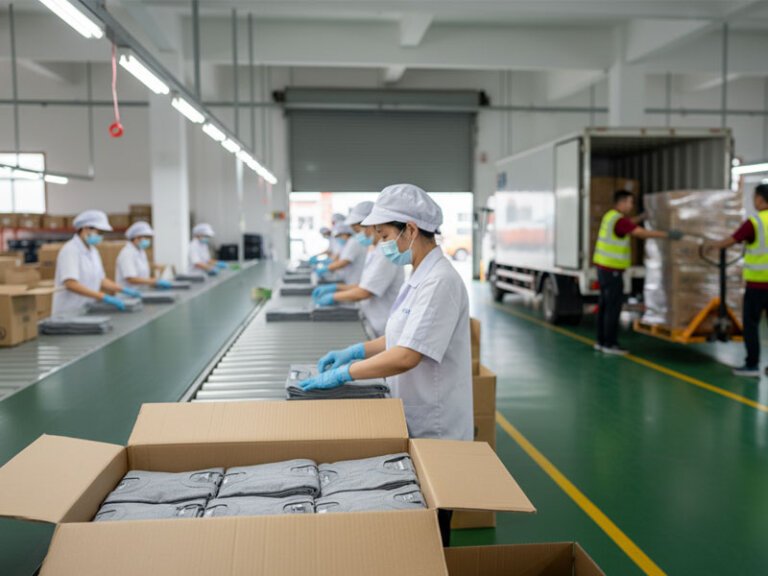
They are commonly used for warehouse packing, e-commerce fulfillment, retail preparation and apparel distribution where garments need to remain enclosed during handling.
Custom dimensions, thickness, flap size, film appearance, printing and bulk packing are available for B2B apparel packaging projects.
- OEM & Wholesale
- Self-Seal Adhesive Closure
- Custom Size & Printing
Standard customized production typically starts from approximately 500 kg per specification or design.

What Is a Self-Seal Compostable Garment Bag?
A self-seal compostable garment bag is a flexible apparel packaging bag with an adhesive flap or strip closure.
After the garment is inserted, the flap is folded over and pressed into place to close the bag.
Compared with a flat open-top garment bag, the self-seal structure helps keep the garment enclosed during warehousing, fulfillment, distribution and retail preparation.
Typical applications include:
- T-shirts and shirts;
- knitwear;
- underwear;
- activewear;
- fashion accessories;
- e-commerce apparel orders; and
- private-label clothing packaging.
The correct bag specification depends on the folded garment dimensions, containment requirements, packing workflow and closure requirements.
How Does a Self-Seal Garment Bag Work?
The garment is inserted through the bag opening, then the adhesive flap is folded over and pressed into place.
Depending on the project, the closure can be customized around:
- flap length;
- adhesive-strip position;
- peel liner;
- opening direction;
- resealing requirements; and
- packing workflow.
Whether the closure is intended for one-time sealing or any form of resealing should be confirmed as part of the finished-bag specification.
The adhesive system should be reviewed together with the film structure because the closure is part of the finished-bag specification.
Where Are Self-Seal Garment Bags Used?
Self-seal garment bags are commonly used where garments need to remain enclosed after packing.
Typical applications include:
- e-commerce apparel fulfillment;
- warehouse packing;
- retail-ready garment preparation;
- clothing distribution;
- branded apparel packaging; and
- private-label packaging programs.
They are particularly useful when the bag needs a simple closure without adding a separate label, tape or external sealing step.
Self-Seal vs Flat Open-Top Garment Bags
| Feature | Self-Seal Garment Bag | Flat Open-Top Garment Bag |
|---|---|---|
| Closure | Adhesive flap / strip | No adhesive closure |
| Packing step | Insert + close | Insert only |
| Bag condition after packing | Enclosed | Remains open |
| Typical use | E-commerce, warehouse, retail preparation | Factory packing, export cartons |
| Added component | Adhesive closure system | Simpler flat structure |
| Best fit | Garments requiring enclosed packaging | Fast bulk packing |
The correct format should be selected according to the packing workflow and garment requirements, rather than assuming one closure style is better for every application.
Self-Seal Compostable Garment Bag Specifications
| Item | Custom Options |
|---|---|
| Bag Structure | Flat garment bag with adhesive flap |
| Closure | Self-seal adhesive strip |
| Dimensions | Custom width, length and flap size |
| Thickness | Selected according to garment and handling requirements |
| Material | Compostable PBAT / PLA / starch-based formulations |
| Film Appearance | Clear, frosted, tinted or custom where applicable |
| Printing | Logo, barcode, SKU information or custom artwork |
| Ventilation | Optional ventilation holes |
| Packing | Bulk stacks, inner packs and export cartons |
| MOQ | Typically approx. 500 kg per specification or design |
Equivalent bag quantities vary according to dimensions, thickness, flap structure and finished-bag configuration.
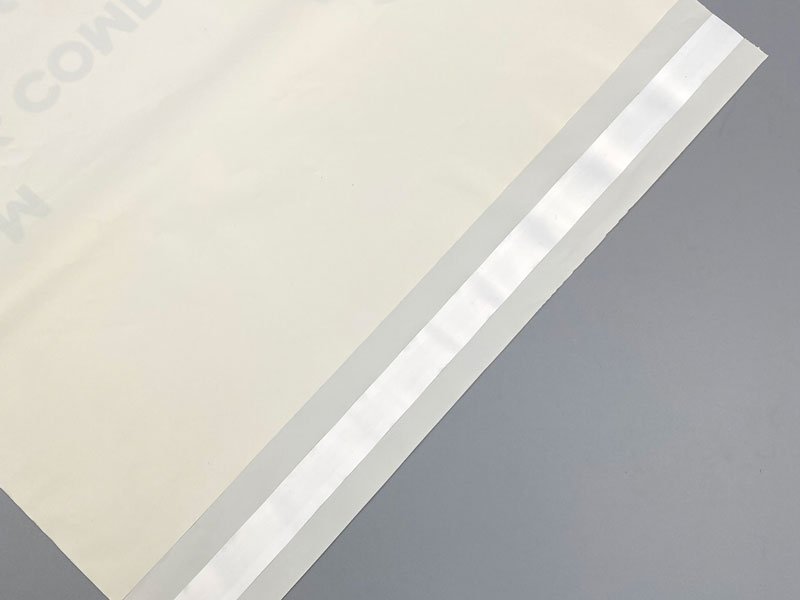
Adhesive Strip & Closure Performance
The adhesive closure is an important part of the finished garment-bag specification.
Buyers should confirm:
- flap dimensions;
- adhesive-strip location;
- closure strength;
- ease of peeling and sealing;
- film compatibility;
- storage conditions; and
- whether the adhesive or liner affects the applicable certification scope.
Closure performance should be evaluated on the finished bag, not assumed from the adhesive material alone.
For repeat OEM production, the approved flap and adhesive configuration can be recorded as part of the production specification.
Film Clarity, Printing & Barcode Visibility
Self-seal garment bags can be produced with clear, frosted, tinted or other film appearances depending on the project.
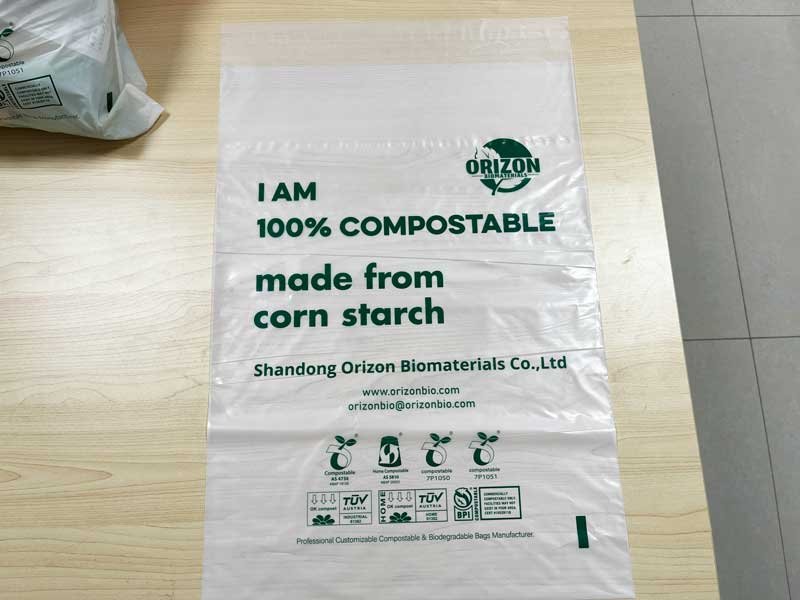
For printed apparel packaging, buyers should consider:
- logo size;
- print coverage;
- barcode location;
- SKU information;
- film transparency;
- background contrast; and
- scanner performance.
Where barcode scanning is required, the final artwork should be reviewed on the intended film color and thickness before mass production.
Custom Printing & OEM Packaging
Self-seal compostable garment bags can be customized for apparel brands, garment factories, distributors and private-label packaging programs.
Available options may include:
- custom bag dimensions;
- custom film thickness;
- custom flap length;
- adhesive-strip position;
- transparent, frosted or tinted film;
- logo and artwork printing;
- barcode and SKU printing;
- ventilation holes;
- custom inner packing; and
- export carton configuration.
If you currently use a conventional PE self-seal garment bag, the existing specification, drawing or physical sample can also be used as a development reference.

Compostable Alternative to Conventional Self-Seal Polybags
Conventional PE self-seal bags are widely used in apparel packaging because they are lightweight, transparent and familiar to factory and fulfillment operations.
Self-seal compostable garment bags can be considered where a buyer requires a defined compostability specification while still needing an enclosed garment package.
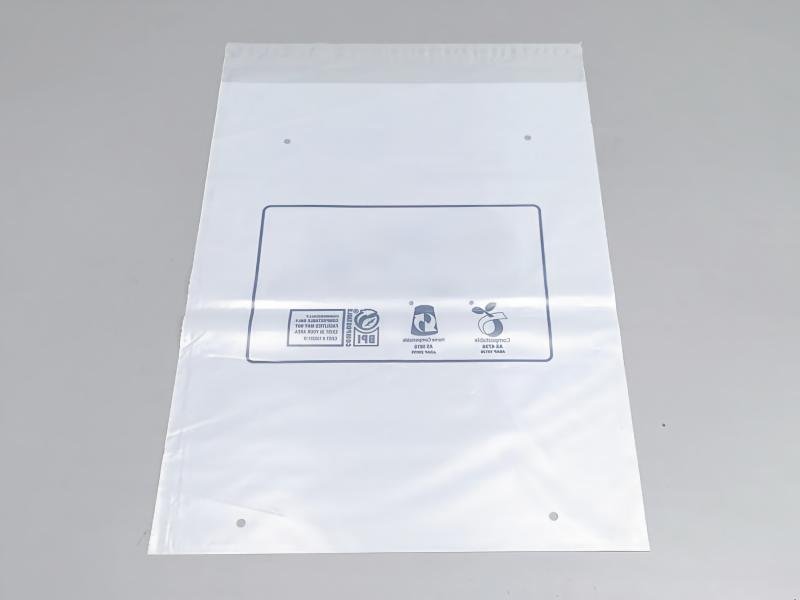
When comparing the two, buyers should consider:
- garment protection;
- film thickness;
- clarity;
- closure performance;
- storage requirements;
- unit cost;
- packing efficiency;
- certification requirements; and
- the intended end-of-life route.
Compostable packaging should not automatically be treated as a universal replacement for conventional plastic. The correct option depends on the apparel product, supply chain, target market and available waste infrastructure.
For a broader comparison, see Compostable vs Plastic Packaging for Clothing Brands.
Certification & Adhesive Components
Compostability certification for a self-seal garment bag should be reviewed against the complete finished-product specification, not only the base film.
The adhesive strip, release liner and closure structure may form part of the finished product and should therefore be considered during certification review.
Relevant technical standards may include:
- EN 13432
- ASTM D6400
- AS 4736
- AS 5810
Third-party certification programs and conformity marks may include those administered by:
- BPI
- TÜV AUSTRIA
- ABA
- DIN CERTCO
Certification & Adhesive Components
ORIZON’s current OK compost INDUSTRIAL and OK compost HOME certificates by TÜV AUSTRIA state the Product Types:
“Bags for collection of biodegradable refuse”
“Shopping bags (check-out bags)”
Self-seal garment bags and apparel packaging bags should not automatically be assumed to fall within these TÜV AUSTRIA certificate scopes.
Certification applicability must be confirmed against the applicable current certificate, product classification and final finished-product specification.
Relevant variables may include:
- film formulation;
- film thickness;
- film colour;
- printing and ink;
- adhesive strip;
- release liner;
- additives;
- flap and closure structure; and
- other finished-product components.
Certification or conformity marks should only be printed where the applicable finished-product scope and all relevant mark-use authorization requirements have been confirmed.
OEM & Bulk Supply
ORIZON manufactures self-seal compostable garment bags for B2B apparel packaging projects.
Custom production can be developed around:
- bag size;
- film thickness;
- flap dimensions;
- adhesive configuration;
- printing;
- packing method; and
- target-market requirements.
Standard customized production typically starts from approximately 500 kg per specification or design. Product-specific trial quantities may differ.
FAQ
A self-seal garment bag includes an adhesive flap or sealing strip that allows the bag to be closed after the garment is inserted.
Self-seal bags use an adhesive closure and keep garments enclosed after packing. Open-top bags do not use an adhesive closure and may be suitable for factory, warehouse or export packing workflows where a separate closure is not required.
Yes. Bag dimensions, flap length and adhesive-strip position can be customized according to the garment and packing workflow.
Yes. Custom logo, barcode, SKU information and artwork printing can be reviewed according to the finished-bag specification.
It can. The base film, adhesive strip, release liner, printing and other finished-product components should be reviewed together against the applicable certification scope.
Certification should not be assumed from the film alone.
Standard customized production typically starts from approximately 500 kg per specification or design. Equivalent bag quantities vary according to dimensions, thickness and configuration.
Not automatically.
ORIZON’s current OK compost INDUSTRIAL and OK compost HOME certificates state the Product Types “Bags for collection of biodegradable refuse” and “Shopping bags (check-out bags)”.
Self-seal garment bags should therefore be reviewed separately against the applicable current certificate, product classification and final finished-product specification before TÜV certification claims or conformity marks are used.
Custom Self-Seal Compostable Garment Bags
Send us your required size, thickness, flap, printing and quantity for a project review and quotation.