Opening a dog waste bag quickly during a walk is essential for pet owners.
Poorly designed bags can be difficult to separate or tear from the roll, leading to a frustrating user experience.
For compostable dog waste bags, easy-open performance is achieved differently compared with conventional polyethylene bags.
Unlike PE bags, compostable films made from PLA and PBAT typically do not require heavy emboss textures to prevent sticking. Instead, manufacturers focus on material formulation, film thickness, and optimized perforation design to ensure smooth bag separation and opening.
This guide explains how compostable dog waste bags are engineered to remain easy to open while maintaining durability and certified compostability.
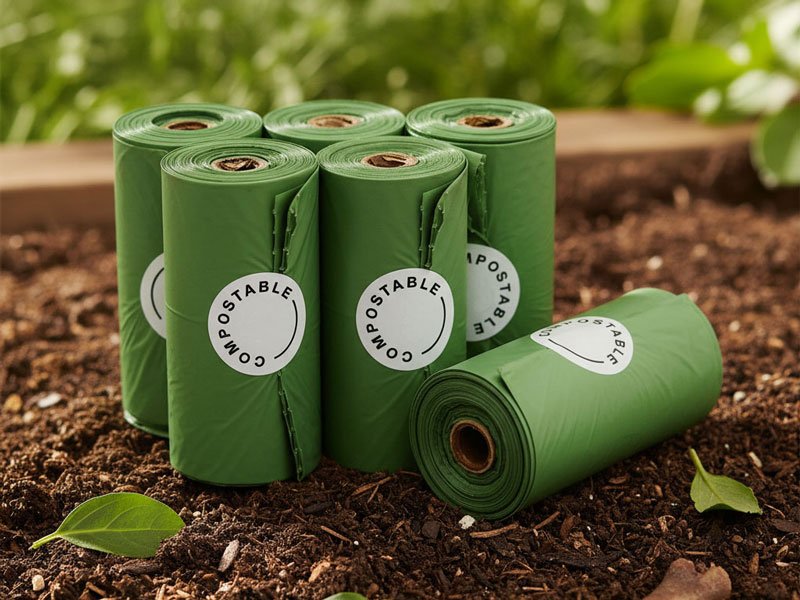
Why Compostable Dog Waste Bags Behave Differently from PE Bags
Traditional plastic dog waste bags are usually made from polyethylene (PE).
PE films have very smooth surfaces and can easily stick together, especially when rolled tightly.
Because of this, PE bags often require embossed textures to reduce surface contact.
Compostable bags behave differently.
Most compostable dog waste bags are made from PLA + PBAT biodegradable films, which have naturally higher surface friction than polyethylene.
This means:
- bags are less likely to cling together
- opening performance is naturally improved
- emboss textures are generally unnecessary
As a result, many compostable dog waste bag manufacturers avoid embossing because it can weaken thin films and affect strength consistency.
Material Formulation and Film Structure
The first factor affecting easy opening is film formulation.
Compostable films typically combine:
| Material | Function |
|---|---|
| PLA | structural rigidity |
| PBAT | flexibility and toughness |
This material structure provides a balanced film that maintains:
- flexibility
- tear resistance
- natural surface friction
Because of this friction, compostable bags separate more easily compared with smooth PE films.
To learn more about compostable dog waste bag production, see our dog waste bags manufacturing guide.
Film Thickness and Bag Opening Performance
Film thickness also influences how easily bags can be opened.
Typical compostable dog waste bag thickness:
Before selecting thickness, it is helpful to understand the standard dog waste bag dimensions used by most pet brands.
| Thickness | Application |
|---|---|
| 15 microns | economy bags |
| 18 microns | most common |
| 20 microns | premium durability |
If the film is too thin, bags may collapse or become difficult to open.
Many brands therefore prefer 18-micron compostable films, which provide a balance between durability and usability.
For more details on standard bag dimensions, see our dog waste bag size guide.
Perforation Design for Easy Separation
One of the most important factors affecting usability is perforation quality.
Dog waste bags are supplied in rolls with perforation lines between each bag.
High-quality perforation ensures:
- smooth tearing from the roll (This is one of the most important steps in the dog waste bags manufacturing process.)
- no accidental tearing of multiple bags
- consistent bag length
If perforation is poorly designed, users may struggle to separate bags during use.
Experienced manufacturers carefully adjust perforation strength based on:
- film thickness
- bag length
- roll tension
Roll Structure and Winding Control
Another key factor is the roll winding process.
During production, bags are wound tightly into compact rolls to fit standard dispensers.
Proper roll design must balance:
| Factor | Function |
|---|---|
| roll tension | prevents sticking |
| bag alignment | ensures clean tearing |
| roll diameter | fits common dispensers |
Incorrect winding tension can compress bags too tightly, making them harder to open.
Quality Control in Compostable Bag Production
Reliable compostable bag manufacturers implement strict quality control procedures.
These include:
- film thickness measurement
- tensile strength testing
- perforation strength verification
- leak resistance testing
Quality inspection ensures that bags remain easy to open while maintaining durability during use.
Working with an Experienced Compostable Bag Manufacturer
Developing high-quality compostable dog waste bags requires experience in both material processing and film conversion.
Professional manufacturers can optimize:
- PLA + PBAT film formulation
- extrusion parameters
- perforation design
- roll winding consistency
These factors ensure the final product remains durable, easy to open, and compliant with international compostability standards.
If you are sourcing private label compostable dog waste bags, it is important to work with an experienced manufacturer., you can learn more about our production capabilities here: Compostable Dog Waste Bags Manufacturer.
Conclusion
Easy-open performance is an important feature in dog waste bags, especially for daily outdoor use.
For compostable bags, manufacturers achieve this not through emboss textures commonly used in polyethylene bags, but through:
- optimized PLA + PBAT film formulation
- appropriate film thickness
- precision perforation design
- controlled roll winding
These engineering improvements ensure compostable dog waste bags remain user-friendly and reliable for daily pet waste collection.