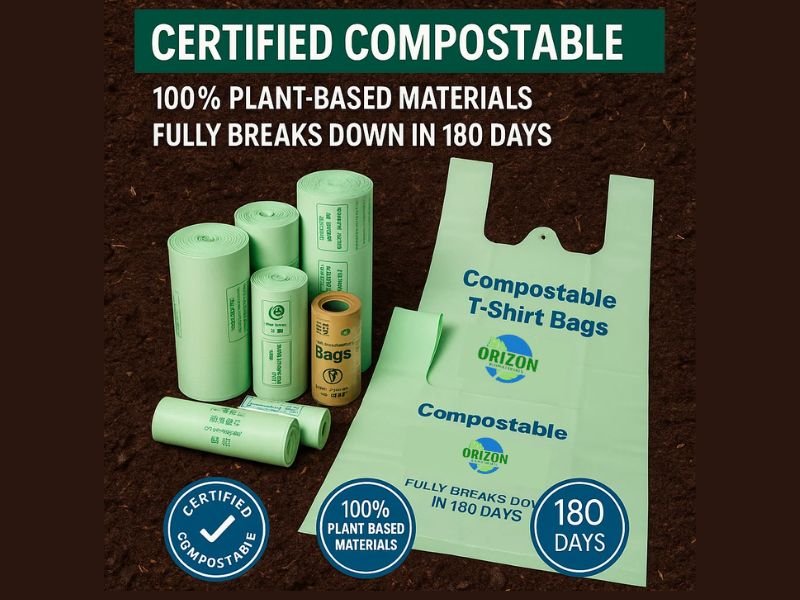
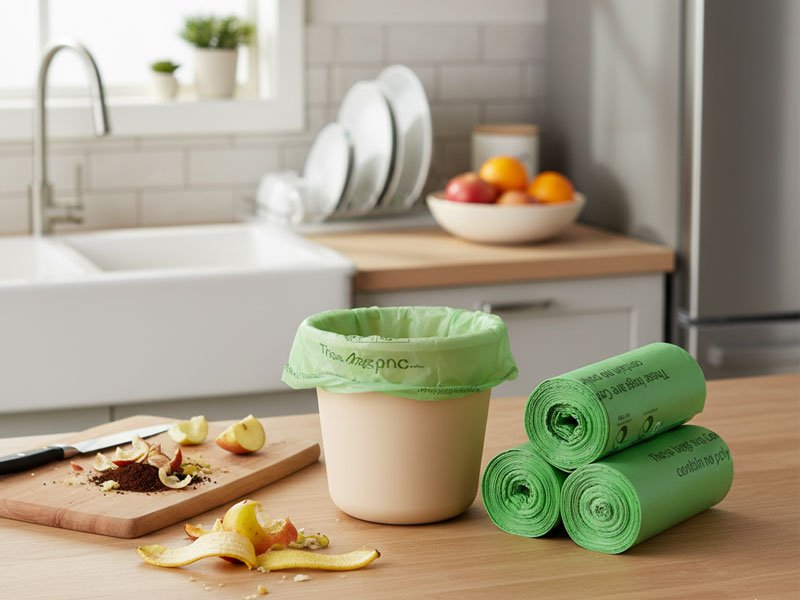
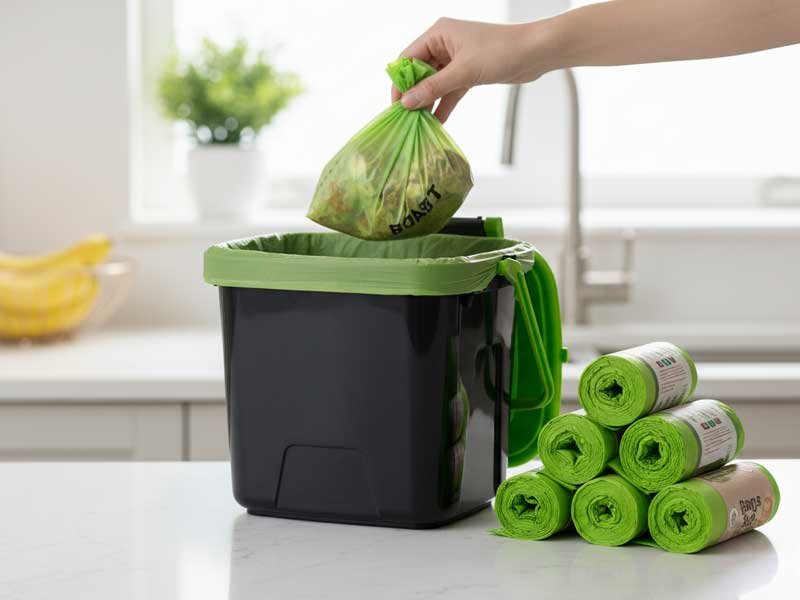
Non plastic trash bags refer to waste bags designed to reduce or eliminate the use of conventional petroleum-based plastics.
With increasing regulations on single-use plastics and growing demand for sustainable packaging, many businesses are actively looking for alternatives to traditional plastic garbage bags. However, not all “non plastic” options are truly sustainable or suitable for real waste systems.
In this guide, we break down the main types of non plastic trash bags, how they compare, and which solutions actually work for commercial use, waste collection, and private label applications.
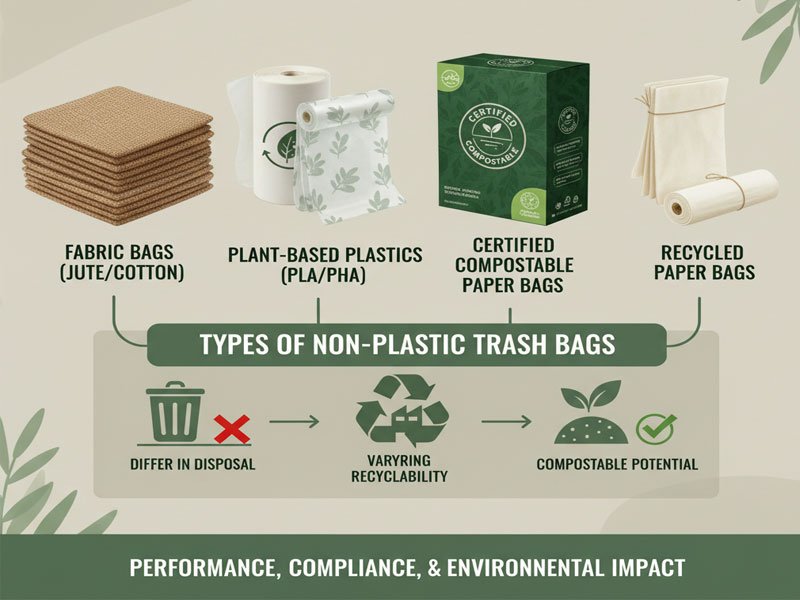
What Types of Non Plastic Trash Bags Exist?
There are several alternatives to traditional plastic trash bags, but they differ significantly in performance, compliance, and environmental impact.
Common options include:
1. Compostable Trash Bags (PLA + PBAT)
- Made from plant-based and biodegradable materials
- Designed to break down in composting systems
- Certified under standards like EN13432, ASTM D6400
👉 This is currently the most reliable non plastic solution for waste management.
2. Paper-Based Trash Bags
- Made from kraft paper or recycled paper
- Fully plastic-free
- Limited strength, especially for wet waste
👉 Suitable for dry waste only, not ideal for food waste or commercial use.
3. Recycled Plastic Bags
- Made from post-consumer plastic
- Reduce plastic waste but still plastic
👉 Not truly “non plastic” and not biodegradable.
4. Oxo-Degradable Bags (Not Recommended)
- Conventional plastic with additives
- Break into microplastics
👉 Increasingly restricted and not accepted in composting systems.
Non Plastic vs Compostable vs Biodegradable vs Plastic
Understanding these differences is critical for buyers.
Plastic Bags
- Made from petroleum-based polymers
- Do not degrade naturally
Biodegradable Bags
- Break down over time
- Often lack certification
- Not accepted in many waste systems
Compostable Bags (Certified)
- Break down into organic matter
- Require industrial or home composting conditions
- Must meet strict certification standards
Learn more:
Key takeaway:
👉 Not all non plastic bags are compostable
👉 Certified compostable bags are the only scalable alternative for waste systems
Where Non Plastic Trash Bags Are Used
Different industries require different solutions.
Typical applications:
- Food waste collection (FOGO programs)
- Commercial kitchens and restaurants
- Retail and supermarkets
- Cleaning and facility services
- Municipal waste systems
- Pet waste disposal
Related solution pages:
What Buyers Should Evaluate Before Choosing
Choosing the right non plastic trash bag requires more than just a sustainability claim.
1. Certification (Critical)
Look for:
- EN 13432 (EU)
- ASTM D6400 / BPI (USA)
- AS4736 / AS5810 (Australia)
Certified compostable = accepted in waste systems
2. Strength & Thickness
- Thin bags → leakage risk
- Thick bags → higher cost
Balance is key for commercial use
3. Size & Capacity
- 13 gallon (US standard)
- 20L / 120L / 240L (EU & AU systems)
Match application scenario
4. Moisture Resistance
Especially important for:
- food waste
- kitchen use
- organic waste collection
5. MOQ & Supply Stability
- Can the supplier support bulk orders?
- Is OEM/private label available?
- Is production in-house?
Learn more: OEM Compostable Bags
Common Mistakes When Switching from Plastic
Many buyers transition to non plastic solutions without fully understanding performance differences.
Common mistakes:
- Assuming paper bags can replace plastic in all cases
- Using biodegradable bags in compost systems
- Ignoring certification requirements
- Choosing based on price only
- Overlooking storage and shelf life
Related: Why Councils Reject Biodegradable Bin Liners
B2B Sourcing Advice: Choosing the Right Non Plastic Solution
For distributors, brands, and importers, the goal is not just to replace plastic—but to ensure performance and compliance.
Recommended approach:
- Prioritize certified compostable materials
- Work with experienced manufacturers
- Verify certifications (not just claims)
- Request samples for testing
- Ensure consistent quality across batches
Recommended reading:
FAQ
Are non plastic trash bags completely plastic-free?
Not always. Many compostable bags still contain biodegradable polymers like PBAT, but they are certified to break down safely.
What is the best alternative to plastic trash bags?
Certified compostable trash bags are currently the most practical and scalable solution.
Are paper trash bags a good replacement?
Only for dry waste. They are not suitable for wet or heavy waste.
Can biodegradable bags replace plastic bags?
Not reliably. Many are not accepted in composting systems.
Looking for reliable non plastic trash bag solutions for your business?
Explore:
Or contact us for specifications, samples, and pricing.