Choosing the right cat litter waste bags is not just about picking any small trash bag. For distributors, brands, and bulk buyers, bag size, film thickness, and leak resistance all affect product performance and customer satisfaction.
Cat litter is often heavy, damp, and sharp in texture. If the bag is too thin, it may tear during use. If the size is too small, it becomes difficult to tie and carry. If the sealing is weak, leakage becomes a real problem.
This guide explains how to choose cat litter waste bags based on practical buying standards, especially for B2B sourcing and OEM projects.
What Are Cat Litter Waste Bags?
Cat litter waste bags are bags used to collect and dispose of used cat litter and pet waste from litter boxes. Compared with ordinary household trash bags, these bags usually need better puncture resistance, sealing strength, and odor control performance.
For buyers, cat litter waste bags are commonly used in:
- pet product retail programs
- private label pet care lines
- supermarket and e-commerce packaging
- cleaning and sanitation supply channels
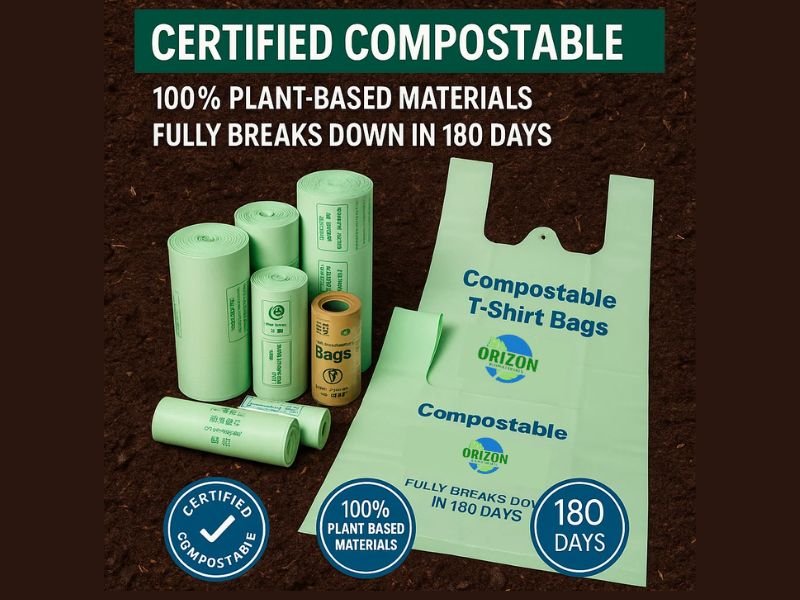
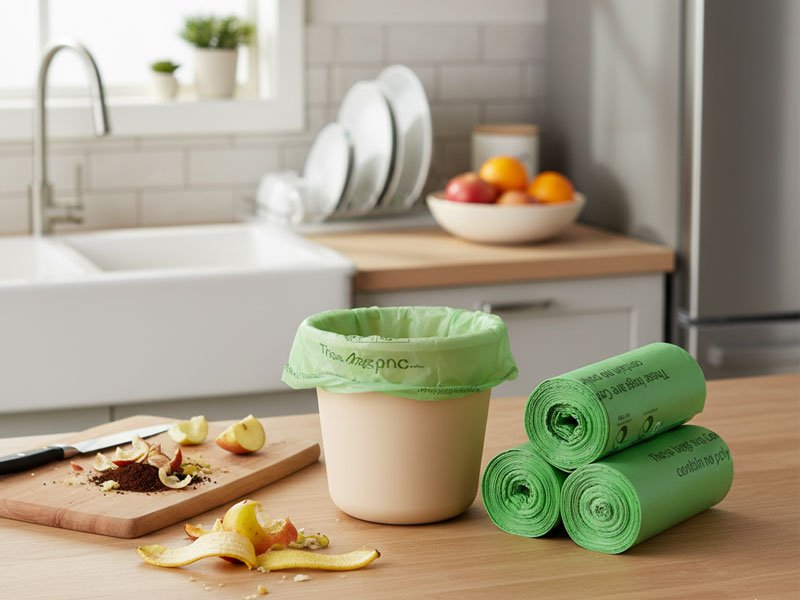
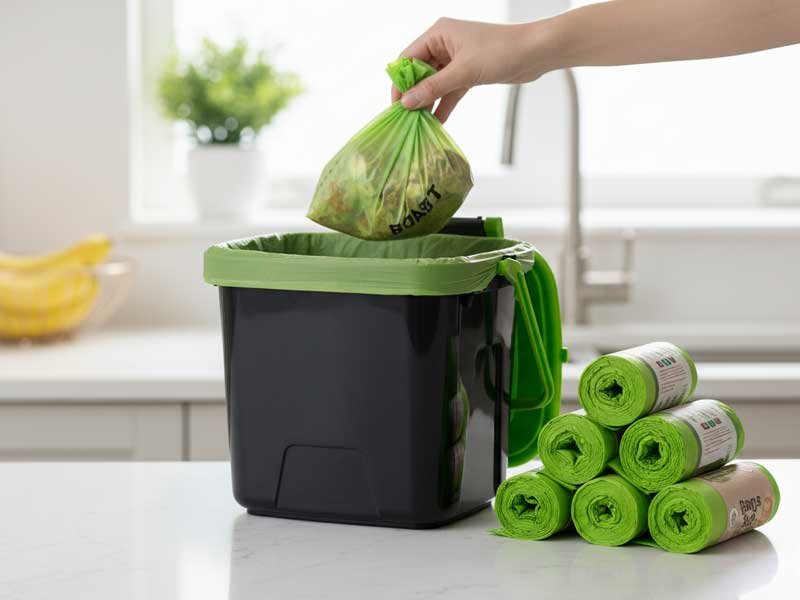
Some buyers also prefer biodegradable or compostable options to support more sustainable product positioning.
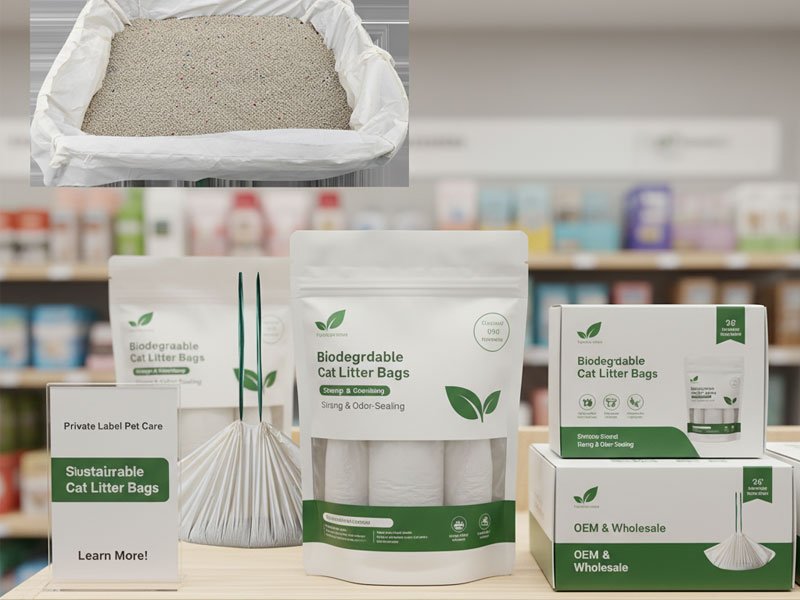
If you are sourcing finished products for the pet care market, you can also explore our Biodegradable Cat Litter Bags for OEM and wholesale options.
Why Size Matters for Cat Litter Waste Bags
Size is one of the first things buyers should check. A bag that is too small may not fit daily cleaning needs. A bag that is too large may increase material cost unnecessarily.
In most cases, cat litter waste bags should be large enough to:
- hold daily scooped litter waste
- leave enough extra space for tying
- reduce the risk of overflow during carrying
Common bag sizes depend on the usage scenario:
Small Size
Suitable for daily scooping and single-use cleaning. Often used in compact litter box routines.
Medium Size
Suitable for households with one or two cats and more frequent waste collection.
Large Size
Suitable for deeper litter boxes, multi-cat homes, or pet care brands that want a more versatile bag size.
When choosing size, buyers should not only look at length and width, but also consider whether the bag has enough opening space and carrying convenience.
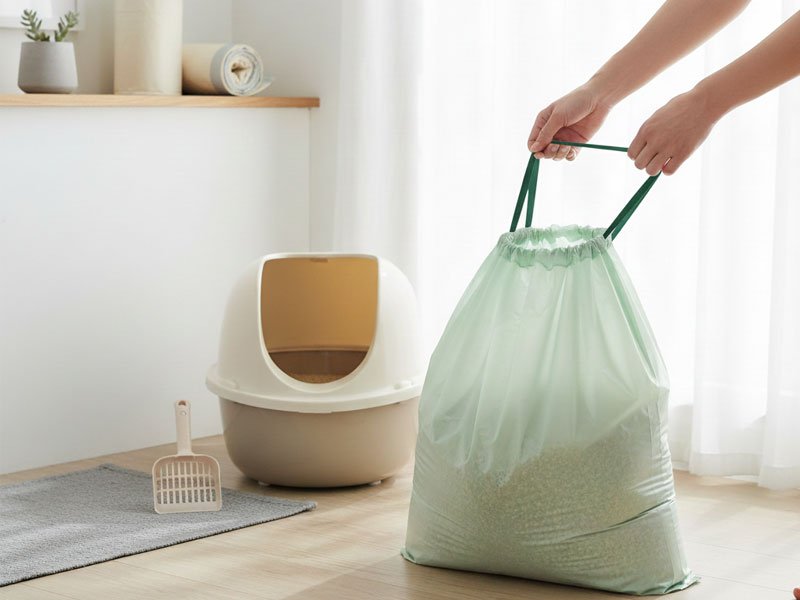
How Thick Should Cat Litter Waste Bags Be?
Thickness directly affects bag strength, puncture resistance, and leak control. Cat litter waste is heavier than ordinary dry waste, so bag thickness is especially important.
In general:
- too thin = easier tearing or leakage
- too thick = higher cost and less competitive pricing
- balanced thickness = better strength-cost ratio
For cat litter waste bags, buyers usually need a thickness that can handle:
- wet waste
- sharp litter particles
- knot tying stress
- short-distance carrying after cleanup
A thicker bag is not always better. The right thickness depends on bag size, material blend, and intended use.
To understand how thickness affects strength and cost, read our Compostable Bag Thickness Guide.
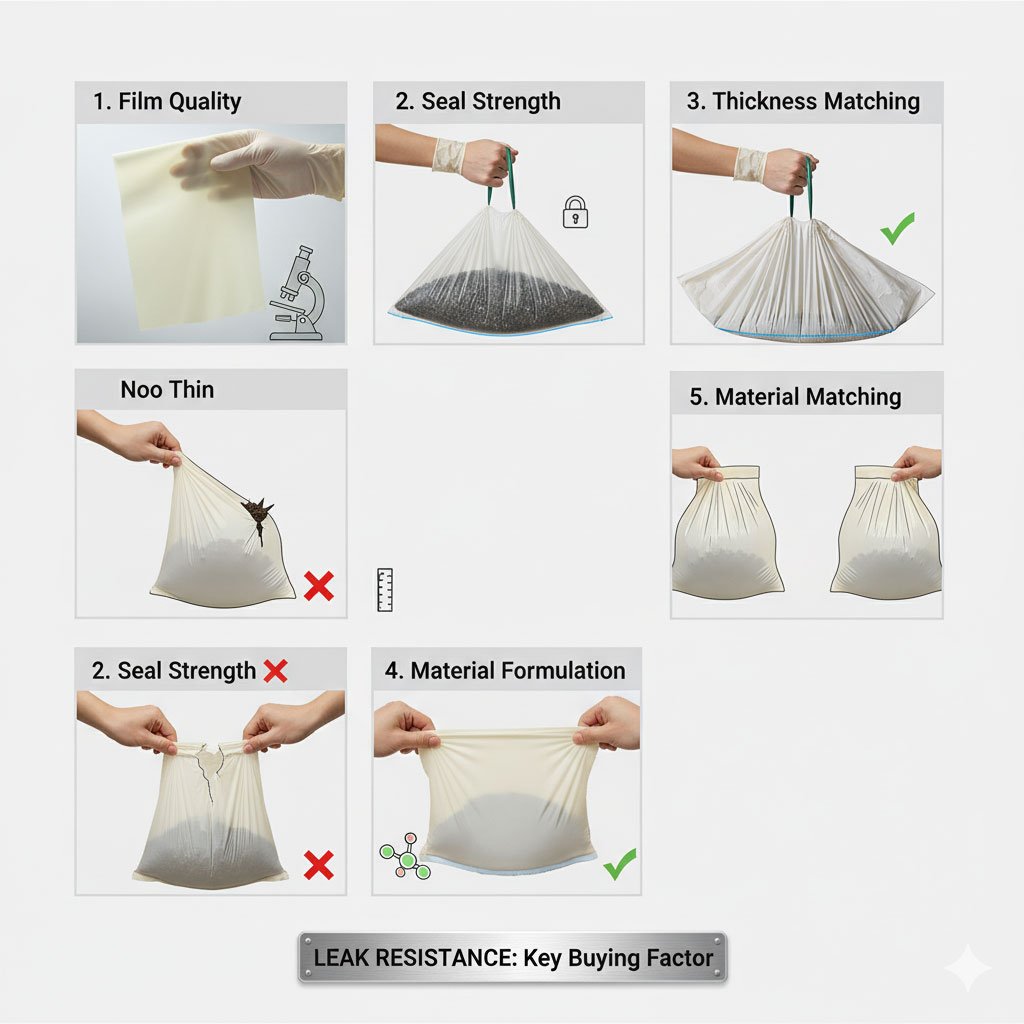
Why Leak Resistance Is a Key Buying Factor
Leak resistance is one of the most important product features for cat litter waste bags. Used litter may contain moisture, urine residue, and clumped particles. If the bag leaks, the user experience becomes poor very quickly.
Leak resistance depends on several factors:
1. Film Quality
Consistent film production helps reduce weak points in the bag.
2. Seal Strength
Poor bottom sealing or side sealing can lead to breakage during lifting.
3. Thickness Matching
A bag that is too thin for its application may fail even if the material itself is acceptable.
4. Material Formulation
Material structure affects flexibility, toughness, and puncture performance.
For B2B buyers, leak resistance is not only a product issue. It is also a brand reputation issue. If end users experience leakage, complaints and repeat purchase rates will be affected.
To evaluate real product consistency, buyers should also learn How to Check Compostable Bag Quality before placing bulk orders.
What Materials Are Commonly Used for Cat Litter Waste Bags?
Cat litter waste bags on the market may be made from different materials, depending on price level, target market, and environmental positioning.
Common material options include:
- conventional plastic blends
- biodegradable materials
- compostable material blends such as PLA and PBAT based films
For brands and importers, the material choice should match market expectations and local compliance requirements. In some markets, compostable claims must be supported by valid certification. In others, buyers may simply want a more eco-conscious alternative for pet waste packaging.
The key is to balance:
- strength
- cost
- processing stability
- certification needs
- final brand positioning
What B2B Buyers Should Check Before Ordering
Before placing a bulk order for cat litter waste bags, buyers should confirm more than just price.
Check the bag size
Make sure the dimensions are practical for real daily use.
Check the thickness range
Thickness should match the target use, not just the lowest cost option.
Check sealing quality
Ask suppliers about bottom seal consistency and production QC.
Check leak and puncture performance
This is especially important for wet and clumped litter waste.
Check customization options
For private label projects, confirm printing, packaging, barcode, carton marking, and MOQ.
Check product consistency
Stable supply matters more than one good sample.
This is especially important for distributors and private label buyers, because repeat business depends on consistent performance.
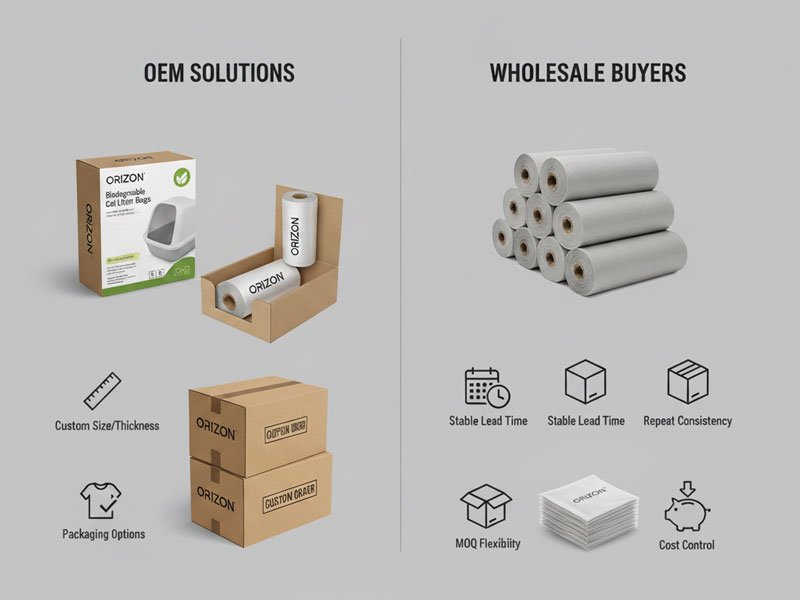
OEM and Wholesale Considerations for Cat Litter Waste Bags
For OEM buyers, cat litter waste bags are often part of a larger pet care product line. That means the supplier should support both product performance and packaging customization.
Typical OEM requirements may include:
- custom bag size
- custom thickness
- printed logo or brand design
- retail box packaging
- roll format or flat pack options
- carton customization for export or retail
Wholesale buyers may focus more on:
- stable lead time
- repeat order consistency
- MOQ flexibility
- cost control across different bag specifications
A professional manufacturer should be able to explain the tradeoff between size, thickness, cost, and performance clearly.
How to Choose the Right Cat Litter Waste Bags for Your Market
The best cat litter waste bags are not always the cheapest ones. The right choice depends on your target users and selling channel.
For example:
- retail brands may need better packaging and stronger user experience
- e-commerce sellers may care more about product reviews and leakage complaints
- distributors may focus on stable specs and large-volume supply
- importers may need certification and clear export documentation
For this reason, buyers should compare products based on real use conditions, not only on unit price.
Conclusion
Cat litter waste bags may look simple, but choosing the right specification requires attention to size, thickness, and leak resistance. These three factors affect whether the bag performs well in real pet waste handling.
For B2B buyers, the best sourcing decision is usually based on application fit, stable quality, and long-term supply reliability. Whether you are building a private label line or sourcing for distribution, understanding the bag structure before ordering can help reduce complaints and improve product value.
If you are looking for OEM or wholesale options, our Biodegradable Cat Litter Bags page can help you explore available specifications and customization solutions.
FAQ
What size bag is best for cat litter waste?
The best size depends on how much waste is collected each time. The bag should be large enough to hold the litter waste and still leave enough space for easy tying.
Are thicker cat litter waste bags better?
Not always. A thicker bag usually offers better strength, but the ideal thickness should match the bag size, material, and actual use scenario.
Why do cat litter waste bags leak?
Leakage is often caused by thin film, weak seals, poor material quality, or using a bag that is too small for wet and heavy litter waste.
Can cat litter waste bags be biodegradable?
Yes. Some cat litter waste bags are made from biodegradable or compostable materials, depending on the product design and target market requirements.
What should buyers check before ordering cat litter waste bags in bulk?
Buyers should check size, thickness, sealing strength, leak resistance, customization options, and overall product consistency before placing large orders.