Pet ownership continues to grow in many residential communities.
For residents, pets bring companionship and a better quality of life. For property managers, HOAs, and community operators, they also create new maintenance responsibilities.
One of the most common challenges is pet waste.
When pet waste is not properly managed, small issues can quickly become larger community problems. Complaints increase. Shared green spaces become less enjoyable. Maintenance teams spend more time addressing avoidable issues. Over time, the overall appearance of the community may suffer.
This is why pet waste management in residential communities has become an important part of property operations.
A successful residential pet waste management program is not simply about installing a few waste stations or providing bags. It is usually part of a broader residential pet waste management solution that combines infrastructure, maintenance, and resident participation. It requires a structured approach that combines infrastructure, maintenance, resident participation, and ongoing management.
In this guide, we will look at practical ways communities can improve pet waste management while creating cleaner, more welcoming environments for residents and visitors.
Why Pet Waste Management Matters in Residential Communities
Shared spaces are one of the biggest benefits of community living.
Walking paths, green belts, playgrounds, landscaped areas, and dog-friendly spaces help create a positive living experience. However, these same areas can quickly become sources of frustration when pet waste is not consistently collected and disposed of.
Poor residential pet waste management can lead to:
- Resident complaints
- Unpleasant odors
- Increased maintenance costs
- Damage to landscaping
- Reduced enjoyment of shared spaces
- Environmental concerns
Many communities discover that pet waste issues are not caused by a lack of rules. They are often caused by a lack of systems.
Without convenient disposal options and clear expectations, even responsible pet owners may be less likely to participate consistently.
A well-designed community pet waste management program helps make proper disposal easier while supporting long-term community cleanliness.
Common Pet Waste Challenges in Residential Communities
Every community is different, but the challenges are often similar.
Resident Complaints
One of the most common complaints received by property managers involves uncollected dog waste.
Residents expect common areas to remain clean and safe. When waste is repeatedly left behind, frustration grows quickly.
In many cases, complaints are directed toward management even when the behavior originates from a small number of pet owners.
Poor Community Appearance
A clean environment influences how residents feel about where they live.
Uncollected pet waste can negatively affect first impressions, especially near entrances, walking trails, and landscaped areas.
For residential developments focused on resident satisfaction and retention, appearance matters.
Rising Maintenance Costs
Maintenance teams often spend significant time addressing recurring pet waste issues.
Additional cleaning, landscape maintenance, and complaint management all require resources.
Over time, these costs can become substantial.
Environmental Concerns
Pet waste contains bacteria and nutrients that may affect soil and water quality when left unmanaged.
The United States Environmental Protection Agency (EPA) has identified pet waste as a potential source of environmental contamination when not properly collected and disposed of.
For this reason, many communities now view pet waste management as part of broader environmental stewardship efforts.
Step 1: Identify Pet Waste Hotspots
Before implementing solutions, it is important to understand where problems occur most frequently.
I often see communities install infrastructure without first identifying usage patterns.
A better approach is to start with observation.
Common pet waste hotspots include:
- Walking routes
- Dog-friendly green spaces
- Community parks
- Building entrances
- Sidewalk corridors
- Trail networks
- Open landscaped areas
Mapping these locations helps managers understand where resources should be concentrated.
The goal is not to cover every square meter of the property.
The goal is to place solutions where residents actually need them.
Communities that understand pet traffic patterns typically achieve better participation rates and more efficient maintenance programs.
Step 2: Install Convenient Dog Waste Stations
Convenience plays a major role in user behavior.
When disposal stations are easy to find and easy to use, participation generally improves.
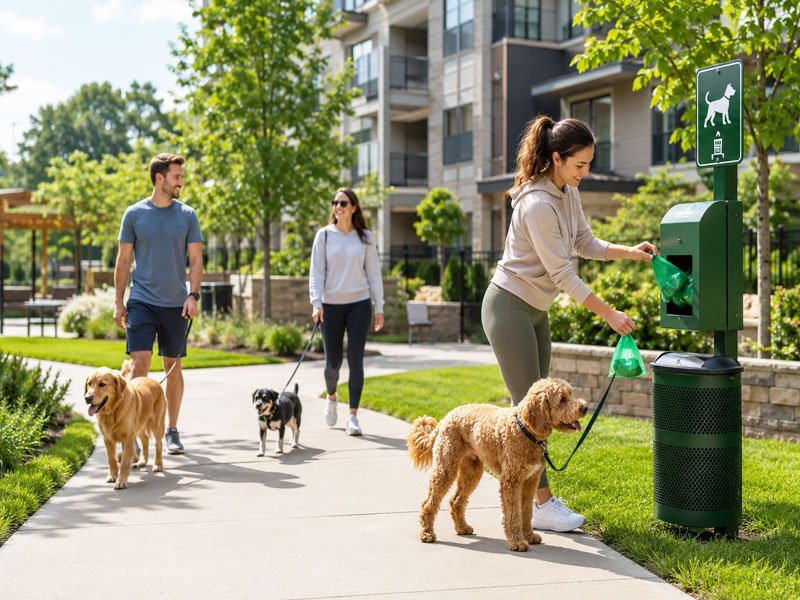
Many successful communities place dog waste stations in locations where residents naturally walk their pets. Proper station placement can significantly improve participation and reduce waste accumulation.
- Along walking paths
- Near community entrances
- At trail intersections
- Near dog-friendly recreation areas
- Adjacent to open green spaces
Visibility is equally important.
Residents should be able to identify disposal points without searching for them.
Placement decisions should focus on convenience rather than aesthetics alone.
In many residential developments, strategically placed dog waste stations become one of the most effective tools for reducing pet waste accumulation throughout shared spaces.
Step 3: Create Clear Disposal Procedures
Infrastructure alone is not enough.
Communities also need clear procedures.
A pet waste management program should define:
- Who services stations
- How often stations are inspected
- How waste is collected
- How bags are replenished
- How maintenance issues are reported
Without clear responsibilities, even well-designed systems can fail over time.
Property managers often achieve better results when pet waste management is integrated into existing maintenance workflows rather than treated as a separate activity.
Consistency is more important than complexity.
Simple procedures that are followed regularly usually outperform complicated systems that are difficult to maintain.
Step 4: Educate Residents and Encourage Participation
Even the best infrastructure will not solve pet waste problems if residents do not participate.
This is where education becomes important.
A successful community pet waste management program helps residents understand both the expectations and the reasons behind them.
Many people respond better when they understand how their actions affect the entire community.
Simple communication methods can include:
- Community newsletters
- Welcome packets for new residents
- Email reminders
- Community notice boards
- Signage near dog walking areas
The goal is not to shame pet owners.
The goal is to encourage responsible pet ownership.
Positive messaging often works better than enforcement alone.
For example, a sign that says:
“Help keep our community clean for everyone.”
is usually more effective than a sign that focuses only on penalties.
Communities that combine education with convenient disposal options often experience better long-term participation.
Step 5: Integrate Pet Waste Management Into Routine Maintenance
One common mistake is treating pet waste management as a separate project.
In reality, it works best when it becomes part of existing operations.
For example:
- Landscape teams can monitor station conditions.
- Maintenance staff can refill bags during routine inspections.
- Property managers can review complaint trends during regular meetings.
- Cleaning contractors can include disposal stations in scheduled service routes.
This integrated approach helps reduce costs while improving consistency.
Many HOA pet waste management programs follow this model because it allows communities to maintain cleaner environments without creating entirely new operational systems. Similar approaches are also used in larger public dog waste management programs operated by municipalities and local authorities.
The same principle applies to apartment pet waste management programs, where maintenance teams already manage common areas and shared facilities.
When pet waste management becomes part of everyday operations, the system becomes easier to sustain.
Benefits of a Structured Pet Waste Management Program
Communities that implement structured programs often experience improvements in several areas.
Cleaner Shared Spaces
Residents are more likely to enjoy walking trails, parks, and green spaces when waste is consistently managed.
Fewer Complaints
Clear systems help reduce recurring disputes between residents and management teams.
Improved Resident Satisfaction
People notice when common areas are maintained well.
Clean environments contribute to a better overall living experience.
More Efficient Maintenance
Defined procedures help teams spend less time reacting to problems and more time preventing them.
Better Community Appearance
Well-maintained properties create stronger first impressions for visitors, prospective residents, and homeowners.
Support for Sustainability Goals
Many communities are looking for practical ways to improve environmental performance.
Pet waste management can contribute to broader sustainability initiatives when combined with appropriate disposal practices and community engagement.
Can Compostable Dog Waste Bags Support Community Programs?
Some residential communities are exploring compostable dog waste bags as part of broader waste reduction initiatives. Before implementation, many organizations review compostable certifications to understand applicable standards and compliance requirements.
These materials are designed to break down under specific composting conditions and may help reduce dependence on traditional plastic bags in certain applications.
However, implementation should always consider:
- Local regulations
- Available waste infrastructure
- Composting acceptance policies
- Contamination prevention measures
Not every region has the same composting capabilities.
For this reason, communities should evaluate local requirements before adopting compostable materials as part of a pet waste management strategy.
The objective should always be practical environmental improvement rather than simply changing materials.
Pet Waste Management Is Part of a Larger Community Strategy
Pet waste management does not operate in isolation. Similar waste management principles can also be found in animal shelter waste management solutions, where sanitation, operational efficiency, and responsible waste handling are equally important.
It is connected to broader community objectives such as:
- Property maintenance
- Resident satisfaction
- Environmental stewardship
- Public hygiene
- Sustainability planning
Communities that take a long-term view often achieve better results because they treat pet waste management as part of an overall community management strategy rather than a standalone issue.
Small improvements made consistently over time often create the most meaningful results.
Frequently Asked Questions
What is residential pet waste management?
Residential pet waste management refers to the systems, procedures, and infrastructure used to help communities collect, dispose of, and manage pet waste in shared residential environments.
Why is pet waste management important in residential communities?
Proper pet waste management helps maintain cleanliness, reduce complaints, protect landscaping, support resident satisfaction, and improve overall community appearance.
How many dog waste stations should a community install?
The number depends on property size, pet population, walking routes, and common gathering areas. Communities typically achieve better results when stations are placed in high-use locations rather than evenly distributed across the property.
How do HOAs manage pet waste?
Many HOAs implement pet waste management programs that combine disposal stations, maintenance schedules, resident communication, and community guidelines.
How can apartment communities improve pet waste management?
Apartment communities often improve results by identifying high-traffic pet areas, installing convenient disposal stations, integrating maintenance procedures, and educating residents about proper disposal practices.
Are compostable dog waste bags suitable for residential communities?
In some regions, certified compostable bags may support sustainability objectives. Communities should first evaluate local waste regulations, composting infrastructure, and operational requirements before implementation.
How can property managers reduce pet waste complaints?
Property managers often achieve the best results by combining convenient disposal infrastructure, clear communication, routine maintenance, and resident participation programs.
Conclusion
Pet waste management in residential communities is rarely solved through a single action.
Most successful programs combine infrastructure, education, maintenance, and community participation.
When these elements work together, communities often experience cleaner shared spaces, fewer complaints, improved resident satisfaction, and more efficient operations.
The goal is not perfection.
The goal is creating a system that makes responsible behavior easier and helps communities remain clean, welcoming, and enjoyable places to live.
For property managers, HOAs, and residential developers, a structured pet waste management program is often one of the simplest ways to improve the quality of shared spaces while supporting long-term community objectives.