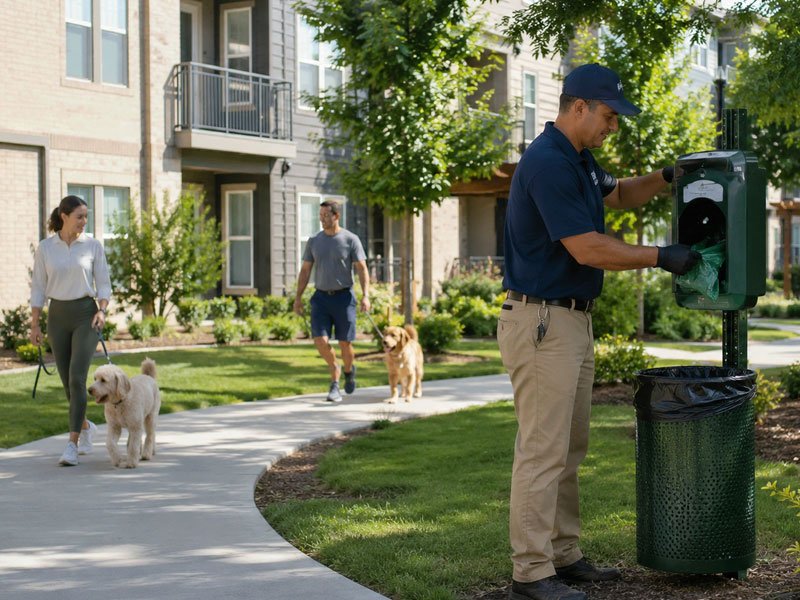
Pet waste complaints can look like a simple cleaning problem.
They rarely are.
A complaint may point to an empty bag dispenser, a full waste bin, a poorly placed station, unclear community rules, or a small number of repeat offenders.
That is why effective pet waste solutions for property managers should address more than resident behavior. They should also cover infrastructure, maintenance, communication, and follow-up.
Property managers often sit in the middle. Pet owners want convenient facilities. Other residents want clean common areas. Maintenance teams want a clear and workable service plan.
A good system must support all three groups.
This guide explains how property managers can identify the cause of recurring pet waste problems, choose practical responses, and measure whether the program is working.
It forms part of a wider approach to residential pet waste management solutions for apartments, condominiums, HOAs, and shared residential developments.
Why Pet Waste Becomes a Property Management Problem
Pet waste usually becomes a management issue when the same problem appears again and again.
One missed cleanup may be a resident behavior issue.
Ten complaints from the same lawn may point to a system problem.
Common warning signs include:
- Waste left along walking paths
- Complaints near building exits
- Empty bag dispensers
- Overflowing station bins
- Waste around shared lawns
- Repeated complaints about the same area
- Maintenance teams spending extra time on cleanup
Property managers should avoid assuming that every complaint has the same cause.
Sometimes residents ignore the rules.
Sometimes the current setup makes proper disposal harder than it should be.
The first job is to find out which problem you are dealing with.
Start With a Pet Waste Complaint Audit
Before adding stations, sending warnings, or changing policies, record what is already happening.
A complaint audit is a simple review of where, when, and how often problems occur.
You do not need special software. A spreadsheet or maintenance log is enough.
Record:
- Date of the complaint
- Exact location
- Approximate time
- Whether the location has a nearby station
- Whether bags were available
- Whether the waste bin was full
- Whether the issue has happened there before
- Photos, when appropriate
- Action taken by the property team
A complaint log turns a vague concern into something you can investigate.
For example, five reports from different parts of a property may show a general resident compliance issue.
Five reports from the same building exit may show that the nearest disposal point is too far away.
Those problems require different solutions.
Map the Main Pet Waste Hotspots
Once you have several weeks of information, mark the problem areas on a property map.
Common hotspots include:
- Building exits
- Short dog walking routes
- Shared lawns
- Dog relief areas
- Parking-to-building walkways
- Internal sidewalks
- Open areas behind buildings
- Spaces with poor nighttime visibility
You are looking for patterns.
Ask:
- Do complaints occur far from existing stations?
- Are the same bins often full?
- Does the problem increase on weekends?
- Does it happen after maintenance teams have finished for the day?
- Are new residents told where disposal stations are located?
- Are there parts of the property that staff rarely inspect?
Do not rush to buy more equipment before answering these questions.
The current stations may simply be in the wrong places.
For detailed location planning, review the apartment dog waste station placement guide.
Identify the Root Cause Before Choosing a Solution
Most recurring pet waste complaints can be linked to one or more of the following causes.
The Station Is Too Far Away
Residents are less likely to use a station if reaching it requires a long detour.
This is especially common near building exits, short walking loops, and isolated green spaces.
The solution may be to move an existing station rather than install several new ones.
Observe where residents actually walk.
Do not rely only on the original site plan.
The Station Runs Out of Bags
An empty dispenser tells residents that the system cannot be trusted.
Some people will return home for a bag.
Others will not.
Track how quickly each dispenser empties. High-use stations may need more frequent refilling or a larger bag supply.
Using consistent dog waste station bags across the property can also simplify inventory, refilling, and staff training.
The Waste Bin Is Full
A full or poorly maintained bin can discourage use, create odor problems, and cause waste to collect around the station.
The issue may not be the station itself.
It may be the service schedule.
Commercial pet waste service providers commonly offer weekly or more frequent visits, but the right schedule depends on the number of residents, dogs, stations, and high-traffic areas.[1]
Residents Do Not Understand the Rules
A rule hidden in a lease or resident handbook may not guide everyday behavior.
Residents need clear information about:
- Where bags are available
- Where waste should be placed
- Who maintains the stations
- How to report an empty dispenser
- What happens after repeated violations
New residents should receive this information during move-in.
Existing residents may need occasional reminders.
Maintenance Responsibilities Are Unclear
Problems often continue because several teams assume someone else is responsible.
The property manager may expect the landscaping company to refill bags.
The landscaping company may believe the cleaning contractor handles the stations.
The cleaning contractor may only empty indoor bins.
Assign each task clearly:
- Who checks dispensers?
- Who empties bins?
- Who cleans around stations?
- Who records damage?
- Who orders replacement bags?
- Who responds to complaints?
A simple written checklist can prevent many service gaps.
A Small Number of Residents Ignore the Rules
Some problems continue after stations, bags, and communication have been improved.
At that point, the property may be dealing with repeated noncompliance rather than a general system failure.
Enforcement may be appropriate, but it should be supported by clear evidence and a consistent policy.
Practical Pet Waste Solutions for Property Managers
The best solution depends on the cause of the problem.
Property managers should use a stepped approach rather than moving immediately to fines or expensive technology.
Level 1: Improve Basic Operations
Start with the lowest-cost changes:
- Refill empty dispensers
- Empty full bins
- Clean station areas
- Inspect known complaint hotspots
- Repair damaged dispensers
- Add clear contact information for maintenance issues
These changes may solve the problem quickly.
Level 2: Improve Infrastructure
When basic servicing is not enough, review the layout.
Possible changes include:
- Moving poorly placed stations
- Adding coverage near high-use areas
- Improving nighttime visibility
- Adding a bin near a bag-only dispenser
- Standardizing bag and dispenser formats
- Adding simple directional signs
The goal is to make proper disposal easy.
Level 3: Improve Resident Communication
Communication should be specific and calm.
Avoid sending a harsh message to every resident because of the actions of a few people.
A useful notice should explain:
- What problem has been reported
- Where it is happening
- Where disposal stations are located
- How residents can report an empty dispenser
- What community rule applies
- What steps may follow if the problem continues
A practical notice may say:
We have received several reports of uncollected pet waste near the east walking path. Waste bags and a disposal bin are available beside Building C. Please report empty dispensers to the management office so they can be serviced promptly.
This is more useful than a general warning.
Level 4: Use Progressive Enforcement
Progressive enforcement means using increasingly formal steps when a problem continues.
A typical process may include:
- General resident reminder
- Direct written notice
- Documented warning
- Action under the lease or community policy
- A fine or other lawful measure, where permitted
Property managers should follow local law, lease terms, company policies, and fair housing requirements.
The process should be consistent.
Do not enforce the rule against one resident while ignoring the same conduct from another.
For HOA-operated properties, related guidance is available in our article on HOA pet waste management programs.
Build Pet Waste Checks Into Routine Property Inspections
A pet waste program should not depend on someone remembering to check it.
Add station servicing and hotspot reviews to existing property inspections.
A basic inspection may include:
- Check bag levels
- Check bin capacity
- Inspect dispenser condition
- Remove waste near the station
- Review high-complaint areas
- Record repairs
- Note changes in usage
- Confirm that signs remain visible
This can be part of landscaping, groundskeeping, or facilities work.
It does not always require a separate team.
What matters is ownership.
Someone must know the task belongs to them.
In-House Management or Outsourced Service?
Some properties manage pet waste stations with existing staff.
Others use an outside contractor.
Neither option is right for every property.
In-House Management May Work When:
- The property has a small number of stations
- Maintenance staff already inspect outdoor areas
- Bag and bin usage is predictable
- Complaints are limited
- Staff have enough time to service the system
Outsourcing May Work When:
- The property has a large site
- Waste problems occur across many common areas
- Staff resources are limited
- Stations need frequent servicing
- Managers want documented service visits
- The property needs common-area waste removal
Commercial providers commonly combine pet waste removal, station installation, bag refilling, and routine station service for apartment courtyards, paths, sidewalks, and shared outdoor areas.
Compare the full cost.
An outside service may cost more in direct fees but reduce internal labor, missed inspections, and complaint handling.
When Should a Property Consider Dog DNA Testing?
Dog DNA testing is an advanced enforcement tool.
It is not the first step for most properties.
Under these programs, registered dogs provide a cheek swab. Waste found on the property can then be tested and matched to a registered animal.
Apartment communities and HOAs use these systems to identify repeat violations when signs, cameras, reminders, and ordinary enforcement have not worked.
Before using DNA testing, consider:
- Program setup costs
- Resident registration requirements
- Privacy concerns
- Lease and policy updates
- Staff training
- Sample collection procedures
- Laboratory processing time
- Fine and appeal procedures
- Consistency of enforcement
DNA testing may be useful when a property has a long-running problem and cannot identify responsible residents.
It should not be used to avoid fixing empty dispensers, poor station placement, or weak maintenance.
A strong enforcement program still needs a working waste management system.
Compare the Main Pet Waste Solutions
| Solution | Relative Cost | Management Effort | Best Used When |
|---|---|---|---|
| Resident reminder | Low | Low | The issue is new or limited |
| More frequent refilling | Low | Low | Dispensers often run out |
| More frequent bin service | Low to medium | Low | Bins overflow or create odor |
| Move or add stations | Medium | Medium | Complaints occur far from disposal points |
| Improve signs and move-in information | Low | Low | Residents do not understand the system |
| Outsourced cleanup | Medium to high | Low internally | Staff lack time or the site is large |
| Progressive enforcement | Varies | Medium to high | Known residents repeatedly violate rules |
| DNA testing | High | High | Serious repeat problems remain unresolved |
This comparison matters because no single tool solves every problem.
A property with empty dispensers does not need DNA testing.
A property with one repeat offender may not need ten new stations.
Match the response to the cause.
Track Whether the Program Is Working
A solution should produce a measurable result.
Review the following each month:
- Number of pet waste complaints
- Number of repeat complaint locations
- Bag refill frequency
- Bin overflow events
- Extra cleaning hours
- Station repair costs
- Resident warnings issued
- Outside service costs
- Feedback from maintenance staff
- Feedback from residents
Compare results over 30 or 60 days.
For example:
- Did complaints fall after moving a station?
- Did bag use rise after improving visibility?
- Did additional servicing reduce overflow?
- Did a resident notice reduce repeated complaints?
- Did outside service save internal staff time?
Do not measure success by the number of stations installed.
Measure the outcome.
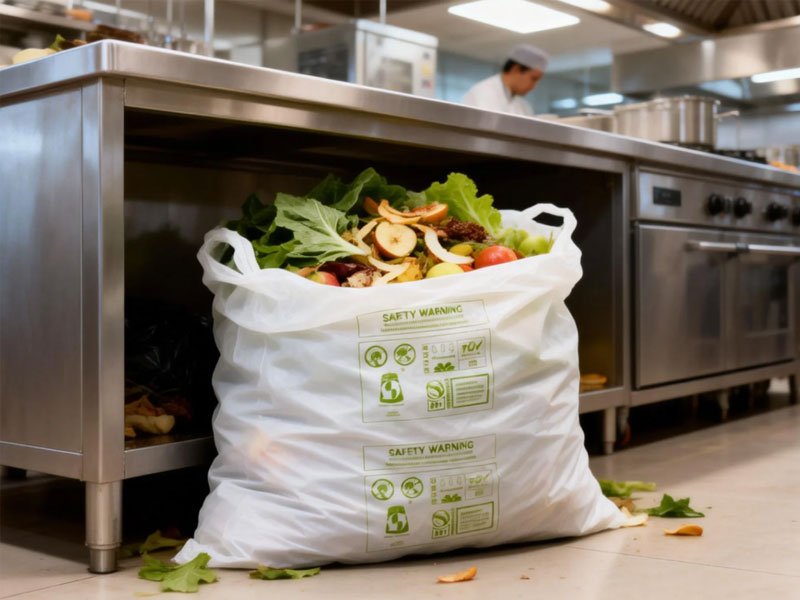
Compostable Bags and Property Sustainability Goals
Some property managers evaluate certified compostable dog waste bags as part of wider plastic reduction or sustainability plans.
This can be a reasonable material choice where local regulations and waste systems support it.
However, changing the bag material will not solve complaints by itself.
A compostable bag still needs to be:
- Available when residents need it
- Strong enough for the intended use
- Compatible with the dispenser
- Collected through a clear waste pathway
- Supported by correct labeling and communication
Property managers should also verify whether local facilities accept compostable bags and pet waste.
The word “compostable” does not automatically mean the filled bag belongs in a local organics collection system.
Before making environmental claims or changing materials, review the applicable compostable certification requirements.
A Practical 30-Day Pet Waste Improvement Plan
Week 1: Record the Problem
- Log every complaint
- Photograph recurring locations
- Inspect existing stations
- Check bag and bin conditions
- Speak with maintenance staff
- Mark hotspots on a property map
Week 2: Correct Basic Failures
- Refill all dispensers
- Empty and clean bins
- Repair damaged equipment
- Move one clearly misplaced station
- Assign servicing responsibilities
- Set a regular inspection schedule
Week 3: Communicate With Residents
- Send a clear property notice
- Remind residents where stations are located
- Explain how to report an empty dispenser
- Add information to move-in materials
- Contact repeat offenders privately when evidence exists
Week 4: Review the Results
- Compare complaint numbers
- Ask maintenance staff what changed
- Review bag and bin usage
- Identify unresolved hotspots
- Decide whether more infrastructure, service, or enforcement is needed
This approach gives the property time to test simple corrections before moving to expensive or highly restrictive measures.
FAQ
What are the best pet waste solutions for property managers?
The best solution depends on the cause of the problem. Property managers should first review complaint locations, station placement, bag availability, bin servicing, resident communication, and repeat violations. A combined approach is usually more effective than relying on one product or rule.
How can property managers reduce dog waste complaints?
Start by recording where and when complaints occur. Inspect nearby stations, confirm bags and bins are serviced, improve resident communication, and assign clear maintenance responsibilities. Use progressive enforcement only when system problems have been addressed.
Do dog waste stations reduce pet waste problems?
Dog waste stations can improve convenience and encourage responsible behavior when they are visible, correctly placed, stocked, and regularly serviced. A poorly placed or empty station is unlikely to improve compliance.
How often should pet waste stations be serviced?
The schedule depends on property size, dog population, station use, and season. High-use stations may require several checks per week, while lower-use stations may need less frequent service. Managers should adjust the schedule based on actual usage.
Who should maintain pet waste stations at an apartment property?
The work may be assigned to property maintenance staff, landscapers, cleaners, or an outside pet waste service. Responsibilities should be documented so refilling, bin emptying, cleaning, and repairs are not missed.
Should property managers fine residents for failing to pick up dog waste?
Fines may be appropriate when permitted by local law, lease terms, and community policies. They should normally follow clear communication, documented evidence, and consistent enforcement.
When should an apartment community consider dog DNA testing?
DNA testing may be considered when repeated violations continue after station, servicing, communication, and ordinary enforcement issues have been addressed. Managers should review costs, privacy, registration, evidence, and appeal procedures before implementation.
Can compostable dog waste bags reduce pet waste complaints?
Not by themselves. Compostable bags may support a sustainability goal, but complaints are more directly affected by station placement, bag availability, maintenance, resident behavior, and enforcement.
Conclusion
Pet waste complaints should not be treated as random messages that property staff must answer one at a time.
They are useful operational data.
They can show where a station is missing, where a bin is full, where residents need clearer guidance, or where a repeat violation requires formal action.
The most practical pet waste solutions for property managers follow a clear order:
- Record the problem
- Find the cause
- Fix basic service issues
- Improve convenience
- Communicate clearly
- Use fair enforcement
- Measure the result
Start with the system.
Then address the behavior.
This approach helps property managers reduce complaints without adding unnecessary equipment, labor, or conflict.