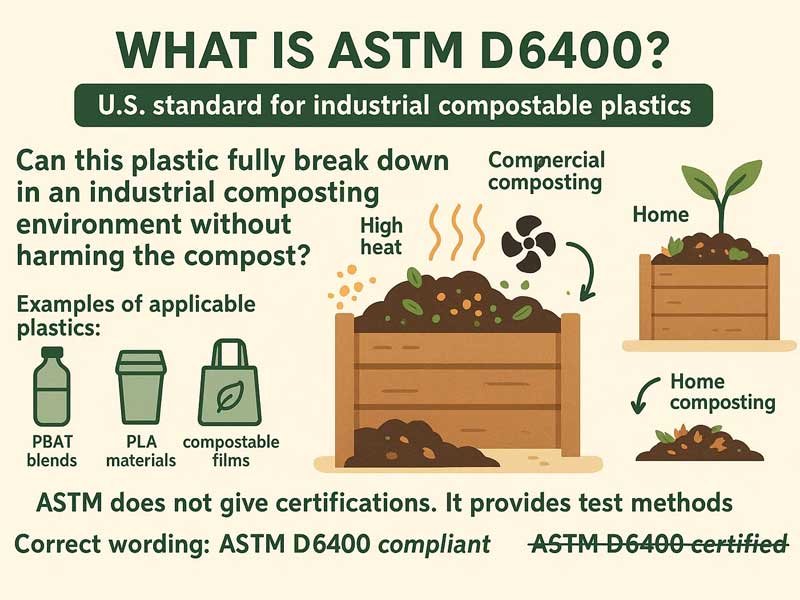
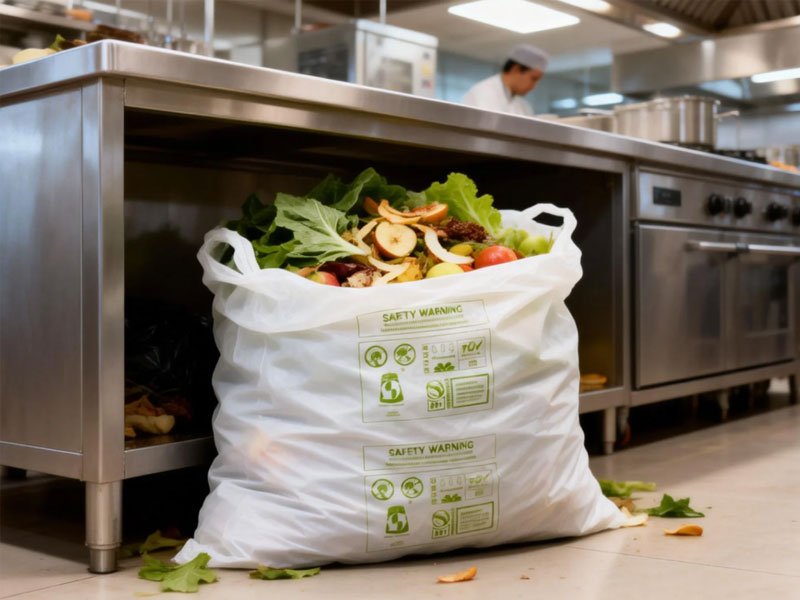
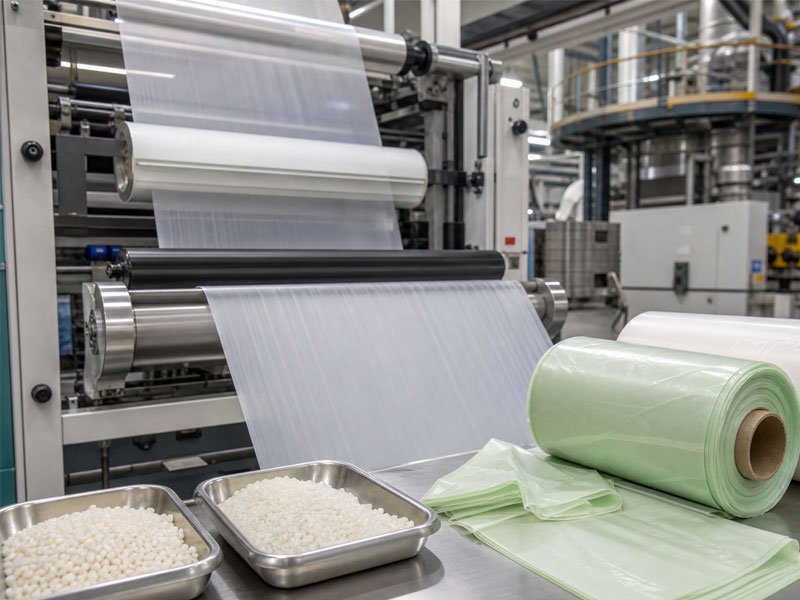
Home compostable and industrial compostable packaging are not the same.
Under PPWR, this difference matters for EU importers, retailers, private-label brands, and packaging buyers.
A bag with an industrial compostable certificate should not be treated as home compostable.
A home compostable certificate also does not remove the need to check Article 9, Article 12, technical documentation, and local Member State rules.
This guide explains PPWR home compostable packaging from a B2B procurement view.
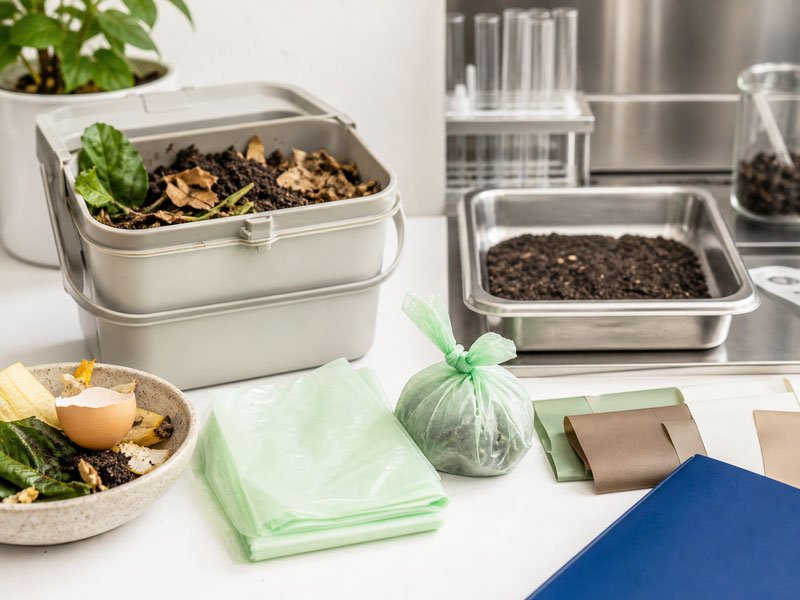
Short Answer
PPWR focuses mainly on composting in industrially controlled conditions and bio-waste treatment facilities.
Home compostable packaging is treated more carefully because home composting conditions vary by climate, household practice, temperature, moisture, and time.
In practical terms:
Industrial compostable does not mean home compostable.
And under PPWR, home compostable claims should only be used when the finished packaging has the right evidence, the target market allows the claim, and the disposal route is clear.
What PPWR Means by Compostable Packaging
Regulation (EU) 2025/40 defines compostable packaging as packaging that biodegrades in industrially controlled conditions or can undergo biological decomposition in those conditions.
This can include anaerobic digestion when applicable.
The final result should be conversion into carbon dioxide, or methane where oxygen is absent, plus mineral salts, biomass, and water.
The packaging should not hinder separate collection, composting, or anaerobic digestion.
For buyers, the key point is simple:
PPWR compostable packaging is mainly about controlled industrial composting systems.
What PPWR Means by Home Compostable Packaging
PPWR defines home compostable packaging separately.
Home compostable packaging is packaging that can biodegrade in non-controlled conditions that are not industrial-scale composting facilities.
The composting process is performed by private individuals to produce compost for their own use.
This is a higher-risk claim because home composting is less controlled.
A home compost pile may be cold, dry, poorly mixed, or too small to support good degradation.
That is why EU buyers should not use “home compostable” as a casual marketing phrase.
Industrial Compostable vs Home Compostable
| Item | Industrial Compostable | Home Compostable |
|---|---|---|
| Composting environment | Controlled facility | Home or garden compost |
| Typical temperature | Higher and more controlled | Lower and less stable |
| Main EU standard route | EN 13432 / industrial compostability certification | Home compostability evidence or scheme, where accepted |
| Common certification mark | OK compost INDUSTRIAL, Seedling, DIN-Geprüft | OK compost HOME |
| Buyer risk | Certificate may not cover every finished bag | Claim may be misunderstood or not accepted in the target market |
| Best use | Food waste liners, produce bags, service packaging where industrial composting is available | Specific applications where home composting is expected and supported by evidence |
Industrial compostability is not a weaker or stronger version of home compostability.
It is a different composting environment.
Where Article 9 Applies
Article 9 of PPWR covers compostable packaging.
By 12 February 2028, certain packaging must be compatible with industrial composting standards in bio-waste treatment facilities.
This includes permeable tea, coffee, or other beverage bags, soft after-use system single-serve units, and sticky labels affixed to fruit and vegetables.
Where required by Member States, those Article 9(1) items must also be compatible with home-composting standards referred to in Article 9(6).
Article 9(2) also gives Member States some flexibility.
If local bio-waste collection and treatment infrastructure is available, Member States may require certain other packaging to be compostable, including very lightweight plastic carrier bags and lightweight plastic carrier bags.
For EU importers, this means one certificate choice may not fit every country.
You need to check the packaging type and the target Member State.
OK Compost HOME vs OK Compost INDUSTRIAL
OK compost HOME and OK compost INDUSTRIAL are both issued by TÜV AUSTRIA, but they cover different conditions.
OK compost INDUSTRIAL applies to products that biodegrade in industrial composting facilities.
TÜV AUSTRIA explains that products certified only as OK compost INDUSTRIAL should not go into garden compost.
OK compost HOME applies to products that can compost at lower temperatures, such as in a home compost heap.
For a deeper certification-level comparison, read our OK compost HOME vs INDUSTRIAL guide.
For B2B buyers, the question is not only which logo looks better.
The real question is:
Which composting route is accepted in your target market and supported by the finished product certificate?
Does EN 13432 Mean Home Compostable?
No.
EN 13432 is the core European standard used for industrially compostable packaging.
It supports compostability under controlled industrial composting conditions.
It does not automatically prove home compostability.
The European Commission also notes that compliance with industrial composting standards does not imply decomposition in home composting.
For industrial compostability evidence in Europe, review our EN 13432 certification page.
If a supplier says “EN 13432 means home compostable,” ask for better proof.
How Member State Requirements Affect Buyers
PPWR is an EU Regulation, but Member State waste systems still matter.
Article 9 allows Member States to require some packaging to be compostable where suitable bio-waste collection and treatment systems are available.
Some countries or local systems may accept certain compostable packaging in bio-waste streams.
Others may restrict it.
Home composting is even more local.
Climate, waste guidance, composting practice, and local authority supervision can affect whether a home compostable claim is suitable.
For EU buyers, the safest process is to check:
- Target Member State
- Packaging type
- Local bio-waste collection rules
- Certificate scope
- Label wording
- Technical documentation
Label Wording and Environmental Claims
Article 12 is important for compostable packaging labels.
For packaging covered by Article 9(1), and where applicable Article 9(2), the label must indicate that the material is compostable, not suitable for home composting, and not to be discarded in nature.
This creates an important artwork issue.
Do not add home compostable wording just because the material supplier says the resin is biodegradable.
Do not print OK compost HOME unless the logo use is authorised and the finished packaging is within the certified scope.
Do not remove required PPWR wording without checking the final implementing acts, target Member State rules, and certificate scope.
Safe wording depends on the exact product and market.
What Importers Should Ask Suppliers to Prove
Before approving a compostable packaging order, ask your supplier for:
- Finished product specification
- Material composition summary
- Certificate number and holder name
- Certificate scope for the exact product
- Thickness, ink, adhesive, and additive coverage
- Whether evidence is for raw material or finished packaging
- Industrial compostability evidence
- Home compostability evidence, if claimed
- Logo authorisation rules
- Label and artwork review
- Batch traceability method
- Technical documentation inputs under Annex VII
Buyers can also compare global compostable standards in our compostable certifications guide.
For broader certification terms, see our compostable certifications overview.
Decision Table for EU Buyers
| Situation | Buyer Decision |
|---|---|
| Supplier has EN 13432 only | Treat it as industrial compostability evidence, not home compostability evidence |
| Supplier claims OK compost HOME | Verify certificate scope, holder, product thickness, and logo authorisation |
| Packaging falls under Article 9(1) | Check industrial compostability and any Member State home-composting requirement |
| Lightweight carrier bag for a specific Member State | Check whether that Member State requires compostability under Article 9(2) |
| Artwork says “home compostable” | Use only if finished packaging evidence and target market rules support it |
| Supplier gives only raw material certificate | Ask for finished packaging evidence before approval |
Buyer Checklist
Before placing an order, ask:
- Is the product industrial compostable, home compostable, or both?
- Which certificate supports the claim?
- Is the certificate for raw material or finished packaging?
- Does EN 13432 cover the finished packaging structure?
- Does OK compost HOME apply to this exact SKU?
- Can the logo be printed on the bag or carton?
- Which Member State will the product enter?
- Does Article 9(1) or Article 9(2) apply?
- Does Article 12 label wording apply?
- Are claims supported in technical documentation?
- Can the supplier provide batch traceability?
Supplier Red Flags
Be careful if a supplier says:
- “Industrial compostable means home compostable.”
- “EN 13432 proves home compostability.”
- “You can print OK compost HOME without logo approval.”
- “The raw material certificate covers all finished bags.”
- “PPWR does not care about Member State rules.”
- “Home compostable means it can be discarded in nature.”
- “Biodegradable and compostable are the same.”
These answers may create artwork, claim, and import risks.
B2B Procurement Case
A German retailer wants private-label compostable produce bags.
The first supplier sends an EN 13432 certificate and says the bag can be labelled home compostable.
The buyer asks for more detail.
The certificate covers industrial compostability only.
It does not show OK compost HOME, home compostability testing, or finished product scope for the printed bag.
A better supplier response would include:
- Finished bag specification
- EN 13432 certificate scope
- OK compost HOME certificate, if home claim is requested
- Ink and print coverage review
- Article 9 category check
- Article 12 label wording review
- Target Member State disposal guidance
- Batch traceability method
The final artwork may need to say industrially compostable instead of home compostable.
That is less risky if the evidence only supports industrial compostability.
How Orizon Supports Compostable Packaging Buyers
Orizon manufactures compostable bags for importers, distributors, wholesalers, retailers, and private-label brands.
We support OEM and ODM projects for:
- Compostable garbage bags
- Compostable shopping bags
- Compostable produce bags
- Compostable mailer bags
- Compostable garment bags
- Compostable dog waste bags
- Custom printed compostable packaging
For EU and global projects, we help buyers compare industrial compostability, home compostability, certificate scope, label wording, and finished product evidence before production.
If you need certified compostable bags for EU or global markets, review our B2B product options.
Our factory has 16 years of manufacturing experience, about 20,000 square meters of production space, 16 fully automatic production lines, and monthly capacity of about 500 tons.
We do not recommend using home compostable claims unless the finished packaging evidence supports them.
That is better for importers, retailers, and long-term supply programs.
FAQ
Is home compostable the same as industrial compostable under PPWR?
No. Industrial compostable packaging is designed for controlled composting facilities. Home compostable packaging is designed for lower and less controlled home composting conditions. They are not interchangeable.
Does EN 13432 prove home compostability?
No. EN 13432 is used for industrially compostable packaging. It does not automatically prove that packaging will biodegrade in home composting conditions.
What does OK compost HOME mean?
OK compost HOME is a TÜV AUSTRIA certification for products designed to compost at lower home composting temperatures. It should only be used when the finished product is within the certified scope.
What does OK compost INDUSTRIAL mean?
OK compost INDUSTRIAL is a certification for products designed to biodegrade in industrial composting facilities. Products certified only as industrial compostable should not be treated as home compostable.
Can Member States require home compostability under PPWR?
Article 9 says certain packaging must be compatible with home-composting standards where required by Member States. Buyers should check the target Member State before approving claims or artwork.
Can compostable packaging be discarded in nature?
No. PPWR labelling and information rules make clear that compostable packaging should not be discarded in nature. Compostability depends on the right composting environment.
Conclusion
Home compostable and industrial compostable packaging serve different composting routes under PPWR.
For EU buyers, EN 13432 and OK compost INDUSTRIAL usually support industrial compostability. OK compost HOME supports home compostability only when the finished product is properly certified and the target market allows the claim.
Before approving artwork or purchase orders, check Article 9, Article 12, certificate scope, Member State rules, and finished packaging evidence.
That is the safer way to source compostable packaging for the EU market.