Animal rescue work does not always happen inside one building.
It can happen in foster homes, cars, parking lots, adoption events, partner clinics, TNR sites and temporary holding spaces.
That is why animal rescue waste management needs a different plan from a normal shelter cleaning routine.
A rescue group may not have one kennel room, one storage room and one waste route.
It may have ten foster homes, three volunteers with transport crates, one adoption event, a small donated supply shelf and an emergency intake that arrives with no warning.
That is real rescue work.
The waste system has to move with the work.
I look at animal rescue organization waste management in four simple questions:
- Where is the animal being cared for?
- What waste is created there?
- Which bag, liner or container should hold it?
- Who restocks the supplies before they run out?
This guide explains practical waste management best practices for animal rescue organizations, including foster homes, TNR work, transport, adoption events, emergency intake and volunteer supply planning.
For the full category, visit our Animal Shelter Waste Management Solutions.
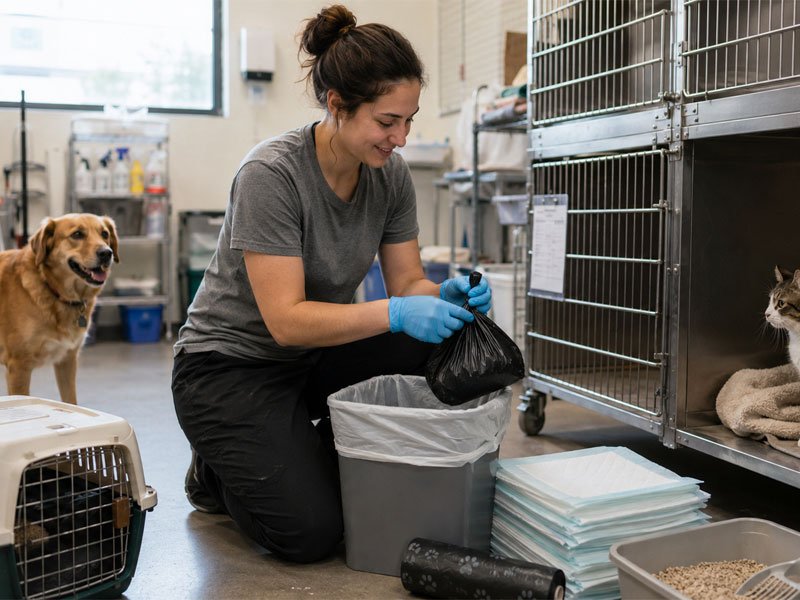
How Animal Rescue Waste Management Is Different From Shelter Waste Management
Animal shelters and animal rescue organizations often work toward the same goal: helping animals move into safer care and permanent homes.
But the daily setup can be very different.
Many rescue groups are built around volunteers and foster homes. Some have facilities. Some do not. Some pull animals from shelters. Others handle community cats, breed-specific cases, emergency rescues or animals that need special care. Rescue groups often use foster homes heavily, while municipal shelters more often operate fixed facilities.
That changes the waste problem.
| Animal shelter | Animal rescue organization |
|---|---|
| Fixed building | Distributed locations |
| Central storage | Foster, event and vehicle kits |
| Staff schedule | Volunteer-heavy workflow |
| Kennel cleaning | Foster and temporary care |
| One waste route | Multiple disposal points |
| Planned facility intake | Sudden rescue cases |
| On-site bins | Home, event, vehicle and clinic waste |
A shelter can post one SOP on the kennel wall.
A rescue group may need the same instruction to work in a foster bathroom, a volunteer car, a cat trapping site and an adoption booth.
Keep it simple.
That is the first rule.
Main Waste Streams in Animal Rescue Work
A waste stream is a type of waste that needs its own handling method.
In rescue work, the common waste streams may include:
| Waste stream | Common source | Handling need |
|---|---|---|
| Dog feces | Foster homes, walks, transport stops | Easy-open pet waste bags |
| Cat litter | Foster homes, TNR recovery, temporary holding | Strong bags or liners |
| Pee pads | Puppies, kittens, sick animals, crates | Leak control |
| Crate liners | Transport and field rescue | Fast removal and containment |
| Soiled bedding | Foster homes, emergency intake | Laundry or disposal route |
| Food waste | Feeding stations, foster homes, events | Odor and pest control |
| General trash | Events, storage, foster kits | Correct bin liners |
| Gloves and paper towels | Cleaning and animal care | Quick disposal |
| Medical waste | Partner clinics or treatment work | Regulated route |
| Sharps | Needles, blades or veterinary tools | Approved sharps container |
Not every rescue group handles every waste type.
But every rescue group should know which waste types it handles.
Donation lists often include pet waste bags, pee pads, cat litter, paper towels, cleaning supplies and garbage bags. That tells us something practical: these are daily-use items, not rare supplies.
Donations help.
But critical waste supplies should not depend only on luck.
Build Waste Kits by Rescue Scenario
A rescue waste kit is a small set of supplies packed for one work setting.
I like kits because they reduce guessing.
A foster home gets one kit.
A TNR volunteer gets another.
An adoption event gets another.
The supplies match the job.
Foster Home Waste Kit
Foster homes are often the center of rescue care.
They may handle puppies, kittens, adult dogs, adult cats, sick animals or animals still learning house routines.
A foster home waste kit may include:
- dog waste bag rolls;
- cat litter waste bags;
- small bin liners;
- pee pads;
- gloves;
- paper towels;
- a laundry or soiled bedding bag;
- and a one-page waste instruction card.
The instruction card matters.
A new foster should not have to guess whether litter waste goes in a kitchen trash bag, an outside bin or a supplied liner.
Keep the wording plain:
Tie waste bags before removal. Keep clean supplies away from soiled bedding. Report low supplies before they run out.
For dog cleanup supplies, see our pet waste bags for animal rescue.
TNR and Field Rescue Waste Kit
TNR means trap-neuter-return. It is used in many community cat programs to trap cats, arrange spay or neuter care, and return them to their outdoor area. Alley Cat Allies is widely known for its TNR work and for helping launch or improve TNR programs.
TNR waste management is different from indoor kennel cleaning.
It is mobile.
It may happen at night, in parking lots, garages, alleys, clinics or temporary holding areas.
A TNR or field rescue waste kit may include:
- trap liners;
- pee pads;
- small waste bags;
- gloves;
- a heavy-duty trash bag;
- crate liners;
- used pad disposal bags;
- paper towels;
- and a short cleanup sheet.
The kit should also include a simple rule:
Used pads and dirty liners go into the assigned waste bag before the trap or crate is moved.
This keeps the vehicle, holding area and volunteer home cleaner.
Transport Waste Kit
Transport is often the forgotten part of rescue group waste management.
Animals may travel between:
- shelters;
- foster homes;
- clinics;
- adoption events;
- airport handoff points;
- or temporary holding spaces.
A transport waste kit may include:
- crate liners;
- disposable pads;
- leak-resistant bags;
- paper towels;
- gloves;
- a dirty towel bag;
- and a spare bin liner.
The kit should fit in the vehicle.
It should be easy to grab.
Do not store the only cleanup bags in the main supply room if the animal is already in the car.
Adoption Event Cleanup Kit
Adoption events bring rescue animals into public spaces.
That means the waste system must be visible and fast.
An adoption event cleanup kit may include:
- dog waste bags;
- small waste bins;
- bin liners;
- pee pads;
- quick cleanup bags;
- paper towels;
- gloves;
- dirty towel bags;
- and simple bin labels.
Use labels such as:
- Pet Waste
- General Trash
- Dirty Towels
- Clean Supplies
The goal is not to make the table look complicated.
The goal is to help volunteers act without asking the same question all day.
Emergency Intake Kit
Emergency intake can change everything.
A rescue may suddenly receive a group of animals from a hoarding case, disaster, transport delay or local shelter overflow.
A basic emergency intake kit may include:
- bulk dog waste bags;
- cat litter waste bags;
- large bin liners;
- pee pad disposal bags;
- bedding bags;
- gloves;
- paper towels;
- and reserve cartons.
A rescue does not need to overstock every item.
But it should know what it cannot run without.
For waste work, those items are usually bags, liners, pads, gloves and cleaning supplies.
Separate Waste by Risk and Destination
Not all rescue waste should go to the same place.
Use simple categories:
- normal pet waste;
- cat litter;
- soiled bedding;
- general trash;
- medical waste;
- sharps;
- and cleaning waste.
The goal is to make the next step clear.
Normal pet waste
This includes dog feces from walks, foster yards and event areas.
It usually needs a pet waste bag and a clear disposal point.
Cat litter
Cat litter is heavier and rougher than dog walking waste.
It needs a stronger bag or liner.
Test it with real used litter weight.
Soiled bedding
Some bedding goes to laundry.
Some must be discarded.
Do not mix the clean bedding route with the dirty bedding route.
Medical waste and sharps
Medical waste is not normal trash.
Biomedical waste can be generated from medical sources and activities, including treatment and veterinary settings, and it is distinct from general waste.
Sharps waste includes items such as needles and blades that can puncture or cut skin and must be handled with care.
This page is not legal or veterinary advice.
Medical waste, sharps and potentially infectious waste should follow local veterinary, public health and licensed disposal rules.
Do not put them into normal pet waste bags.
Create a Simple Rescue Waste Workflow
A workflow is the order of steps people follow.
For animal rescue waste disposal, I would keep the workflow short.
- Collect the waste.
- Contain it in the correct bag or liner.
- Separate it by waste type.
- Move it to the correct bin, laundry route or holding point.
- Clean the area.
- Restock the kit.
- Report shortages or problems.
That is enough.
Do not make volunteers read a long manual while holding a leash, crate or litter scoop.
Use short signs.
Use kit checklists.
Use labels.
Use the Right Bag for the Job
One bag type will not work for every rescue task.
A small dog walking bag may be fine for a foster dog walk.
It may fail under used cat litter.
A large bin liner may work for event trash.
It may be wasteful for a small foster bathroom bin.
| Rescue task | Bag or liner requirement |
|---|---|
| Dog walking | Easy-open roll bags |
| Foster cat litter | Stronger liner or litter bag |
| Transport crate cleanup | Leak-resistant liner or pad disposal bag |
| Adoption event | Bin liner plus dog waste bags |
| Emergency intake | Bulk cartons and mixed sizes |
| Dirty bedding | Larger transport bag |
| General trash | Correct-size bin liner |
| TNR field work | Small waste bags and heavy-duty liner |
Dog walking bags
Dog walking bags should be easy to open and easy to tie.
A volunteer may be holding a leash.
The bag should not slow them down.
Cat litter bags
Cat litter bags need strength.
Used litter can be heavy.
Choose bags by load, not by appearance.
Crate liners
Transport crate liners should help contain wet mess.
They should be easy to remove and discard after transport.
Bin liners
Bin liners should fit the bin.
A poor fit causes tearing, slipping and wasted material.
Dirty bedding bags
For bedding, choose a bag large enough for towels or blankets.
Keep dirty textile bags away from clean bedding.
For a wider shelter and rescue product overview, review our animal shelter waste bags.
Donations vs Planned Procurement
Donations are useful.
Many rescues depend on them.
But donations should not be the only plan for critical waste supplies.
A donation box may bring towels one week and dog treats the next. That is helpful, but it does not guarantee that you will have litter bags, pee pads or bin liners when twenty animals arrive.
Real Simple also recommends checking an individual shelter or rescue’s website before donating, because each group may have specific needs and preferences.
That point matters for rescue operations.
Not every donated bag fits the job.
Donation-friendly supplies
These may be useful if they meet the rescue’s rules:
- clean towels;
- clean bedding;
- unopened food;
- old newspapers;
- gently used leashes;
- certain cleaning supplies;
- toys;
- and unopened treats.
Critical operating supplies
These should have a planned reorder point:
- pet waste bags;
- cat litter disposal bags;
- pee pad disposal bags;
- bin liners;
- transport crate liners;
- gloves;
- paper towels;
- and emergency reserve cartons.
Donations can support the system.
They should not replace the system.
Estimate Monthly Supply Use
Animal rescue waste management becomes easier when you track usage.
You do not need a complex system at first.
Use a simple formula:
Monthly animal rescue waste bag demand =
foster homes × weekly average use × 4
+ TNR events × event kit use
+ transport trips × crate liner use
+ adoption events × event cleanup use
+ emergency reserve
Example
A rescue group has:
- 20 foster homes;
- average 1 roll of pet waste bags per foster home per week;
- 2 TNR events per month;
- 10 transport trips per month;
- 2 adoption events per month;
- and 20% emergency reserve.
Basic monthly estimate:
20 foster homes × 1 roll × 4 weeks = 80 rolls
+ 2 TNR event kits
+ 10 transport cleanup sets
+ 2 adoption event cleanup sets
+ 20% reserve
This is not perfect.
It is better than guessing.
After one or two months, adjust the number based on actual use.
Track:
- rolls used;
- liners used;
- litter bags used;
- event cleanup kits used;
- emergency stock used;
- and shortages reported.
Keep Waste Instructions Simple for Volunteers
Volunteer instructions should be short.
A good waste instruction card answers:
- What bag do I use?
- Where do I put the filled bag?
- What should not go in this bin?
- Who do I tell if supplies are low?
- What do I do if waste looks medical or unsafe?
Use plain labels.
For example:
Dog Walk Kit
- Take 2 bags per walk.
- Tie used bags.
- Place filled bags in the outdoor bin.
- Tell the coordinator when one roll is left.
Cat Foster Kit
- Use the supplied litter bags.
- Do not overfill.
- Tie before carrying.
- Store used litter waste in the assigned outside bin.
Event Kit
- Use labeled bins.
- Keep clean supplies under the table.
- Put dirty towels in the marked bag.
- Report low supplies before the event ends.
One rule should be on every card:
When in doubt, ask.
Compostable, Recycled or Conventional Bags for Rescue Groups
Rescue groups may want compostable bags, recycled-content bags or conventional liners.
The best choice depends on the waste type and disposal route.
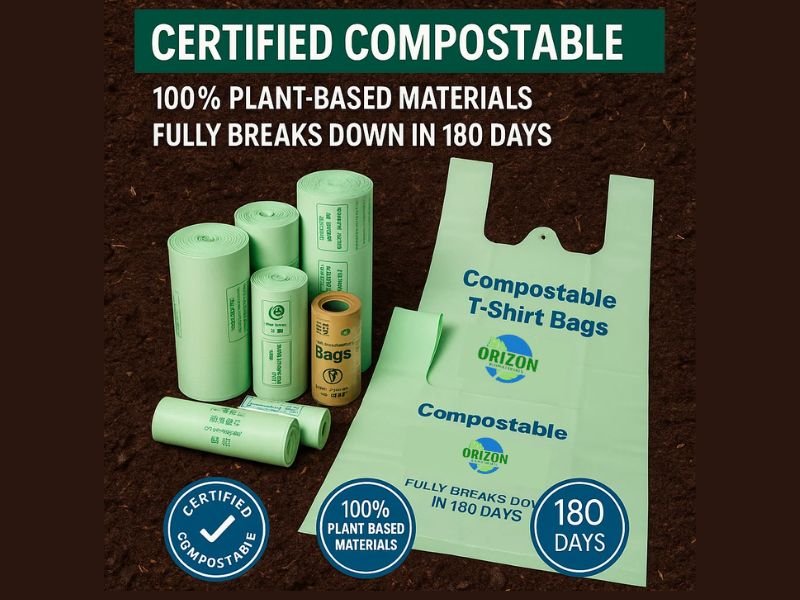
Compostable bags can make sense when the waste route accepts that product and waste type.
But the claim should be checked.
TIME reported that in many U.S. areas, industrial composting facilities do not accept dog waste, so compostable dog waste bags often end up in landfills instead of composting systems.
That is why I would not start with a material claim.
I would start with the job.
Ask:
- Does the bag need to hold cat litter?
- Does it need to handle wet pads?
- Is it used for dog walking?
- Does it go to general waste?
- Is there an accepted composting route?
- Does the rescue need recycled-content material?
- Does local law or facility policy affect disposal?
For material claims, certificate scope and market rules, review our compostable certifications.
Common Animal Rescue Waste Management Mistakes
1. Treating foster homes like a shelter building
A foster home does not have a kennel supply room.
Send a kit.
2. Depending only on random donations
Donations help, but critical supplies need planned stock.
3. Sending fosters without waste instructions
A bag roll without instructions still leaves room for mistakes.
4. Using weak bags for cat litter
Cat litter needs a stronger bag than normal light trash.
5. No kit for TNR
Field rescue work needs supplies packed before the trip.
6. No transport cleanup supplies
The mess often happens in the car, not after arrival.
7. Mixing medical waste with normal trash
Medical waste and sharps need the correct route.
8. No emergency reserve
A sudden intake can use supplies faster than expected.
9. No monthly usage record
Without records, ordering becomes guessing.
10. Choosing material claims before checking disposal
Compostable, recycled and conventional bags should be selected after the waste route is understood.
Animal Rescue Waste Management Checklist
Foster homes
- Foster waste kit prepared
- Dog waste bags included
- Cat litter waste bags included where needed
- Pee pads included where needed
- Small bin liners included
- Waste instruction card included
- Reorder contact included
TNR and field rescue
- Trap liners packed
- Pee pads packed
- Small waste bags packed
- Heavy-duty liner packed
- Gloves packed
- Crate liners packed
- Used pad disposal route confirmed
Transport
- Crate liners packed
- Leak-resistant bags packed
- Dirty towel bag packed
- Paper towels packed
- Spare bin liner packed
- Vehicle cleanup rule written
Adoption events
- Dog waste bags packed
- Bin liners packed
- Pee pads packed
- Event waste bin labels prepared
- Dirty towel bag prepared
- Cleanup supplies restocked after event
Emergency intake
- Bulk pet waste bags stored
- Cat litter bags stored
- Large bin liners stored
- Pee pad disposal bags stored
- Gloves stored
- Emergency reserve level defined
Procurement
- Monthly usage tracked
- Critical supplies identified
- Donation-friendly supplies listed
- Minimum stock level set
- Supplier lead time confirmed
- Sample bags tested
- Material preference reviewed
- Disposal route checked
Volunteers
- Waste instructions written
- Kit labels used
- Medical waste rule explained
- Shortage reporting process clear
- “When in doubt, ask” rule included
Procurement Checklist for Rescue Waste Bags
Before ordering animal rescue waste bags, confirm the real work setting.
Rescue operation
- How many foster homes do you support?
- Do you run TNR programs?
- Do volunteers transport animals?
- Do you attend adoption events?
- Do you handle emergency intake?
- Do you work with partner clinics?
Product needs
- Do you need dog waste bags?
- Do you need cat litter waste bags?
- Do you need pee pad disposal bags?
- Do you need bin liners?
- Do you need transport crate liners?
- Do you need bedding or laundry bags?
- Do you need custom labels or carton marks?
Material and disposal
- Will the waste go to general trash?
- Is there an accepted composting route?
- Do you need compostable material?
- Do you need recycled-content material?
- Are any waste streams medical or regulated?
- Are local disposal rules confirmed?
Supply planning
- What is your monthly usage?
- What is your emergency reserve?
- How much storage space do you have?
- What carton size is easy for volunteers?
- Do you need smaller kits for foster homes?
- Do you need bulk cartons for central storage?
- Do you need samples before approval?
For bulk supply, custom packaging or larger rescue programs, visit our OEM and bulk compostable bags.
FAQ
What is animal rescue waste management?
Animal rescue waste management is the system used to collect, contain, separate, move and restock waste supplies across foster homes, TNR work, transport, adoption events and emergency intake.
How is rescue waste management different from shelter waste management?
A shelter often works inside one fixed facility. A rescue organization may work across foster homes, vehicles, events, clinics and temporary holding spaces. That means the waste system needs portable kits and clear volunteer instructions.
What waste supplies do foster homes need?
A foster home may need dog waste bags, cat litter waste bags, pee pads, small bin liners, gloves, paper towels, soiled bedding bags and a simple waste instruction card.
What should be included in a TNR cleanup kit?
A TNR cleanup kit may include trap liners, pee pads, small waste bags, gloves, a heavy-duty liner, crate liners, used pad disposal bags, paper towels and a short cleanup instruction sheet.
What bags do animal rescue organizations need?
Animal rescue organizations may need pet waste bags, cat litter disposal bags, pee pad disposal bags, bin liners, transport crate liners, event cleanup bags, bedding bags and emergency intake liners.
Should rescues rely on donated waste bags?
Donated waste bags can help, but critical supplies should have a planned stock level. A rescue should track monthly use and set a reorder point for bags, liners, pads and cleaning supplies.
Can animal rescue organizations use compostable bags?
Yes, if the bag fits the task and the disposal route supports the claim. The rescue should confirm whether the local facility accepts the waste type and the compostable bag before using compostable claims in policy or procurement.
How should rescues handle medical waste?
Medical waste, sharps and potentially infectious waste should follow local veterinary, public health and licensed disposal rules. They should not be mixed with normal pet waste or general trash.
How can rescues estimate monthly bag use?
Start with foster home use, TNR event supplies, transport cleanup, adoption event cleanup and emergency reserve. Track actual use each month and adjust the order quantity.
What should volunteers know about waste handling?
Volunteers should know which bag to use, where to place filled bags, how to report shortages, what not to mix, and who to ask when the waste type is unclear.
Build a Waste System That Can Move With the Rescue Work
Animal rescue work moves.
The waste system should move with it.
A rescue group may need one plan for foster homes, another for TNR, another for transport and another for adoption events.
That does not mean the system must be complex.
It means the supplies should be packed by task, labeled clearly and restocked before they run out.
Start with the work.
Then choose the bag.
ORIZON supports animal rescue waste management with pet waste bags, cat litter disposal bags, bin liners, transport cleanup bags and bulk supply options for rescue groups.
For a broader supply overview, visit our Animal Shelter Waste Management Solutions.