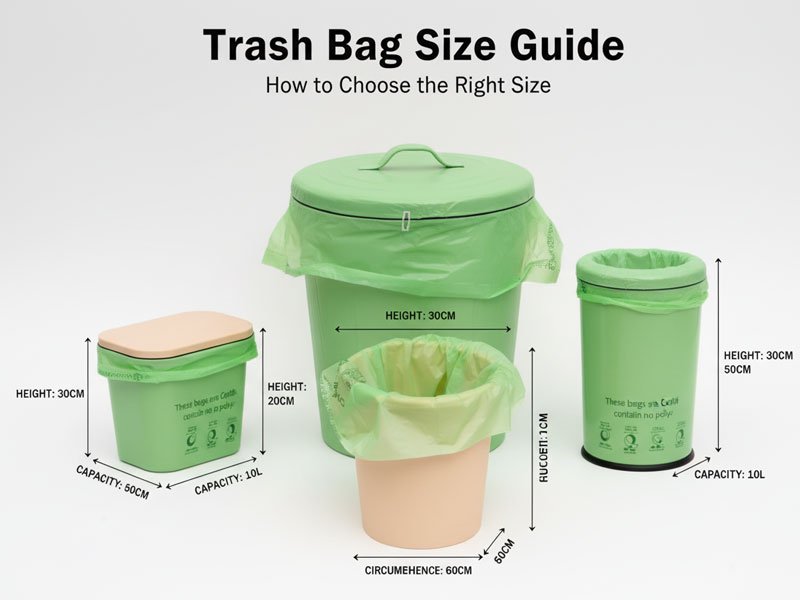
Choosing compostable bag sizes in Australia is not only about litres.
It is about fit, use, storage, certification, and resale.
If you are a packaging wholesaler, your customers may be grocery stores, produce retailers, food service groups, councils, cleaning suppliers, or private-label brands. They all need compostable bags, but they do not need the same bag.
- A produce bag is not a caddy liner.
- A kitchen liner is not a 240L wheelie bin liner.
- A FOGO liner may need a different claim from a retail carry bag.
This guide gives you a practical way to choose compostable bag sizes for Australian customers.
I will keep it simple.
The goal is to help you stock the right sizes, avoid slow-moving inventory, and answer buyer questions with more confidence.
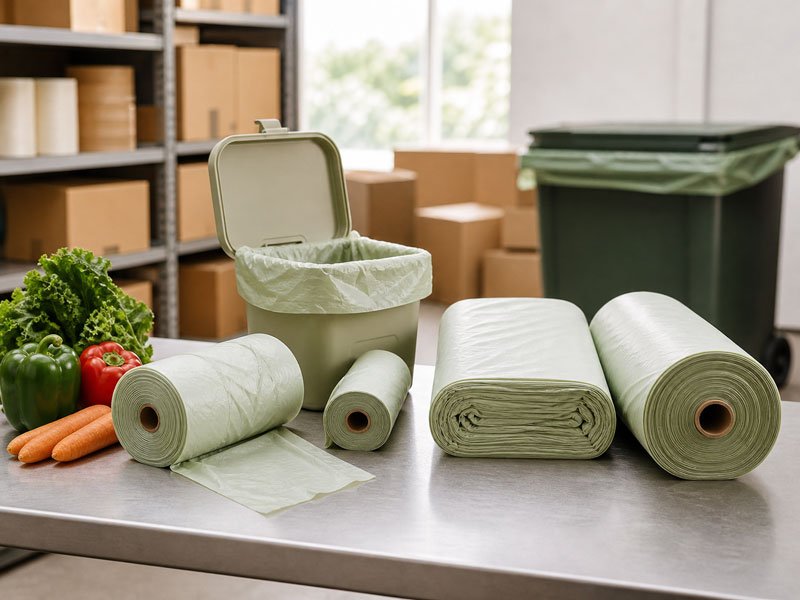
Start With the Customer, Not the Size
Many buyers start by asking:
“What sizes do you have?”
I would start with a better question:
“What will the bag be used for?”
A compostable bag size only makes sense when you know the use case.
Ask:
- Is it for fruit and vegetables?
- Is it for food scraps?
- Is it for a kitchen caddy?
- Is it for a commercial bin?
- Is it for a 120L or 240L wheelie bin?
- Is it for retail checkout?
- Is it for private-label resale?
- Does the customer need AS 4736 or AS 5810?
Once you know the use, the size choice becomes easier.
Quick Size Guide for Australian Wholesalers
Use this as a starting point, not a final rule. Bin shape, bag thickness, gusset, sealing, and customer use can change the best fit.
| Customer Type | Common Bag Type | Common Size Range | Notes for Wholesalers |
|---|---|---|---|
| Grocery stores | Produce roll bags | Small to medium roll bags | Check dispenser fit, opening feel, roll count, and food contact needs |
| Fruit and vegetable retailers | Compostable produce bags | Medium produce bags | Good for loose fruit, vegetables, herbs, and small grocery items |
| Food service | Caddy liners, food waste bags | 8L, 10L, 20L, 30L, 36L | Useful for kitchen scraps, prep areas, and counter bins |
| Cafes and restaurants | Bin liners | 30L, 36L, 60L, 80L | Check leak resistance and seal strength |
| Commercial kitchens | Heavy-duty liners | 60L, 80L, 120L | Match to bin shape and food waste weight |
| FOGO programs | Caddy liners, wheelie bin liners | 8L, 10L, 120L, 240L | Check local council acceptance and certification needs |
| Cleaning suppliers | Compostable bin liners | 30L, 60L, 80L, 120L | Carton labels and SKU clarity matter |
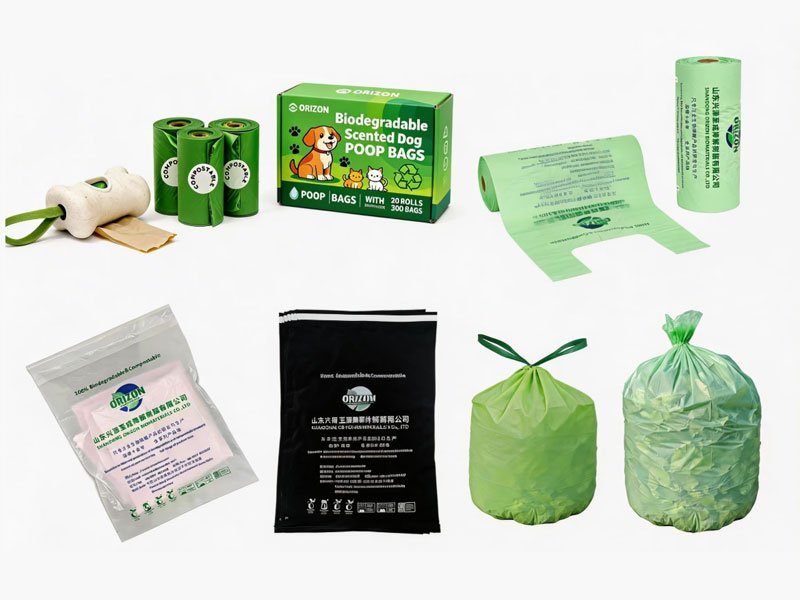
| Private-label brands | Custom compostable bags | Depends on channel | Artwork and claim wording must match certification |
Grocery and Produce Bag Sizes
For grocery and produce customers, the main product is usually a compostable produce bag.
These are often used for:
- Fruit
- Vegetables
- Herbs
- Bakery items, if suitable
- Loose grocery items
- Produce departments
For wholesalers, the main checks are not only width and length.
You should also check:
- Roll count
- Core size
- Perforation
- Opening feel
- Food contact support
- Carton quantity
- Shelf life
- Storage conditions
A produce retailer does not want a bag that is hard to open during a busy day.
Small friction becomes a big complaint.
If this is your focus, connect this section to your compostable produce bags wholesale Australia page.
Food Service Bag Sizes
Food service customers usually need compostable bags for food scraps and kitchen waste.
Common sizes include:
- 8L caddy liners
- 10L small kitchen liners
- 20L food waste bags
- 30L kitchen bin liners
- 36L food waste liners
- 60L commercial bin liners
- 80L commercial kitchen liners
The right size depends on the bin, but also on the waste.
Food waste is often wet and heavy. That means seal strength and leak resistance matter.
Do not choose by litre size alone.
Ask the customer:
- Is the waste dry or wet?
- Will the bag hold food scraps?
- How often is the bin emptied?
- Is the bag for front-of-house or back-of-house?
- Is odour control important?
- Does the buyer need commercially compostable bags?
For food service, I would test samples before a large order. It is better to find a weak seal in a test kitchen than after a full shipment arrives.
FOGO and Green Bin Liner Sizes
FOGO means Food Organics and Garden Organics.
In simple words, it is a system for collecting food scraps and garden waste.
For FOGO customers, the common compostable bag sizes are often:
- 8L kitchen caddy liners
- 10L kitchen caddy liners
- 120L wheelie bin liners
- 240L wheelie bin liners
But here is the important part.
FOGO rules are not the same everywhere.
The ACT Government explains that FOGO stands for Food Organics and Garden Organics and notes that only certified compostable caddy liners meeting AS 5810 can be used in its FOGO bins. It also says local rules apply to what can go in the bin.
So wholesalers should be careful.
Do not tell every customer, “This can go in any green bin.”
A safer answer is:
“This liner is certified compostable. Please check local council acceptance before disposal.”
That one sentence can reduce confusion.
For more detail, link this section to your FOGO bin liners page and your Australia compostable bag requirements guide.
Bin Liner Sizes for Commercial Buyers
Commercial buyers often ask for bin liners by litre size.
Common options include:
| Bin Liner Size | Typical Use | Buyer Risk to Check |
|---|---|---|
| 8L | Kitchen caddy, FOGO caddy | AS 5810 needs, caddy fit |
| 10L | Small food waste bin | Opening size and bag depth |
| 20L | Small kitchen or office food waste | Seal strength |
| 30L | Kitchen bin, cafe prep area | Leak resistance |
| 36L | Food service bin | Wet waste performance |
| 60L | Medium commercial bin | Carton count and thickness |
| 80L | Commercial kitchen bin | Load weight and seal |
| 120L | Wheelie bin | Fit, overhang, and strength |
| 240L | Large wheelie bin | Pallet packing and heavy-duty use |
For B2B buyers, a size chart is useful.
But samples are better.
A 120L liner from one supplier may not fit the same way as another 120L liner. Gusset, width, height, and sealing style all change the fit.
For this section, link to your Compostable bin liners.
Certification Notes by Use Case
Size is not the only decision.
Certification also matters.
The Australasian Bioplastics Association says its certification program verifies products against Australian Standards for commercial and home composting, including AS 4736 and AS 5810.
For wholesalers, this means the product claim should match the end use.
| Use Case | Certification Note |
|---|---|
| Commercial food waste bags | AS 4736 may be requested |
| Home compost or caddy liners | AS 5810 may be requested |
| FOGO liners | Check local council rules and required certification |
| Produce bags | Check compostability claim and food contact needs |
| Private-label bags | Check logo use and claim wording before printing |
A simple rule helps:
Do not print a claim that the certificate does not support.
How to Build a Starter SKU Range
If you are building a compostable bag range for wholesale, do not start with too many sizes.
Start with the sizes that serve clear customer groups.
A practical starter range may include:
- Produce roll bags for grocery and fruit shops
- 8L or 10L caddy liners for food scraps
- 30L or 36L kitchen liners for cafes
- 60L or 80L liners for food service
- 120L wheelie bin liners for commercial waste
- 240L wheelie bin liners for larger sites
Then add private-label or custom sizes after you see demand.
This keeps inventory easier to manage.
It also makes the sales pitch cleaner.
If you are building a distributor range, our guide on compostable bags for distributors may help you plan the offer more clearly.
Avoid These Size Selection Mistakes
Some mistakes are common.
They are also avoidable.
Avoid:
- Buying too many sizes before testing demand
- Choosing only by litre size
- Ignoring bin shape
- Forgetting roll count and carton quantity
- Selling FOGO liners without checking local rules
- Printing vague claims on private-label bags,For custom branded products, review your private-label compostable packaging requirements before confirming the size range.
- Using one bag type for every customer
- Ignoring shelf life and storage conditions
- Skipping samples before bulk order
Compostable bag sizes look simple on a price list.
They become less simple in a warehouse.
That is why a clear size plan matters.
What to Ask Your Supplier
Before ordering compostable bag sizes for Australia, ask your supplier:
- What sizes are commonly ordered by Australian wholesalers?
- Which sizes suit grocery and produce customers?
- Which sizes suit food service customers?
- Which liners are suitable for FOGO use?
- Can you provide AS 4736 or AS 5810 support?
- Can I get samples before bulk order?
- Can we mix sizes in one shipment?
- What is the MOQ for each size?
- What is the shelf life?
- What storage conditions do you recommend?
Can you support private-label packaging?
For a fuller document checklist, see our guide on compostable bag supplier documents.
These questions are basic.
That is why they work.
FAQ
What are common compostable bag sizes in Australia?
Common compostable bag sizes in Australia include produce roll bags, 8L and 10L caddy liners, 30L and 36L kitchen liners, 60L and 80L commercial liners, and 120L and 240L wheelie bin liners.
What size compostable bag is used for a kitchen caddy?
Many kitchen caddies use 8L or 10L compostable liners. Always check the caddy shape and local council rules before choosing the liner.
What compostable bag sizes are used for food service?
Food service customers often use 30L, 36L, 60L, and 80L compostable bin liners. Smaller kitchens may also use 8L, 10L, or 20L caddy liners.
What size compostable liner fits a wheelie bin?
120L and 240L compostable wheelie bin liners are common for larger bins. Fit can vary, so sample testing is important before bulk orders.
Should wholesalers stock every compostable bag size?
No. It is better to start with a focused range based on customer type. Produce bags, caddy liners, kitchen liners, and wheelie bin liners usually cover the main B2B needs.
Conclusion
Choosing compostable bag sizes in Australia is not about having the longest product list.
It is about matching the right bag to the right customer.
- Grocery buyers need easy-to-use produce bags.
- Food service buyers need liners that hold food waste.
- FOGO buyers need clear certification and local disposal guidance.
- Private-label buyers need the right size, claim, and artwork.
Start with the use case.
Then choose the size.
That is the steady way to build a wholesale range that sells.
If you are planning a wholesale range, you can contact Orizon for compostable bag sizes based on your grocery, food service, FOGO, or bin liner customers.