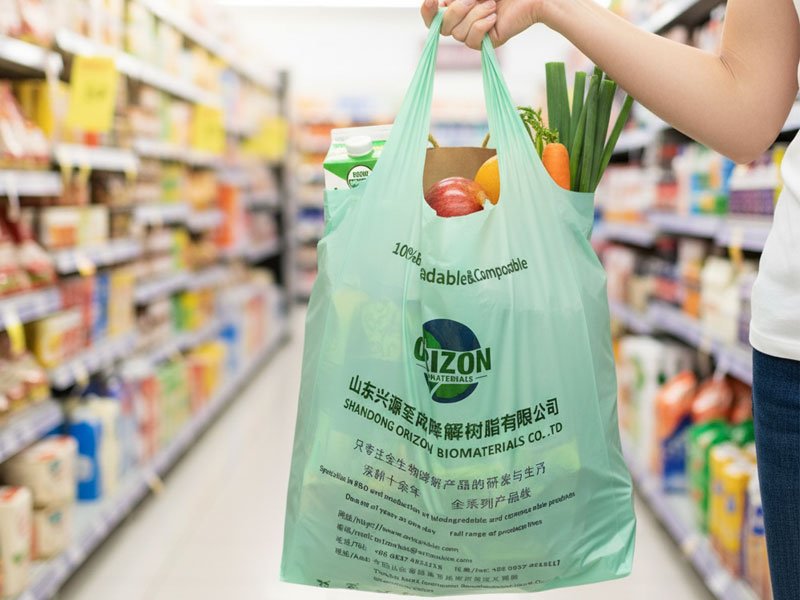
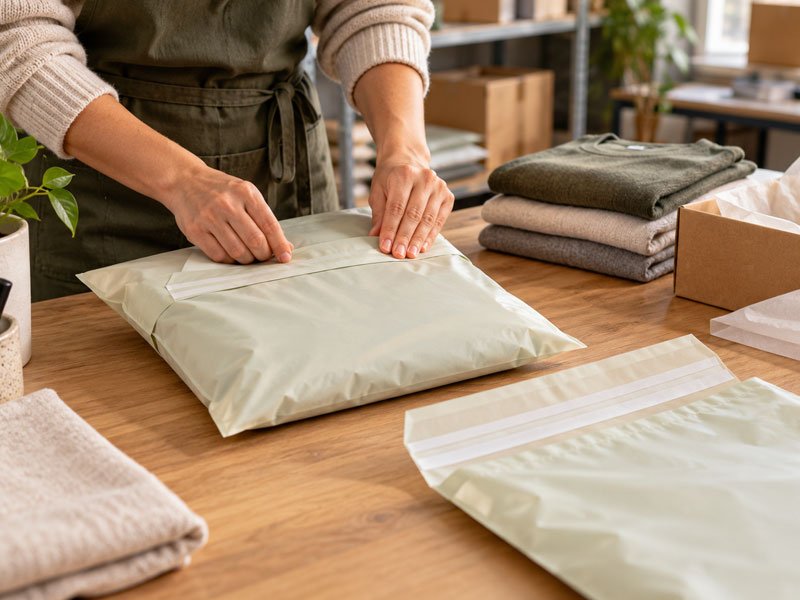
If you import compostable bags from China, price is only one part of the job.
The bigger question is simple:
Can you resell the bags with confidence?
For Australian wholesalers, this matters a lot. Your customers may be supermarkets, grocery stores, produce shops, food service groups, councils, cleaning suppliers, or private-label brands. They do not only ask for size, thickness, MOQ, and lead time.
They often ask:
- Is this bag certified compostable?
- Does it meet AS 4736 or AS 5810?
- Can you send the certificate?
- Is it truly compostable, or only biodegradable?
If your answer is not clear, the order can slow down.
Sometimes it stops.
This guide explains how to reduce resale risk when sourcing certified compostable bags from China. I will keep it practical. The goal is not to make the process look complex. The goal is to help you ask better questions before you buy.
What Does Resale Risk Mean?
Resale risk means the risk you carry after you buy the product and sell it to your own customers.
For compostable bags, this can include:
- Certification risk
- Greenwashing risk
- Product claim risk
- Quality risk
- Inventory risk
- Private-label artwork risk
- Customer trust risk
A low price cannot fix these problems later.
If the certification is unclear, your customer may not approve the product. If the wording on the bag is too broad, the claim may create concern. If the bag quality is not stable, your customer may return it or stop reordering.
That is why a good buying process starts before the first bulk order.
Why This Matters in Australia
Australia is a careful market for environmental claims.
The Australian Competition and Consumer Commission, or ACCC, says environmental claims should be true, clear, and backed by evidence. It also warns businesses to avoid broad claims that can mislead buyers or consumers.
This matters for compostable packaging.
A bag printed with “eco-friendly” or “green” may sound good, but those words are not enough. A buyer may want proof. They may ask for the compostability standard, the certificate holder, the test basis, and the correct disposal path.
In Australia, the two compostability standards often discussed are:
- AS 4736 for commercial or industrial composting
- AS 5810 for home composting
The Australasian Bioplastics Association explains that certification helps show products meet Australian standards for commercial and home composting.
In plain words:
A claim needs support.
That support should be easy for your customer to check.
Start With the Claim, Not the Price
When you import compostable bags from China, it is tempting to start with unit price.
I would start with the claim.
Ask yourself:
What will my customer need to say about this bag?
For example:
- “Certified compostable to AS 4736”
- “Certified home compostable to AS 5810”
- “Commercially compostable where accepted”
- “Made for food waste collection”
- “Private-label compostable produce bags”
- “Compostable bin liners for FOGO programs”
Each claim needs a different level of proof.
If the bag is only suitable for commercial composting, do not make it sound like it can break down in any home compost bin.
If the product is certified under AS 4736, do not present it as AS 5810 unless that is also covered.
This is a small detail.
But small details protect large orders.
Check the Certification Scope
A certificate is useful only when it covers the actual product you plan to buy.
Do not stop at the words “certified compostable bags.”
Ask these questions:
- Which standard does the product meet?
- Is it AS 4736, AS 5810, EN 13432, BPI, or another standard?
- Does the certificate cover the finished bag or only the raw material?
- Is the bag size, thickness, and product type included?
- Who owns the certificate?
- Is the certificate still valid?
- Can the logo be used on private-label packaging?
- Are there rules for printing the certification mark?
This is important for Australian buyers.
Many downstream customers do not want a general promise. They want a clear document trail.
If you need Australian-standard products, review your options for AS4736 compostable bags and AS5810 compostable bags before choosing the claim.
Know the Difference: Biodegradable vs Compostable
Here is a simple definition.
Biodegradable means a material can break down over time through natural processes. But the word alone does not always tell you how long it takes, what conditions are needed, or what is left behind.
Compostable means the product is designed to break down under composting conditions and meet a compostability standard.
That difference matters.
A product can be biodegradable but not certified compostable.
For resale, this is where many problems begin. If your customer asks for certified compostable bags and you offer a vague biodegradable bag, the buyer may see risk.
A safer way is to use clear wording.
Risky wording:
- “Eco-friendly bag”
- “Green bag”
- “100% biodegradable”
- “Earth-safe”
- “Compostable anywhere”
Clearer wording:
- “Certified compostable to AS 4736”
- “Home compostable to AS 5810”
- “Commercially compostable where accepted”
- “Compostable bag for food waste collection”
- “Certification documents available for buyer review”
If your sales team needs a simple explanation, you can link them to a guide on compostable vs biodegradable bags.
Ask for the Documents Before Bulk Ordering
Do not wait until your customer asks.
Before you place a bulk order, ask your compostable bags supplier in China for a clean document pack.
A good document pack may include:
- Compostability certificate
- Product data sheet
- Material information
- Size and thickness specification
- Carton and packing details
- Shelf life and storage notes
- Food contact statement, if needed
- Printing and artwork proof
- QC standard or inspection checklist
- Photos or samples from similar orders
A product data sheet is useful because it puts the basic facts in one place. It should show the product name, size, thickness, material type, application, packing method, and relevant compostability claim.
This helps your customer review the product faster.
It also helps your own sales team.
If your sales staff cannot explain the product, they will not sell it with confidence.
Be Careful With Private-Label Claims
Private label can be a good opportunity for Australian wholesalers.
It can also create risk.
The bag may carry your customer’s logo, brand name, disposal message, and environmental claim. Once printed, the wording is part of the product.
So it should be checked before production.
For private-label compostable bags, review these points:
- Does the artwork match the certification?
- Is the compostability claim specific?
- Is the disposal instruction clear?
- Is the logo use allowed?
- Is the wording too broad?
- Does the carton label match the product?
- Does the product data sheet match the printed bag?
A simple rule helps:
Say only what you can prove.
If you are building a private-label range, your supplier should be able to support artwork review and claim guidance. You can connect this section to your private label compostable packaging page.
Reduce Quality Risk Before Shipment
Certification is not the only issue.
The bag still has to work.
For compostable bin liners, produce bags, shopping bags, and mailer bags, buyers may care about:
- Tensile strength
- Sealing strength
- Leak resistance
- Roll perforation
- Opening feel
- Print quality
- Carton strength
- Shelf life
- Storage conditions
Compostable materials can be more sensitive to heat, moisture, and long storage than some traditional plastics. So storage and shipping details matter.
Ask your supplier:
- What is the suggested shelf life?
- How should the bags be stored?
- Can the bags handle Australian summer warehousing?
- What carton style is used?
- Can the supplier provide pre-shipment photos or inspection reports?
- Can samples be tested before mass production?
This is not about making sourcing harder.
It is about avoiding surprises after the container arrives.
Match Product Type to Customer Use
Not every compostable bag fits every customer.
A grocery customer may need produce roll bags.
A council-related customer may ask about FOGO bin liners.
A pet brand may need private-label waste bags.
A food service distributor may need caddy liners or kitchen waste bags.
Before ordering, map the product to the buyer’s use.
For example:
| Customer Type | Common Need | Risk to Check |
|---|---|---|
| Grocery stores | Produce bags, T-shirt bags | Certification and roll performance |
| Food service | Caddy liners, bin liners | Leak resistance and food waste use |
| Councils / FOGO programs | Kitchen caddy liners | Local acceptance and AS 4736 needs |
| Retail brands | Shopping bags | Print claim and logo use |
| E-commerce brands | Mailer bags | Strength, seal, and disposal wording |
| Pet brands | Waste bags | Claim wording and end-use limits |
If you sell into Australia, connect the product choice back to local requirements. Your buyers may also want to review Australia compostable bag requirements.
Warning Signs When Choosing a Supplier
Some warning signs are easy to miss.
Be careful if a supplier:
- Uses “biodegradable” and “compostable” as the same word
- Cannot explain AS 4736 or AS 5810
- Sends only raw material certificates
- Cannot provide a product data sheet
- Says every claim is fine to print
- Avoids questions about shelf life
- Gives no QC standard
- Cannot confirm who owns the certificate
- Offers very low prices with unclear material details
A low price may still be fine.
But unclear answers are not fine.
If a supplier cannot support your resale process, you may end up doing all the explaining yourself.
A Practical Checklist Before You Import
Before you import certified compostable bags from China, I would check these items:
- Confirm the target market: Australia, New Zealand, EU, US, or other
- Confirm the needed standard: AS 4736, AS 5810, EN 13432, BPI, ASTM D6400
- Confirm whether the certificate covers the finished bag
- Ask for a product data sheet
- Check claim wording before printing
- Review shelf life and storage rules
- Test samples before bulk order
- Confirm MOQ, lead time, and reorder plan
- Agree on carton labels and packing details
- Arrange inspection before shipment
This list is simple.
But it can save time, money, and trust.
What a Good China Supplier Should Help With
A good compostable bags manufacturer in China should do more than quote.
They should help you prepare for resale.
That may include:
- Certified compostable bag options
- AS4736 and AS5810 related product support
- Clear product specs
- Sample preparation
- Private-label artwork review
- Carton and SKU planning
- Basic claim guidance
- QC checks before shipment
- Documents for procurement review
For importers and wholesalers, this support is not extra decoration.
It is part of the buying decision.
You can also review our guide for compostable bags for importers and compostable bags for distributors.
FAQ
Is it safe to import compostable bags from China?
Yes, it can be safe if you verify the supplier, certification, product scope, and quality before bulk order. Do not rely only on price or general claims.
What documents should I ask for?
Ask for the compostability certificate, product data sheet, product specification, packing details, shelf life notes, and artwork proof for private-label orders.
Are biodegradable bags the same as compostable bags?
No. Biodegradable is a broad term. Certified compostable means the product has been tested against a compostability standard, such as AS 4736 or AS 5810 in Australia.
What is the main risk for Australian wholesalers?
The main risk is not only product quality. It is resale confidence. Your customer may ask for proof, correct wording, and clear disposal guidance.
Should I use AS 4736 or AS 5810?
It depends on the product and disposal path. AS 4736 is for commercial or industrial composting. AS 5810 is for home composting. Some products may need one or both.
Conclusion
When you import compostable bags from China, the best supplier is not always the one with the lowest price.
It is the one that helps you answer your customer’s next question.
Can you prove the claim?
Can you show the document?
Can your sales team explain it?
Can your customer resell it without doubt?
That is the real work.
And that is how you reduce resale risk.