Disease prevention in an animal shelter is not one single task.
It is not only vaccination.
It is not only cleaning.
It is not only disinfection.
It is a daily system.
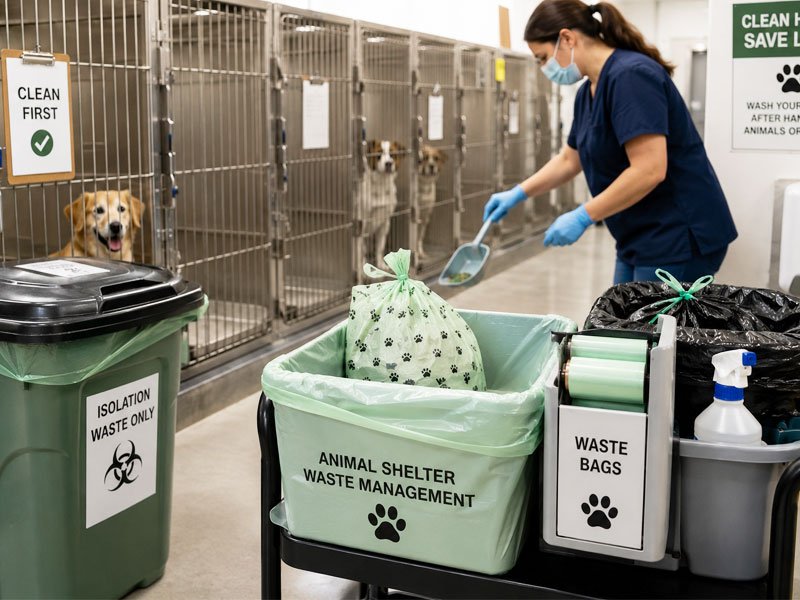
In a shelter, animals, staff, volunteers, bedding, bowls, cages, litter boxes, waste bins, cleaning carts and transport crates all move through the same space. If that movement is not controlled, waste can move too.
That is where shelter waste management becomes part of shelter disease prevention.
Waste bags do not prevent disease by themselves.
But the right waste handling system can help reduce contact with feces, urine, vomit, cat litter, soiled bedding, dirty gloves, leaking liners and overflowing bins.
That matters.
The CDC notes that pets and other animals can sometimes carry germs that make people sick, even when the animal appears healthy. It also recommends washing hands after cleaning up after pets, handling pet habitats or equipment, removing soiled clothes or shoes, and touching animal waste or garbage.
This guide explains how better animal shelter waste management can support disease control in animal shelters.
It is not veterinary treatment advice.
It is an operational guide for cleaner waste flow, better isolation waste handling, clearer staff routines and stronger supply planning.
For the full solution category, visit our Animal Shelter Waste Management Solutions.
What Shelter Disease Prevention Really Means
Shelter disease prevention is the daily system used to reduce the spread of disease among animals, staff, volunteers and visitors.
It can include:
- intake checks;
- vaccination;
- isolation;
- quarantine;
- cleaning;
- disinfection;
- waste handling;
- hand hygiene;
- staff training;
- and record keeping.
Some parts belong to the shelter veterinarian.
Some parts belong to management.
Some parts belong to every staff member and volunteer.
Waste handling sits in the middle.
If feces, urine pads, cat litter and soiled bedding are not removed well, the shelter becomes harder to clean. If bins overflow, staff have to work around waste. If isolation waste moves through clean areas, the risk of cross-contamination increases.
A disease prevention plan should not stop at “clean the kennel.”
It should also answer:
- Where does waste go?
- Which bag or liner is used?
- Who ties the bag?
- Which cart carries it?
- Which route does it take?
- Who replaces the liner?
- Who reports a leak, shortage or unusual waste volume?
That is the practical side.
How Disease Risks Build Up in Shelter Waste Flow
Waste flow means the path waste takes from the animal area to final disposal.
In a shelter, waste flow may start in a kennel, cattery, intake room, isolation room, laundry cart, outdoor run or transport crate.
The risk is not only the waste itself.
The risk is the way waste moves.
| Waste flow point | Disease risk |
|---|---|
| Kennel floor | Feces, urine, vomit and dirty pads may contaminate surfaces |
| Cat litter area | Litter can contain feces and urine and can be heavy to move |
| Laundry cart | Bedding can carry hair, saliva, urine, feces or discharge |
| Cleaning cart | Dirty tools, gloves and waste may mix with clean supplies |
| Isolation room | Higher-risk waste may need a separate route |
| Waste holding area | Overflow, leaks, odor and pests can build up |
| Outdoor run | Feces left too long increases contact risk |
| Transport crate | Waste can move between areas if crates are not cleaned |
In 2026, a West Virginia animal shelter paused dog intake after confirming a canine distemper case. The shelter increased cleaning and sanitizing, isolated dogs showing symptoms and continued vaccinating animals upon intake. The report also noted that distemper can spread through airborne exposure and contaminated surfaces.
That example shows why disease prevention is not only a medical issue.
It is also an intake, isolation, sanitation and workflow issue.
Waste Management Is Not a Replacement for Veterinary Disease Control
This point needs to be clear.
Waste bags do not diagnose disease.
Waste bags do not vaccinate animals.
Waste bags do not replace isolation rules.
Waste bags do not replace disinfectants.
Shelter disease control should follow veterinary guidance, facility protocol and local rules.
Better waste management supports that system by helping staff reduce exposure to contaminated material and remove waste more consistently.
I would describe it this way:
Veterinary care sets the disease control plan. Waste management helps the team carry out the hygiene part of that plan.
That is the right boundary.
Separate Shelter Waste by Risk Level
Not all shelter waste should be treated the same way.
A food wrapper is not the same as a used pee pad.
A clean cardboard box is not the same as vomit cleanup waste.
Use risk levels.
| Risk level | Waste type | Handling direction |
|---|---|---|
| Routine | Clean packaging, normal office trash | Standard bin liner and regular removal |
| Contaminated | Feces, cat litter, urine pads, soiled bedding | Bag, tie and remove promptly |
| Higher-risk | Isolation waste, vomit cleanup, suspected disease area waste | Dedicated route and shelter protocol |
| Regulated | Sharps, medical waste, some treatment waste | Veterinary and local disposal rules |
This simple table helps staff decide what to do.
It also helps purchasing teams choose the right bags and liners.
A small dog waste bag may work for feces pickup.
It may not work for wet pads, cat litter or soiled bedding.
Create a Clean-to-Dirty Waste Workflow
Clean-to-dirty workflow means staff move from cleaner areas to dirtier or higher-risk areas.
The goal is simple:
Do not carry contamination back into clean spaces.
A basic shelter route may look like this:
- Clean supply area
- Healthy animal housing
- Intake area
- Isolation or quarantine area
- Waste holding area
This does not replace your shelter protocol.
It gives the team a mental map.
Try to avoid:
- carrying isolation waste through clean supply storage;
- moving dirty bedding past clean towels;
- using the same cart for clean supplies and waste;
- using the same gloves between zones;
- dragging leaking bags down the hall;
- placing tied waste bags on clean surfaces.
Small habits matter.
A shelter does not become cleaner because one person knows the rule.
It becomes cleaner when the rule is easy for everyone to follow.
Control Feces, Litter and Urine Pads First
Feces, cat litter and urine pads are daily waste streams in many shelters.
They should be handled early and consistently.
The CDC says dog and cat poop can contain parasites and germs that may be harmful to people, and it recommends using bags to pick up and dispose of dog poop in proper areas. It also recommends cleaning a cat’s litter box daily to lower exposure to harmful parasites.
In a shelter, that means:
- remove feces promptly;
- use the right waste bag;
- tie bags before transport;
- remove wet pads before they leak;
- use stronger bags for cat litter;
- keep litter waste away from clean bedding;
- reline bins before the next round starts.
This is where animal shelter waste bags become part of the hygiene system.
For broader shelter waste planning, see our animal shelter waste management.
Keep Isolation Waste Separate
Isolation areas need clear rules.
Isolation waste may include:
- feces;
- cat litter;
- used pee pads;
- vomit cleanup waste;
- used gloves;
- paper towels;
- disposable bedding;
- contaminated packaging;
- and empty food containers from the isolation area.
The exact handling method should follow the shelter veterinarian’s protocol and local disposal rules.
But the workflow should be clear.
A practical isolation waste system may include:
- dedicated bins;
- labeled liners;
- tied bags before removal;
- separate gloves;
- separate cleaning tools;
- no shared carts;
- a defined removal route;
- a waste log;
- and separate restocking.
Do not make staff guess.
If an isolation bin needs a specific liner, label the bin.
If the waste must leave by a specific route, mark the route.
If a bag leaks, record it.
Manage Soiled Bedding and Laundry Routes
Bedding can move contamination through a shelter.
A towel may look harmless.
But it can carry hair, saliva, urine, feces, discharge or cleaning residue.
Soiled bedding should have a defined route.
Separate:
- washable bedding;
- disposable bedding;
- heavily soiled bedding;
- isolation bedding;
- clean laundry;
- and clean storage.
Do not carry dirty bedding through clean supply areas if another route is available.
Use soiled bedding bags or lined carts where needed.
If the bag or liner leaks, the hallway becomes part of the cleanup.
That is extra work.
It is also a risk point.
Prevent Bin Overflow, Leaks and Pest Attraction
Overflowing waste bins are not only messy.
They slow down cleaning and increase exposure.
A full bin means staff may press waste down by hand, place waste beside the bin or carry loose waste to another area.
None of that is ideal.
Good bin control includes:
- correct-size bin liners;
- regular removal times;
- lids where appropriate;
- no overfilling;
- leak checks;
- bin cleaning;
- and restocking near the work area.
Waste holding areas also need attention.
Open waste, strong odor and food residue can attract flies, rodents or wildlife.
Once pests enter the system, sanitation becomes harder.
A good waste system removes waste before it becomes a second problem.
Build an Outbreak-Ready Waste Kit
During a disease concern, staff should not be looking for bags, gloves and labels at the last minute.
Prepare a simple outbreak-ready waste kit.
It may include:
- dedicated isolation bin liners;
- small waste bags;
- pee pad disposal bags;
- soiled bedding bags;
- gloves;
- labels;
- cart liners;
- waste log sheets;
- tape or markers;
- and reserve cartons.
Keep the kit in a known place.
Check it on a schedule.
A kit does not solve an outbreak.
But it helps the team respond without confusion.
The 2026 shelter distemper report showed that outbreak response may involve intake changes, isolation, increased cleaning and continued vaccination. Waste handling should be ready to support that kind of response.
Train Staff and Volunteers With Simple Rules
Disease prevention fails when the rules are too hard to remember.
Use short rules.
For example:
- Tie bags before moving them.
- Change gloves between zones.
- Keep clean and dirty supplies separate.
- Do not move from isolation to clean areas without following protocol.
- Report leaks.
- Report low stock.
- Wash hands after animal waste or garbage handling.
- Record unusual waste.
The CDC lists handwashing after touching animal waste, after handling garbage and after cleaning up after pets among key hygiene practices.
A volunteer does not need a long manual on the first day.
They need a clear card beside the supplies.
Something like:
Waste Handling Rule
Bag it. Tie it. Move it by the right route. Wash hands. Report problems.
That works.
Waste Management Supplies That Support Shelter Disease Prevention
The supply list should match the waste flow.
Do not buy one bag for every task.
Different waste needs different containment.
| Need | Supply |
|---|---|
| Feces pickup | Dog waste bags |
| Cat litter disposal | Cat litter waste bags |
| Wet pad disposal | Leak-resistant disposal bags |
| Kennel bins | Bin liners |
| Cleaning carts | Cart liners |
| Soiled bedding | Bedding bags |
| Isolation waste | Labeled liners |
| Outdoor runs | Pet waste bags |
| Waste holding area | Stronger liners or bulk bags |
| Staff cleanup | Gloves and small waste bags |
For dog walking areas, outdoor runs and kennel feces removal, review our dog waste bags for shelters.
For larger shelter, rescue or municipal programs, visit our OEM and bulk compostable bags.
Compostable Bags and Shelter Disease Prevention
Compostable bags can support some shelter waste programs.
But the claim must be used carefully.
A compostable bag does not make contaminated waste safe.
A compostable bag does not replace the need for proper disposal.
Start with the waste type and disposal route.
Ask:
- Is the waste routine or contaminated?
- Is the bag holding feces, litter, wet pads or bedding?
- Will the waste go to general trash?
- Is there an accepted composting route?
- Does the facility accept that waste type?
- Does the certification cover the product and claim?
- Are local rules clear?
For material claims, certificate scope and logo use, see our compostable certifications.
Common Mistakes That Increase Disease Risk
1. Waiting too long to remove feces
Feces should not sit in kennels, outdoor runs or public areas longer than needed.
Prompt removal makes cleaning easier.
2. Letting bins overflow
Overflow creates more contact points.
It also tells staff the waste system is not keeping up.
3. Using weak liners for wet waste
Wet pads and litter need stronger containment.
A leak spreads the problem.
4. Mixing isolation waste with routine trash
Isolation waste should follow the facility’s protocol.
Do not mix routes unless the protocol allows it.
5. Moving dirty bedding through clean areas
Dirty bedding can carry contamination through the building.
Give it a route.
6. Sharing tools between zones
A shared cart, brush or bin can move contamination.
Use dedicated tools where needed.
7. Not restocking bags and gloves
When supplies run out, staff improvise.
Improvising usually weakens the process.
8. No waste log
A log helps track leaks, shortages, unusual waste and repeated problems.
9. Treating disinfection as a shortcut around waste removal
Remove waste first.
Then clean.
Then disinfect according to protocol.
10. No outbreak waste kit
A shelter should not build the kit after the problem starts.
Prepare the basics first.
Shelter Disease Prevention Waste Checklist
Use this checklist as a starting point.
Adjust it to your shelter veterinarian’s protocol and local rules.
Daily waste flow
- Feces removed promptly
- Cat litter waste bagged
- Pee pads contained
- Soiled bedding separated
- Bins checked before overflow
- Bin liners replaced as needed
- Cart liners changed when soiled
- Waste holding area checked
Isolation waste
- Isolation bins labeled
- Dedicated liners available
- Bags tied before removal
- Separate route followed
- Gloves changed
- Waste log updated
- Supplies restocked separately
Staff and volunteer workflow
- Clean and dirty areas understood
- Gloves available
- Handwashing reminders posted
- Shortages reported
- Leaks reported
- Unusual waste volume reported
- Cleaning records updated
Procurement
- Dog waste bags stocked
- Cat litter bags stocked
- Leak-resistant bags stocked
- Bin liners stocked
- Cart liners stocked
- Soiled bedding bags stocked
- Isolation liners stocked
- Emergency reserve checked
FAQ
What is shelter disease prevention?
Shelter disease prevention is the daily system used to reduce disease spread among animals, staff, volunteers and visitors. It includes intake checks, vaccination, isolation, cleaning, disinfection, waste handling, staff training and records.
How does waste management help prevent disease in animal shelters?
Waste management helps by removing feces, litter, urine pads, soiled bedding and contaminated cleanup waste before they spread through the facility. It also supports clean-to-dirty workflow and reduces leaks, overflow and improvised handling.
Can waste bags prevent disease?
No. Waste bags do not prevent disease by themselves. They support disease prevention when used inside a proper shelter hygiene, cleaning, isolation and disposal workflow.
What shelter waste should be separated?
Shelters should separate routine trash, feces, cat litter, urine pads, soiled bedding, isolation waste and regulated medical or sharps waste. The exact categories should follow shelter protocol and local rules.
How should isolation waste be handled?
Isolation waste should follow the shelter veterinarian’s protocol. Many shelters use dedicated bins, labeled liners, tied bags, separate tools, separate routes and waste logs for isolation areas.
Why should feces and litter be removed quickly?
Feces and litter can contain germs or parasites depending on the animal’s health. Prompt removal reduces exposure and makes cleaning easier. The CDC advises using bags to pick up and dispose of dog poop and cleaning cat litter boxes daily to reduce parasite exposure.
What supplies support shelter disease prevention?
Useful supplies may include dog waste bags, cat litter waste bags, leak-resistant bags, bin liners, cart liners, soiled bedding bags, isolation liners, gloves, labels and cleaning logs.
How can shelters reduce cross-contamination?
Shelters can reduce cross-contamination by using clean-to-dirty workflow, dedicated tools, glove changes, separate isolation routes, lined carts, tied bags and clear restocking rules.
What should be included in an outbreak-ready waste kit?
An outbreak-ready waste kit may include dedicated bin liners, small waste bags, pee pad disposal bags, soiled bedding bags, gloves, labels, cart liners, waste log sheets and reserve stock.
Should medical waste be handled with normal shelter waste?
No. Sharps, medical waste and some treatment waste should follow veterinary and local disposal rules. They should not be mixed with normal shelter waste unless the approved protocol allows it.
Build a Waste System That Supports Disease Control
Shelter disease prevention is not only what happens in the exam room.
It also happens in the kennel aisle, the cattery, the laundry area, the cleaning cart and the waste holding space.
Remove waste before it spreads.
Keep clean and dirty routes separate.
Use the right liner for the load.
Tie bags before transport.
Keep isolation waste on its own route.
Restock before supplies run out.
Record problems before they repeat.
That is practical disease control support.
ORIZON supplies animal shelter waste bags, dog waste bags, bin liners, cat litter waste bags, soiled bedding bags and bulk options for shelter and rescue operations.
For the full category, visit our Animal Shelter Waste Management Solutions.