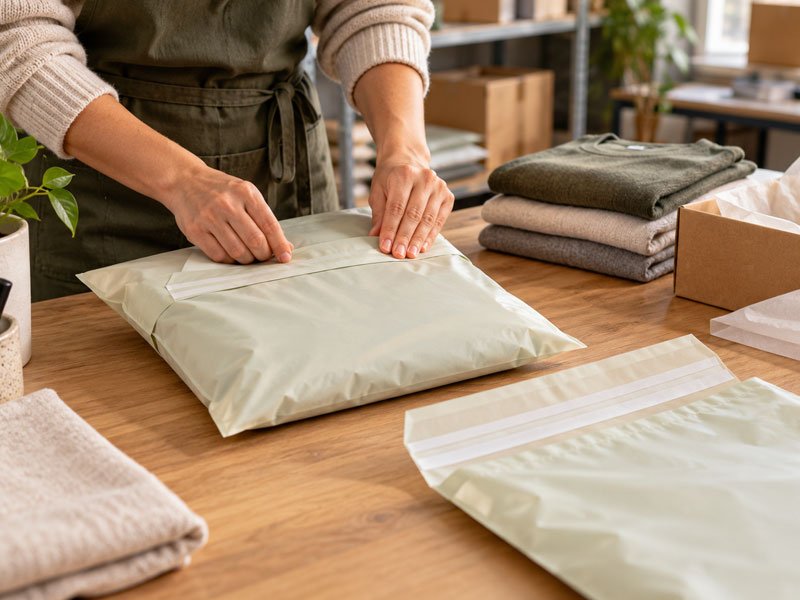
Kitchen compostable trash bags are designed for handling food waste, wet waste, and organic materials in both household and commercial kitchens. Unlike traditional plastic liners, they are made from certified compostable materials that can break down under controlled conditions.
However, choosing the right size and thickness is critical. A bag that is too thin may leak, while an oversized liner increases cost and waste.
This guide helps buyers select the right kitchen compostable trash bags based on real usage scenarios.
What Are Kitchen Compostable Trash Bags Made Of?
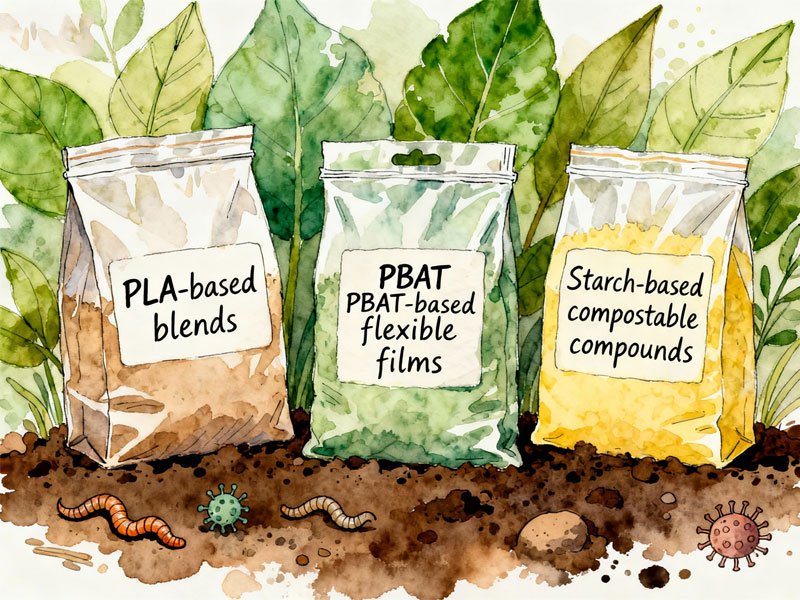
Most kitchen compostable trash bags are made from certified compostable materials that balance strength and biodegradability.
Common materials include:
- PLA (Polylactic Acid) – plant-based material
- PBAT – flexible biodegradable polymer
- PLA + PBAT blends – most common for compostable liners
These materials allow the bags to break down in composting systems while maintaining durability for daily kitchen use.
Learn more: What Are Compostable Bags Made Of?
Kitchen Compostable vs Plastic vs Biodegradable Bags
Understanding the differences helps avoid common purchasing mistakes.
Compostable kitchen bags:
- Certified under EN13432, ASTM D6400, AS5810
- Break down into natural elements
- Suitable for food waste collection
Plastic bags:
- Strong but non-degradable
- Not suitable for composting systems
Biodegradable bags:
- Break down over time without strict standards
- May not be accepted in food waste programs
Related reading: Biodegradable vs Compostable Waste Bags
What Size Works Best for Kitchen Compostable Trash Bags?
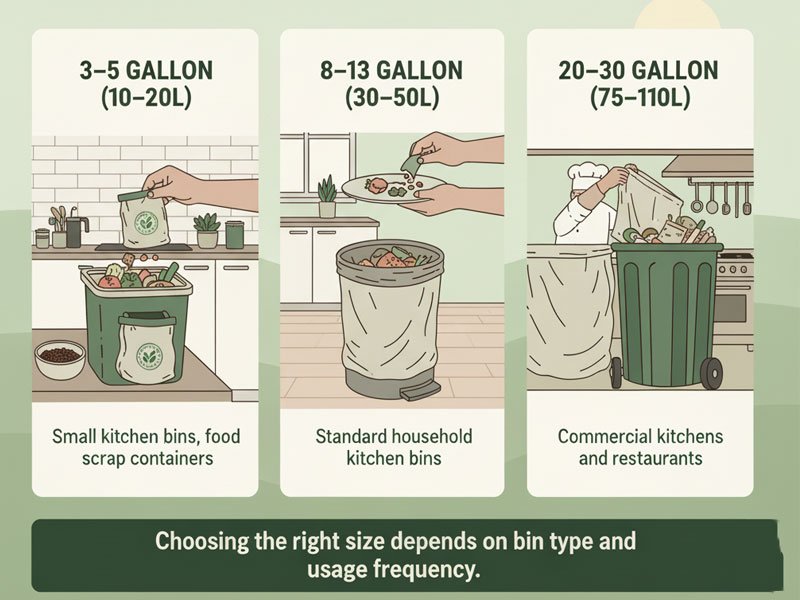
Choosing the right size depends on bin type and usage frequency.
Common sizes:
- 3–5 gallon (10–20L)
Small kitchen bins, food scrap containers - 8–13 gallon (30–50L)
Standard household kitchen bins - 20–30 gallon (75–110L)
Commercial kitchens and restaurants
Reference: Trash Bag Size Guide
What Thickness Works Best for Food and Wet Waste?
Thickness is one of the most important factors for kitchen compostable bags.
General guidelines:
- 10–12 microns
Light food waste, dry waste - 12–18 microns
Standard kitchen use (recommended range) - 18+ microns
Heavy, wet, or commercial kitchen waste
Key performance factors:
- Leak resistance
- Tear resistance
- Seal strength
Reference: Compostable Bag Thickness Guide
Where Kitchen Compostable Trash Bags Are Used
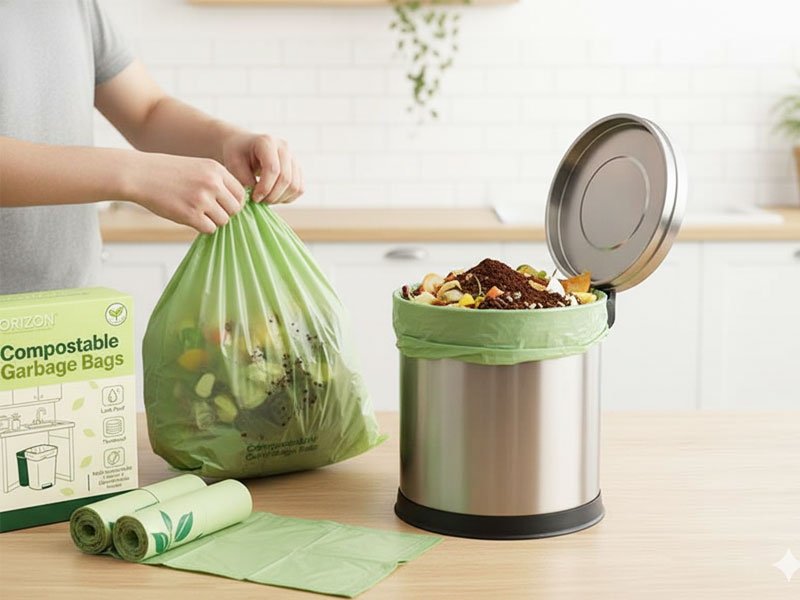
Kitchen compostable bags are widely used across different environments:
Typical applications:
- Household kitchens
- Restaurants and cafes
- Hotels and catering services
- Supermarket fresh food sections
- Food waste collection programs (FOGO systems)
Related solution: Compostable Bags for Food Waste
What Buyers Should Check Before Buying
1. Certification
Always verify:
- EN13432 (EU)
- ASTM D6400 / BPI (USA)
- AS5810 (home compostable AU)
Learn more: Compostable Certifications Overview
2. Fit and Compatibility
- Bag must fit bin size properly
- Avoid excess material or tight fitting
3. Moisture Resistance
- Important for food scraps and liquids
- Prevent leakage and odor issues
Related: Are Compostable Bags Strong Enough for Wet Food Waste
4. Supply and MOQ
- Consistent supply for business use
- Custom sizes and printing options
Learn more: Compostable Garbage Bags Wholesale
Common Mistakes Buyers Make
- Choosing bags that are too thin for wet waste
- Using non-certified biodegradable bags
- Ignoring local composting requirements
- Selecting incorrect size for bins
- Focusing only on price instead of performance
Related guide: Why Councils Reject Biodegradable Bin Liners
B2B Sourcing Advice: How to Choose the Right Supplier
For distributors and commercial buyers:
Key factors:
- Certified compostable production
- Experience with food waste applications
- Stable material sourcing (PLA + PBAT)
- Customization capability
- Quality control system
Recommended reading: How to Choose A Compostable Bag Manufacturer
FAQ
What size compostable trash bag is best for kitchen use?
Most households use 8–13 gallon bags, while small food waste bins use 3–5 gallon liners.
What thickness is best for kitchen compostable bags?
12–18 microns is ideal for most kitchen applications, especially for wet food waste.
Are compostable kitchen bags leak-proof?
High-quality compostable bags with proper thickness offer good leak resistance.
Can kitchen compostable bags be used for all food waste?
Yes, but performance depends on thickness, material quality, and waste type.
Looking for reliable kitchen compostable trash bags for your business?
Explore our solutions:
Contact us for:
- Bulk pricing
- Custom sizes and thickness
- OEM and private label options