Updated: 13 August 2026
Quick Answer:
Yes, compostable toilet bags can be truly compostable.
But only when the finished bags are made with suitable compostable materials and tested under recognized composting standards.
A toilet bag that is certified for industrial composting may not be suitable for home composting. A used toilet bag may also face local sanitation rules, even if the bag itself is compostable.
For B2B buyers, the key point is simple:
Check the finished bag certification, not only the raw material.
| Question | Short Answer |
|---|---|
| Are compostable toilet bags really compostable? | Yes, if the finished bag is certified under recognized compostability standards. |
| Are all biodegradable toilet bags compostable? | No. Biodegradable does not always mean compostable. |
| Can compostable toilet bags go into home compost? | Only if they are home compost certified and local rules allow the waste type. |
| Can used toilet bags be commercially composted? | Only if the composting facility accepts both compostable bags and toilet waste. |
| Do compostable toilet bags break down in landfill? | Compostability should not be claimed for landfill conditions. |
Why This Question Matters for B2B Buyers
Many brands now see terms such as:
- compostable
- biodegradable
- plant-based
- eco
- green packaging
These words are common in toilet bags and portable sanitation products.
But they do not all mean the same thing.
If you are sourcing compostable toilet bags for portable toilets, camping toilets, emergency sanitation kits, RV products, or private label hygiene products, you need more than a material name.
You need proof.
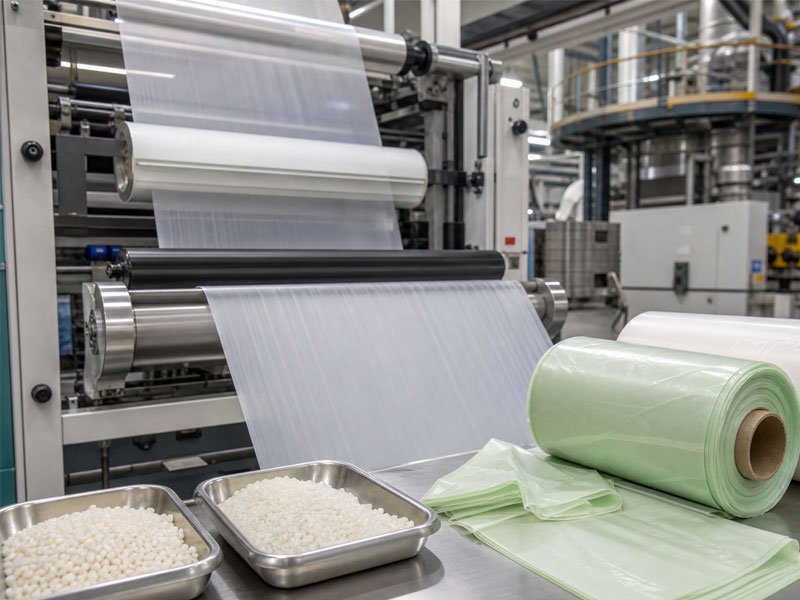
At ORIZON, we manufacture compostable toilet bags and portable hygiene bags for global B2B customers. We support OEM projects with custom size, thickness, printing, roll packing, retail packaging, and certification document support.nthly production capacity of 500 tons, we work with brands developing compostable sanitation and temporary hygiene solutions.

Compostable as a Bag vs. Compostable After Use
One point is often missed.
A compostable toilet bag and a used compostable toilet bag are not always treated the same way.
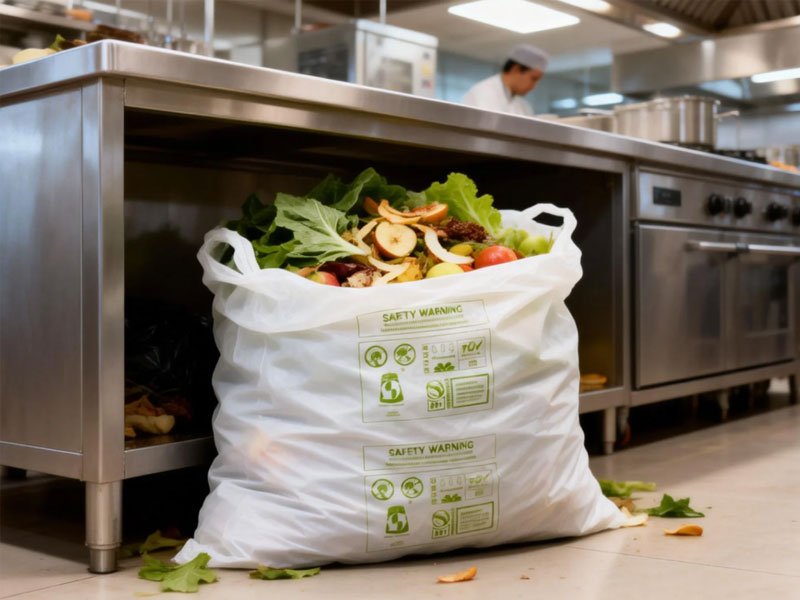
The bag itself may be compostable if the finished product is tested and certified. But once the bag is used for human waste, portable toilets, camping toilets, or emergency sanitation, disposal becomes a separate issue.
Some composting facilities accept certified compostable bags.
But they may not accept human waste.
Other facilities may require special handling, collection, or treatment.
For brands, distributors, and institutional buyers, claim wording must be clear. It is safer to say the bag is certified compostable under specific conditions. Do not claim that every used bag can be composted anywhere.
What Does “Compostable” Actually Mean?
Compostable means a material can break down into compost under set conditions.
Compost is not just broken plastic.
Compost should be a usable soil amendment.
Compostable packaging is usually tested for:
- biodegradation
- disintegration
- compost quality
- heavy metal limits
- plant safety
The European Commission explains that compostable plastics are a type of biodegradable plastic, but they usually need the right collection and composting system. European Bioplastics EN13432 overview
Compostable vs Biodegradable Toilet Bags
Biodegradable and compostable are not the same.
A biodegradable toilet bag may break down over time. But the claim may not give a clear time, test method, or composting condition.
A compostable toilet bag should meet a defined composting standard.
In simple terms:
All compostable bags are biodegradable.
But not all biodegradable bags are compostable.
This matters for:
- compostable toilet bags
- compost toilet bags
- biodegradable toilet bags
- portable toilet waste bags
- camping toilet bags
- emergency sanitation bags
For serious B2B sourcing, “biodegradable” alone is usually not enough.
Why Some “Eco” Toilet Bags May Not Be Truly Compostable
Some toilet bags are marketed as eco-friendly simply because they contain a small amount of plant-based material.
That does not automatically make them compostable.
In real manufacturing, compostability depends on:
- material structure
- resin formulation
- compost testing
- certification standards
- processing conditions
Some products may contain traditional plastic mixed with fillers while still using green marketing language.
This is why OEM buyers should always verify certifications instead of relying only on packaging claims.
Industrial Composting vs. Home Composting
Not all compostable toilet bags are designed for the same composting environment.
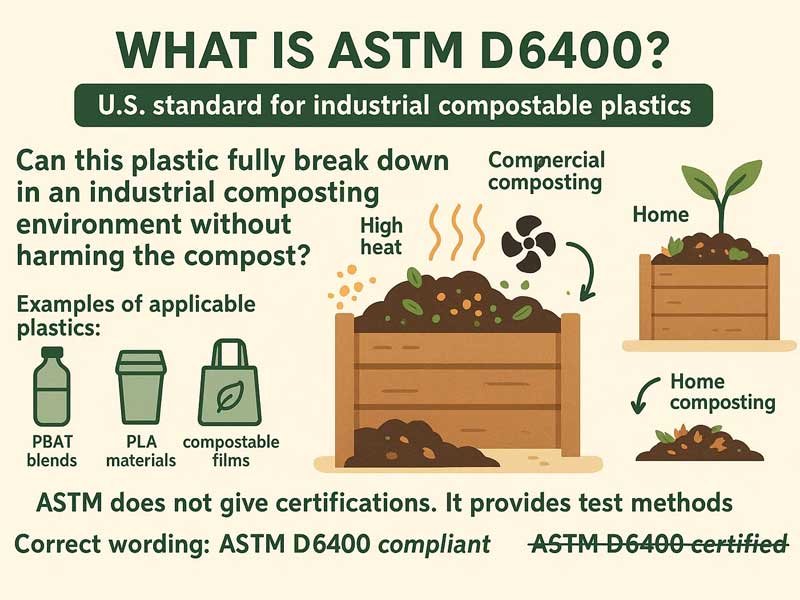
Industrial composting uses controlled heat, moisture, oxygen, and microbial activity. These conditions are stronger than most backyard compost piles.
Home composting is cooler and less stable.
So, an industrial compostable toilet bag should not be sold as home compostable unless it also has home compost certification.
TÜV AUSTRIA also explains that OK compost INDUSTRIAL products are for industrial composting conditions, while OK compost HOME products are tested for lower-temperature home composting conditions.
Source: TÜV AUSTRIA OK compost HOME
Key Standards and Certifications
Common compostability standards and certifications include:
| Standard or Certification | Common Market | What It Helps Show |
|---|---|---|
| EN 13432 | Europe | Industrial compostability for packaging |
| ASTM D6400 | North America | Commercial compostability for plastics |
| BPI Certification | North America | Third-party compostability certification |
| OK compost INDUSTRIAL | Global / Europe | Industrial composting suitability |
| OK compost HOME | Global / Europe | Home composting suitability |
BPI states that its commercial compostability certification uses ASTM D6400 as the base standard for assessment.
Source: BPI Commercial Compostability Certification
Raw Material Certificate vs. Finished Bag Certificate
This is very important.
A raw material certificate is not the same as a finished bag certificate.
A resin may be certified.
A film may be tested.
But the finished toilet bag can be different because of:
- bag thickness
- sealing method
- printing ink
- color masterbatch
- additives
- roll format
- final product size
For B2B buyers, the safest step is to check whether the finished bag structure is covered by the certificate or test report.
Do not rely only on a resin supplier document.
Documents Buyers Should Ask For
Different documents have different uses.
| Document | What It Means |
|---|---|
| Certificate | Issued by a certification body. It confirms the certified product scope. |
| Test report | Lab test data. It supports claims but may not be a market certificate. |
| Technical documentation | Internal product file, such as formula, thickness, drawings, ink, and process details. |
| Supplier declaration | A supplier statement. Useful, but weaker than third-party proof. |
| Declaration of Conformity / DoC | A formal declaration by the responsible company for a specific market requirement. |
For compostable toilet bags, buyers should check:
- certificate holder
- product name
- product scope
- tested thickness range
- ink and color scope
- certificate validity date
- issuing body
- target market rules
This helps reduce claim risk before printing packaging, building a product page, or entering a tender.
EU Packaging Note
If your project is packaging for the EU market, PPWR may also matter.
Regulation (EU) 2025/40 applies to packaging and packaging waste in the EU. Article 9 covers compostable packaging.
But this does not mean every compostable bag is automatically accepted in every EU country.
Some details depend on the packaging use, Member State waste systems, future harmonised standards, and official guidance.
Also, PPWR is packaging law. It is separate from food contact material rules. If a product is intended for food contact, food contact regulations must be checked separately.
Source: EUR-Lex: Regulation (EU) 2025/40
Disposal Guide for Compost Toilet Bags
The correct disposal method depends on two things:
- the bag certification
- the waste inside the bag
Unused compostable toilet bags can usually follow their certification route. Industrial compostable bags should go to suitable commercial composting facilities where accepted. Home compostable bags may be suitable for home composting only when the certificate supports that claim.
Used compost toilet bags require more care.
If the bag contains human waste, chemical toilet additives, absorbent powder, or mixed sanitary waste, users should follow local waste and sanitation rules.
In many cases, approved waste collection may still be required.
The U.S. EPA notes that composting conditions depend on oxygen, moisture, temperature, and accepted feedstocks. The FTC also warns that compostable and degradable claims should be clear and backed by reliable evidence.
Sources: EPA composting basics, FTC Green Guides summary
What Buyers Should Check Before Sourcing
Before ordering compostable toilet bags, I suggest checking:
- target market
- composting claim needed
- industrial or home composting requirement
- finished bag certificate
- test report
- bag thickness
- sealing strength
- puncture resistance
- roll packing style
- shelf life
- printing requirements
- disposal wording on packaging
For portable sanitation use, sealing strength and leak resistance are important.
A very thin bag may reduce material use, but it may not work well for toilet waste handling.
How ORIZON Supports B2B Projects
ORIZON supports custom compostable toilet bag projects for:
- portable toilets
- camping toilets
- RV sanitation
- emergency hygiene kits
- outdoor sanitation products
- institutional supply
- private label programs
We can support:
- custom bag size
- custom thickness
- roll packing
- OEM printing
- retail box packing
- multilingual packaging
- certification document support
- export packing
Our team can also help buyers choose safer claim wording based on the target market and document status.
FAQ
Are compostable toilet bags really compostable?
Yes. Compostable toilet bags can be really compostable when the finished bags are certified under recognized compostability standards and disposed of under suitable conditions.
Are compostable toilet bags the same as biodegradable toilet bags?
No. Biodegradable means the material can break down over time. Compostable means it must break down under defined composting conditions and meet specific test requirements.
Can compostable toilet bags be used for human waste?
Yes, they can be used as toilet waste bags. But disposal rules depend on local sanitation rules and facility acceptance.
Can used compostable toilet bags go into home compost?
Only if the bag is home compost certified and local rules allow that waste type. Buyers should not assume used toilet bags are suitable for backyard compost.
What certifications should compostable toilet bags have?
Common options include EN 13432, ASTM D6400, BPI certification, OK compost INDUSTRIAL, and OK compost HOME. The right choice depends on the market and disposal route.
Do compostable toilet bags break down in landfill?
Compostability should not be claimed for landfill conditions. Compostable bags are designed for composting environments with suitable heat, moisture, oxygen, and microbial activity.
Conclusion
Compostable toilet bags can be truly compostable.
But the finished bag must be properly tested, certified, and disposed of in the right conditions.
For B2B buyers, the main question is not only “Is the material compostable?”
The better question is:
“Is this finished toilet bag certified for the claim we want to make?”
That difference helps brands, distributors, and institutional buyers reduce claim risk and choose better compostable toilet bag suppliers.