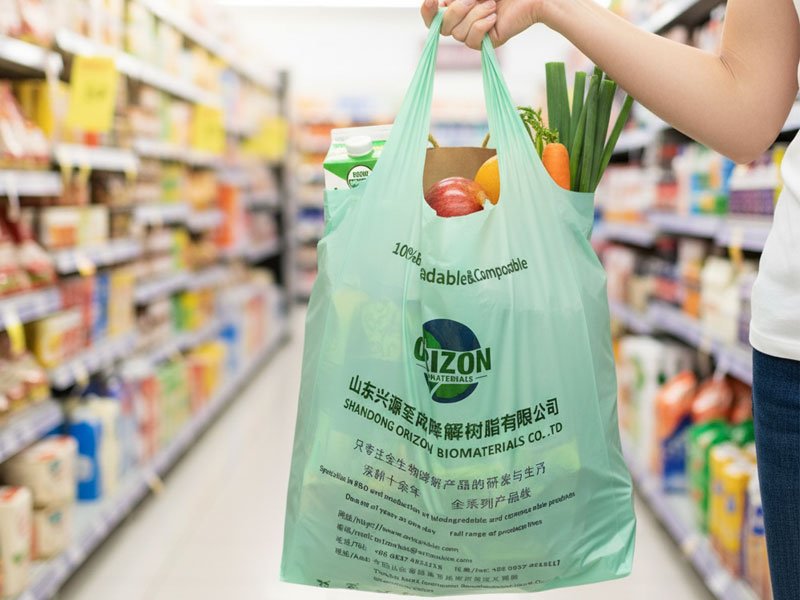
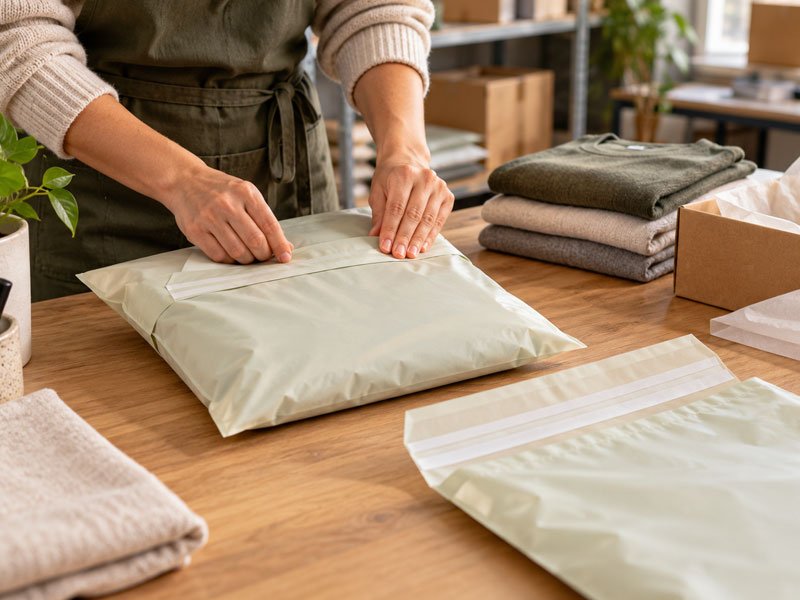
When you buy compostable bags for resale, you are not only buying the product.
You are also buying the evidence behind the product.
For Australian wholesalers, documents are not just office paperwork. They help your sales team answer buyer questions, help customers approve the product, and reduce the risk of unclear environmental claims.
Do not wait until after the order to ask for documents.
Ask before you buy.
A reliable compostable bag supplier should be able to provide a clear document pack. It should explain what the bag is, which compostability standard it supports, how it should be used, and what claims can be made.
This guide explains which documents to request before placing a bulk order.
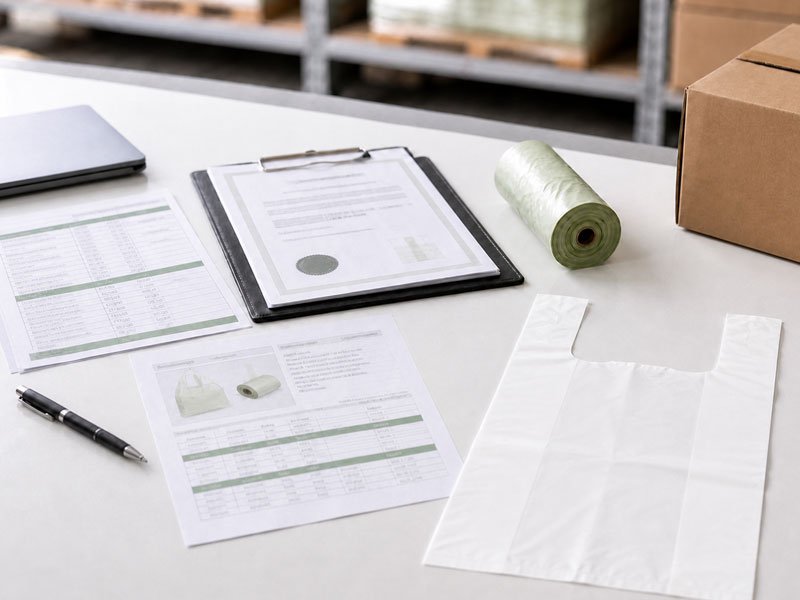
Why Documents Matter for Australian Wholesalers
Australian buyers are careful with compostable packaging claims.
A supermarket, food service group, council supplier, distributor, or private-label brand may ask:
- Is this bag certified compostable?
- Does it meet AS 4736 or AS 5810?
- Can we see the certificate?
- Does the certificate cover the finished bag?
- Can we print the certification logo?
- Is the claim suitable for the Australian market?
- Can this product be added to our catalogue or tender file?
If you cannot answer these questions, the order may slow down.
The ACCC advises businesses to make environmental claims that are accurate, truthful, easy to understand, and supported by evidence. Broad claims such as “green” or “eco-friendly” can create risk if they are not clearly explained.
So the practical question is simple.
Can your supplier help you prove the claim?
1. Compostability Certificate
The first document to request is the compostability certificate.
For Australian wholesalers, common standards include:
- AS 4736 for commercial or industrial composting
- AS 5810 for home composting
You may also see other standards, such as EN 13432, ASTM D6400, BPI, or OK Compost.
A certificate should not be treated as a decoration.
Check the details.
Ask:
- Which standard does the certificate cover?
- Is the certificate still valid?
- Who is the certificate holder?
- Does it cover the finished bag or only the raw material?
- Does it cover the same thickness, size, and product type?
- Can the certification logo be printed on the bag?
- Are there rules for using the certification mark?
This is where many buying mistakes happen.
A raw material certificate is not always the same as a finished product certificate. If your customer asks for certified compostable bags, you need to know what the certificate actually covers.
For Australian standards, you can review AS4736 compostable bags and AS5810 compostable bags.
2. Product Data Sheet
A product data sheet is a simple file that lists the basic facts about the bag.
It is sometimes called a PDS or technical data sheet.
A good product data sheet should include:
- Product name
- Bag type
- Size
- Thickness
- Material type
- Color
- Packing format
- Carton quantity
- Application
- Compostability claim
- Storage notes
- Shelf life
- Supplier contact details
This document helps your customer review the product faster.
It also helps your own sales team.
If a sales person has to search through emails to find size, thickness, and claim wording, mistakes are more likely. A product data sheet keeps the facts in one place.
Simple is good.
Clear is better.
3. Product Specification Sheet
A product specification sheet is more detailed than a product data sheet.
It should explain how the bag is made and what the buyer should expect.
For compostable bags, it may include:
- Width and length
- Gusset size
- Film thickness
- Roll count
- Core size
- Perforation style
- Sealing method
- Printing color
- Carton size
- Gross weight
- Net weight
- Pallet loading details
This is very useful for wholesale and distributor orders.
Why?
Because your customer may need the data for warehouse setup, catalogue listing, customs files, or tender review.
If the bag is a private-label item, the specification sheet also helps prevent confusion between similar SKUs.
A 10L caddy liner and a 13L caddy liner may look similar in a photo.
On paper, they must be clear.
4. Material Safety Data Sheet or SDS
Some buyers may ask for an SDS.
SDS means Safety Data Sheet. It gives basic safety information about a material or product.
For compostable bags, the SDS may help procurement teams understand material handling, storage, and safety notes.
Not every customer will ask for it.
But many B2B buyers like having it in the file.
This is especially true for larger importers, institutional buyers, and customers with formal procurement teams.
5. Food Contact Statement, If Needed
If the compostable bag will touch food, ask whether a food contact statement is needed.
This may apply to:
- Produce bags
- Bakery bags
- Food waste caddy liners used near kitchens
- Retail food packaging
- Food service packaging
Do not assume every compostable bag is suitable for food contact.
Ask your supplier to confirm the intended use.
If your customer sells to grocery stores or food service groups, this detail can matter.
6. Environmental Claim Guidance
This is one of the most important files for Australian wholesalers.
A claim guidance note explains what you can and cannot say about the product.
It may include suggested wording such as:
- “Certified compostable to AS 4736”
- “Certified home compostable to AS 5810”
- “Commercially compostable where accepted”
- “Designed for organic waste collection”
- “Check local council rules before disposal”
It should also warn against broad wording such as:
- “Eco-friendly”
- “Green”
- “Earth safe”
- “Compostable anywhere”
- “100% biodegradable”
The ACCC advises businesses to avoid vague environmental claims and to explain conditions clearly. This matters because compostable bags often need the right composting system to break down as intended.
The words on the bag should match the evidence.
That is the main rule.
If your team needs a clearer explanation, use an internal guide on compostable vs biodegradable bags or your existing page on certified compostable bags.
7. Private-Label Artwork Proof
If you order private-label compostable bags, the artwork proof is not just a design file.
It is a compliance checkpoint.
Before printing, check:
- Brand name
- Bag size
- Certification claim
- Disposal wording
- Certification logo use
- Barcode
- Country of origin
- Carton label
- Warning text, if needed
- Printing color and placement
Once printed, the wording is fixed.
Changing it later costs money.
For Australian wholesalers, private-label claim review is especially important. A compostable claim on the bag, box, or outer carton should match the product certificate and intended use.
If you are planning a branded range, connect the project to private label compostable packaging.
8. Quality Control Checklist
A compostable bag still has to perform in real use.
So ask your supplier for a QC checklist.
QC means quality control. It is the process used to check whether the product meets the agreed standard.
For compostable bags, QC may include:
- Size check
- Thickness check
- Seal strength check
- Roll count check
- Perforation check
- Leak test
- Print check
- Carton check
- Packing check
- Random sample inspection
This is useful before shipment.
A compostability certificate does not tell you whether a roll tears cleanly or whether the carton label is correct.
Quality and compliance are both needed.
9. Shelf Life and Storage Notes
Compostable materials can be more sensitive to heat, moisture, and long storage than some traditional plastics.
That does not mean the product is weak.
It means storage rules matter.
Ask your supplier:
- What is the shelf life?
- What temperature is best for storage?
- Should the bags avoid direct sun?
- Should cartons stay dry?
- How long can the product sit in a warehouse?
- What happens if storage conditions are poor?
Australian wholesalers should pay attention to this.
Warehouses can get hot. Stock may move slowly. Private-label SKUs may sit longer than standard stock.
A short storage note can prevent many problems.
10. Packing List, Commercial Invoice, and Shipping Documents
These are normal trade documents, but they still matter.
For import orders, ask for:
- Commercial invoice
- Packing list
- Bill of lading
- Certificate of origin, if needed
- HS code suggestion
- Carton list
- Pallet loading plan
- Container loading photos, if available
These files help your logistics team, customs broker, and warehouse staff.
For mixed-SKU orders, clear packing documents are very important. They help avoid receiving errors and stock confusion.
11. Sample Approval Record
Before mass production, you should keep a sample approval record.
This can be simple.
It may include:
- Sample date
- Product name
- Size
- Thickness
- Material
- Color
- Printing
- Packing format
- Approved sample photos
- Buyer approval note
This record protects both sides.
If there is a dispute later, you can compare the final goods with the approved sample.
That is much better than relying on memory.
12. Procurement Review Pack
For larger Australian buyers, you may need a procurement review pack.
This is a folder that combines the key documents your customer wants to check before placing an order.
A practical pack may include:
- Compostability certificate
- Product data sheet
- Product specification sheet
- SDS
- Food contact statement, if needed
- Artwork proof
- Claim guidance note
- QC checklist
- Packing details
- Supplier profile
This pack helps your customer say yes faster.
It also shows that you are prepared.
That matters when your customer is comparing you with local suppliers.
What a Good Supplier Should Make Easy
A good compostable bag supplier should not make you chase every document one by one.
They should understand what wholesalers need.
At minimum, they should help with:
- Certification documents
- Product specifications
- Private-label artwork review
- Claim wording checks
- QC records
- Packing and shipping files
- Reorder documents
For distributors and importers, this support is part of the product value.
You are not only buying bags.
You are buying a product that your customer can review, approve, and resell.
Practical Document Checklist
Before placing a bulk order, I would ask for this checklist:
- Compostability certificate
- Product data sheet
- Product specification sheet
- SDS
- Food contact statement, if needed
- Environmental claim guidance
- Private-label artwork proof
- QC checklist
- Shelf life and storage notes
- Commercial invoice
- Packing list
- Bill of lading
- Sample approval record
You may not need every file for every order.
But you should know which ones matter before your customer asks.
FAQ
What documents should a compostable bag supplier provide?
A compostable bag supplier should provide a compostability certificate, product data sheet, product specification sheet, SDS, shelf life notes, quality control checklist, packing list, shipping documents, and artwork proof for private-label orders.
You may not need every file for every order.
But your supplier should be able to explain which documents apply to your product and market.
Why do Australian wholesalers need compostable bag documents?
Australian wholesalers need these documents because their customers often ask for proof.
A buyer may want to check the certification, product specs, claim wording, shelf life, and packing details before approving the order.
Clear documents help your sales team answer questions faster.
They also reduce the risk of unclear environmental claims.
Is a raw material certificate enough for compostable bags?
Not always.
A raw material certificate may only cover the resin or film material. It may not cover the finished bag.
Before you place a bulk order, check whether the certificate covers the actual bag type, thickness, size, and compostability claim.
This is especially important for private-label or Australian-standard products.
What is a product data sheet for compostable bags?
A product data sheet is a simple document that lists the main facts about the bag.
It usually includes size, thickness, material, packing format, application, shelf life, storage notes, and compostability claim.
It helps your customer review the product without reading a long email chain.
What documents are needed for private-label compostable bags?
Private-label compostable bags usually need:
- Compostability certificate
- Product data sheet
- Product specification sheet
- Artwork proof
- Claim guidance
- Barcode details
- Carton label information
- Approved sample record
The most important point is claim matching.
The wording on the bag should match the certificate and intended use.
Conclusion
The best compostable bag supplier is not only the one that can make the bag.
It is the one that can help you explain the bag.
For Australian wholesalers, clear documents reduce friction. They help your customers trust the product. They also protect your sales team from unclear claims.
When the documents are ready, the product is easier to sell.
That is the point.