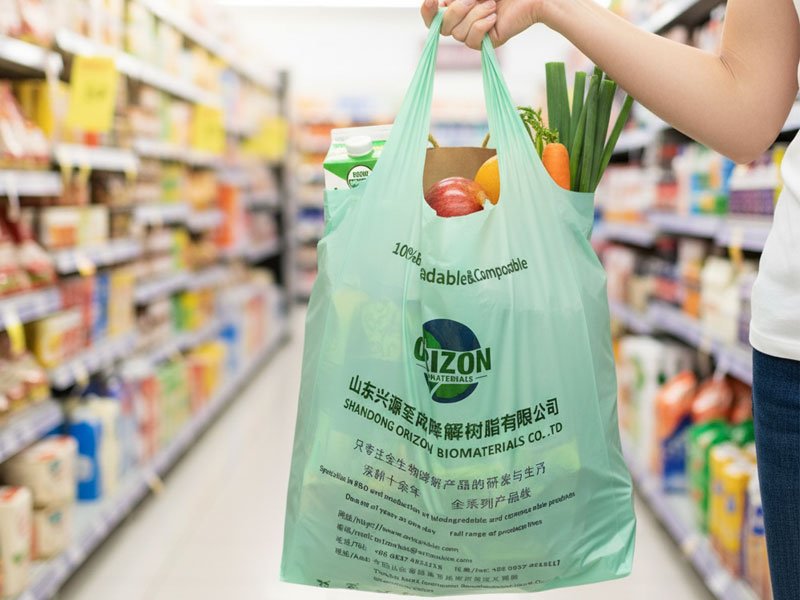
If a package is biodegradable, should it go to composting?
Under the EU Packaging and Packaging Waste Regulation, the answer is often:
Not necessarily.
This is the main issue behind PPWR recyclability vs compostability.
A package can be technically compostable, supported by industrial compostability evidence, and still fall under a PPWR route that points toward material recycling.
That sounds confusing at first.
The reason is that PPWR does not choose an end-of-life route only by asking what a material can do.
It also asks:
- What type of packaging is it?
- How is it used?
- Does Article 9 specifically cover it?
- Does a Member State require compostability?
- Which waste stream should receive it?
- Can it affect other recycling streams?
For EU buyers, this changes the sourcing process.
You should not start with:
“Should I buy recyclable or compostable material?”
Start with:
“Which PPWR end-of-life route applies to this packaging?”
That is a more useful question.
If you first need the wider regulatory framework, see our PPWR compostable packaging guide.

PPWR Recyclability vs Compostability at a Glance
The simplest way to understand the issue is through PPWR Articles 6 and 9.
Article 6 creates the general framework for recyclable packaging.
Article 9 creates specific rules for compostable packaging.
But Article 9 does not say that all biodegradable packaging should be composted.
It separates packaging into different routes. EUR-Lex
| Packaging situation | Main PPWR route | What the buyer should check |
|---|---|---|
| Packaging specifically covered by Article 9(1) | Compostability | Industrial composting requirements |
| Packaging covered by a Member State decision under Article 9(2) | Compostability may apply | Target Member State and bio-waste system |
| Other biodegradable packaging | Material recycling | Article 9(3) + Article 6 |
| Non-biodegradable packaging | General recyclability route | Article 6 requirements |
The most important row is often the third one.
Biodegradable does not automatically mean “send to composting.”
What Does Recyclability Mean Under PPWR?
Recyclability is about keeping packaging material in a material cycle.
In simple terms:
Packaging
    ↓
Collection
    ↓
Sorting
    ↓
Material recycling
    ↓
Secondary raw material
    ↓
New products
PPWR Article 6 sets out requirements for recyclable packaging.
The regulation moves progressively toward packaging that is designed for recycling and, later, recyclable at scale. The European Commission describes the wider PPWR direction as making packaging recyclable while reducing unnecessary packaging and improving circular use of materials. Environment
For a packaging buyer, recyclability therefore involves more than putting a recycling symbol on a bag.
The finished packaging may need to be considered in terms of:
- polymer structure;
- additives;
- inks;
- adhesives;
- labels;
- closures;
- sorting compatibility;
- recycling-process compatibility.
A simple-looking flexible bag can still contain several material components.
What Does Compostability Mean Under PPWR?
Compostability uses a different end-of-life system.
Instead of recovering the packaging material to make another plastic or other material product, compostable packaging is treated biologically.
A simplified industrial-composting route looks like this:
Packaging + bio-waste
        ↓
Separate collection
        ↓
Industrial composting
        ↓
Biological treatment
Industrial composting uses controlled treatment conditions.
This is not the same as leaving a bag outdoors or placing it in the environment.
And it is not automatically the same as home composting.
Under PPWR, compostability is mainly addressed through Article 9.
The important point is that PPWR reserves this route for particular situations.
Recyclable and Compostable Are Different End-of-Life Routes
These two terms are sometimes placed together under a general “sustainable packaging” label.
For procurement, that is not specific enough.
Recyclable packaging
The aim is to:
recover the material.
Compostable packaging
The aim is to:
treat the packaging through a suitable biological waste process.
The difference is practical.
A consumer cannot put the same used mailer into both:
the plastic recycling stream
and:
the bio-waste stream.
One physical package needs a clear disposal route.
That is why choosing an end-of-life pathway matters before the artwork is approved.
Why PPWR Does Not Send All Biodegradable Packaging to Composting
This is the most important section of this guide.
Many buyers naturally think:
biodegradable
↓
compostable
↓
bio-waste bin
PPWR does not use that as a general rule.
Article 9(3) specifically addresses other packaging, including packaging made from biodegradable plastic polymers and other biodegradable materials.
By 12 February 2028, this packaging must be designed for material recycling in accordance with Article 6, without affecting the recyclability of other waste streams.
That means a packaging material can have biodegradable or compostable properties while the applicable PPWR route still points toward material recycling.
This is especially important for products such as:
- e-commerce mailers;
- garment packaging;
- some flexible bags;
- other biodegradable packaging that is not part of Article 9(1) or a qualifying Article 9(2) situation.
The material property does not decide the route by itself.
Article 6: The General Material-Recycling Route
A useful way to understand the Regulation is to see Article 6 as the general route.
Article 6 deals with recyclable packaging.
PPWR requires packaging covered by that framework to move toward design for recycling and recycling at scale according to its implementation timetable.
The basic idea is:
Design packaging so its material can remain in a useful material cycle.
This does not mean every package reaches the same recycling plant.
Different packaging materials can have different:
- collection systems;
- sorting processes;
- recycling technologies;
- design criteria.
But material recycling is the broad starting route.
Article 9 then creates special treatment for certain compostable packaging.
Article 9: When Composting Applies
Article 9 is easier to understand if you divide it into three paths.
Article 9(1): Specific Packaging Must Be Compostable
Article 9(1) covers particular packaging formats.
By 12 February 2028, relevant packaging must be compatible with treatment under industrially controlled composting conditions.
The categories include certain:
- permeable tea bags;
- coffee bags;
- other beverage bags;
- soft single-serve beverage units;
- sticky labels attached to fruit and vegetables.
These formats have something in common.
After use, the packaging often stays closely connected to organic material.
A tea bag is an easy example.
Few people open a wet tea bag, remove every tea leaf and prepare the empty bag for a recycling stream.
The package and organic contents naturally remain together.
That makes a biological treatment route easier to understand.
Article 9(1) is therefore not a general rule for all biodegradable packaging.
Article 9(2): Member States Can Require More Packaging to Be Compostable
The second path is different.
Article 9(2) allows EU Member States, under the conditions in the Regulation, to require additional packaging to be compostable.
This includes certain:
- very lightweight plastic carrier bags;
- lightweight plastic carrier bags;
- non-metal beverage-system packaging;
- packaging already covered by certain national compostability requirements.
But there is an important condition behind this approach.
The Member State needs suitable bio-waste collection and treatment conditions. EUR-Lex
This makes practical sense.
A compostable package is not very useful as a bio-waste solution if:
- local bio-waste collection does not accept it;
- there is no suitable treatment route;
- consumers are told to place it somewhere else.
For a B2B buyer, this means:
“EU market” is often not specific enough.
Tell your supplier the target country.
Article 9(3): Other Biodegradable Packaging Goes Back to Material Recycling
This is where many purchasing teams make the wrong assumption.
Article 9(3) covers biodegradable packaging outside the relevant composting routes.
By 12 February 2028, that packaging must be designed for material recycling according to Article 6.
So this logic is wrong:
The film is compostable.
Therefore the package should be composted.
The better logic is:
Is it packaging?
       ↓
Which Article 9 category applies?
       ↓
9(1)? → compostability route
9(2)? → check Member State
Neither?
       ↓
9(3) may apply
       ↓
Material recycling / Article 6
That is the core decision behind PPWR compostability vs recyclability.
For a deeper breakdown of these three paths, see our PPWR Article 9 guide.
A Simple PPWR End-of-Life Decision Tree
When I review a biodegradable packaging project, I would use the following sequence.
Step 1 — Is the item packaging?
First establish whether PPWR applies to the item as packaging.
This matters especially for standalone products such as:
- garbage bags;
- food-waste liners;
- dog waste bags.
They may have compostability requirements or local waste-system requirements without necessarily having the same PPWR packaging classification as an e-commerce mailer.
Step 2 — Is it covered by Article 9(1)?
If yes:
Follow the Article 9(1) compostability route.
Examples include qualifying tea and coffee packaging and fruit or vegetable sticky labels.
Step 3 — Could Article 9(2) apply?
If yes:
Check the Member State.
This is especially important for:
- very lightweight plastic carrier bags;
- lightweight plastic carrier bags.
Do not assume every Member State uses the same compostability approach.
Step 4 — Is it other biodegradable packaging?
If yes:
Review Article 9(3).
That generally points the packaging toward material recycling in accordance with Article 6.
Step 5 — Review the finished package
Now look at:
- resin or compound;
- thickness;
- masterbatch;
- ink;
- labels;
- adhesive;
- closures;
- release liners.
The final package matters more than the material name alone.
Does EN 13432 Decide the End-of-Life Route?
No.
This is another important distinction.
EN 13432 is an established European standard dealing with packaging recoverable through composting and biodegradation. Environment
It can provide useful evidence about industrial compostability.
But EN 13432 does not decide whether Article 9(1), 9(2), or 9(3) applies to your packaging.
Think of the questions separately.
EN 13432 asks:
Can this packaging meet defined industrial compostability criteria?
PPWR asks:
Which regulatory requirements and end-of-life pathway apply to this packaging?
Those are not the same question.
The European Commission’s June 2026 PPWR Guidance also addresses the transition to updated harmonised standards for compostable packaging. EUR-Lex
So a supplier saying:
“We have EN 13432, therefore this package should go to composting.”
has skipped an important step.
You still need to classify the packaging.
For a detailed explanation, see our PPWR vs EN 13432 guide.
Technically Compostable Does Not Always Mean “Compost It”
Consider an e-commerce mailer.
The film may have valid industrial compostability evidence.
But what is the package used for?
It carries:
- clothing;
- books;
- accessories;
- household products.
It does not normally become mixed with food waste after use.
A standard e-commerce mailer is also not one of the Article 9(1) mandatory compostable formats.
That changes the PPWR decision.
This is why I would not decide the waste route from the material certificate alone.
What About Compostable Mailers?
Compostable mailers are probably the clearest example of why PPWR recyclability vs compostability matters.
A normal e-commerce mailer is packaging.
But it is not an Article 9(1) format.
For biodegradable mailers outside an applicable Article 9(2) situation, Article 9(3) becomes central.
This means the buyer needs to consider the Article 6 material-recycling pathway.
And the finished mailer may contain more than film:
- printing ink;
- colour masterbatch;
- adhesive;
- release liner;
- tear strip;
- second return adhesive strip.
That is why:
EN 13432 certificate
should not be the end of the compliance conversation.
Read our full PPWR compostable mailers guide for the product-specific analysis.
Practical Example: A Compostable E-Commerce Mailer
Suppose an EU brand asks for:
- 350 × 450 mm;
- 60 μm;
- biodegradable PBAT/PLA-based film;
- green masterbatch;
- two-colour logo;
- self-seal strip;
- 100,000 bags.
The supplier provides compostability evidence.
How would I review it?
1. Is it packaging?
Yes.
It contains and delivers goods.
2. Article 9(1)?
No standard e-commerce mailer category appears there.
3. Article 9(2)?
Normally not the main route for this standard mailer use, although the target market should still be confirmed.
4. Article 9(3)?
This becomes important for other biodegradable packaging.
5. Article 6?
Material recyclability now needs to be reviewed.
6. Finished construction?
Check:
- base film;
- thickness;
- ink;
- masterbatch;
- adhesive;
- release liner.
That is a much stronger procurement review than simply asking:
“Do you have EN 13432?”
What About Compostable Produce Bags?
Produce bags are more complicated because the word “produce packaging” covers several different applications.
A sticky label attached to fruit or vegetables is explicitly covered by Article 9(1).
A loose produce bag is different.
For example:
12 μm produce bag for loose apples
may fall into the very lightweight plastic carrier bag category.
That brings Article 9(2), Member State rules and other carrier-bag requirements into the discussion.
So:
fruit sticker ≠ produce roll bag.
The material may be similar.
The PPWR classification can be different.
For the full 15 μm, 50 μm and Member State analysis, see our PPWR compostable produce bags guide.
What About Compostable Shopping Bags?
Shopping bags create another good example.
PPWR defines:
- very lightweight plastic carrier bags as below 15 μm;
- lightweight plastic carrier bags as below 50 μm.
Article 9(2) allows Member States under specified conditions to require these categories to be compostable.
But Article 34 separately addresses reducing lightweight plastic carrier-bag consumption.
So a shopping bag can be:
compostable
and still be subject to:
waste-prevention and carrier-bag reduction measures.
Compostability does not mean that PPWR encourages unlimited use.
For the detailed carrier-bag rules, see our PPWR compostable shopping bags guide.
What About Compostable Garment Bags?
A garment bag used to package clothing is closer to an e-commerce mailer than to a tea bag.
It performs a packaging function.
But it does not normally enter a bio-waste stream with its contents.
If the garment bag is made from biodegradable polymers, do not assume that industrial compostability alone determines its PPWR route.
Article 9(3) and Article 6 need to be considered.
For B2B buyers, this is especially important when reviewing:
- apparel polybags;
- self-seal garment bags;
- printed garment packaging;
- fashion e-commerce packaging.
This is a good example of where a compostable material claim and the PPWR end-of-life route may not be the same thing.
What About Food-Waste Liners?
Food-waste bags are different again.
A compostable liner can make practical sense because the liner and organic waste may enter a biological treatment system together.
But there is a question before Article 9:
Is this standalone waste liner “packaging” under PPWR?
Do not assume that every compostable bag is PPWR packaging.
Municipal food-waste liners may instead be strongly influenced by:
- local collection requirements;
- composting-facility acceptance;
- municipal tender requirements;
- national compostability rules.
For organic-waste bag formats, see our compostable green bin bags.
What About Dog Waste Bags?
The same caution applies to dog waste bags.
A dog waste bag can have industrial or home-compostability certification.
That does not automatically mean Article 9 decides its use.
First ask whether the standalone dog waste bag performs a PPWR packaging function.
Then review:
- compostability claim;
- local waste route;
- product certification;
- target market.
This is more accurate than simply printing:
PPWR compliant
on every biodegradable bag.
Can Packaging Be Both Recyclable and Compostable?
Technically, a package may have more than one material property.
But that is not always useful to the person disposing of it.
Imagine a bag printed with:
INDUSTRIALLY COMPOSTABLE
and:
RECYCLABLE
What should the user do?
Place it in:
- plastic recycling?
- bio-waste?
- residual waste?
That is where technical claims can become disposal confusion.
For procurement, I would ask a more practical question:
Which end-of-life route should the user actually follow in the target market?
Then design the packaging message around that route.
Why Recycling and Composting Claims Can Conflict
A packaging claim has two jobs.
It describes a property.
But it also gives the user an expectation.
If a compostable package enters a recycling stream where it is not compatible, it may affect sorting or recycling.
Article 9(3) itself addresses the need for other biodegradable packaging not to affect the recyclability of other waste streams. EUR-Lex
On the other hand, a package labelled compostable is only useful if:
- there is suitable collection;
- the facility accepts it;
- users understand where it belongs.
This is why disposal language needs to be tied to infrastructure.
Not only to the material.
Does PPWR Prefer Recycling Over Composting?
I would avoid saying:
“PPWR says recycling is always better than composting.”
That is too simple.
A more accurate explanation is:
PPWR builds a broad material-recycling framework under Article 6 and creates specific compostability routes under Article 9.
That structure tells us that compostability has a defined role.
It is particularly useful where packaging naturally becomes mixed with bio-waste and separation is difficult.
But for other biodegradable packaging, Article 9(3) points back to material recycling.
So the question is not:
Which technology sounds greener?
It is:
Which treatment route fits the packaging and waste system?
Why Waste Infrastructure Matters
A compostability certificate proves a material property under specified conditions.
It does not build a composting facility.
Likewise, a recyclable design does not automatically mean every city will collect and recycle it successfully.
Infrastructure matters.
For compostable packaging, check:
- Is separate bio-waste collection available?
- Does the local system accept compostable packaging?
- Is industrial composting available?
- Is the product actually intended for that route?
For recyclable packaging, check:
- Can the package be collected?
- Can it be sorted?
- Is a suitable recycling process available?
- Does the package affect another recycling stream?
PPWR increasingly connects design with practical waste-management outcomes rather than material labels alone.
PPWR Recyclability Timeline
There are several dates buyers should keep separate.
12 February 2028
Article 9 becomes especially important for biodegradable packaging.
Specific Article 9(1) packaging must meet the relevant compostability route, while Article 9(3) requires other biodegradable packaging to be designed for material recycling.
2030
PPWR moves packaging further into design-for-recycling requirements.
The European Commission summarises the Regulation as requiring packaging to become recyclable by 2030, subject to the Regulation’s specific provisions and exceptions.
2035
Recyclability at scale becomes an additional part of the Article 6 framework according to the Regulation’s timetable. EUR-Lex
The key point is that:
2028 and 2030 are doing different jobs.
Do not collapse them into one “PPWR deadline.”
PPWR Compostability Timeline
For this topic, the most important date is:
12 February 2028.
By that point, Article 9 clearly separates several biodegradable packaging pathways.
This does not mean:
“All compostable packaging becomes mandatory in 2028.”
Instead:
- some packaging must follow compostability requirements;
- some may be covered by Member State compostability rules;
- other biodegradable packaging goes toward material recycling.
That distinction is much more useful for buyers.
Recyclability vs Compostability by Product Type
Here is the decision table I would give to a B2B buyer.
| Product | Main PPWR question | Likely route to investigate |
|---|---|---|
| Tea / coffee bag covered by Article 9(1) | Is it within specified format? | Compostability |
| Fruit or vegetable sticky label | Article 9(1) | Compostability |
| 12 μm loose produce bag | Article 9(2) + Member State | Country-specific |
| 20 μm shopping bag | Article 9(2) + carrier-bag rules | Country-specific |
| Compostable e-commerce mailer | Article 9(3) | Material recycling |
| Compostable garment bag | Article 9(3) | Material recycling |
| Food-waste liner | Is it PPWR packaging? | Check scope/local system first |
| Dog waste bag | Is it PPWR packaging? | Check scope/local system first |
This table is a starting point.
It is not a substitute for checking the finished package and target market.
Does EN 13432 Still Matter?
Yes.
Very much.
EN 13432 remains a key reference for assessing packaging recoverable through composting and biodegradation.
But use it for the right purpose.
EN 13432 can help support a claim such as:
industrially compostable under specified conditions.
It does not automatically prove:
- Article 6 compliance;
- Article 9 classification;
- Member State acceptance;
- home compostability;
- full PPWR compliance.
That is why the question:
“Do you have EN 13432?”
should usually be followed by:
“What exactly does the certificate cover?”
Raw Material Evidence vs Finished Packaging
This is where the discussion becomes practical for B2B sourcing.
Imagine a supplier has compostability evidence for a compound.
Your final product is:
- 60 μm;
- dark green;
- two-colour printed;
- self-sealing;
- private label.
The finished package may contain:
- PBAT;
- PLA;
- starch;
- additives;
- colour masterbatch;
- water-based printing ink;
- adhesive;
- release liner.
The raw-material certificate and finished bag are not automatically the same certification scope.
Ask:
- Does the evidence cover the film?
- What thickness is covered?
- Is the masterbatch covered?
- Is printing covered?
- What adhesive is used?
- What does the finished-product technical file contain?
The same logic applies to recyclability.
A base polymer may fit a recycling route while another component changes the finished-packaging assessment.
What Should EU Buyers Ask Their Supplier?
You do not need to ask 50 questions at the start.
Start with the important ones.
About the product
- What is the packaging used for?
- What will it contain?
- Is it packaging under PPWR?
- Is it single-use?
About Article 9
- Does Article 9(1) apply?
- Could Article 9(2) apply?
- Is Article 9(3) relevant?
About the material
- Which polymers are used?
- What is the finished thickness?
- Which additives are used?
- Which masterbatch is used?
- What ink is used?
- Are there adhesives or other components?
About the market
- Which EU Member State?
- What waste stream is intended?
- Is suitable composting or recycling infrastructure available?
About the evidence
- What does the certificate cover?
- Raw material or finished packaging?
- Is it current?
- What technical documentation is available?
- What conformity information is available?
That gives you enough information to make a better sourcing decision.
A Practical Supplier Comparison
Imagine two suppliers respond to your RFQ for a biodegradable mailer.
Supplier A
“Yes. Our mailer is PPWR compliant because our material is EN 13432 certified.”
Simple answer.
But important questions remain unanswered.
Supplier B
“The material has industrial-compostability evidence. For an EU e-commerce mailer, however, we should also review Article 9(3), Article 6, the finished film, printing, adhesive and target Member State before confirming the correct end-of-life claim.”
The second answer sounds more complicated.
But I would consider it more useful.
In regulatory sourcing, a qualified answer is often better than a confident shortcut.
Five PPWR Recyclability vs Compostability Mistakes to Avoid
Mistake 1: “Biodegradable packaging should always be composted.”
No.
Article 9(3) specifically places other biodegradable packaging onto a material-recycling pathway.
Mistake 2: “All packaging must be both recyclable and compostable.”
No.
PPWR provides specific compostability routes and derogations rather than requiring every package to follow both systems.
Mistake 3: “EN 13432 decides the PPWR end-of-life route.”
It does not.
EN 13432 supports industrial-compostability assessment.
Article 9 determines which PPWR path you need to investigate.
Mistake 4: “A compostable mailer belongs in bio-waste.”
Do not assume this.
Standard e-commerce mailers are not Article 9(1) mandatory compostability formats.
Mistake 5: “The material name tells me everything.”
It does not.
You also need:
- application;
- finished construction;
- target country;
- waste infrastructure;
- documentation.
Material is one part of the decision.
A Better Way to Choose Packaging
I would use this order:
First: application
What does the packaging actually do?
Second: regulation
Which PPWR article applies?
Third: waste route
Should it enter material recycling or a bio-waste system?
Fourth: material
Which material supports that route?
Fifth: product design
Thickness, printing, adhesive, colour and structure.
Sixth: claim
Only after that should you decide what to print on the package.
This avoids a common sourcing problem:
Choosing a “green” claim first, then trying to make the technical documents fit it later.
How ORIZON Approaches End-of-Life Questions
At ORIZON, we manufacture compostable bags for B2B buyers, including importers, distributors, supermarket suppliers, packaging companies and private-label brands.
Our production includes formats such as:
- compostable garbage bags;
- compostable shopping bags;
- compostable produce bags;
- compostable mailers;
- compostable garment bags;
- dog waste bags;
- custom OEM bags.
For an EU project, I do not think the first question should always be:
“Can you make this compostable?”
I would rather know:
- Which country are you selling into?
- What will the bag contain?
- What is the intended disposal route?
- What size and thickness do you need?
- Will it be printed?
- Are there adhesive strips or other components?
- Which certification or documentation does your customer require?
Then we can review the specification more realistically.
For custom bag projects, see our OEM compostable bags.
For e-commerce applications, see our compostable mailer bags.
The goal is not to use the word “compostable” everywhere.
The goal is to match the finished product, evidence and market requirement.
FAQ
What is PPWR recyclability vs compostability?
PPWR recyclability vs compostability describes the different end-of-life pathways used under Regulation (EU) 2025/40.
Article 6 provides the general material-recycling framework, while Article 9 creates specific compostability routes for certain packaging.
Does PPWR prefer recycling or composting?
PPWR creates a broad material-recycling framework under Article 6 and specific compostability routes under Article 9.
The correct route depends on the packaging type, use and applicable Article 9 category.
Does all biodegradable packaging need to be compostable under PPWR?
No.
Article 9(3) requires other biodegradable packaging outside the relevant Article 9(1) and Article 9(2) routes to be designed for material recycling by 12 February 2028.
Which packaging must be compostable under PPWR?
Article 9(1) covers specific formats including certain permeable tea, coffee and beverage packaging, certain soft single-serve units, and sticky labels attached to fruit and vegetables.
Can EU Member States require additional packaging to be compostable?
Yes.
Article 9(2) allows Member States under specified conditions to require certain additional packaging, including qualifying lightweight and very lightweight plastic carrier bags, to be compostable.
What does PPWR Article 9(3) mean?
Article 9(3) addresses other biodegradable packaging.
By 12 February 2028, this packaging must be designed for material recycling in accordance with Article 6 and should not affect other recycling streams.
Does EN 13432 exempt packaging from PPWR recyclability requirements?
No.
EN 13432 supports industrial-compostability assessment.
Whether the PPWR composting or material-recycling pathway applies depends on the packaging classification under Article 9.
Are compostable mailers supposed to be composted under PPWR?
Not automatically.
Standard e-commerce mailers are not among the Article 9(1) mandatory compostability formats.
Other biodegradable mailers can therefore fall under Article 9(3)’s material-recycling route.
Can packaging be both recyclable and compostable?
A package may have more than one technical property.
However, buyers should establish a clear intended waste-management route before setting disposal instructions and environmental claims.
What should an EU buyer check before choosing recycling or composting?
Check:
- packaging type;
- intended use;
- Article 9 pathway;
- target Member State;
- material structure;
- local waste infrastructure;
- certificate scope;
- finished-package design;
- technical documentation.
Conclusion
The PPWR recyclability vs compostability decision is not really about choosing which environmental word sounds better.
It is about choosing the correct end-of-life route for a specific package.
Article 6 provides the broad material-recycling framework.
Article 9 then creates different routes for biodegradable packaging.
Some packaging must be compostable.
Some can be required to be compostable by Member States.
Other biodegradable packaging must be designed for material recycling.
So I suggest this order:
- Identify the packaging.
- Confirm how it is used.
- Check Article 9(1).
- Check Article 9(2).
- If those do not apply, review Article 9(3).
- Review Article 6.
- Check the target Member State.
- Review the finished product.
- Review certification and technical documentation.
- Decide the end-of-life claim last.
Do not begin with:
“Which material is greener?”
Begin with:
“Which waste route actually applies to this packaging?”
That is a much more practical question for an EU packaging buyer.
If you are sourcing a custom biodegradable or compostable bag for Europe, send us your target country, product application, bag size, thickness, printing requirements and estimated order quantity.
We can then start from the actual specification rather than from a broad material claim.
This article provides general information for B2B packaging buyers and does not constitute legal advice. Requirements can depend on the packaging format, intended use, Member State and applicable PPWR implementing measures.