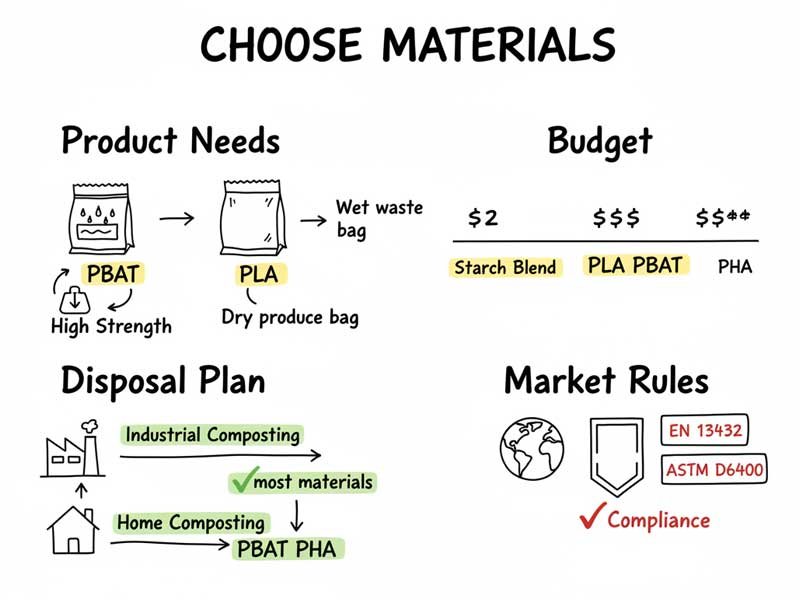
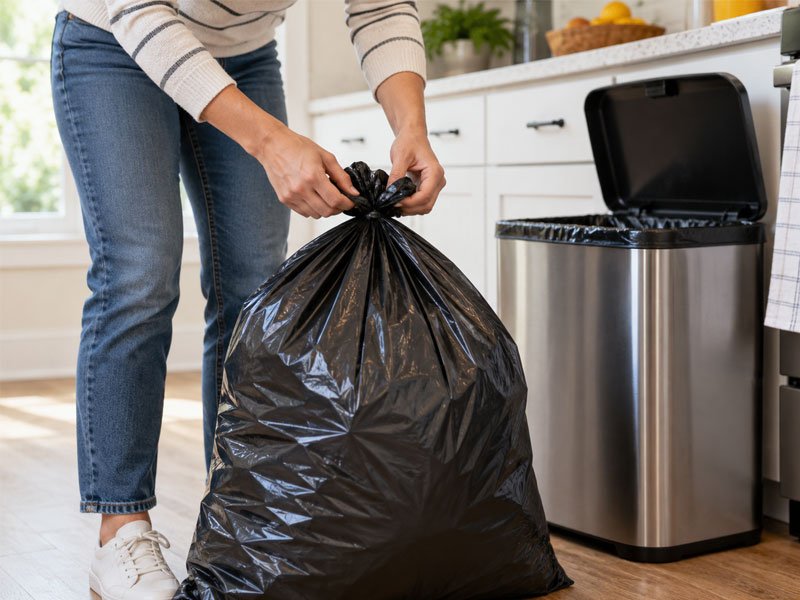
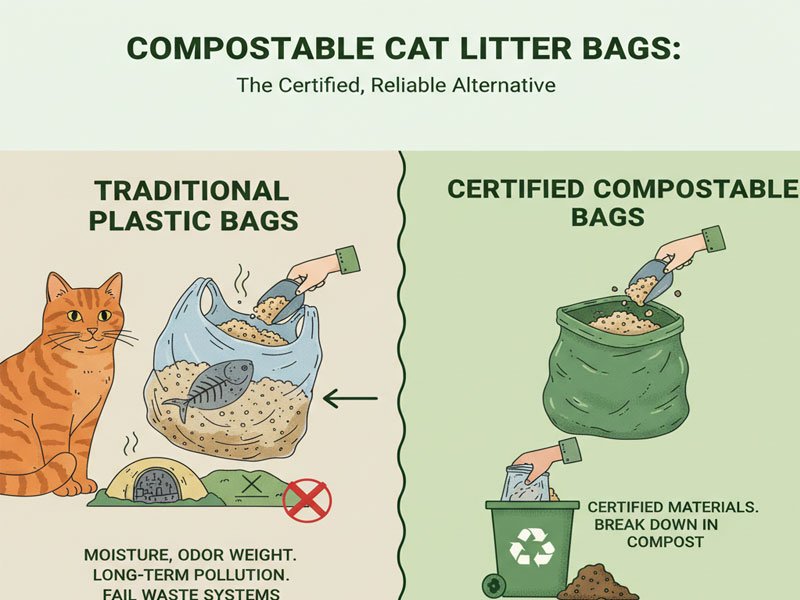
Cat litter waste is one of the most challenging types of household and commercial waste due to moisture, odor, and weight.
Traditional plastic bags create long-term environmental issues, while many “biodegradable” options fail to meet real waste system requirements.
For distributors, brands, and pet product businesses, choosing the right solution is critical.
👉 Compostable cat litter bags offer a certified, reliable alternative—but only when selected correctly.
This guide explains what they are, how they work, and what B2B buyers should look for.
What Are Compostable Cat Litter Bags?
Compostable cat litter bags are designed to:
- Contain pet waste safely
- Handle moisture and odor
- Break down in composting systems
They are typically made from:
- PLA (plant-based polymer)
- PBAT (biodegradable flexible polymer)
- Corn starch blends
Learn more about materials: Why Use PLA PBAT Compostable Bags
Compostable vs Biodegradable Cat Litter Bags
This is one of the most common areas of confusion.
Key differences:
- Biodegradable bags
- May break down over time
- Often not certified
- May leave residues or microplastics
- Compostable bags
- Fully certified (EN13432, ASTM D6400, AS4736)
- Break down into natural elements
- Accepted in composting systems
While biodegradable cat litter bags are widely used in the market, many are not certified and may not be accepted in composting systems.
If you are looking for wholesale options, you can explore: Biodegradable Cat Litter Bags (Product Page)
👉 Related reading:
👉 Practical guide:

Why Compostable Bags Work Better for Cat Litter
Cat litter waste has specific challenges:
- High moisture content
- Heavy weight
- Odor control requirements
Compostable bags provide:
- Better sealing and leak resistance
- Compatibility with organic waste systems
- Reduced environmental impact
Applications: Where Compostable Cat Litter Bags Are Used
Common use cases:
- Pet product brands
- E-commerce sellers (Amazon / retail)
- Pet stores and distributors
- Veterinary clinics
- Household and commercial pet waste management
👉 Explore related products: Compostable Pet Waste Bags
What Buyers Should Check Before Buying
For B2B sourcing, focus on performance + compliance.
1. Certification (Critical)
Look for:
- EN13432 (EU)
- ASTM D6400 / BPI (USA)
- AS4736 / AS5810 (Australia)
👉 Learn more: Compostable Certifications
2. Thickness (Microns)
- 15–25 μm typical range
- Thicker = stronger but higher cost
👉 Reference: Compostable Bag Thickness Guide
3. Size & Format
Common formats:
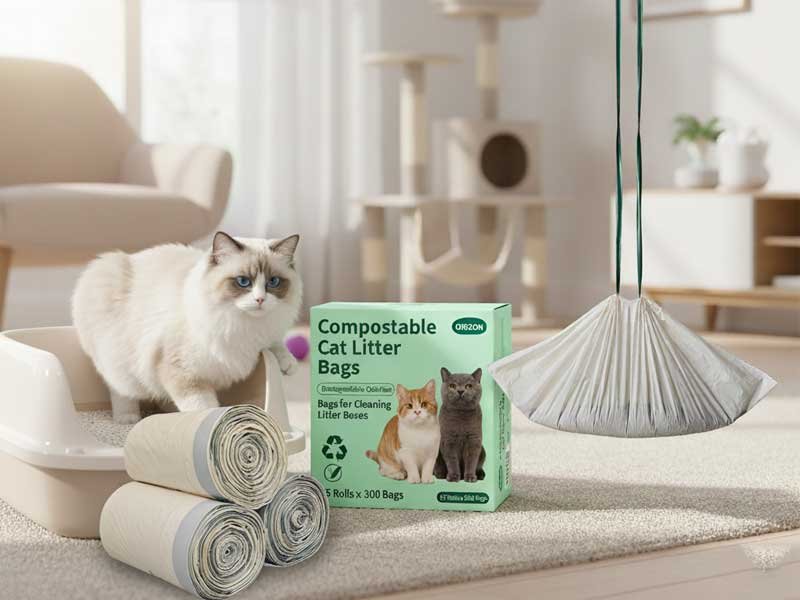
- Flat bags
- Roll bags
- Drawstring bags
Must match litter volume and usage habits.
4. Leak Resistance
Critical for:
- Clumping litter
- Wet waste
5. MOQ & Customization
Check:
- Minimum order quantity
- Printing options
- Private label capability
Common Mistakes Buyers Make
Many sourcing issues come from misunderstanding the product.
Common mistakes:
- Choosing biodegradable instead of compostable
- Ignoring certification requirements
- Selecting bags too thin for heavy litter
- Not testing for leakage
- Focusing only on price
B2B Sourcing Advice
If you are sourcing compostable cat litter bags:
Look for:
- Certified compostable production
- Stable raw material supply (PLA + PBAT)
- Experience with export markets
- OEM / private label support
- Quality control capability
👉 Related guide: How to Choose A Compostable Bag Manufacturer
FAQ
Are compostable cat litter bags safe for composting?
Yes, if they are certified compostable and used in appropriate systems.
Can biodegradable cat litter bags replace compostable bags?
Not reliably. Many are not accepted in composting systems.
What thickness is best for cat litter bags?
Typically 15–25 microns, depending on weight and moisture.
Are compostable cat litter bags strong enough?
Yes, when properly designed and manufactured.
Looking for reliable compostable cat litter bags for your business?
Explore our solutions:
Contact us for specifications, samples, and bulk pricing.