ECO friendly trash bags are increasingly used as alternatives to traditional plastic waste bags—but not all “eco-friendly” options deliver real environmental benefits.
For distributors, importers, and brands, choosing the right type of trash bag is not just about sustainability claims. It directly impacts regulatory compliance, waste system compatibility, and long-term business credibility.
In this guide, we explain what eco friendly trash bags really are, how they differ from biodegradable and compostable options, and how to choose the right solution for your market.
What Are Eco Friendly Trash Bags?
Eco friendly trash bags refer to waste bags designed to reduce environmental impact compared to conventional plastic bags.
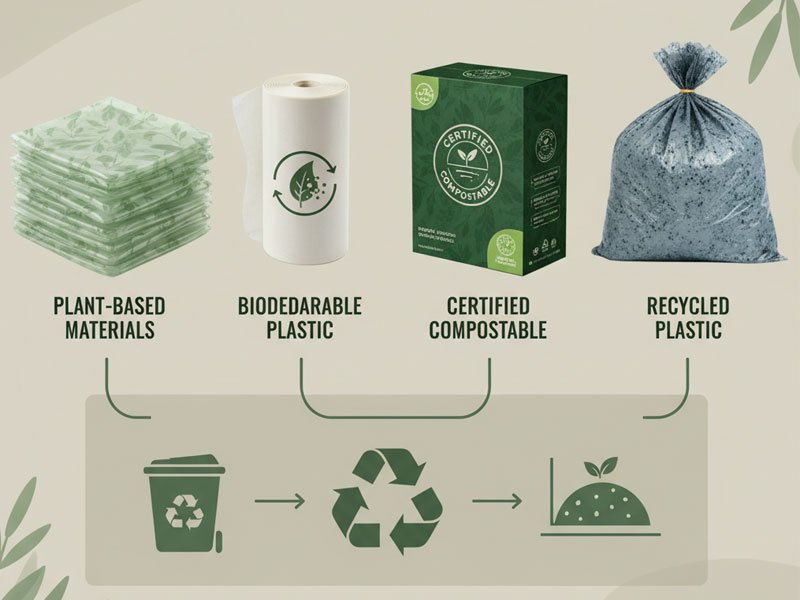
However, the term “eco friendly” is not a regulated standard. It can include different types of products:
- Bags made from plant-based materials
- Biodegradable plastic bags
- Certified compostable trash bags
- Recycled plastic bags
This is why buyers must go beyond marketing claims and understand what the material actually does in real disposal systems.
What Materials Are Used in Eco Friendly Trash Bags?
Different materials lead to very different environmental outcomes.
Common material types:
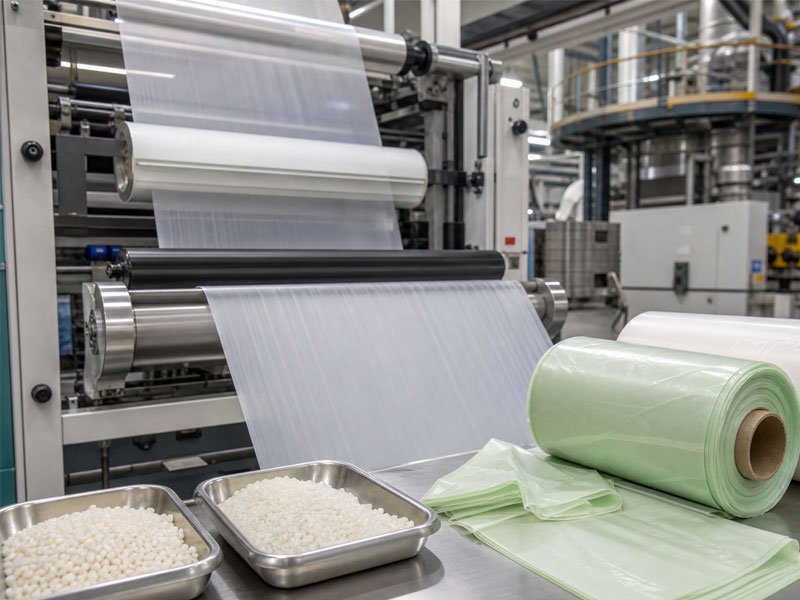
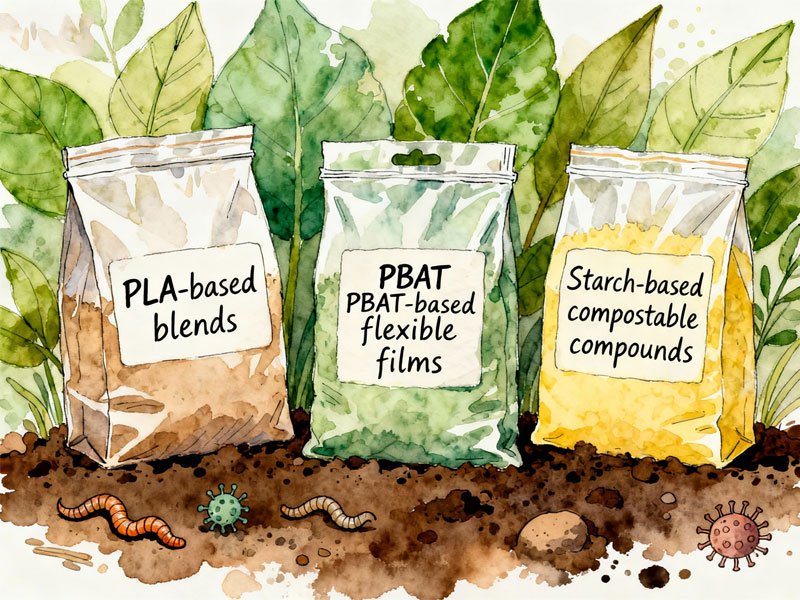
1. PLA (Polylactic Acid)
A bio-based material derived from renewable resources like corn starch.
2. PBAT (Polybutylene Adipate Terephthalate)
A biodegradable polymer that provides flexibility and durability.
3. PLA + PBAT blends
The most widely used formula for certified compostable trash bags.
4. Recycled plastic
Reduces virgin plastic use but does not solve disposal issues.
5. Oxo-degradable plastics
Break into microplastics and are increasingly restricted in many markets.
Related reading: Why Use PLA PBAT Compostable Bags
Eco Friendly vs Compostable vs Biodegradable vs Plastic
Understanding these differences is critical for buyers.
Plastic bags
- Do not degrade naturally
- Persist in landfills and oceans
Biodegradable bags
- Break down over time
- Often lack certification
- May not be accepted in compost systems
Compostable bags (certified)
- Fully break down into CO₂, water, and biomass
- Require industrial or home composting conditions
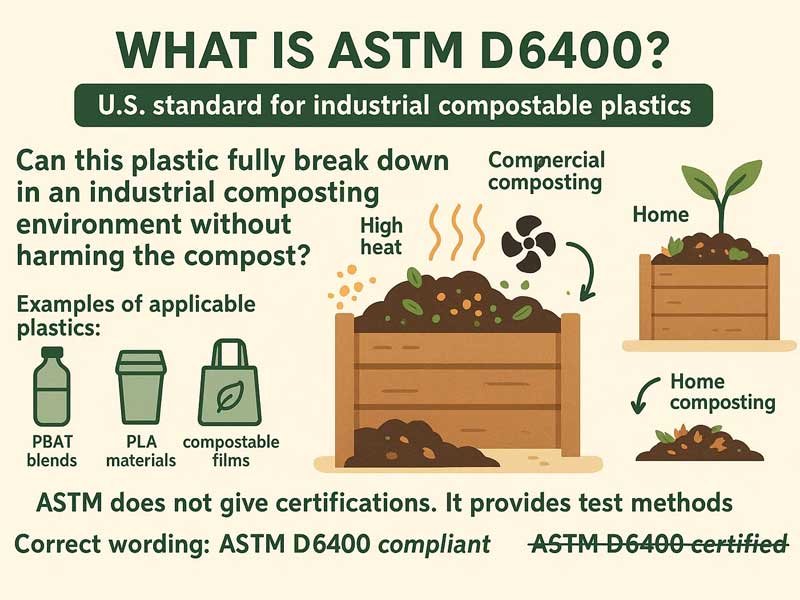
- Must meet standards such as EN 13432 or ASTM D6400
Important guides:
- Biodegradable vs Compostable Waste Bags: What’s the Difference?
- Why “Biodegradable” Claims Can Be Risky for Waste Bags
Where Eco Friendly Trash Bags Are Used
Eco friendly trash bags are used across a wide range of industries and applications:
Key use cases:
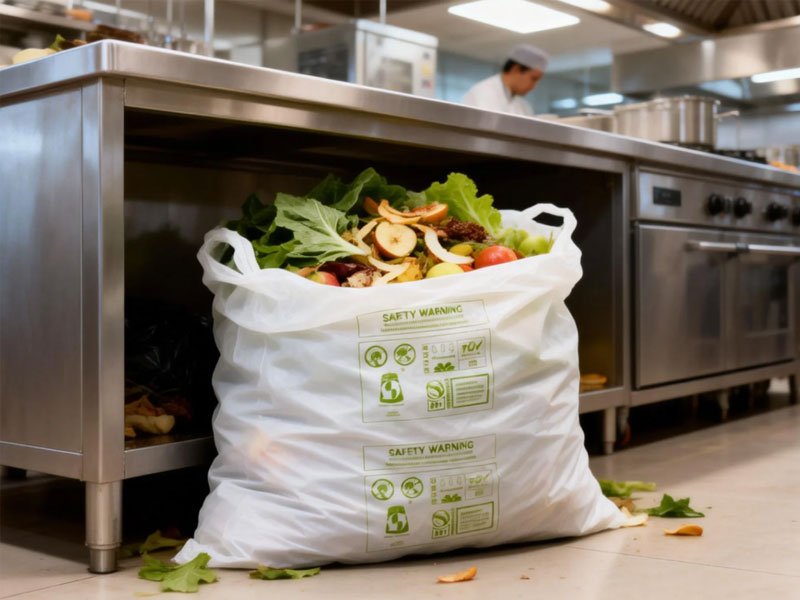
- Food waste collection (FOGO programs)
- Commercial kitchens and hospitality
- Supermarkets and retail stores
- Cleaning and facility management
- Municipal waste systems
- Pet waste disposal
Related solutions:
What Buyers Should Check Before Buying
For B2B buyers, performance and compliance matter more than “eco-friendly” labels.
1. Certification (Most Important)
Look for recognized standards:
- EN 13432 (Europe)
- ASTM D6400 / BPI (USA)
- AS4736 / AS5810 (Australia)
Learn more:
2. Thickness (Microns)
- Too thin → risk of leakage and tearing
- Too thick → unnecessary cost increase
Reference: Compostable Bag Thickness Guide
3. Size and Capacity
Typical sizes include:
- 13 gallon (US standard)
- 8L / 20L / 120L / 240L (EU/AU systems)
Reference: Trash Bag Size Guide
4. MOQ & Supply Capability
Key considerations:
- Factory vs trading company
- Minimum order quantity
- Lead time and logistics
- Custom printing capability
Reference: Compostable Bags MOQ: A Practical Guide for Buyers
Common Mistakes Buyers Make
Many buyers misunderstand eco friendly trash bags, leading to costly mistakes.
Common issues:
- Assuming biodegradable = compostable
- Ignoring certification requirements
- Choosing based on price alone
- Using non-certified bags in compost systems
- Overlooking storage conditions and shelf life
Related reading: Why Councils Reject Biodegradable Bin Liners
B2B Sourcing Advice: How to Choose the Right Supplier
If you are sourcing eco friendly trash bags for distribution or private label, consider:
Key criteria:
- Certified compostable production
- Stable raw material supply (PLA + PBAT)
- In-house manufacturing capability
- Experience with export markets
- OEM and private label support
Recommended guides:
FAQ
Are eco friendly trash bags the same as compostable bags?
No. Only certified compostable bags meet strict standards and can be used in composting systems.
Are biodegradable trash bags accepted in compost bins?
In most regions, they are not accepted due to lack of certification.
What is the best eco friendly trash bag option?
Certified compostable bags made from PLA and PBAT blends.
Do eco friendly trash bags break down in landfill?
Most require composting conditions and do not degrade effectively in landfill.
Looking for Certified Eco Friendly Trash Bags for Your Business?
We provide certified compostable trash bags designed for global B2B markets, including:
- Food waste collection systems
- Retail and supermarket packaging
- Municipal and commercial waste management
- Private label and OEM projects
Explore our products:
- Compostable Garbage Bags
- Compostable Garbage Bags Wholesale
- Custom Bin Liners
Or contact our team for specifications, pricing, and samples.