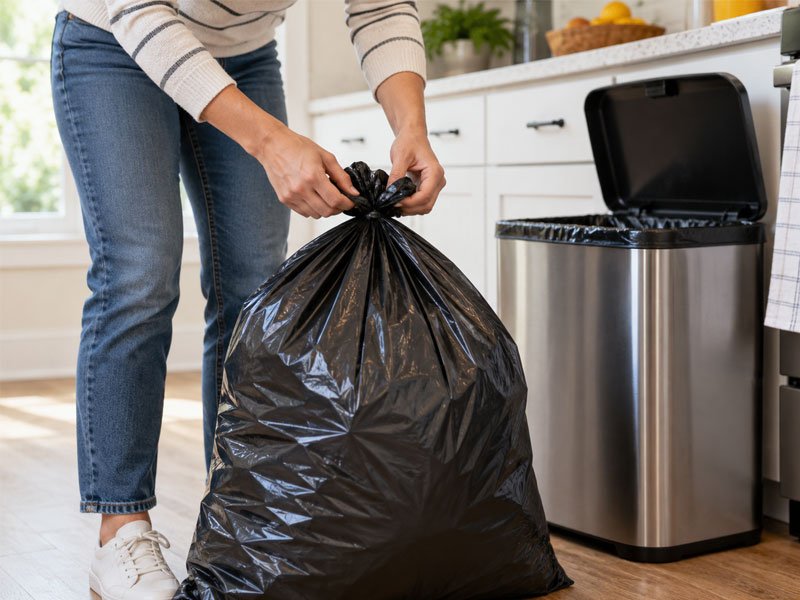
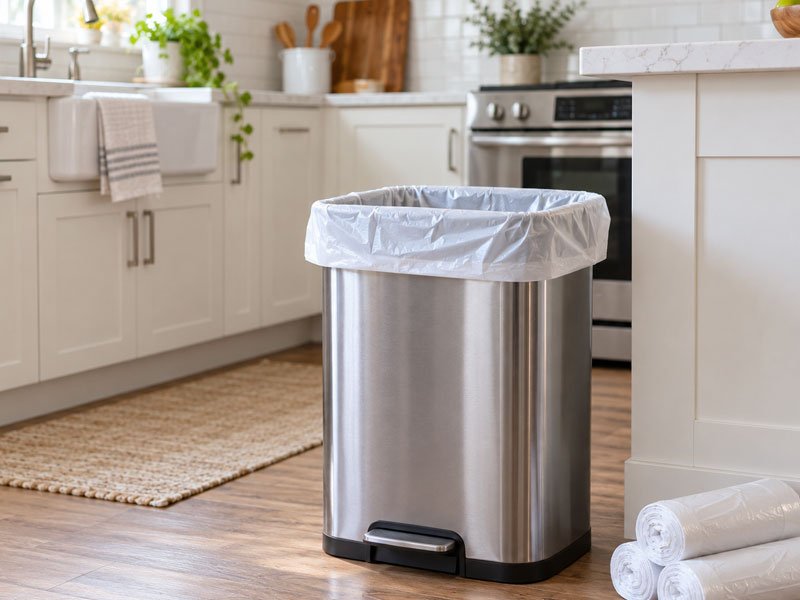
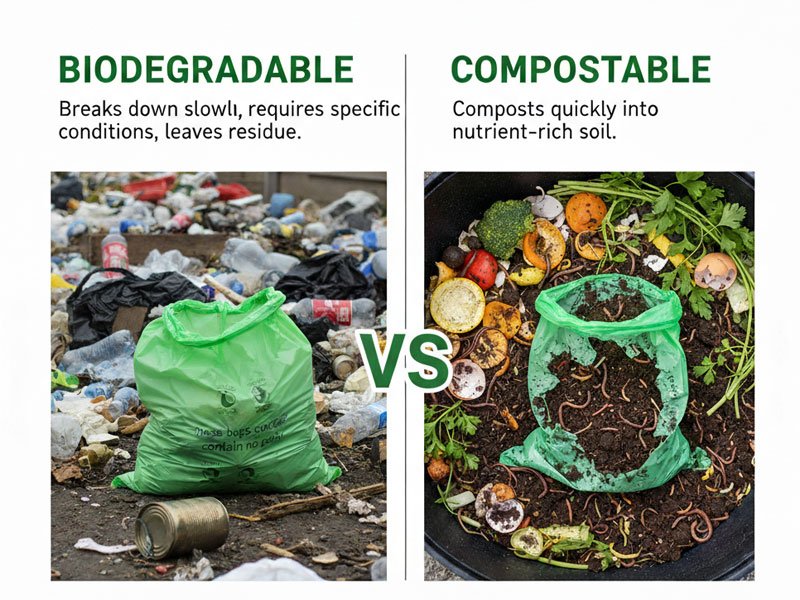
Compostable toilet bags are not the same as ordinary trash bags.
They work in a harder place.
Inside a portable toilet, a bag may need to hold liquid, semi-solid waste, toilet paper, absorbent material, odor pressure and movement.
That is a lot to ask from one liner.
Many buyers first ask for thicker film.
I understand why.
Thickness feels safe.
But in real portable sanitation use, leak resistance depends on more than thickness alone.
It depends on the full system:
- bag size;
- sealing quality;
- film stability;
- material flexibility;
- storage time;
- heat exposure;
- waste pressure;
- and movement during travel.
This guide explains how compostable toilet bags work for portable toilets, camping toilets, RVs and off-grid sanitation. It also explains why some toilet bags still leak, how sealing affects performance, and what buyers should check before ordering portable toilet bags.
For a broader view of toilet and waste system types, see our guide to portable sanitation systems.
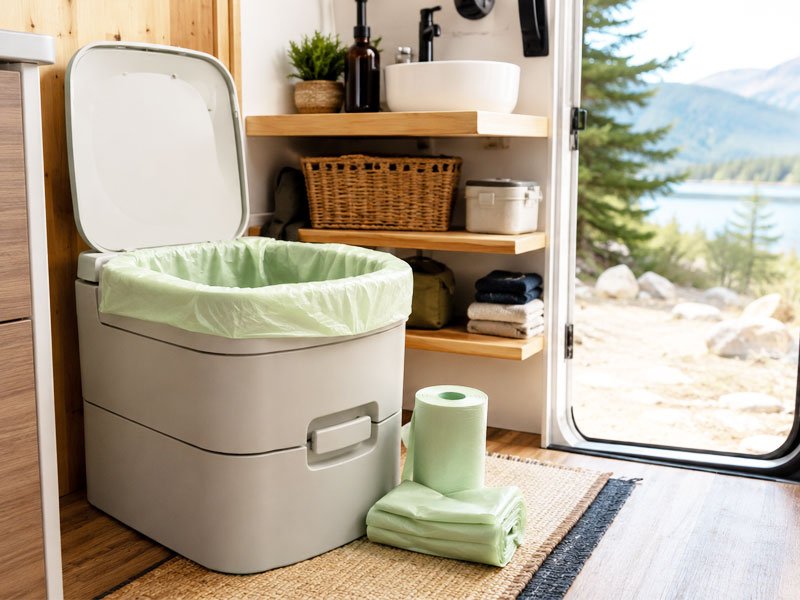
Quick Answer: What Should a Compostable Toilet Bag Do?
A compostable toilet bag is a liner used inside a portable toilet, camping toilet, bucket toilet, RV backup toilet or emergency sanitation setup.
A good portable toilet bag should do four basic jobs:
- fit the toilet or bucket;
- hold waste during short-term use;
- reduce leakage risk;
- match the correct disposal route.
That last point matters.
A compostable bag is not a free pass to dispose of human waste anywhere.
Human waste must be handled according to local rules and the system being used. Leave No Trace notes that proper human waste disposal helps avoid water pollution, disease spread and other impacts, and in some environments solid human waste must be packed out.
So the better question is not only:
“Is this bag compostable?”
It is:
“Does this bag fit the real sanitation use and disposal method?”
What Are Compostable Toilet Bags?
Compostable toilet bags are waste liners designed for portable sanitation systems.
They are commonly used in:
- camping toilets;
- RV toilet backup systems;
- van life sanitation setups;
- bucket toilets;
- emergency toilets;
- outdoor event sanitation;
- off-grid cabins;
- and temporary waste systems.
A compostable toilet liner is usually made to hold waste for a short period before removal.
It may need to handle more stress than a normal compostable trash bag.
Why?
Because toilet waste is heavier, wetter and harder to manage.
A normal trash bag may hold dry waste in a kitchen bin.
A portable toilet bag may hold human waste inside a moving RV in hot weather.
Those are not the same conditions.
Where Are Compostable Toilet Bags Used?
Different toilet systems create different pressure on the bag.
That is why one liner does not fit every use.
| Use Case | Common Need | What to Check |
|---|---|---|
| Camping toilet | Lightweight and easy to pack | Size fit and short-term waste holding |
| RV toilet backup | Leak resistance during travel | Seal strength and vibration pressure |
| Van life sanitation | Compact storage and odor control | Closure method and storage time |
| Emergency toilet | Fast setup and reliable containment | Thickness, size and sealing |
| Bucket toilet | Larger opening and stable liner fit | Bag width, height and overhang |
| Off-grid cabin | Longer temporary storage | Heat, waste pressure and disposal route |
If the toilet bag is used only for one night of camping, the requirement may be simple.
If the bag stays in an RV or van during summer travel, the requirement becomes harder.
Heat changes things.
Movement changes things.
Waste pressure changes things.
What Makes Compostable Toilet Bags Leak-Resistant?
I prefer the term leak-resistant instead of leak-proof.
Leak-proof sounds absolute.
But a toilet bag is affected by real conditions:
- how much waste is inside;
- how long the waste stays there;
- how hot the storage space becomes;
- how the bag is sealed;
- how the vehicle moves;
- and how the user closes the bag.
A better question is:
How is the bag designed to reduce leakage risk under the expected use conditions?
Leak resistance usually depends on several factors working together.
| Factor | Why It Matters |
|---|---|
| Sealing quality | Weak seals often fail before the middle film does |
| Film consistency | Thin or weak spots can increase failure risk |
| Material flexibility | The bag needs to move without cracking or tearing |
| Puncture resistance | Toilet paper, absorbents or rough contact can create stress |
| Thickness | Helps strength, but does not solve every problem |
| Storage conditions | Heat and time can increase pressure |
| Movement | RV and vehicle vibration can stress the bottom seal |
Thickness matters.
But it is not the whole answer.
Why Some Compostable Toilet Bags Still Leak
This surprises many first-time buyers.
They choose a thicker compostable toilet liner and still see leakage during real use.
In factory communication, I often see buyers start with one request:
“Can you make it thicker?”
That is understandable.
But when we review failed samples, the problem is often near the seal, not the center of the film.
Leakage may happen because of:
- weak bottom sealing;
- unstable film production;
- overfilling;
- sharp waste objects;
- long storage time;
- high temperature;
- repeated movement;
- or poor closure after use.
Inside RVs and vans, portable toilet bags may face vibration and compression.
Over time, pressure collects near the bottom seal.
That is why a sanitation liner should be tested as a finished bag, not only as a film sample.
Sealing Matters More Than Thickness
Sealing is the closed edge of the bag.
It is where the film is joined together by heat and pressure during production.
For portable toilet bags, sealing quality is often more important than simply adding more microns.
A thick bag with weak sealing can still fail.
A balanced bag with stable sealing may perform better in real use.
This matters for:
- long-distance RV travel;
- waste compression;
- high-temperature storage;
- extended camping;
- emergency toilet systems;
- and off-grid sanitation.
In many portable sanitation projects, I check the seal before I talk about adding more thickness.
That is the practical order.
Seal first.
Then thickness.
Then real-use testing.
For more production details, see our guide on how compostable toilet bags are manufactured.
Star Seal vs Flat Seal for Portable Toilet Bags
Different sealing structures behave differently under waste pressure.
Two common options are star seal and flat seal.
Star Seal
A star seal folds the bottom of the bag in a way that helps spread pressure.
It is often used for roll bags and compact waste liners.
Star-sealed compostable toilet bags may be useful for:
- rolled toilet liners;
- compact sanitation systems;
- camping toilet bags;
- small portable waste bags;
- RV backup liners.
Possible benefits:
- distributes pressure more evenly;
- reduces corner stress;
- helps waste sit near the center;
- supports compact roll packing.
Flat Seal
A flat seal is a straight seal across the bottom of the bag.
It is simple and common.
Flat-sealed liners may be used for:
- larger toilet liners;
- drawstring toilet bags;
- folded sanitation bags;
- bucket liners;
- emergency waste bags.
Possible benefits:
- simple structure;
- stable for some larger bag formats;
- easier to match with some closure styles.
| Seal Type | Good For | Watch Point |
|---|---|---|
| Star seal | Roll bags, compact liners, camping toilet bags | Needs stable folding and sealing control |
| Flat seal | Larger liners, drawstring bags, bucket toilet bags | May create more stress at corners under heavy pressure |
There is no single best seal for every toilet bag.
The right choice depends on bag size, waste load, closure method and use time.
How Thickness Affects Compostable Toilet Bags
Thickness means film gauge.
In compostable bags, it is often measured in microns, written as μm.
A higher micron number usually means a thicker film.
But thicker film can also mean:
- larger roll diameter;
- higher material cost;
- larger box size;
- more shipping volume;
- and different flexibility.
| Application | Common Thickness Direction | Notes |
|---|---|---|
| Lightweight camping | 15–18 μm | Short-term use, compact packing |
| RV sanitation backup | 18–22 μm | Better balance of strength and flexibility |
| Extended off-grid storage | 20–25 μm | Stronger liner may be needed |
| Emergency sanitation | 18–25 μm | Depends on storage time and waste load |
These are not fixed rules.
They are starting points.
The final choice should be tested with the real toilet system.
A 20 μm bag may work well in one portable toilet but not in another if the size is wrong or the seal is unstable.
For a deeper look at film gauges, see our compostable toilet bag thickness.
Heat, Odor and Waste Storage Pressure
Portable sanitation often happens in small, closed spaces.
That makes heat and odor more serious.
Think about a parked RV in summer.
Or a van with a toilet bag stored for several hours.
Or a camping toilet left in a small tent.
Higher temperature can increase:
- odor pressure;
- moisture buildup;
- film stress;
- sealing pressure;
- and waste instability.
This is one reason some compostable toilet bags perform well during short use but become harder to manage during longer storage.
The bag is only one part of the system.
The closure method, absorbent material, ventilation, storage time and disposal plan also matter.
For handling and storage details, read our portable toilet waste handling systems.
How to Choose the Right Size for Portable Toilets
Do not choose a compostable toilet bag size only by liter capacity.
Two portable toilets may have a similar capacity but need different liner sizes.
Why?
Because the opening shape, rim width and bucket depth may be different.
Before choosing a size, measure:
| Item to Measure | Why It Matters |
|---|---|
| Toilet opening width | The liner must cover the seat or rim |
| Bucket or container depth | The bag must reach the bottom without stretching |
| Rim overhang | Extra film is needed for folding or tying |
| Waste volume | More volume needs more bag height and strength |
| Closure method | Tie-top, drawstring or separate sealing method |
| Storage time | Longer storage may need stronger structure |
A good liner should sit inside the toilet without too much stretching.
Stretching is risky.
It puts extra pressure on the film and seal.
If you are developing portable toilet bags for OEM production, send the toilet dimensions or a sample toilet model before confirming the bag size.
That saves time.
It also avoids a bad sample.
Material and Certification Notes
Compostable toilet bags are commonly made with material blends such as PLA, PBAT and starch-based compounds.
These materials can affect:
- flexibility;
- puncture resistance;
- sealing behavior;
- storage stability;
- and compostable certification options.
But material names alone are not enough.
A buyer should also check:
- certificate scope;
- target market;
- disposal route;
- logo use permission;
- local waste rules;
- and whether human waste is accepted in the intended system.
The FTC Green Guides say environmental marketing claims should be truthful, not misleading and supported before they are made. They also warn against overstating environmental benefits.
For compostable claims, the FTC states that marketers should have competent and reliable scientific evidence that the item will break down into usable compost in a safe and timely way in an appropriate composting facility or home compost pile.
So be careful with claim wording.
“Compostable bag” does not automatically mean “used human waste can go into home compost.”
That depends on the waste type, local rules and composting system.
For certificate scope and claim wording, review our compostable certifications guide.
Compostable Toilet Bags vs Dry Flush Toilet Bags
Some buyers compare compostable toilet bags with dry flush toilet bags.
They are related, but not the same.
A compostable toilet bag is usually a liner used to hold waste inside a portable toilet, bucket toilet or temporary sanitation setup.
A dry flush toilet bag is often part of a dry flush toilet system. The system may wrap, seal or package waste after each use.
| Product Type | Common Use | Main Check |
|---|---|---|
| Compostable toilet bag | Camping toilets, bucket toilets, portable toilets | Size, seal, thickness and disposal route |
| Dry flush toilet bag | Dry flush toilet systems | System compatibility and cartridge format |
| Emergency toilet liner | Disaster prep or temporary sanitation | Fast setup and reliable containment |
| RV toilet bag | RV backup or travel sanitation | Vibration, heat and storage pressure |
If you are comparing systems, read dry flush toilet bags vs compostable toilet bags.
Buyer Specification Checklist
Before ordering compostable toilet bags, prepare a clear specification.
This helps the supplier understand the real use.
Toilet system
- Portable toilet type confirmed
- Camping toilet, RV, bucket toilet or emergency use confirmed
- Toilet opening measured
- Bucket depth measured
- Rim overhang checked
Bag structure
- Bag width confirmed
- Bag height confirmed
- Thickness direction selected
- Star seal or flat seal selected
- Closure method confirmed
- Roll pack or folded pack confirmed
Performance
- Short-term or longer storage time confirmed
- Heat exposure considered
- Movement or vibration considered
- Waste load estimated
- Absorbent material use confirmed
- Leak-resistance test plan prepared
Material and claims
- Compostable material target confirmed
- Certification target checked
- Claim wording reviewed
- Disposal route reviewed
- Local rules checked
Packaging
- Bags per roll or pack confirmed
- Retail packaging format selected
- Carton packing reviewed
- Storage instructions prepared
- Final sample approved
A clear checklist is not fancy.
It just prevents avoidable mistakes.
Common Mistakes When Choosing Compostable Toilet Bags
1. Only asking for thicker film
Thicker film may help, but it cannot fix weak sealing or poor fit.
2. Using trash bags as toilet bags
A trash bag and a toilet liner may face very different waste pressure.
3. Ignoring the bottom seal
Many leak problems happen near the seal.
Check it early.
4. Forgetting heat exposure
Portable toilets are often used in RVs, vans and outdoor spaces.
Heat can change performance.
5. Choosing size by capacity only
Measure the toilet opening, depth and overhang.
Capacity alone is not enough.
6. Making broad compostable claims
Compostable claims should match certificate scope, market rules and disposal route.
7. Skipping real-use testing
A flat film sample does not show how the finished bag behaves inside a toilet.
Test the final bag.
8. Ignoring closure method
A good liner still needs a safe way to close or remove the waste.
FAQ
What are compostable toilet bags?
Compostable toilet bags are liners designed for portable toilets, camping toilets, bucket toilets, RV sanitation backups and emergency waste systems. They are made from compostable materials and used to hold waste for short-term handling.
Are compostable toilet bags leak-proof?
A better term is leak-resistant. Real leak performance depends on sealing, thickness, film stability, storage time, waste pressure, heat and movement.
Can compostable toilet bags be used in RV toilets?
They can be used in some RV or portable sanitation setups, but the bag size, sealing strength, storage time and disposal method must match the system.
What thickness is best for compostable toilet bags?
Light camping use may use 15–18 μm, while RV or longer storage may require 18–25 μm. Thickness should be tested together with sealing and waste pressure.
What seal is better for portable toilet bags?
Star seal may help spread pressure in compact roll systems. Flat seal may work better for larger liners or drawstring bags. The best option depends on the bag size and use case.
Do compostable toilet bags control odor?
They can help contain waste, but odor control also depends on closure method, absorbent material, storage time, heat and the full sanitation system.
Are compostable toilet bags the same as compostable trash bags?
No. Toilet bags may need to handle liquid, semi-solid waste, odor pressure and movement. They should be tested differently from ordinary trash bags.
How do I choose the right size toilet bag?
Measure the toilet opening, bucket depth, rim overhang, waste volume and closure method before choosing the bag size.
Can used compostable toilet bags go into home compost?
Do not assume that. Human waste usually needs special handling. Disposal depends on local rules, certification, waste type and composting conditions.
What should buyers confirm before ordering compostable toilet bags?
Buyers should confirm size, thickness, seal type, closure method, material, certification target, storage time, test conditions, packaging and disposal guidance.
Conclusion
Compostable toilet bags are simple in shape.
But they work in a difficult environment.
A portable toilet liner may face waste pressure, moisture, odor, heat and movement.
That is why leak resistance is not only about thicker film.
The better approach is to check the full system:
Size.
Seal.
Thickness.
Material.
Storage time.
Heat.
Closure.
Disposal route.
If you are choosing compostable toilet bags for camping toilets, RV sanitation, bucket toilets or off-grid waste systems, start with the real use conditions.
Then build the bag around them.
That is the practical way.