Portable sanitation sounds simple at first.
Until you actually need to store waste inside a small RV or van for several hours.
Or several days.
That is usually when people begin comparing different toilet bag systems.
Especially:
- dry flush toilet bags
- compostable toilet bags
- portable toilet liners
- RV sanitation bags
At first glance, many of these products look similar online.
But once you use them in real travel conditions, the differences become very obvious.
Odor behaves differently.
Storage becomes harder.
Heat changes everything.
And waste handling becomes part of daily life.
After spending years working with compostable bag manufacturing and talking with RV users, sanitation distributors, and portable toilet buyers, I realized something important:
Most sanitation problems are not caused by one single product.
They are usually caused by choosing the wrong system for the actual travel environment.
This article compares dry flush toilet bags and compostable toilet bags based on real portable sanitation use instead of marketing language.
Quick Comparison
| Situation | Better Option |
|---|---|
| Long RV travel | Dry flush toilet bags |
| Hot weather storage | Dry flush systems |
| Eco-focused camping | Compostable toilet bags |
| Lower replacement cost | Compostable toilet bags |
| Strong odor isolation | Dry flush systems |
| Lightweight sanitation setup | Compostable toilet bags |
What Are Dry Flush Toilet Bags?
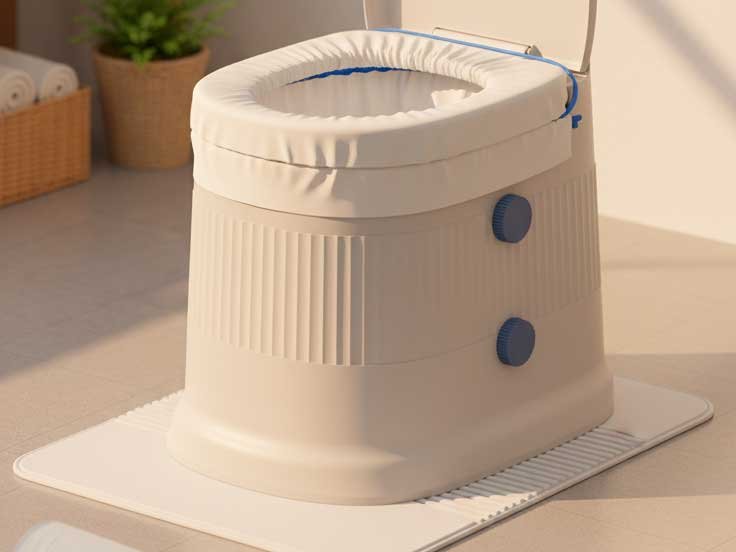
Dry flush toilet bags are usually part of cartridge-based portable toilet systems.
The system seals waste after each use using special liner material inside a replaceable cartridge.
Many RV users choose dry flush systems because they provide:
- strong odor isolation
- cleaner waste handling
- easier temporary storage
- reduced direct contact with waste
Dry flush systems are especially popular in:
- RV travel
- van life
- off-grid camping
- emergency sanitation systems
However, the convenience also comes with trade-offs. Replacement cartridges are usually more expensive. And disposal still depends on local waste infrastructure.
How Dry Flush Cartridge Systems Actually Work
Many first-time RV users assume dry flush systems work like ordinary portable toilet liners.
They do not.
Most dry flush toilet systems use cartridge-based liner material that automatically seals waste after each use.
This creates a separate waste pouch inside the cartridge system.
The sealed structure helps reduce:
- odor spread
- direct waste contact
- leakage during storage
- handling problems during travel
This is one reason dry flush systems are often preferred during:
- long RV trips
- off-grid travel
- emergency sanitation
- confined-space environments
However, the cartridge system also creates higher replacement costs compared to standard compostable toilet bags.
What Are Compostable Toilet Bags?
Compostable toilet bags are usually made from materials like PLA and PBAT.
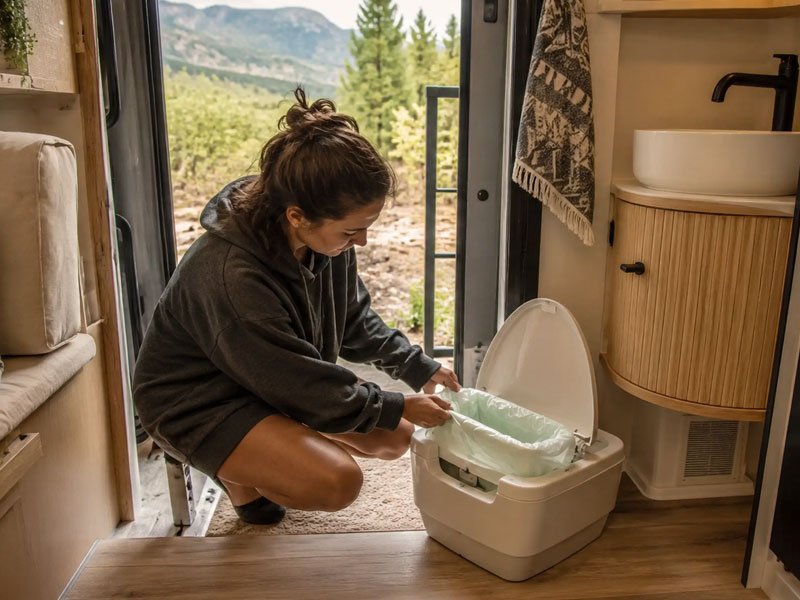
Unlike dry flush cartridge systems, compostable toilet bags are often used as standalone liners inside portable toilets or bucket toilet systems.
Some travelers choose compostable toilet bags because they want to reduce traditional plastic waste during travel.
Others prefer the lower replacement cost compared to cartridge-based systems.
Many users researching different types of compostable portable toilet liners eventually discover that compostability alone does not automatically solve sanitation problems.
Storage conditions still matter.
Heat still matters.
And disposal infrastructure still matters.
Odor Control During RV and Van Life Travel
This is one of the biggest differences between the two systems.
Dry flush toilet bags usually provide stronger odor isolation during long RV trips.
Because the waste becomes sealed after each use.
That makes a noticeable difference inside:
- small vans
- parked RVs
- hot travel environments
- enclosed sleeping spaces
Compostable toilet bags can still perform very well.
But odor control often depends more heavily on:
- sealing quality
- storage duration
- humidity
- temperature
- absorbent materials
This is why some RV users switch systems after longer trips.
Not because one product is “bad.”
But because different sanitation systems behave differently under heat and storage pressure.
Do dry flush toilet bags smell less than compostable toilet bags?
In many long-term RV travel situations, dry flush toilet systems usually provide stronger odor isolation because waste becomes sealed after each use.
Compostable toilet bags can still work well, but odor performance often depends more heavily on storage duration, sealing quality, humidity, temperature, and ventilation conditions inside the vehicle.
Do compostable toilet bags smell more during RV travel?
They can become more sensitive to heat, humidity, and longer waste storage periods.
Especially inside:
- parked RVs
- enclosed vans
- summer travel environments
- multi-day off-grid trips
In many cases, odor problems are caused more by storage conditions than by the material itself.
Leak Resistance and Waste Storage
Most people only think about leak resistance after experiencing a failure.
Usually during travel.
Or while moving waste bags between locations.
Dry flush systems generally provide stronger waste containment because the liner becomes mechanically sealed during operation.
Compostable toilet bags rely more heavily on:
- film strength
- seal quality
- thickness consistency
- storage conditions
In real portable sanitation systems, sealing types and leakage risks matter much more than many users initially expect.
A toilet bag may look thick online.
Many RV users assume thicker toilet bags automatically perform better.
But in real portable sanitation manufacturing, sealing quality often affects leak performance more than film thickness itself.
This becomes especially obvious during:
- long-distance travel
- waste compression
- high-temperature storage
- repeated movement inside vehicles
But weak sealing or unstable film production can still create leakage problems later.
Especially during long-distance RV travel.
Which System Works Better in Hot Weather?
Heat changes portable sanitation behavior very quickly.
Especially inside parked vehicles.
Many RV interiors become extremely warm during summer travel.
That affects:
- odor buildup
- humidity
- waste stability
- bag flexibility
- storage performance
Dry flush toilet systems usually handle long-term odor isolation better under high temperatures.
Compostable toilet bags may become more sensitive to heat and moisture exposure over time.
This is also why storage and transport conditions for compostable bags become much more important than many buyers realize.
Some lightweight compostable toilet bags are designed mainly for short sanitation cycles instead of multi-day waste storage.
That difference matters during real RV travel.
The Real Problem Is Usually Heat, Not the Bag
Many first-time RV users assume sanitation problems are caused by poor bag quality alone.
But heat changes portable sanitation behavior very quickly.
Inside parked RVs and vans, temperatures can rise much faster than most travelers expect.
This affects odor buildup, moisture levels, waste stability, and even how flexible the toilet bags remain during long storage periods inside the vehicle.
In many cases, the sanitation environment itself creates more problems than the material alone.
Waste Disposal Differences
This is where many online discussions become oversimplified.
Dry flush toilet bags are usually disposed of through normal trash systems.
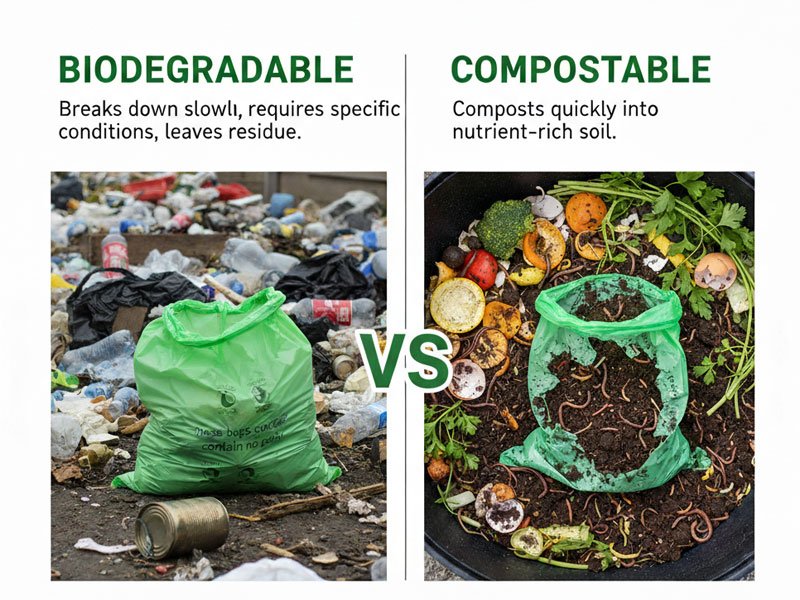
Compostable toilet bags may require industrial composting conditions depending on local regulations and waste infrastructure.
According to industrial compostability standards such as ASTM D6400 and TÜV Austria compost certifications, most compostable toilet bags are designed for controlled composting environments rather than unmanaged landfill conditions.
This creates confusion for many travelers.
Especially during off-grid trips.
Or international RV travel.
That is why compostable vs plastic waste system compatibility has become a much larger discussion inside modern portable sanitation systems.
The bag itself is only one part of the system.
Disposal infrastructure matters too.
Why Some RV Users Stop Using Compostable Toilet Bags
This topic appears often in RV communities after long summer trips.
Some travelers discover that lightweight compostable toilet bags become harder to manage during:
- high temperatures
- extended waste storage
- multi-day off-grid travel
- enclosed vehicle environments
Odor becomes stronger.
Storage becomes more complicated.
And waste handling requires more planning.
That does not mean compostable toilet bags are ineffective.
It simply means different sanitation systems perform differently under long-duration travel conditions.
Why Some RV Users Still Prefer Dry Flush Systems
Many long-term RV users prioritize operational simplicity over environmental messaging.
Dry flush systems offer several practical advantages:
- stronger odor isolation
- cleaner waste handling
- lower leak risks
- better storage stability
- easier use during emergency situations
That does not mean compostable toilet bags are ineffective.
It simply means some users value stability and convenience more during extended travel.
Especially in confined spaces.
Why Compostable Toilet Bags Still Matter
At the same time, compostable toilet bags continue gaining attention for good reasons.
Especially in:
- eco-focused camping
- shorter sanitation cycles
- outdoor recreation
- municipal composting programs
- environmentally regulated travel areas
Many travelers also prefer avoiding cartridge dependency and recurring replacement costs.
Some biodegradable camping toilet bags are designed specifically for lightweight portable sanitation systems where flexibility and easier disposal matter more than long-term waste storage.
Different systems solve different problems.
Dry Flush Toilet Bags vs Compostable Toilet Bags Comparison
| Feature | Dry Flush Toilet Bags | Compostable Toilet Bags |
|---|---|---|
| Odor Control | Strong | Moderate |
| Leak Resistance | High | Medium to High |
| Waste Isolation | Excellent | Moderate |
| Compostability | No | Yes |
| Long-Term RV Storage | Strong | Limited |
| Cartridge Cost | Higher | Lower |
| Eco Positioning | Lower | Higher |
| Off-Grid Convenience | Strong | Moderate |
| Heat Resistance | Stronger | More Sensitive |
| Disposal Flexibility | Depends on trash access | Depends on composting infrastructure |
In real portable sanitation systems, there is no perfect universal solution.
Dry flush toilet bags usually work better for:
- long-term RV travel
- stronger odor isolation
- high-temperature storage
- emergency sanitation
Compostable toilet bags usually work better for:
- shorter sanitation cycles
- eco-focused camping
- lightweight portable systems
- lower replacement costs
The better option depends more on travel conditions than on marketing claims.
Which System Is Better for RV and Van Life?
There is no universal answer.
The better system usually depends on:
- travel duration
- climate
- storage conditions
- disposal access
- budget
- personal comfort level
Generally:
Dry flush systems work better for:
- long RV trips
- hot climates
- enclosed vehicle environments
- emergency sanitation
- users prioritizing odor isolation
Compostable toilet bags work better for:
- shorter sanitation cycles
- eco-focused travel
- lower replacement cost
- lightweight portable systems
- travelers reducing plastic waste
Portable sanitation is always a balance between convenience, waste handling, storage stability, and environmental priorities.
Conclusion
I used to think portable toilet bags were simple products.
Now I do not think that anymore.
The more I study RV and portable sanitation systems, the more I realize the real challenge is not choosing the “best” bag.
It is choosing the system that matches the actual travel environment.
A product may work perfectly during a short camping trip.
And fail completely during extended off-grid travel.
That is why portable sanitation should not be treated as a small accessory category.
It is part of the entire travel system.
Today, more manufacturers are beginning to realize that portable hygiene packaging systems require a balance between storage stability, odor control, disposal infrastructure, and real-world sanitation behavior.
That is where smarter sanitation decisions begin.
In portable sanitation systems, there is rarely one perfect solution for every travel environment. The better choice usually depends on how waste is stored, how long the trip lasts, how much heat exposure occurs, and how the sanitation system is managed during travel.
FAQ
Are dry flush toilet bags better than compostable toilet bags?
Not necessarily.
Dry flush toilet bags usually provide stronger odor isolation and easier long-term waste storage, especially during extended RV travel.
Compostable toilet bags may reduce traditional plastic waste and work well in shorter sanitation cycles or eco-focused travel systems.
The better option usually depends on the actual travel environment and disposal conditions.
Do compostable toilet bags smell more during RV travel?
They can become more sensitive to heat, humidity, and longer waste storage periods.
Odor control depends heavily on:
- sealing quality
- storage duration
- ventilation
- absorbent materials
- temperature
In small enclosed RV spaces, odor behavior becomes much more noticeable during long trips.
Why are dry flush systems popular in van life?
Many van life users prefer dry flush systems because they offer:
- cleaner waste containment
- strong odor isolation
- easier temporary storage
- reduced direct waste handling
These advantages become more important during long off-grid travel or hot-weather camping.
Can compostable toilet bags replace dry flush systems?
Sometimes.
But the systems are designed for different sanitation priorities.
Compostable toilet bags focus more on reducing traditional plastic waste, while dry flush systems prioritize waste isolation and storage stability.
Some RV users successfully use compostable toilet bags for shorter trips, while others prefer dry flush systems for extended travel.
Which system works better in hot weather?
Dry flush systems usually perform more consistently during long high-temperature travel conditions because waste becomes sealed after each use.
Compostable toilet bags may become more sensitive to heat and humidity exposure during extended storage.