Many people assume thicker toilet bags automatically perform better.
In real portable sanitation systems, that is not always true.
Over the past several years working in compostable bag manufacturing, I noticed something interesting:
Some thick toilet liners still fail during travel.
And some thinner liners perform surprisingly well under real sanitation conditions.
Why?
Because compostable toilet bag thickness is only one part of portable sanitation performance inside larger portable sanitation systems.
Sealing quality.
Film consistency.
Storage pressure.
Heat exposure.
Waste duration.
All of these affect how compostable toilet bags behave during real-world use.
This guide explains how compostable toilet bag thickness affects leak resistance, odor control, portability, and waste handling inside portable sanitation systems.
Especially during:
- RV travel
- van life
- camping
- off-grid sanitation
- emergency hygiene systems
Why Compostable Toilet Bags Thickness Matters
Thickness affects several important parts of portable sanitation performance.
Including:
- leak resistance
- puncture strength
- flexibility
- waste pressure tolerance
- sealing behavior
- roll size
- portability
However, thicker material does not automatically guarantee better performance.
A poorly sealed thick liner can still leak during transportation or long-term storage, especially in portable toilet waste handling systems used during RV travel and off-grid sanitation.
This is one reason many RV users eventually realize sanitation systems behave very differently under real travel conditions compared to online product descriptions
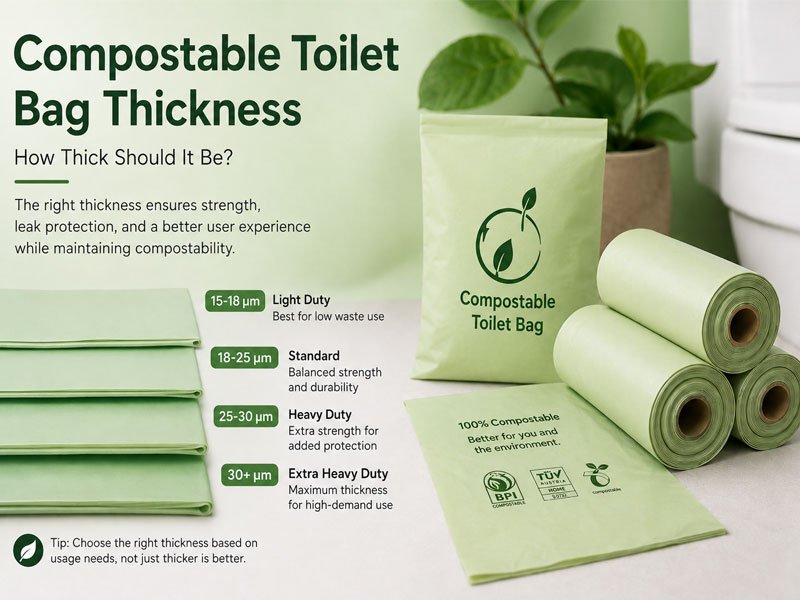
Common Compostable Toilet Bag Thickness Ranges
Most compostable toilet bags are commonly produced within several thickness ranges.
12–15 Micron
Usually used for:
- lightweight camping sanitation
- short-term waste handling
- portable outdoor use
Advantages:
- lighter rolls
- lower material cost
- compact storage
Limitations:
- lower puncture resistance
- more sensitive to storage pressure
- less stable during long-term waste storage
18–20 Micron
This is one of the most common compostable toilet bag thickness ranges.
Often used for:
- RV toilet liners
- portable camping toilets
- off-grid sanitation
- moderate storage duration
Advantages:
- better balance between flexibility and strength
- improved sealing stability
- more reliable transportation performance
This thickness range is often preferred for portable sanitation systems that require both portability and reasonable leak resistance.
22–25 Micron
Usually used for:
- heavy-duty sanitation systems
- extended storage environments
- higher waste pressure applications
Advantages:
- stronger puncture resistance
- better storage stability
- higher tolerance during transportation
Limitations:
- larger roll diameter
- reduced portability
- higher material cost
Some RV users prefer thicker liners during long summer travel because storage pressure inside enclosed vehicles becomes much more demanding.
15μm vs 20μm vs 25μm
Many buyers ask whether thicker compostable toilet bags always perform better.
The answer depends heavily on the sanitation environment.
| Thickness | Typical Use | Main Advantage | Main Limitation |
|---|---|---|---|
| 15μm | Short camping trips | Lightweight and compact | Lower storage stability |
| 20μm | RV and off-grid use | Balanced performance | Slightly larger rolls |
| 25μm | Extended storage | Higher puncture resistance | Higher material cost |
In many sanitation systems, the “best” thickness depends more on operational conditions than on laboratory numbers alone.
Why Thick Bags Still Fail
This surprises many buyers. A thick liner can still fail.
Especially during:
- vehicle movement
- waste compression
- heat exposure
- poor sealing
- long storage periods
This is one reason portable sanitation systems should not be evaluated based on thickness alone.
In real manufacturing environments, unstable sealing often causes more failures than film thickness itself.
Sealing Matters More Than Thickness
Many sanitation failures happen near the sealing area. Not in the middle of the film.
This becomes especially obvious during:
- long-distance transportation
- repeated movement inside RVs
- waste compression
- high-temperature storage
Strong sealing stability is often more important than adding extra microns, which is why many buyers eventually research how compostable toilet bags are manufactured before choosing portable sanitation liners.
That is why many OEM sanitation buyers focus heavily on sealing systems during product evaluation.
Heat and Storage Pressure
Heat changes portable sanitation behavior very quickly.
Especially inside:
- parked RVs
- vans
- enclosed sanitation spaces
- temporary storage environments
Higher temperatures increase:
- odor pressure
- waste instability
- sealing stress
- moisture buildup
Under these conditions, thin liners may become harder to manage during long-term waste storage.
This is why some sanitation systems require thicker liner structures for summer travel environments.
RV and Off-Grid Use Conditions
RV sanitation systems create unique operational pressure.
Unlike public sanitation systems, RV waste often remains stored inside confined living spaces for longer periods.
That changes how portable toilet liners behave.
Many RV users eventually begin comparing leak-proof compostable toilet bags, dry flush toilet bags vs compostable toilet bags, and thicker sanitation liners for long-term RV storage environments.:
- leak-proof compostable toilet bags
- dry flush systems
- thicker sanitation liners
- waste storage behavior
The better thickness usually depends on:
- trip duration
- climate
- storage conditions
- disposal frequency
- sanitation system structure
How Manufacturers Choose Thickness
OEM portable toilet liner manufacturing usually balances several factors together:
- portability
- roll size
- sealing behavior
- transportation stability
- storage duration
- sanitation environment
- cost structure
This is why different portable sanitation systems often use different liner thicknesses depending on the operational requirements.
There is rarely one perfect universal thickness.
OEM Thickness Recommendations
In many portable sanitation applications, manufacturers often recommend:
| Application | Recommended Thickness |
|---|---|
| Lightweight camping | 12–15μm |
| RV sanitation | 18–20μm |
| Off-grid extended storage | 20–25μm |
| Emergency sanitation systems | 18–22μm |
However, actual thickness selection still depends heavily on sealing quality, storage conditions, transportation environments, and the overall portable sanitation system design.
- sealing quality
- material structure
- storage conditions
- transportation environments