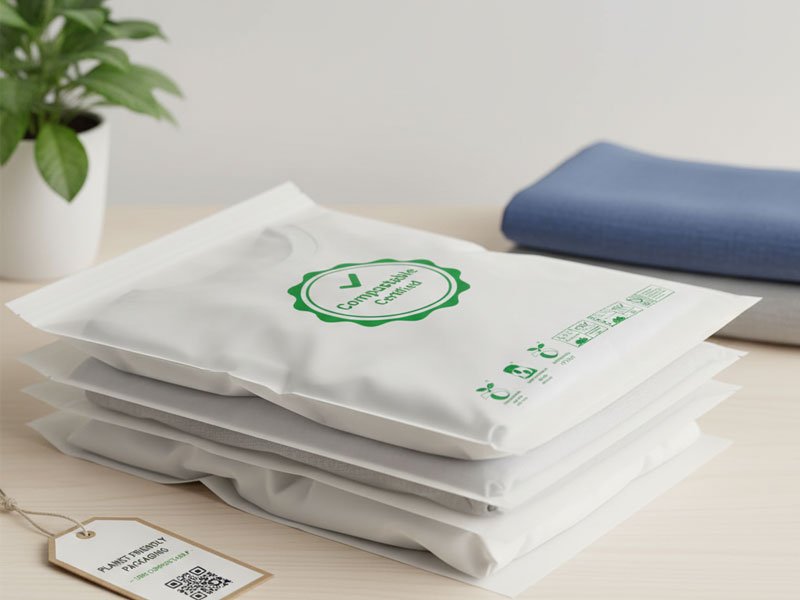
Many Edmonton residents use Green Bin systems for food waste collection.
As composting programs grow across Canada, more people are also searching for:
- compostable bags for Green Bin Edmonton
- Edmonton compost bags
- compost liners Edmonton
- food waste liners
At first, compostable bags sound simple.
If a bag is labeled compostable, it should work well inside municipal compost systems.
But real composting systems are more complicated than that.
Edmonton’s Green Bin system focuses not only on compostability, but also on contamination control and efficient organics processing.
That is why local rules and compost facility requirements still matter.
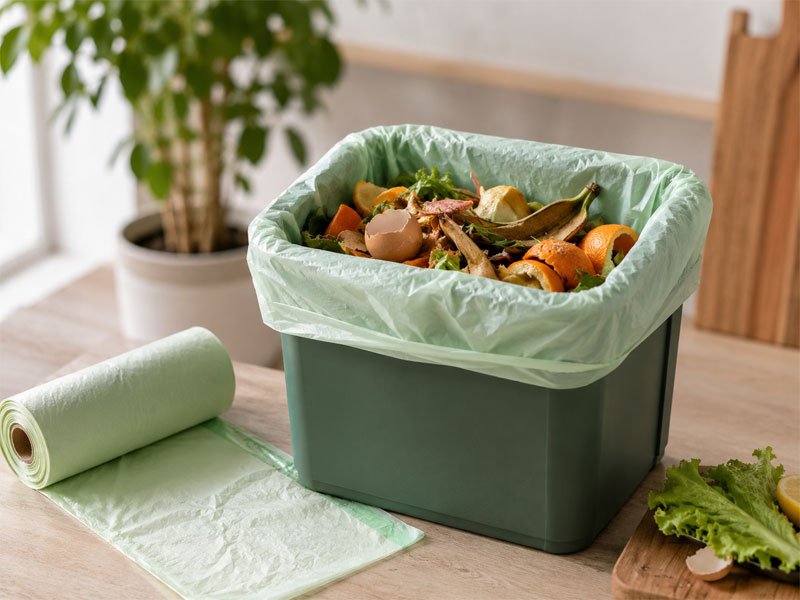
Are Compostable Bags Allowed in Edmonton?
The short answer is: Some certified compostable liners are accepted.
But municipal compost systems still apply contamination controls and processing standards.
Many residents use compostable liners for kitchen food waste collection because they help reduce leakage and improve convenience.
However, not every bag labeled “compostable” performs the same way inside industrial compost systems.
This is why people searching for:
- Edmonton compost bags
- compost liners Edmonton
- Green Bin liners Edmonton
often still have questions about what is actually accepted.
Municipal composting systems evaluate materials based on processing performance, contamination risk, and compost quality.
Why Edmonton Focuses on Compost Quality
Compost quality is one of the biggest priorities in municipal organics recycling.
Small amounts of plastic contamination can create major processing problems.
One challenge is that compost facilities cannot always quickly distinguish between:
- regular plastic bags
- biodegradable plastics
- oxo-degradable bags
- certified compostable liners
This increases contamination risks inside organics recycling systems.
Edmonton’s Green Bin program focuses on improving food waste recovery while reducing contamination.
This is one reason municipal compost systems often apply stricter rules to compostable plastics and food waste liners.
The issue is not only whether the bag can compost.
The issue is whether the bag performs well inside real municipal processing conditions.
How Edmonton Processes Organic Waste
Edmonton’s Green Bin system uses industrial composting methods to process food waste and organics.
The process usually includes:
- food waste collection
- bag opening
- contamination separation
- screening systems
- industrial composting
Most industrial composting systems operate under controlled processing timelines.
If a compostable liner breaks down too slowly, fragments may remain during screening.
This creates operational problems and may affect compost quality.
That is why many municipal systems focus on certified compostable products with stable decomposition performance.
Compostable vs Biodegradable Bags in Edmonton
Another major source of confusion is product labeling.
Many bags use terms such as:
- biodegradable
- eco-friendly
- degradable
- plant-based
But these terms do not always mean the product is suitable for municipal compost systems.
A certified compostable bag is different from a general biodegradable bag.
Certified compostable products are tested against standards such as:
- ASTM D6400
- BPI Certified
- EN13432
This guide explains the difference between biodegradable vs compostable materials in more detail.
Many municipal waste systems now focus more on contamination reduction than marketing language.
This is also why biodegradable claims often fail inside real compost processing environments.
Why Municipal Compost Rules Matter
Many people assume compost rules are the same across Canada.
They are not.
Different cities use different:
- compost equipment
- screening systems
- processing timelines
- contamination policies
This is why Green Bin rules may differ between Edmonton, Vancouver, Toronto, and Ottawa.
Some municipal systems are stricter about compostable plastics than others.
The local compost facility design plays a major role in what materials are accepted.
That is also why certified compostability alone does not guarantee acceptance everywhere.
What Buyers and Distributors Should Know
For distributors and private label buyers, Edmonton is another example of why local compost rules matter.
A bag labeled “compostable” may still face restrictions depending on municipal composting systems.
Important sourcing considerations include:
- certification verification
- decomposition performance
- contamination policies
- thickness consistency
- sealing quality
- film stability
This is why many buyers focus on certified compostable bags with verified compliance documentation and stable production quality.
For broader Green Bin system requirements, this guide to compostable green bin liners explains how municipal waste systems evaluate compostable bags.
FAQs About Compostable Bags for Green Bin Edmonton
Are compostable bags allowed in Edmonton Green Bin systems?
Some certified compostable liners are accepted, but municipal compost systems still apply contamination control standards.
Why are compost systems strict about compostable plastics?
Cities focus on compost quality, contamination reduction, and efficient organics processing.
Are biodegradable bags accepted in Edmonton?
Not always. Many biodegradable bags are not certified compostable and may create contamination problems.
What certifications matter in Edmonton?
ASTM D6400 and BPI Certified are among the most recognized compostability standards in North America.
Why does compost contamination matter?
Plastic contamination can reduce compost quality and create additional screening problems during waste processing.
Conclusion
Edmonton’s Green Bin system focuses on compost quality, contamination reduction, and efficient organics recycling.
This is why municipal compost systems carefully evaluate compostable plastics and food waste liners.
For buyers, distributors, and manufacturers, Edmonton is another example of how local waste systems influence compostable bag requirements.
Real compostability depends not only on the material itself.
It also depends on whether municipal compost systems can process the product effectively.