A few months ago, I thought choosing a toilet liner was simple. Just pick a bag. Use it. Throw it away.
Done.
But after spending more time talking with RV users, camping distributors, sanitation buyers, and OEM customers, I realized the real issue is not the bag itself.
The real issue is how the bag behaves inside a real portable sanitation system.
That is where many problems begin.
- Leaks.
- Odor.
- Storage.
- Waste disposal confusion.
And sometimes, bags that sound “eco-friendly” online fail badly in actual use.
This article is not about marketing terms. It is a practical comparison based on how composting toilet bags and plastic liners behave in real-world portable sanitation environments.
Especially for:
- RV systems
- camping toilets
- off-grid sanitation
- emergency hygiene kits
- portable waste systems
Quick Answer
Composting toilet bags and plastic liners serve different sanitation needs.
Composting toilet bags are designed to reduce traditional plastic waste and work best in controlled disposal systems or short-cycle sanitation environments.
Plastic liners, on the other hand, often provide stronger long-term storage stability, better wet-load resistance, and lower leak risks during extended travel or emergency use.
In real portable sanitation systems, the better option usually depends on storage duration, disposal infrastructure, environmental conditions, and operational simplicity rather than marketing claims alone.
What Are Composting Toilet Bags?
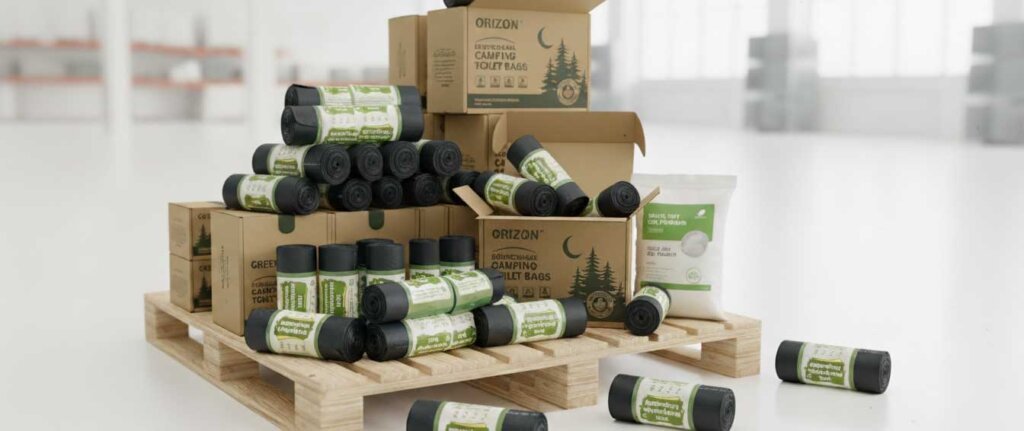
Composting toilet bags are usually made from compostable materials like PLA and PBAT.
Many buyers first discover this difference when comparing different types of compostable portable toilet liners and realizing that not all compostable toilet systems behave the same in real disposal environments.
This is important.
Because many users assume “compostable” means the bag will disappear naturally anywhere.
That is not how waste systems work in real life.
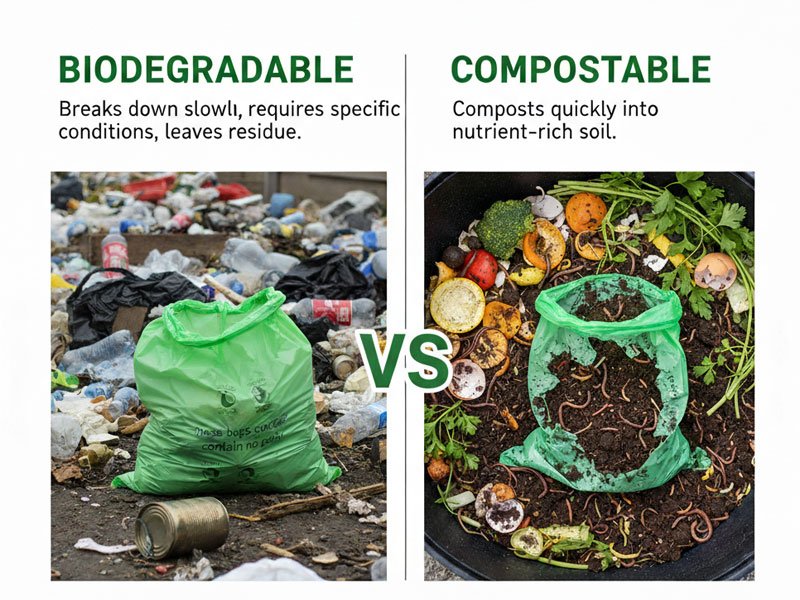
A certified compostable toilet bag is designed to break down under controlled composting conditions with heat, moisture, oxygen, and microbial activity.
Without those conditions, degradation becomes much slower.
Especially inside landfills.
Or sealed waste containers.
Many buyers discover this only after using the product.
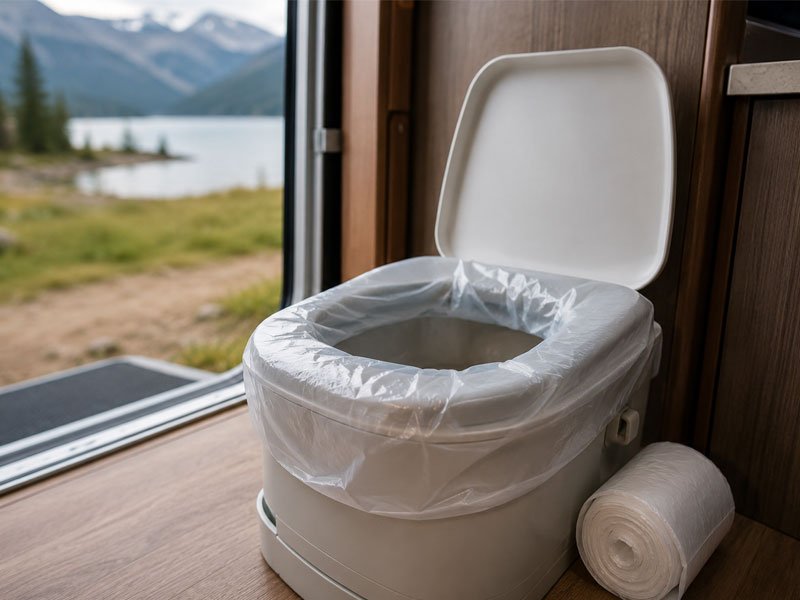
What Are Plastic Toilet Liners?
Traditional plastic liners are usually made from PE or HDPE materials.
They are cheap.
Stable.
Easy to store.
And they perform well in wet environments.
That is one reason many RV users still use plastic liners today.
Especially for:
- long trips
- warm climates
- multi-day storage
- emergency backup kits
Plastic liners are not compostable.
But in some situations, they are operationally more stable.
That is the uncomfortable truth many websites avoid discussing.
The Real Difference Starts After Use
On paper, composting toilet bags sound better environmentally.
But once human waste enters the system, the discussion changes completely.
Now the focus becomes:
- leak resistance
- odor
- storage duration
- disposal infrastructure
- transportation
- heat exposure
- puncture resistance
This is where many online articles become unrealistic.
Because they only discuss sustainability.
Not operational behavior.
Leak Resistance Comparison
One thing I learned after talking with sanitation buyers is this:
Most complaints do not start with “eco concerns.”
They start with leaks.
Especially in:
- RV toilets
- camping systems
- temporary sanitation setups
Plastic liners usually have stronger long-term wet-load stability.
This is why some users still trust them more during extended travel.
Compostable toilet bags can perform very well too.
But the film structure matters a lot.
Thickness matters.
In real portable sanitation applications, sealing types and leakage risks matter far more than many buyers initially expect, because weak seals are one of the main reasons toilet liners fail during transport or temporary storage.
Storage conditions matter.
Poor-quality compostable bags often fail because:
- sealing temperature is unstable
- film thickness varies too much
- elongation performance is weak
- the bag was designed only for short-cycle use
Some biodegradable camping toilet bags are designed mainly for lightweight short-cycle outdoor use, while others are engineered for more demanding sanitation environments where sealing strength and wet-load resistance become much more important.
Some are designed for short disposal cycles.
Others are engineered for more demanding sanitation systems.
Huge difference.
Odor Control and Waste Storage
This topic appears constantly on Reddit and RV forums.
And honestly, many manufacturers avoid discussing it.
Because odor control is complicated.
Plastic liners usually provide better long-term odor containment.
Especially during:
- hot weather
- multi-day storage
- closed vehicle environments
Compostable toilet bags can still work very well.
But they are generally more sensitive to:
- heat
- humidity
- biological activity
This is also why storage and transport conditions for compostable bags become much more important during shipping, warehouse storage, or long summer transport periods.
That does not mean they are bad.
It means users should match the bag to the actual sanitation environment.
This is something many “eco blogs” ignore completely.
Can Compostable Toilet Bags Really Compost?
Yes.
But the real answer is more complicated.
Most certified compostable toilet bags require industrial composting conditions.
That means:
- controlled temperature
- oxygen
- moisture
- microbial activity
Without those systems, decomposition slows down significantly.
This creates confusion for many users.
Especially when portable toilet waste enters normal trash streams.
Or landfills.
Or remote outdoor environments.
A lot of websites oversimplify this issue.
This is one reason why compostable vs plastic waste system compatibility becomes a much bigger issue inside real municipal waste systems, especially in regions with limited industrial composting infrastructure.
And disposal compatibility matters more than marketing language.
Why Many RV Users Still Choose Plastic Liners
This part may surprise some readers.
But real-world sanitation systems are full of compromises.
Many RV users choose plastic liners because they want:
- longer storage stability
- lower leak risk
- easier handling
- lower cost
- wider disposal compatibility
Not because they “hate sustainability.”
Operational simplicity matters.
Especially during travel.
Or emergency situations.
This is something manufacturers should acknowledge honestly instead of pretending one solution works perfectly everywhere.
Where Compostable Toilet Bags Work Best
From what I have seen, compostable toilet bags work best in:
- short-cycle sanitation systems
- eco-focused campgrounds
- controlled waste programs
- municipal composting systems
- temporary event sanitation
- environmentally regulated outdoor areas
In these systems, compostable liners can significantly reduce traditional plastic waste.
But the waste system itself still matters.
The bag alone does not solve the infrastructure problem.
Composting Toilet Bags vs Plastic Liners: Comparison Table
| Feature | Composting Toilet Bags | Plastic Liners |
|---|---|---|
| Compostability | Yes, under proper composting conditions | No |
| Leak resistance | Medium to high, depending on film and seal quality | Usually high |
| Long-term storage | More sensitive to heat and humidity | More stable |
| Odor control | Depends on storage time and sealing | Usually stronger for long storage |
| Disposal | Needs proper composting or waste system | Normal trash stream in most areas |
| RV travel use | Better for short-cycle use | Better for long trips |
| Emergency sanitation | Good if collection is managed | Good for longer storage |
| Environmental impact | Lower plastic use | Higher plastic waste |
What OEM Buyers Should Actually Check
After working in compostable bag manufacturing for years, I noticed many buyers focus only on certifications.
But certifications alone are not enough.
The real operational questions are:
- How stable is the film?
- How strong are the seals?
- What is the actual thickness tolerance?
- How does the bag behave after humidity exposure?
- How long can it be stored?
- Is the material optimized for short-cycle or longer sanitation use?
Sometimes a bag passes certification.
But performs poorly in actual field conditions.
That creates bigger problems later.
Especially for distributors and private-label brands.
Conclusion
I used to think toilet liners were a very simple product.
Now I do not think that anymore.
The more I study portable sanitation systems, the more I realize most problems are not caused by one single product.
They are caused by mismatched systems.
A bag may perform perfectly in one environment and fail in another.
That is why the discussion should move beyond “plastic vs compostable.”
The real question is:
Which system works best for the actual use environment?
Today, many manufacturers are beginning to realize that portable hygiene packaging systems require a balance between material performance, disposal infrastructure, storage stability, and operational simplicity.
That is where smarter sanitation decisions begin.
FAQ
Are composting toilet bags as strong as plastic liners?
Not always.
Plastic liners usually provide more stable long-term wet-load performance, especially during extended storage or high-temperature travel conditions.
However, high-quality composting toilet bags with stable film structures and strong sealing performance can still work very well in short-cycle portable sanitation systems.
The real difference often comes down to film quality, sealing stability, and actual use conditions.
Why do some compostable toilet bags leak more easily?
In many cases, leakage problems are not caused by compostable materials alone.
The bigger issue is often poor film production control, weak sealing structures, unstable thickness, or incorrect storage conditions.
Some low-cost compostable toilet bags are designed only for lightweight short-term use and may not perform well in demanding sanitation environments.
Can composting toilet bags break down in landfills?
Usually much slower than many users expect.
Most certified compostable toilet bags are designed for industrial composting systems with controlled heat, oxygen, moisture, and microbial activity.
Landfills often lack these conditions.
As a result, decomposition inside landfills can become extremely slow.
Why do many RV users still choose plastic liners?
Many RV users prioritize operational stability over marketing claims.
Plastic liners often provide:
- longer storage stability
- lower leak risks
- better long-term odor containment
- easier handling during travel
This does not necessarily mean users dislike compostable products.
In many cases, they are simply choosing the option that works better for their specific sanitation environment.
Are composting toilet bags suitable for emergency sanitation systems?
Yes, but it depends heavily on deployment conditions and waste disposal infrastructure.
Compostable toilet bags can work well in short-cycle emergency sanitation systems where waste collection and disposal are properly managed.
However, long-term storage, heat exposure, and uncontrolled disposal environments can create additional operational challenges.
Do compostable toilet bags eliminate odor completely?
No.
No sanitation liner completely eliminates odor.
Plastic liners generally provide stronger long-term odor containment, while compostable toilet bags may become more sensitive to heat, humidity, and biological activity over time.
Odor control also depends on:
- waste type
- storage duration
- ventilation
- absorbent materials
- sealing quality