Odor-Control Compostable Waste Bags Explained
Odor control has become an important requirement in many hygiene and sanitation-related packaging applications.
As more brands develop compostable waste bags for portable hygiene, pet waste, travel sanitation, and temporary disposal systems, buyers are paying closer attention to sealing performance, leakage prevention, and odor-sensitive waste containment.
This guide explains how odor-control compostable waste bags are commonly used, how compostable structures affect odor management, and what OEM buyers should consider when developing private-label hygiene packaging systems.
What Are Odor-Control Compostable Waste Bags?
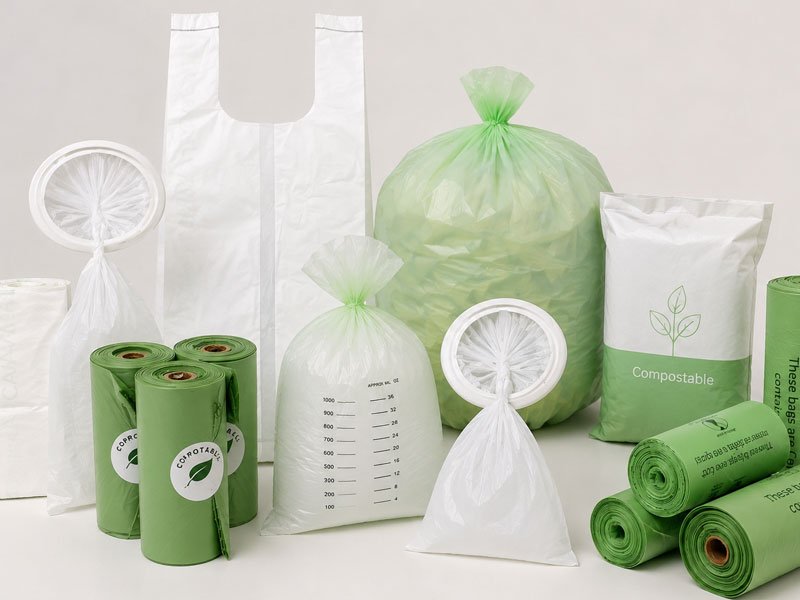
Odor-control compostable waste bags are disposable bags designed for hygiene-related waste containment where odor management is important.
These bags are commonly used in:
- dog waste disposal systems
- portable toilet liners
- diaper disposal bags
- travel hygiene kits
- outdoor sanitation systems
- temporary waste containment
- emergency sanitation applications
Compared with standard trash bags, odor-control compostable bags are usually designed with stronger sealing structures and better portability for short-cycle hygiene disposal.
Many applications also require compact roll-format packaging for easier storage and transport.
Why Odor Control Matters
Many hygiene-related waste applications involve temporary storage before disposal.
In these situations, odor-sensitive waste containment becomes important for both user comfort and sanitation handling.
For example:
- dog waste bags may be carried during walks or outdoor activities
- portable toilet liners may be used in RV or camping environments
- diaper disposal bags are often used in travel or childcare situations
- emergency sanitation systems may operate in temporary field-use conditions
In most cases, odor control depends more on sealing performance and waste containment structure than on fragrance alone.
Common Materials Used in Odor-Control Compostable Bags
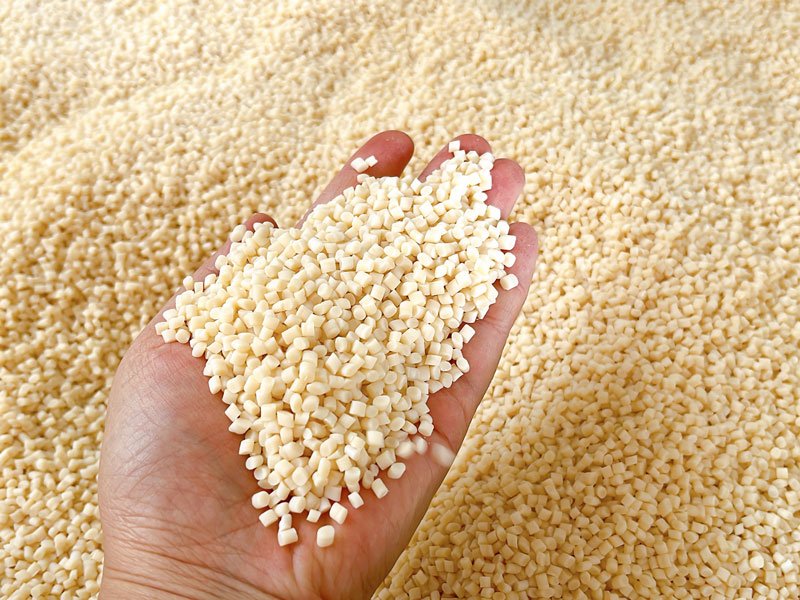
Most compostable odor-control waste bags are commonly produced using:
- PLA
- PBAT
- starch-based compostable materials
These compostable structures are often selected because they provide a balance between:
- flexibility
- sealing performance
- portability
- controlled disposal
- compostability
PLA + PBAT material structures are widely used in portable hygiene and sanitation-related applications where short-cycle disposal is expected.
Because compostable materials behave differently from traditional PE plastic, film structure and application environment are both important considerations.
Key Factors That Affect Odor Control
Different hygiene applications may require different film structures depending on the intended use environment.
Sealing Performance
Poor sealing can increase odor leakage during transport or temporary storage.
Seal width, sealing temperature, and film compatibility all affect sealing reliability.
Leak Resistance
Leak-resistant compostable bag structures can help reduce contamination and odor spread during handling.
Film thickness and bag design are both important for portable sanitation systems and hygiene disposal applications.
Storage Duration
Compostable hygiene bags are generally designed for practical short-cycle disposal rather than long-term waste storage.
The expected disposal cycle can affect which material structure is most suitable.
Compact Portability
Compact roll-format compostable bags are commonly used in travel hygiene systems, emergency kits, and outdoor sanitation programs.
Smaller packaging formats can improve portability and storage efficiency.
Odor Control vs Fragrance
Some hygiene disposal bags use fragrance to help reduce unpleasant smells.
However, in many professional sanitation applications, odor management depends more on:
- sealing performance
- waste isolation
- controlled disposal
- leak resistance
- handling stability
For OEM buyers, selecting the correct compostable structure is usually more important than simply adding fragrance.
Common OEM Applications
OEM odor-control compostable waste bags are commonly developed for:
- dog waste brands
- portable sanitation systems
- travel hygiene products
- diaper disposal programs
- emergency sanitation kits
- outdoor and camping markets
Different applications may require different:
- film thicknesses
- sealing structures
- bag dimensions
- roll formats
- packaging systems
OEM & Private Label Options
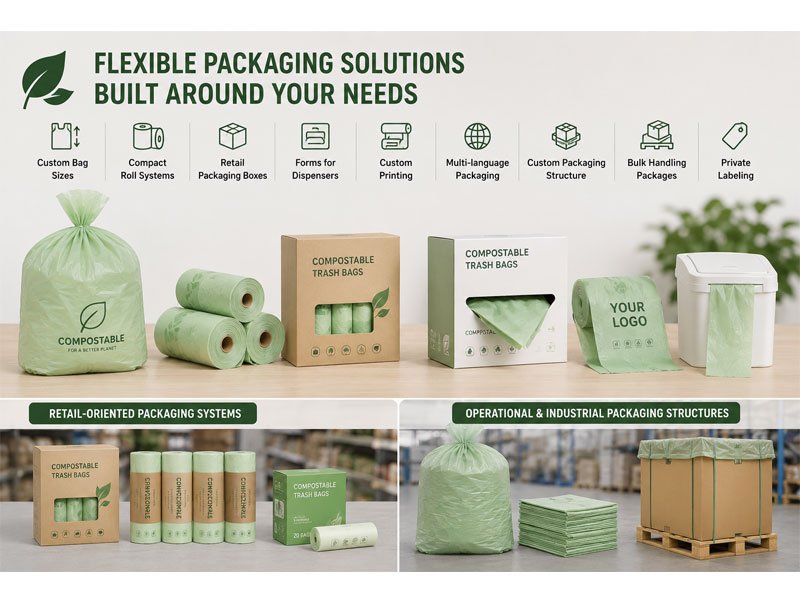
Many distributors and hygiene brands now develop private-label odor-control compostable bags for retail and operational markets.
OEM customization options may include:
- compact roll systems
- dispenser-compatible formats
- retail box packaging
- custom printing
- multilingual packaging
- private-label branding
- operational bulk packaging
Different regional markets may also require different certification and packaging approaches.
Certifications for Compostable Hygiene Bags
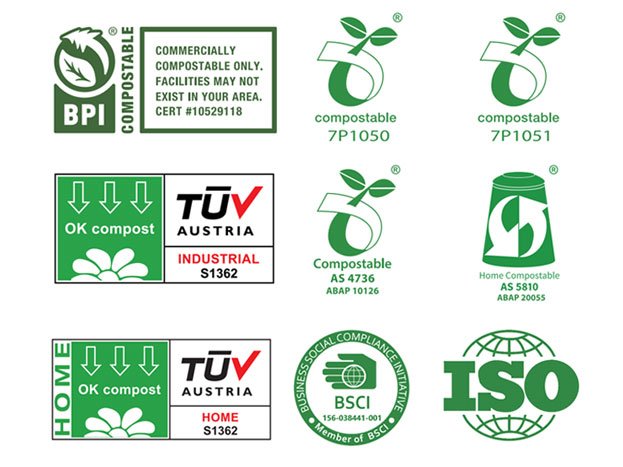
Common compostability certifications include:
Certification requirements may vary depending on the target country and local waste management infrastructure.
Choosing the Right Compostable Structure
The most suitable odor-control compostable bag structure depends on:
- intended use environment
- disposal cycle
- moisture exposure
- portability needs
- sealing requirements
- storage conditions
- packaging format
Some applications prioritize stronger sealing and thicker film structures, while others focus on compact portability and retail convenience.
For OEM projects, early discussion about the intended application is usually important before finalizing specifications.
OEM Odor-Control Compostable Waste Bags from ORIZON
ORIZON supports OEM and private-label compostable hygiene packaging projects for sanitation, travel, pet waste, and hygiene-related applications.
We support:
- PLA + PBAT compostable structures
- leak-resistant compostable bag systems
- compact roll-format packaging
- retail-ready packaging
- custom printing
- private-label programs
- application-oriented packaging development
Our team can help discuss suitable compostable bag structures based on the intended hygiene application and packaging goals.