Off-grid living sounds simple when people talk about it online.
A small cabin.
A quiet place.
No city noise.
No monthly utility bill.
But after the first few days, one practical question appears very quickly:
How do you handle waste when there is no normal bathroom?
That is where portable toilet bags become part of broader portable sanitation systems.
Not just a small accessory.
Not just a liner.
A real part of daily hygiene.
After working with compostable bag manufacturing and talking with buyers in camping, RV, and portable sanitation markets, I have learned one thing:
Most toilet bag problems are not caused by the bag alone.
They are caused by choosing the wrong bag for the wrong off-grid environment.
A bag that works for a weekend camping trip may not work well inside a warm cabin for several days.
A lightweight liner may be fine for short use.
But it may fail when storage time, heat, odor, and waste pressure increase.
This guide explains how portable toilet bags work for off-grid living, and what buyers should check before choosing a system.
What Does Off-Grid Sanitation Really Mean?
Off-grid sanitation means handling human waste without relying on normal public utilities.
In simple words:
No sewer.
No flush toilet.
No fixed plumbing.
Sometimes no running water.
This can apply to:
- off-grid cabins
- tiny homes
- RVs
- vans
- remote camps
- hunting cabins
- emergency shelters
- outdoor work sites
An off-grid toilet is usually not connected to centralized sewer, piped-in water, or outside electricity. This is why portable waste systems become important in remote living environments.
In these places, a toilet bag must do more than “hold waste.”
It needs to support:
- waste containment
- odor control
- temporary storage
- easy handling
- safe disposal
- basic hygiene
This is where many people underestimate the problem.
They buy a bag.
But they forget the system.
Why Portable Toilet Bags Matter in Off-Grid Living
In off-grid living, waste handling is not something you can ignore.
If a liner leaks, the problem is immediate.
If odor builds up, the whole space is affected.
If waste cannot be stored safely, the sanitation setup becomes stressful.
This is especially true in small spaces like:
- vans
- cabins
- tents
- compact RVs
- emergency shelters
Portable toilet bags help create a simple barrier between waste and the living environment.
But the bag needs to match the actual use condition.
That means you need to think about:
- how long waste will stay in the bag
- how warm the storage area gets
- whether the bag will be moved after use
- whether absorbent material is used
- how the waste will be disposed of later
This is not complicated.
But it does need planning.
Common Types of Portable Toilet Bags for Off-Grid Use
There are several types of portable toilet bags used in off-grid sanitation.
Each one solves a different problem.
Compostable Toilet Bags
Compostable toilet bags are usually made from materials such as PLA, PBAT, and starch-based blends.
They are often used in:
- camping toilets
- bucket toilet systems
- eco-focused outdoor setups
- short-cycle sanitation systems
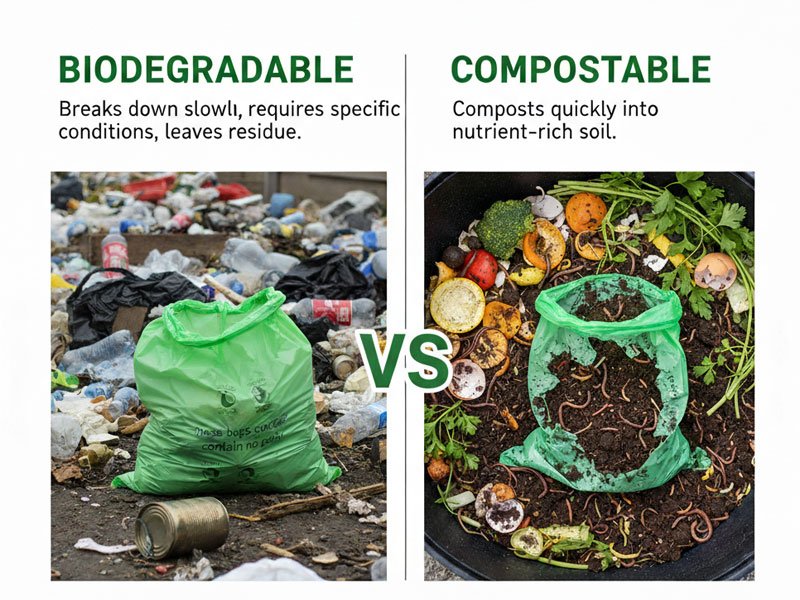
Many people choose compostable toilet bags because they want to reduce traditional plastic waste, although many buyers still confuse compostable toilet bags vs biodegradable toilet bags when researching portable sanitation systems.
That makes sense.
But compostable does not mean the bag will disappear anywhere.
Most compostable bags need proper composting conditions to break down correctly.
That usually means heat, moisture, oxygen, and microbial activity.
Without those conditions, the process is much slower.
So compostable toilet bags can work well for off-grid living, but only when the disposal plan is realistic.
Plastic Portable Toilet Liners
Traditional plastic liners are usually made from PE or HDPE materials.
They are not compostable.
But they are often more stable during long storage.
This is why some users still choose plastic liners for:
- long trips
- hot weather
- emergency kits
- multi-day storage
It is not always about being “less eco.”
Sometimes it is about operational stability.
That is the part many simple eco blogs avoid saying.
Heavy-Duty Waste Bags
Heavy-duty waste bags are used when leak resistance and handling strength matter more than compostability.
They may be used in:
- emergency sanitation kits
- field toilets
- temporary shelters
- remote work camps
These bags are usually selected for strength and containment.
Not compostability.
Absorbent Waste Bag Systems
Some portable toilet bag systems include absorbent powder or gel.
These systems are designed to reduce liquid movement and make waste easier to handle.
They can be useful in:
- emergency toilets
- car travel
- temporary camping toilets
- disaster response kits
The absorbent material helps reduce sloshing and leakage risk.
But disposal still depends on local waste rules.
What Makes a Good Off-Grid Toilet Bag?
A good off-grid toilet bag is not just “thick.”
Thickness matters.
But it is not the only factor.
From a manufacturing point of view, I would check these points first:
- film strength
- seal quality
- thickness consistency
- puncture resistance
- moisture resistance
- storage stability
- odor control support
Many buyers focus only on thickness.
But in real use, weak sealing often causes more failures than film thickness alone.
A 25-micron bag with poor sealing may fail faster than a thinner bag with better film control and stable sealing.
This is why real production control matters, especially when understanding how compostable toilet bags are manufactured and why some bags perform more consistently than others.
Odor Control in Off-Grid Sanitation
Odor is one of the biggest issues in off-grid living.
Especially when waste is stored inside:
- small cabins
- vans
- tents
- enclosed toilet areas
Odor control depends on several things:
- how well the bag is sealed
- how long waste is stored
- how much ventilation exists
- whether absorbent material is used
- temperature and humidity
Heat makes odor problems worse.
Humidity makes storage harder.
Limited ventilation makes everything more noticeable.
This is why short-cycle sanitation often works better with compostable toilet bags.
If waste needs to be stored for several days, the bag system must be chosen more carefully.
Leak Resistance and Waste Storage
Most people only think about leak resistance after something fails.
Usually at the worst time.
In off-grid living, toilet bags may need to handle:
- liquid waste
- solid waste
- absorbent material
- transport after use
- storage before disposal
That creates pressure on the liner.
A reliable portable toilet bag should have stable sealing and consistent film thickness, which is why many buyers begin researching leak-proof compostable toilet bags for off-grid sanitation and RV use.
The bottom seal is especially important.
For compostable toilet bags, storage conditions also matter.
Heat, sunlight, and humidity can affect material performance over time.
This is why storage and transport conditions for compostable bags should not be treated as small details, because they directly affect sanitation performance during off-grid living and RV travel.
They are part of the product performance.
Do Compostable Toilet Bags Work for Off-Grid Living?
Yes, they can.
But they are not perfect for every off-grid setup.
Compostable toilet bags usually work better for:
- short-cycle use
- weekend camping
- eco-focused cabins
- bucket toilet systems
- controlled waste disposal
They may be less suitable for:
- long-term waste storage
- very hot environments
- poor ventilation
- uncertain disposal routes
- users expecting landfill breakdown
This does not mean compostable bags are bad.
It means the system needs to match the environment.
That is the whole point.
Disposal: The Part People Often Skip
This is where many off-grid sanitation plans fail.
People think about the toilet.
They think about the bag.
But they do not think enough about what happens after use, which is why portable toilet waste handling systems become so important in off-grid sanitation.
Disposal depends on:
- local waste rules
- composting access
- land ownership
- campground rules
- emergency response procedures
- whether human waste is involved
Outdoor waste handling should be done carefully to avoid contamination and environmental damage. Leave No Trace guidance emphasizes proper waste disposal in outdoor environments, which is especially important for remote camping and off-grid use.
For compostable toilet bags, industrial compostability standards such as ASTM D6400 focus on controlled composting conditions, not unmanaged disposal in nature or landfill environments.
So the realistic question is not:
“Is this bag compostable?”
The better question is:
“Do I have the right disposal system for this bag?”
That changes the conversation.
Portable Toilet Bags for Cabins, RVs, and Remote Camps
Different off-grid environments need different decisions.
Off-Grid Cabins
Cabins may have more space for storage, but they may also have less frequent waste collection.
This makes odor control and storage duration more important.
RVs and Vans
RVs and vans have limited space.
Odor becomes noticeable faster.
Waste storage also becomes harder during hot travel, which is why many travelers research portable toilet bags for RV and van life before choosing a sanitation setup.
Remote Camps
Remote camps often need simple and reliable systems.
The priority may be:
- fast setup
- easy distribution
- safe handling
- strong containment
Emergency Shelters
Emergency sanitation needs are different.
The system must be simple, fast, and easy to manage by many users.
In these cases, stability may matter more than environmental claims.
Off-Grid Toilet Bag Comparison
| Bag Type | Best For | Main Advantage | Main Limitation |
|---|---|---|---|
| Compostable toilet bags | Short-cycle eco use | Lower traditional plastic waste | Needs proper disposal conditions |
| Plastic portable liners | Longer storage | Strong stability | Not compostable |
| Heavy-duty waste bags | Emergency use | Better strength | Higher plastic use |
| Absorbent waste bags | Liquid control | Easier handling | Disposal may be limited |
What OEM Buyers Should Check
For distributors, camping brands, and portable toilet manufacturers, product selection should not stop at material claims.
You should check:
- bag size
- film thickness
- sealing strength
- roll format
- shelf life
- storage conditions
- certification scope
- packaging method
- odor control requirements
- intended use cycle
If the product is for weekend camping, one structure may work.
If it is for off-grid cabins or emergency sanitation, you may need a different structure.
This is where OEM communication matters.
A clear use case saves a lot of trouble later.
Conclusion
Portable toilet bags for off-grid living are not just small disposable liners.
They are part of a complete sanitation system.
The right bag depends on:
- where it is used
- how long waste is stored
- how hot the environment gets
- how the bag is sealed
- how the waste is disposed of
A compostable toilet bag can be a good choice for short-cycle off-grid use.
But it still needs a realistic disposal plan.
A stronger plastic liner may work better for long storage.
But it does not solve the plastic waste problem.
There is no perfect answer for every off-grid setup.
There is only a better match between the bag, the toilet system, and the actual living environment.
That is where smarter portable sanitation decisions begin.