Human waste bags sound simple at first.
Until people actually need to store human waste inside:
- RVs
- vans
- off-grid cabins
- emergency shelters
- camping systems
- temporary sanitation environments
That is usually when people realize these bags are not just disposable liners.
They are part of a real portable sanitation system.
After working with compostable bag manufacturing and portable hygiene packaging for years, I noticed something interesting:
Most sanitation failures are not caused by one bad product.
They are usually caused by choosing the wrong waste system for the actual environment.
A lightweight camping waste bag may work perfectly during a short hiking trip.
The same bag may become much harder to manage during multi-day RV travel in hot weather.
Odor changes.
Storage pressure increases.
Waste handling becomes more complicated.
And disposal infrastructure suddenly matters much more than most people expect.
This guide explains how human waste bags work across camping, RV travel, off-grid sanitation, emergency hygiene, and portable waste handling systems.
What Are Human Waste Bags?
Human waste bags are portable containment bags designed for temporary human waste collection and disposal.
They are commonly used when normal toilets or sewer systems are unavailable.
These bags are often used in:
- camping toilets
- RV sanitation systems
- bucket toilets
- off-grid cabins
- emergency shelters
- disaster relief
- portable toilet systems
- hiking and backpacking
Some human waste bags are made from traditional plastic materials.
Others use compostable materials such as PLA and PBAT.
The purpose is not only waste collection.
It is also about:
- odor isolation
- temporary storage
- leak prevention
- easier waste handling
- portable sanitation
This is why human waste bags should be viewed as part of broader portable sanitation systems instead of simple disposable products.
Where Are Human Waste Bags Used?
Different sanitation environments create different problems.
This is why human waste bags are used across many temporary hygiene systems.
RV and Van Life
Inside small RVs and vans, sanitation becomes much more noticeable during longer trips.
Especially during:
- summer travel
- limited ventilation
- multi-day parking
- off-grid camping
Many travelers researching portable toilet bags for RV and van life eventually realize that odor control and temporary storage become much more important than expected.
Off-Grid Living
Off-grid cabins and remote camps often do not have permanent plumbing systems.
This creates the need for temporary sanitation systems that are easy to transport and manage.
Portable toilet bags for off-grid living are commonly used together with:
- bucket toilets
- dry toilet systems
- temporary outdoor sanitation setups
In many off-grid environments, the waste handling system matters more than the toilet itself.
Camping and Hiking
Camping sanitation systems are usually designed for shorter use cycles.
Lightweight human waste bags are often used during:
- hiking
- backpacking
- temporary camps
- outdoor festivals
But shorter use cycles and long-term storage are very different situations.
That difference matters more than many users realize.
Emergency Sanitation
Human waste bags are also widely used in:
- disaster relief
- emergency shelters
- field sanitation systems
- temporary medical environments
In these situations, sanitation priorities usually focus on:
- fast deployment
- simple handling
- hygiene isolation
- temporary storage stability
This is one reason portable sanitation systems continue expanding beyond recreational use.
Compostable vs Plastic Human Waste Bags
This is where many online discussions become oversimplified.
Some users prefer compostable human waste bags because they want to reduce traditional plastic waste.
Others prioritize storage stability and leak prevention.
Both sides have valid points.
Compostable Human Waste Bags
Compostable human waste bags are usually made from materials such as:
- PLA
- PBAT
- starch-based blends
These bags are commonly used in:
- eco-focused camping
- portable toilet systems
- short sanitation cycles
- off-grid hygiene setups
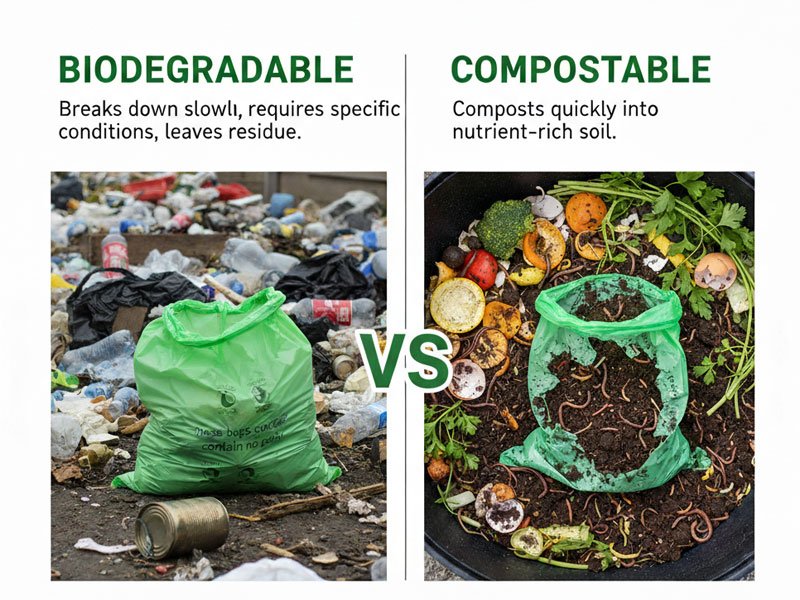
Many buyers also confuse compostable toilet bags vs biodegradable toilet bags when researching portable sanitation systems.
That creates unrealistic expectations.
Most compostable bags still require proper composting conditions to break down effectively.
That usually means:
- oxygen
- heat
- microbial activity
- moisture
- controlled composting environments
Without those conditions, decomposition becomes much slower.
Plastic Human Waste Bags
Traditional plastic waste bags are often made from PE or HDPE materials.
They are not compostable.
But they are usually more stable during:
- high heat
- long-term storage
- extended travel
- emergency use
This is one reason some RV users still choose plastic liners during longer trips.
Especially inside confined travel spaces.
How Human Waste Bags Handle Odor and Waste Storage
Odor control becomes one of the biggest challenges during portable sanitation use.
Especially when waste remains inside:
- small RVs
- vans
- cabins
- tents
- emergency shelters
Odor behavior depends on several things:
- sealing quality
- storage duration
- humidity
- heat exposure
- ventilation
- absorbent material
Heat changes everything very quickly.
Especially inside parked vehicles.
Many sanitation problems are caused more by storage conditions than by the bag itself.
That is why waste storage behavior matters just as much as material choice.
Leak Resistance and Seal Quality
Most users only think about leak resistance after experiencing a failure.
Usually during transport.
Or during extended storage.
A reliable human waste bag should provide:
- stable sealing
- puncture resistance
- thickness consistency
- moisture resistance
- temporary storage stability
Many buyers assume thicker bags automatically perform better.
But in real manufacturing, sealing quality often matters more than thickness alone.
This becomes especially obvious during:
- waste compression
- high-temperature storage
- repeated movement
- vehicle vibration
This is also why many buyers begin researching leak-proof compostable toilet bags before choosing sanitation systems for RV travel and off-grid use.
Film stability, sealing consistency, and material structure all affect sanitation performance, which is why understanding how compostable toilet bags are manufactured becomes increasingly important.
Human Waste Bags for RV and Van Life
RV sanitation creates unique pressure on portable waste systems.
Unlike public restrooms, RV users often need to temporarily store waste inside enclosed living environments.
That changes sanitation behavior significantly.
Especially during:
- long-distance travel
- hot-weather camping
- overnight storage
- off-grid parking
Long-term RV users often spend considerable time researching dry flush toilet bags vs compostable toilet bags because odor isolation and storage behavior become much more important inside confined vehicles.
Different systems solve different travel problems.
Human Waste Bags for Off-Grid Living
Off-grid sanitation systems usually prioritize independence from normal plumbing infrastructure.
In these environments, users often focus on:
- portability
- waste containment
- simple disposal
- temporary storage
- easier handling
Some systems prioritize lower environmental impact.
Others prioritize operational stability during long-term use.
There is no perfect solution for every off-grid setup.
The better system usually depends on:
- climate
- storage conditions
- disposal access
- travel duration
- sanitation expectations
Emergency Sanitation and Disaster Relief Use
Emergency sanitation environments create very different operational priorities.
In disaster relief situations, sanitation systems often need to support:
- rapid deployment
- large-scale distribution
- easier transportation
- temporary hygiene infrastructure
In these situations, reliability and containment often become more important than sustainability messaging.
Human waste bags used in emergency sanitation systems are usually selected based on:
- handling simplicity
- storage stability
- leak prevention
- operational consistency
This is why emergency sanitation systems behave very differently from recreational camping systems.
Do Compostable Human Waste Bags Really Break Down?
This is one of the biggest misconceptions in portable sanitation.
Many users assume compostable human waste bags will quickly disappear in any environment.
That is not how compostability works.
Most compostable materials require controlled composting conditions.
Industrial compostability standards such as ASTM D6400 focus on controlled composting systems rather than uncontrolled landfill or outdoor environments.
Compostable does not automatically mean:
- suitable for backyard burial
- rapid landfill breakdown
- immediate outdoor decomposition
That is why disposal infrastructure matters so much.
The bag itself is only one part of the sanitation system.
Disposal and Waste Handling Limitations
This is the part many portable sanitation discussions skip.
People think about:
- the toilet
- the bag
- the material
But not enough people think about disposal logistics after use.
Human waste disposal depends heavily on:
- local regulations
- campground rules
- composting access
- waste management systems
- emergency sanitation procedures
Outdoor sanitation guidance from Leave No Trace emphasizes proper waste handling to reduce contamination risks in outdoor environments.
In many sanitation environments, portable toilet waste handling systems matter more than the toilet itself.
That is usually where sanitation problems begin.
Human Waste Bag Comparison Table
| System Type | Best For | Main Advantage | Main Limitation |
|---|---|---|---|
| Compostable Human Waste Bags | Eco-focused camping | Lower plastic waste | Sensitive to storage conditions |
| Plastic Human Waste Bags | Extended storage | Better stability | Not compostable |
| Heavy-Duty Waste Bags | Emergency sanitation | Strong containment | Higher plastic use |
| Absorbent Waste Bag Systems | Temporary sanitation | Better liquid control | Disposal limitations |
Related Portable Sanitation Guides
RV & Off-Grid
- Portable Toilet Bags for RV & Van Life
- Portable Toilet Bags for Off-Grid Living
- Dry Flush Toilet Bags vs Compostable Toilet Bags
Waste Handling
- Portable Toilet Waste Handling Systems
- Leak-Proof Compostable Toilet Bags
- Portable Sanitation Systems Explained
Manufacturing & Technical
- How Compostable Toilet Bags Are Manufactured
- Compostable Toilet Bags vs Biodegradable Toilet Bags
- What Certifications Matter for Compostable Toilet Bags?
FAQ
Do human waste bags smell during RV travel?
They can.
Especially during:
- hot weather
- long storage periods
- poor ventilation
- enclosed vehicle environments
Odor control depends heavily on sealing quality, storage duration, absorbent materials, and sanitation system design.
Are compostable human waste bags leak proof?
Some are designed for temporary leak resistance, but performance depends on:
- sealing quality
- film structure
- storage pressure
- heat exposure
- transportation conditions
This is why real manufacturing quality matters.
Can compostable human waste bags be buried?
Not necessarily.
Most compostable bags require controlled composting environments to break down correctly.
Outdoor burial may not provide the conditions required for proper compostability.
What human waste bags work best for off-grid living?
There is no universal answer.
The better system usually depends on:
- climate
- storage duration
- disposal access
- odor expectations
- sanitation infrastructure
Different systems solve different sanitation problems.
Conclusion
Human waste bags are not just disposable liners.
They are part of a larger portable sanitation system.
The longer I work around portable hygiene packaging and sanitation systems, the more obvious this becomes:
Most sanitation problems are not caused by one bad bag.
They are usually caused by poor system matching.
A lightweight compostable bag may work perfectly during a short camping trip.
The same bag may become difficult during long-term RV storage in hot weather.
Odor changes.
Storage pressure changes.
Waste handling changes.
That is why portable sanitation should not be viewed as a simple product category.
It is really about managing hygiene under imperfect conditions.
And as portable living, emergency preparedness, and off-grid sanitation continue growing, human waste bags will likely become an increasingly important part of modern portable sanitation systems.